I came across a rather interesting piece of financial news these past couple of days.
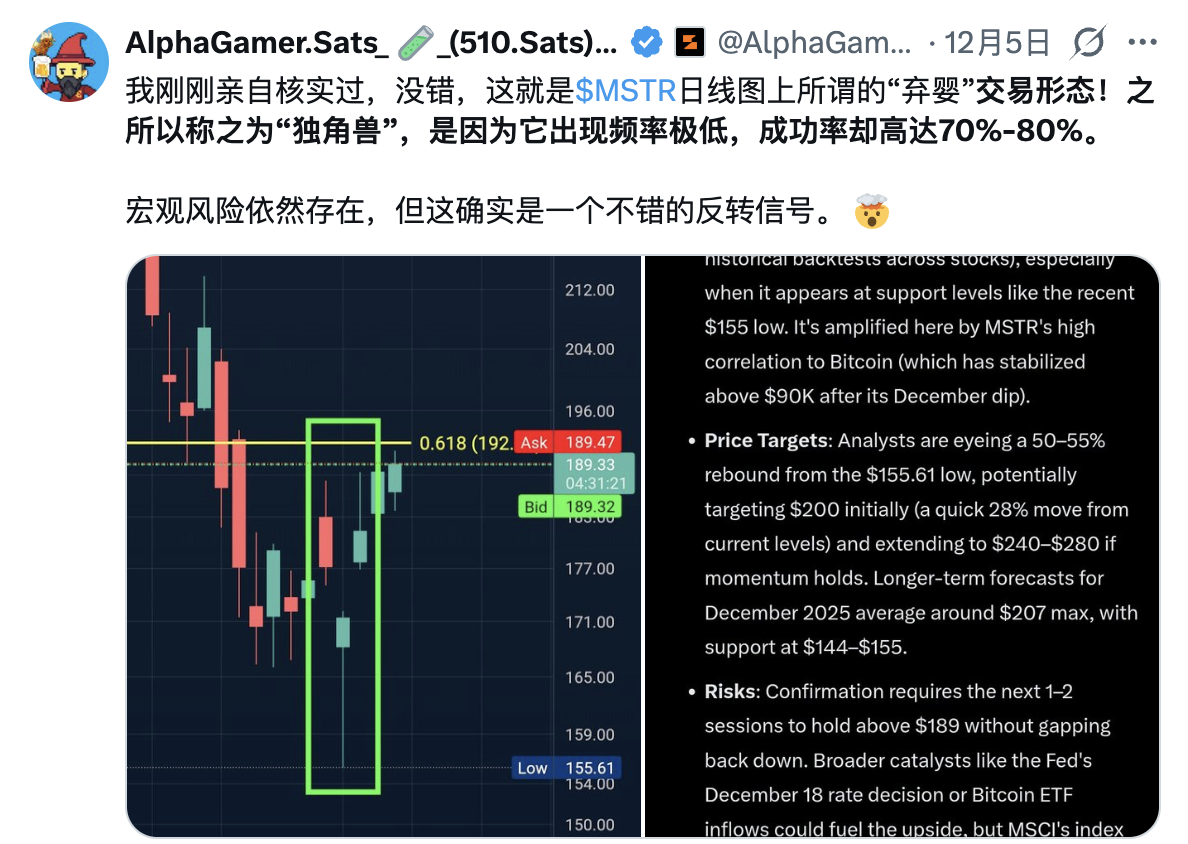
A publicly traded company called MicroStrategy (stock code MSTR) has seen an extremely rare bullish pattern appear on its stock chart – the "Abandoned Baby" pattern. Expert analysts say this pattern occurs only once every 0.02% to 0.08% of thousands of trading days.
Coincidentally, Bitcoin's price was firmly above $90,000 at the time. MSTR's stock price also rose accordingly, jumping from $171 to around $190.
What's making the market excited? The answer is so straightforward it's almost boring: because this company has hoarded a whopping 650,000 bitcoins .
But the interesting part of this matter lies precisely in the back of this "boring answer".
The Glory and Helplessness of the "Off-Chain Richest Man"
In recent years, MicroStrategy has almost become a "model student" for traditional companies buying Bitcoin. It issued bonds, raised funds, and then went all in on All In, accumulating a behemoth reserve worth over $60 billion. With an average purchase price of just over $66,000, the paper profits from this operation are simply staggering.
It successfully told Wall Street a clear story: buying my stock is equivalent to investing in Bitcoin with leverage . In the days before Bitcoin spot ETFs even existed, this was practically the only "equity ticket" for institutions to ride the Bitcoin wave.
However, this dazzling array of "off-chain micro-strategies" is like a mirror, reflecting a long-standing problem with Bitcoin itself.
First, you have to "believe" it. We believe it truly has 650,000 bitcoins based on its financial statements and the seal of its auditing firm. This isn't real-time, and you can't simply click a link to find out everything.
Secondly, the assets are "sleeping." These hundreds of thousands of bitcoins lie peacefully in cold wallets or custodian institutions. They don't participate in any DeFi, don't earn any interest, and are purely stores of value, but also "dead assets" with zero returns. The money is just sitting there, with shockingly low efficiency.
Ultimately, everything is "centralized." The management of all the added value generated by this empire, how it's handled, and who gets the profits are all essentially decided by the company's management. Ordinary shareholders? They're just bystanders watching stock price fluctuations.
You see, MicroStrategy is a die-hard Bitcoin believer, yet its model perfectly replicates Bitcoin's classic dilemma— it has value, but lacks liquidity . It hoards Bitcoin, and incidentally, it completely locks away Bitcoin's ability to generate wealth.

The market applauded loudly, but behind the applause, it seemed to be expecting a smarter answer.
New question: Is it possible to make the Bitcoin you hoard "earn wages" on its own?
Therefore, the market began to explore a new possibility: Can we hold onto Bitcoin as steadily as MicroStrategy, and also make it move on its own, "working" and making money in the financial system of the crypto world?
This spurred a series of "wrapping Bitcoin" solutions (such as wBTC, which many have heard of). However, most of them only accomplished the "transfer"—moving Bitcoin from one chain to another. After the transfer, what happens? Bitcoin remains an "outsider," making it difficult to integrate into the core reward system of the new chain and unable to obtain incentives from the underlying layer.
Until a new approach emerged: Proof of Liquidity (PoL) .
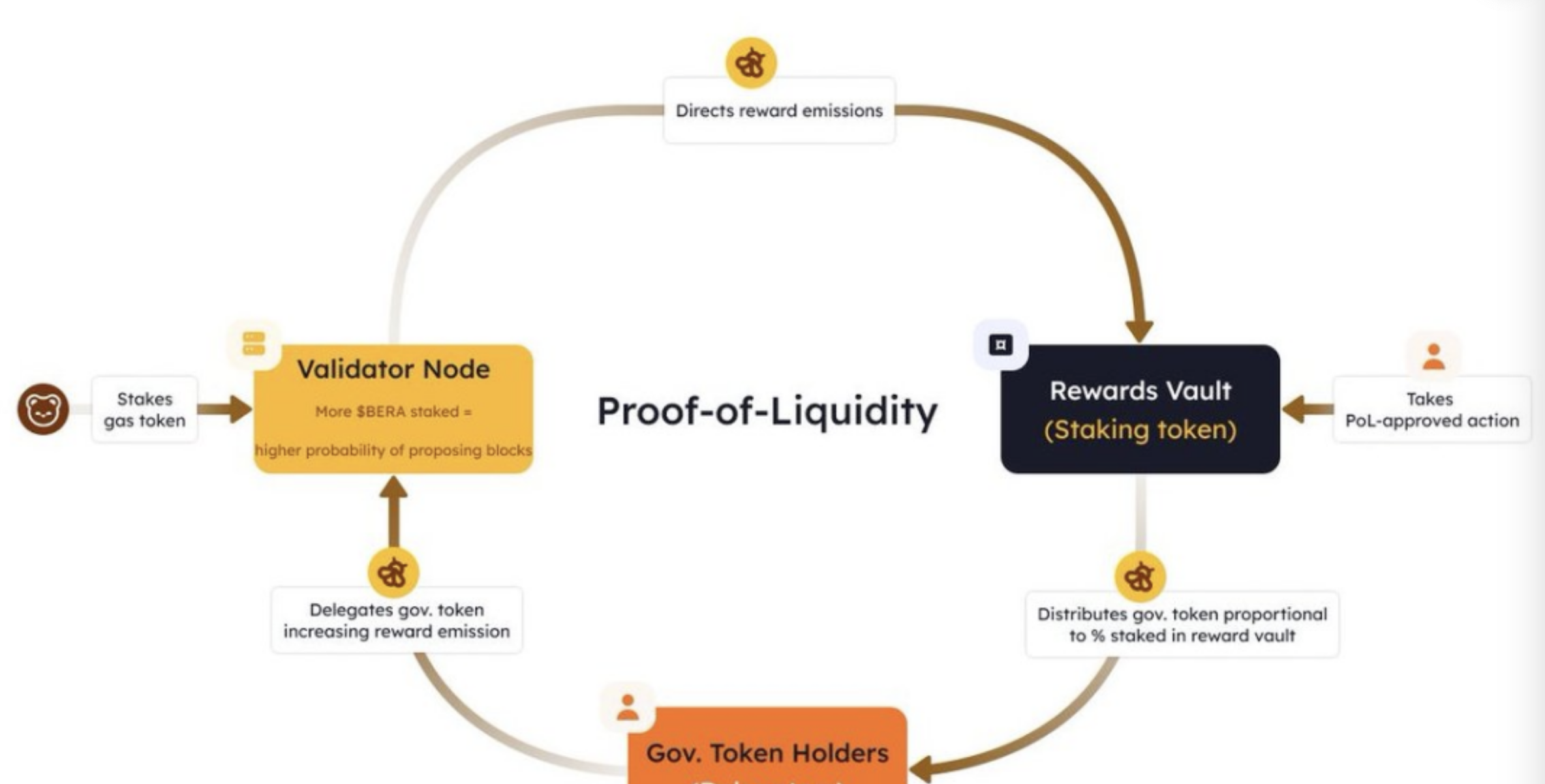
Take the emerging public blockchain Berachain as an example. You can think of it as a blockchain "tailor-made for financial applications". The cornerstone of its secure operation is not simply "staking tokens for security" (like many PoS chains), but requires participants to provide real and useful asset liquidity to the network.
To give an analogy: In traditional blockchains, staking tokens is like "paying a deposit to become a security guard"; on the PoL chain, providing liquidity is like "opening a convenience store in a business district and continuously supplying goods," and you are rewarded for the prosperity of the entire neighborhood.
This brings about a fundamental change: the role of nodes (which you can think of as the maintainers and organizers of the network) has changed . They are no longer just technicians ensuring the code runs, but must become active builders of the ecosystem economy , finding ways to attract real assets (such as BTC and ETH) to provide liquidity. Their returns are deeply tied to the prosperity of the entire on-chain economy.
In this system, Bitcoin's identity changes once it enters the market. It is no longer just "digital gold" to be hoarded, but can become a form of **"productive capital"**. It helps the network operate stably by providing liquidity and thus receives native token rewards from the system.
For the first time, Bitcoin has the right to "receive wages" on the blockchain.
So, here comes the ultimate fantasy: what would it be like if there existed a place where you could accumulate Bitcoin professionally and continuously like MicroStrategy, and make it automatically "work" and earn returns like on Berachain, with the whole process as transparent as the blockchain itself and jointly managed by the community?
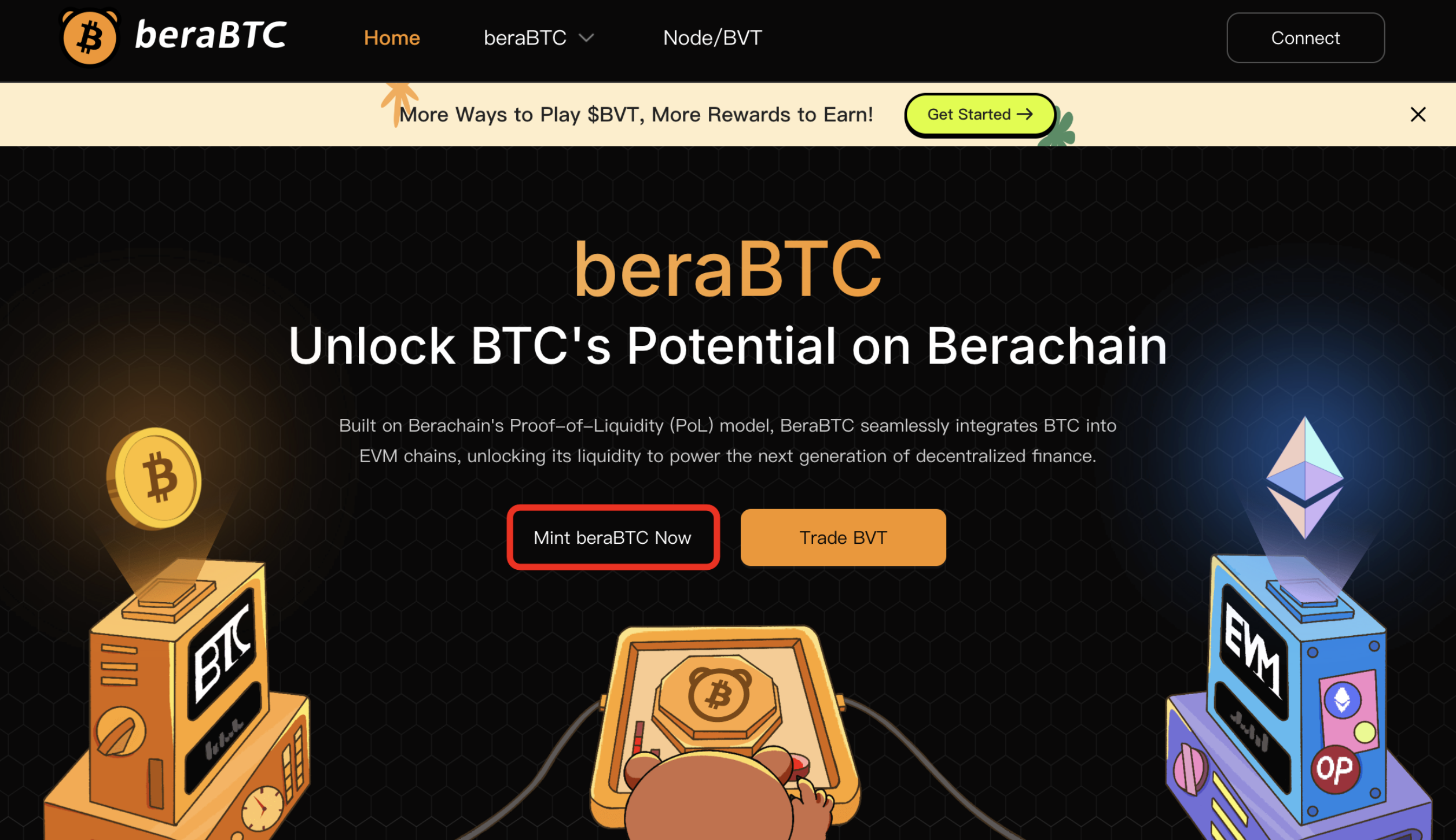
This is no longer a fantasy. A team called the Batoshi Foundation is turning this "on-chain micro-strategy" into reality. And the key to understanding all of this lies in their governance token: BVT .
BVT: Putting an "on-chain money printing machine" into a token
BVT represents a complete, transparent, and composable "on-chain version of MicroStrategy" system. It targets all the pain points we mentioned earlier.
- Transparent hoarding solves the "trust" problem : The system's cornerstone is beraBTC , an asset pegged 1:1 to Bitcoin on Berachain. Each beraBTC is backed by real BTC reserves, verifiable in real time, and redeemable at any time . This completely breaks down the audit black box of traditional models.
- BeraBTC is not just for storing Bitcoin; it flows into various DeFi applications and PoL incentive pools on the Berachain platform, automatically earning on-chain rewards such as BGT. Bitcoin truly becomes an "interest-bearing asset" here.
- The protocol will use a portion of the revenue from the beraBTC ecosystem (such as transaction fees and incentive sharing) to periodically buy back and burn BVT on the market. This directly creates sustained purchasing power and deflationary expectations for BVT.
- At the same time, holders can capture another portion of the on-chain revenue generated by the system by simply staking BVT.
Simply put, BVT is the value aggregation point and governance switch of this "on-chain Bitcoin treasury." The more active the ecosystem and the wider the use of beraBTC, the stronger the incentive to buy back BVT. Holding BVT is no longer gambling on an empty story, but investing in the core rights of the clear trend of " liberating on-chain productivity of Bitcoin ."
Recently, BVT made a key move: it officially launched on the trading platform Gate Alpha, becoming the first Berachain ecosystem asset to be listed on the platform .
This move sends a strong signal. It signifies that these on-chain native assets, based on clear economic mechanisms and possessing real yield logic, are entering the mainstream. They are moving from the circles of seasoned players to a broader market.
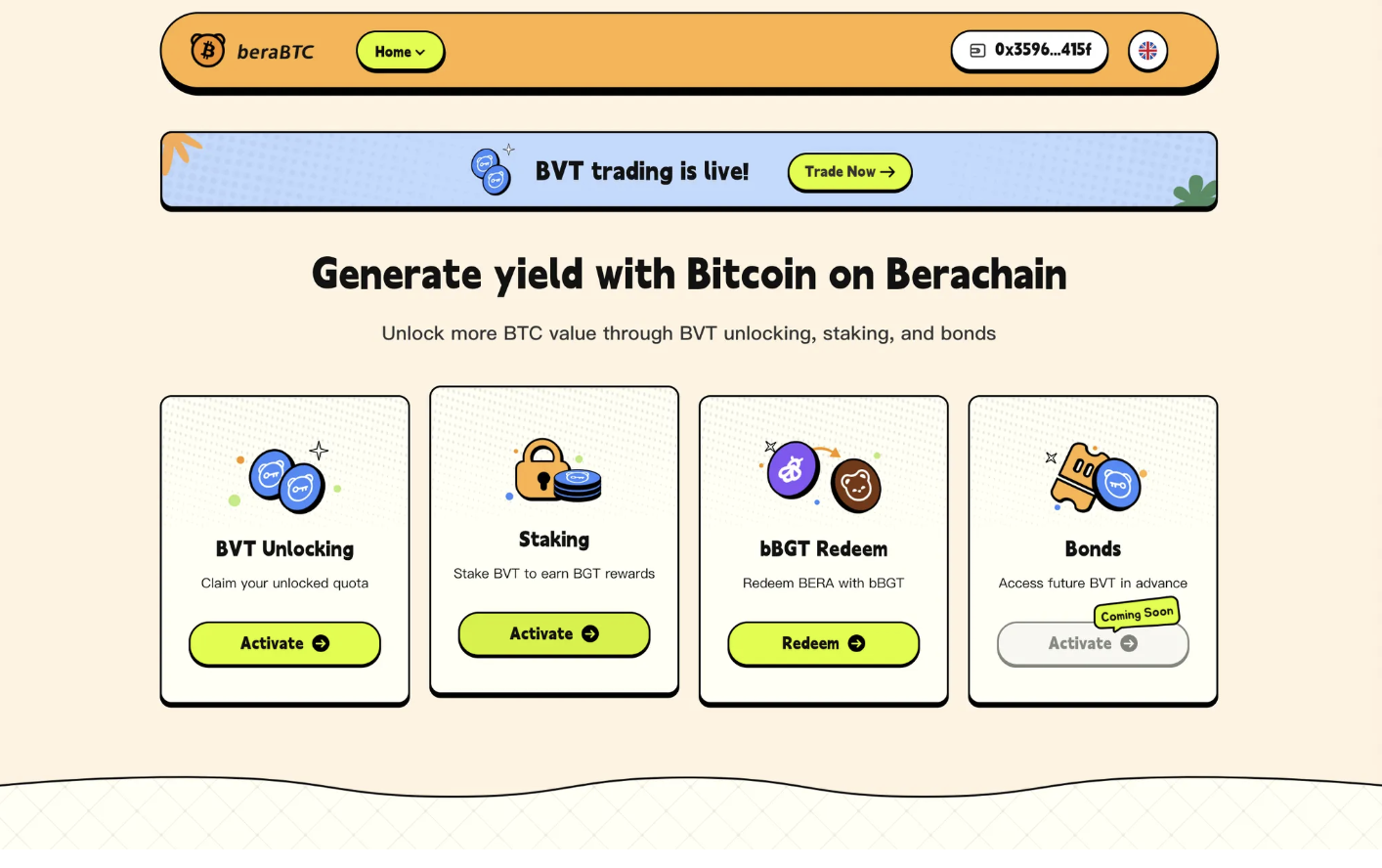
at last
MicroStrategy's unusual stock price movement is a concentrated tribute to Bitcoin's value within the old paradigm. BVT and the "on-chain micro-strategy" it represents, however, are attempting to answer the next question: Once we've reached a consensus on Bitcoin's value, how can we allow that value to grow and flourish in the digital age?
The story is gradually becoming clearer: Bitcoin's narrative is shifting from "how to hoard better" to "how to generate interest more intelligently." Each such paradigm shift gives rise to key infrastructure that carries new value.
🎉Let 's explore everything about beraBTC, BVT, and BearChain together .
Welcome to follow ⭐️ Batoshi