Is Bitcoin's quadrennial "carnival" going to be canceled? I've come up with something new.
These past two days, I've been scrolling through the crypto community's updates.
Everyone is talking about one thing:
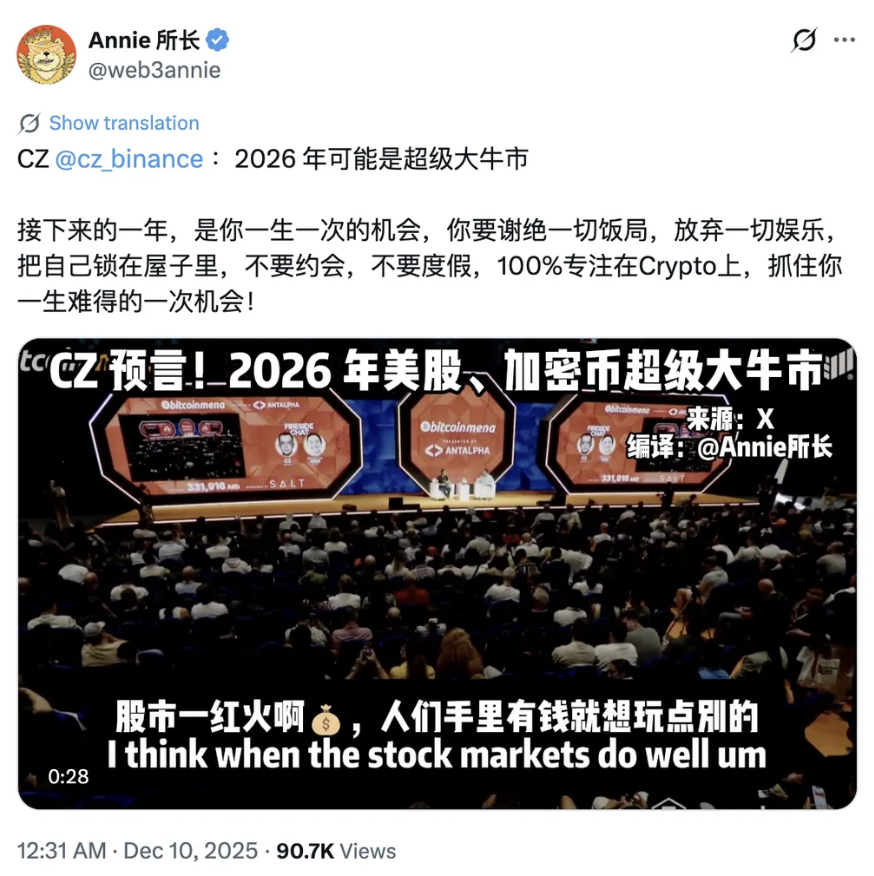
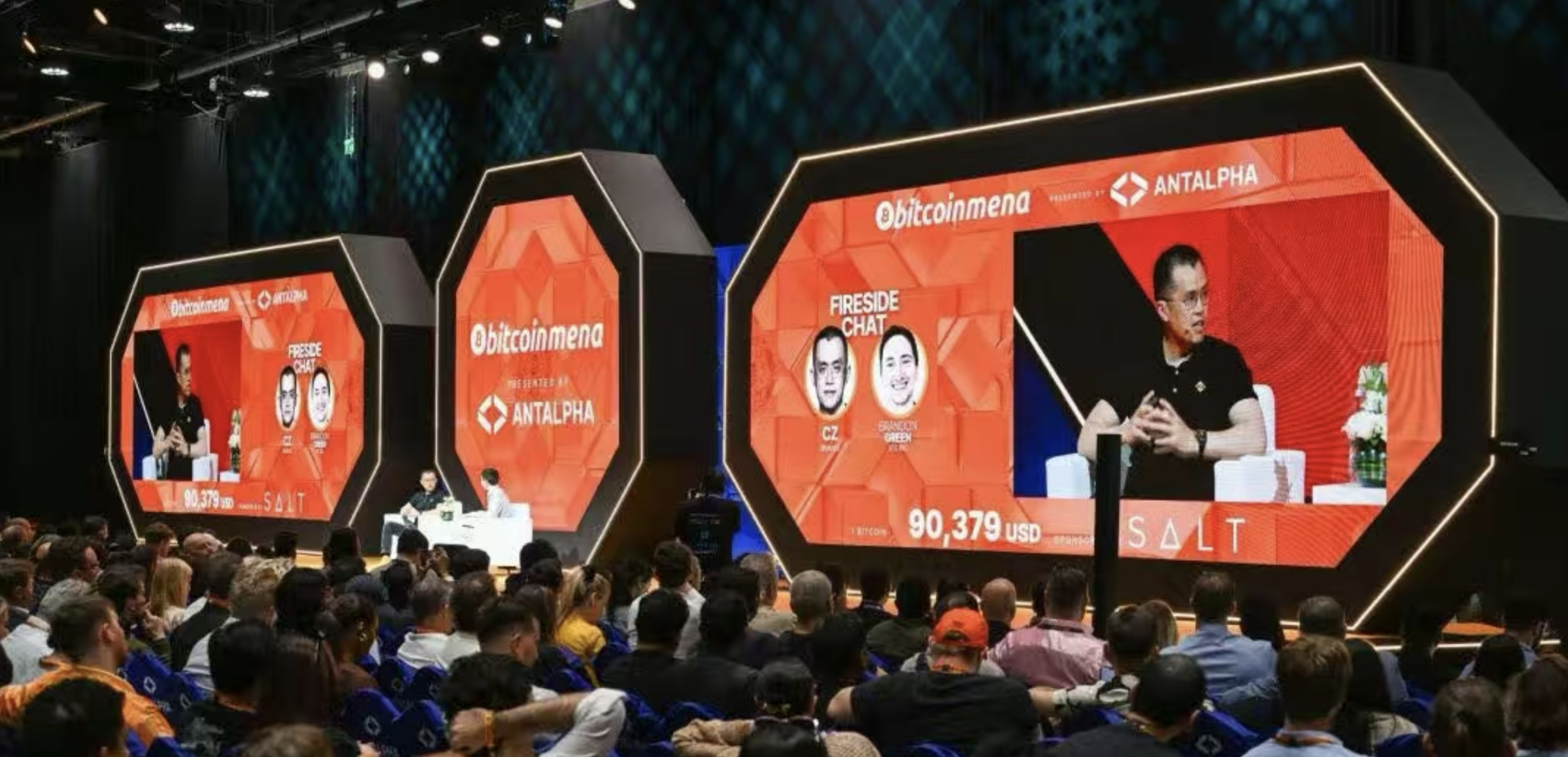
Binance founder CZ said that the "four-year cycle" that has been played out for more than a decade in the Bitcoin market may be coming to an end.
What "super cycle" will begin next?
When I saw it, I thought it sounded quite intimidating.
It's worth noting that the past three Bitcoin halvings have been incredibly punctual, almost like the World Cup, each followed by a price frenzy that sent prices soaring. Everyone's counting on this "four-year cycle" for their livelihood.
But this time, it seems a little different.
The 2024 halving has passed, and the price of Bitcoin did indeed reach a new high of $125,000 in 2025.
But what about the atmosphere team? Gone.
The market is unusually calm, lacking the previous nationwide frenzy of "if you don't buy now, it will be too late."
What's even stranger is that Bitcoin's market capitalization share has remained stubbornly around 59%, while the Altcoin that used to surge alongside their big brother have been relatively quiet this time.
Even CZ (Cai Xing) said that the cycle has "distorted." The data speaks for itself; the cycle is indeed getting longer and longer.
I wondered why this old script wasn't working anymore. Then I realized that the lead actor on stage had been changed.
The biggest variable is that the Bitcoin spot ETF has been approved.
BlackRock and JPMorgan Chase, these "whale" of the traditional financial world, have entered the market with real money.
Their approach to investing differs from that of retail investors; they have more money, are more patient, and prefer to hold onto their investments for the long term.
Their money acts like ballast, smoothing out the market's fluctuations.
These ETFs alone have accumulated over $50 billion worth of Bitcoin, becoming an "ironclad floor" supporting prices.
Looking at the broader context, the story has also evolved.
The staggering debt in the United States has led some to believe that Bitcoin could serve as a "backup tire for the financial system."
In the words of the BlackRock report, it is transforming from an “alternative answer” into part of a “systemic solution.”
Of course, new stories aren't without risks. Institutional funds aren't just flowing in and out; recently, ETFs saw outflows of over $500 million in a single day, indicating that the road ahead is still bumpy.
But no matter what,
One real change is that the game in the Bitcoin market is slowly shifting from a "flash" game where retail investors chase sentiment and gamble on cycles to a "long-term holding race" where institutions focus on value and test their endurance.
This raises a new question: when "holding it without moving" becomes the mainstream approach, can our Bitcoins stop lying around and start "working" and earning some returns?
This used to be quite difficult.
Bitcoin has a high status, but it's like a gold bar locked in a safe—difficult to move and impossible to take out to earn interest.
Previous solutions, such as wBTC, essentially created a "digital IOU" for the gold coin that could be used on the blockchain. However, this "IOU" itself was still centrally managed. Most importantly, the gold coin remained the same gold coin; it wouldn't "give birth" to other gold coins.
Until I studied the new public chain Berachain and discovered that it had implemented a mechanism called PoL (Proof of Liquidity), my thinking changed.
Simply put, when you contribute liquidity to this chain (like depositing money in a bank), the chain rewards you.
If Bitcoin can get in now, wouldn't it have a chance to "work and get paid"?
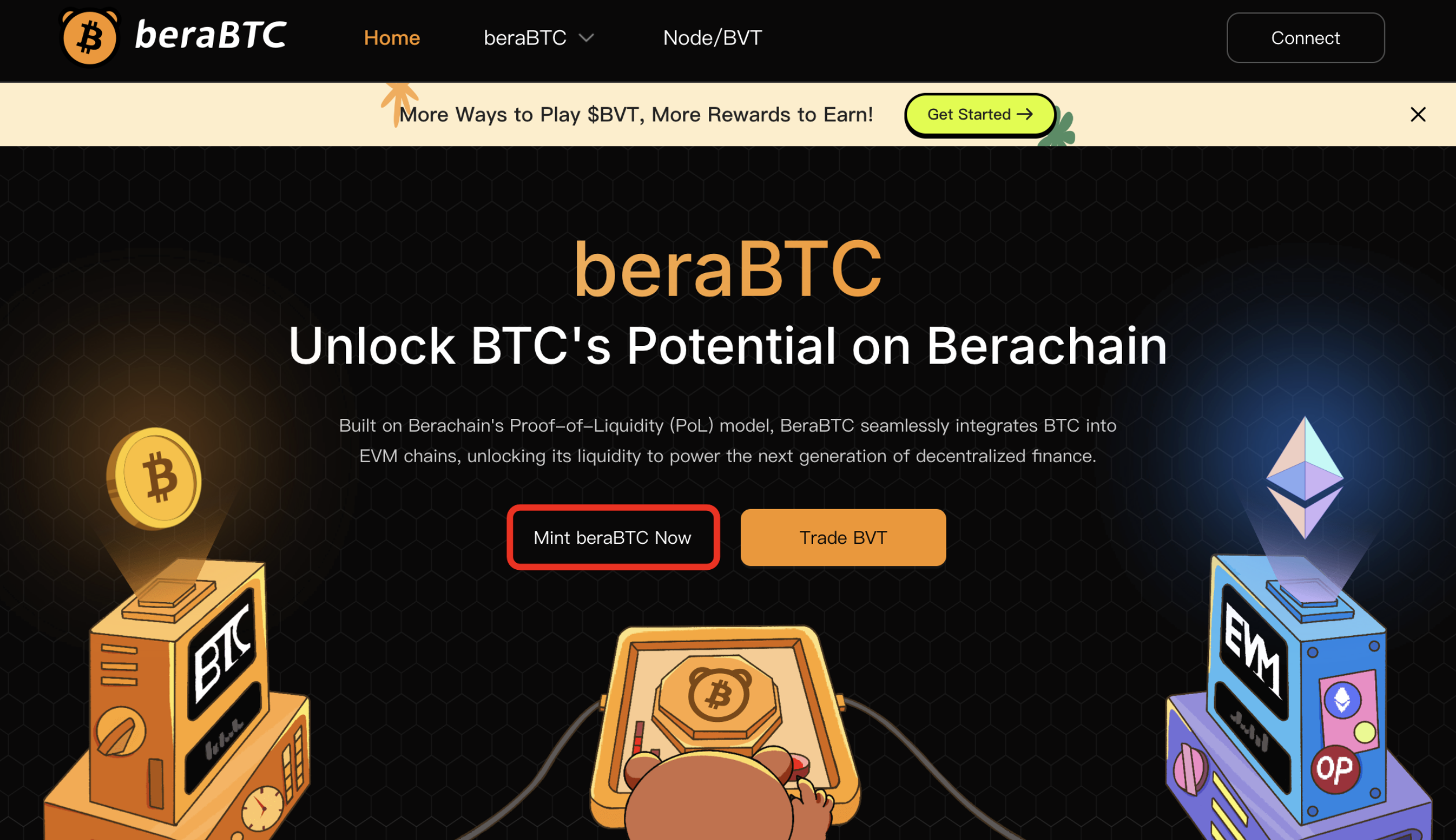
Following this line of thought, the Batoshi Foundation created beraBTC and BVT.
We can understand it this way: beraBTC is like a Berachain "work permit" and "salary card" for Bitcoin.
If you exchange your BTC for beraBTC at a 1:1 ratio, you can clearly see on the blockchain how much real Bitcoin is behind it.
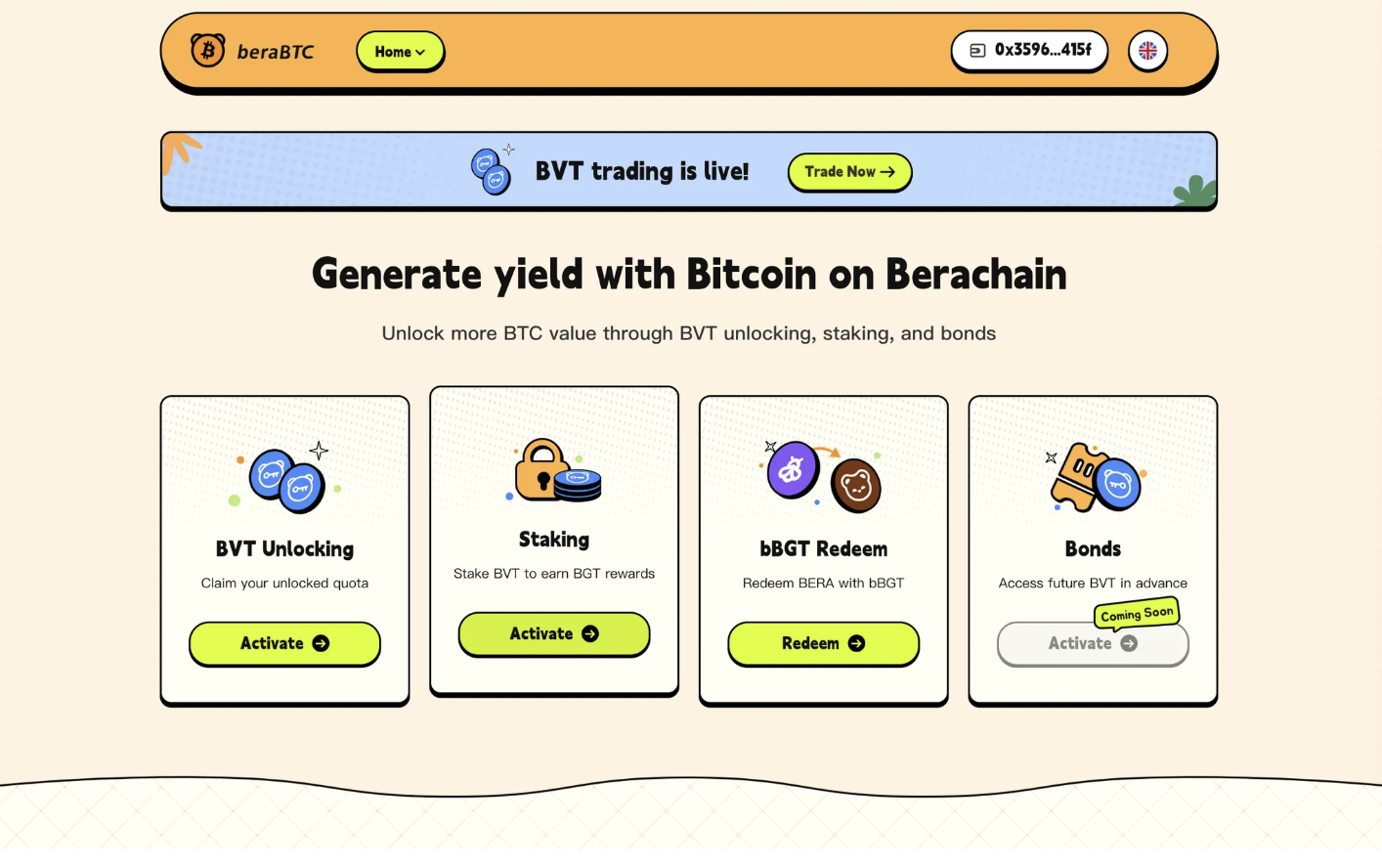
Here's the key point: when you use this "work permit" to participate in various DeFi activities within the Berachain ecosystem (such as providing liquidity), it will help you receive the chain's native rewards (BGT) based on your contributions.
What does this mean? It means your Bitcoin no longer needs to be passively held; it can now earn returns in a secure on-chain environment. Doesn't this perfectly address the anxiety of assets simply depreciating (or remaining stagnant) in the "long-term holding race"?
So what is BVT for? You can think of it as "shares" and "value savings" in this "Bitcoin working ecosystem".
BVT itself is not something to be spent.
Its value comes from the money earned by the entire beraBTC ecosystem. The more active the ecosystem is, the more beraBTC is used, and the resulting transaction fees and a portion of the rewards—these protocol revenues—will be periodically used to buy back BVT from the market and burn it.
This creates a transparent cycle: more people use beraBTC → the ecosystem earns more → more BVT is bought back and burned (reducing the quantity) → the remaining BVT becomes more valuable. Holding BVT is equivalent to holding a stake in this ever-growing "on-chain Bitcoin value pool".
Let's look back at what CZ said about the "super cycle".
At its core, isn't Bitcoin becoming more like gold and a long-term asset? In this new phase, simply waiting for the price to rise may not be enough.
The Batoshi Foundation's approach is like providing new equipment to participants in a "long-term holding race": using beraBTC to let your Bitcoin "work" and generate interest, and then using BVT to share in the profits of the entire "Bitcoin working ecosystem" growing and expanding. Doesn't this story sound more substantial than waiting for a "carnival" that only happens once every four years?
The story of the market is always unfolding. Perhaps it's time to explore new tools.
Want to try making Bitcoin "earn a salary" yourself? You can visit the official website berbtc.io to see how to mint beraBTC.
🎉Let 's explore everything about beraBTC, BVT, and BearChain together .
Welcome to follow ⭐️ Batoshi