In late 2025, OpenAI updated its image generation capabilities again, releasing the next-generation model, GPT Image 1.5, to the public. This release was not accompanied by aggressive visual hype, nor did it attempt to create a grand narrative of "the next disruption to the creative industry." Instead, OpenAI directly embedded this capability into the daily use of ChatGPT, making image generation a part of the conversational flow.
On the surface, this is still just a model upgrade: faster speed, stronger editing capabilities, and more stable understanding of instructions. However, if we consider the changes in the AI image field over the past year, we will find that the focus of GPT Image 1.5 is no longer simply "demonstrating generation capabilities," but rather an adjustment centered around usage methods and workflows.
AI image processing is moving from "being able to draw beautiful pictures" to "being able to be truly used in work," and this crucial step is often more significant in practical terms than the technological breakthrough itself.
GPT Image 1.5: How OpenAI Reimagined "AI Image Drawing"
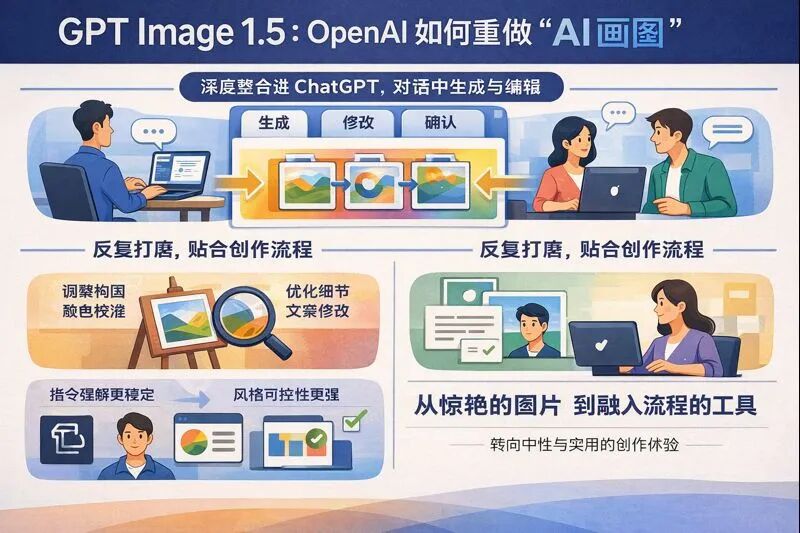
Image source: Generated by GPT Image 1.5
Before the advent of GPT Image 1.5, AI image generation had undergone several iterations. The model could produce high-quality images with increasingly diverse styles, but users quickly discovered in practice that generating a stunning image and seamlessly embedding it into a workflow were two completely different things.
The innovation of GPT Image 1.5 is first reflected in the restructuring of its product form. It is not a standalone drawing application, but is deeply integrated into the image function module of ChatGPT. The entire process of generating, modifying, and confirming is completed in the same dialog environment, eliminating the need for users to switch back and forth between multiple tools and saving cumbersome switching costs.
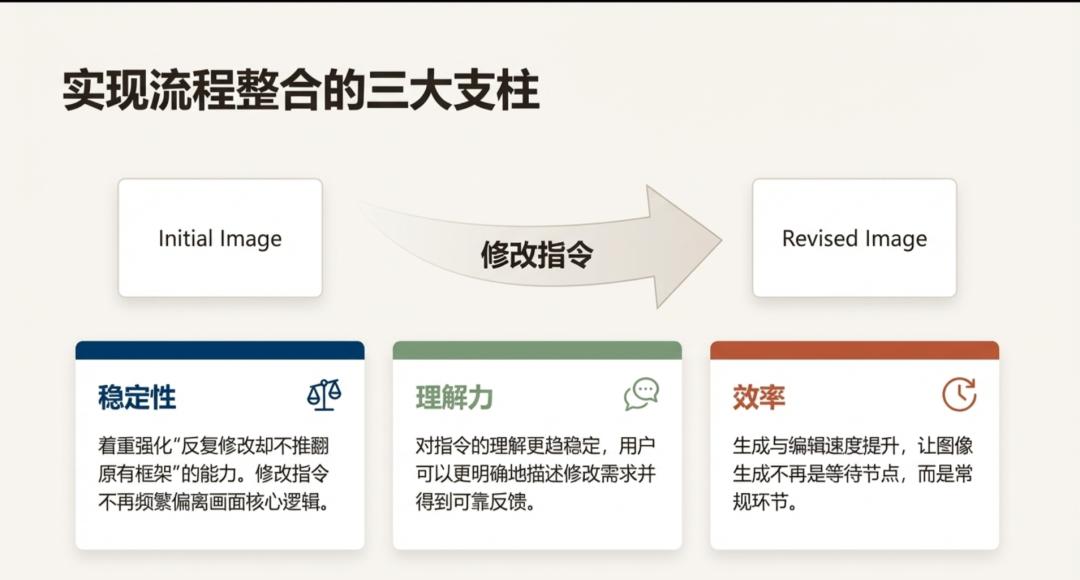
Behind this design lies OpenAI's profound understanding of real-world creative scenarios. In practice, images are never finished products in one go, but rather require a process of repeated refinement. Color calibration, composition adjustments, detail optimization, and text layout may all be continuously revised through multiple rounds of communication. GPT Image 1.5 emphasizes this stability of "repeated modifications without overturning the original framework."
Compared to earlier models, the new generation of image generation demonstrates more stable performance in command understanding. Users can more clearly describe their modification needs, and the model no longer frequently deviates from the original visual logic during execution. This is especially important for scenarios that require maintaining consistency in brand visuals, character portrayals, or instructional illustrations.
At the same time, the improved efficiency of generation and editing makes it easier to integrate AI images into daily work rhythms. When generation and modification are no longer obvious waiting points, images can become a regular part of the process, rather than an occasional auxiliary tool.
It's worth noting that GPT Image 1.5 doesn't deliberately emphasize any "signature style." It seems to intentionally restrain its expressiveness, instead pursuing a relatively neutral and controllable output. This choice may not be the easiest way to generate buzz, but it's closer to real-world usage needs.
In this respect, GPT Image 1.5 represents not a leap forward in visual capabilities, but rather a shift in product logic.
More Than Just Competition: Industry Choices Behind GPT Image 1.5 and Nano Banana
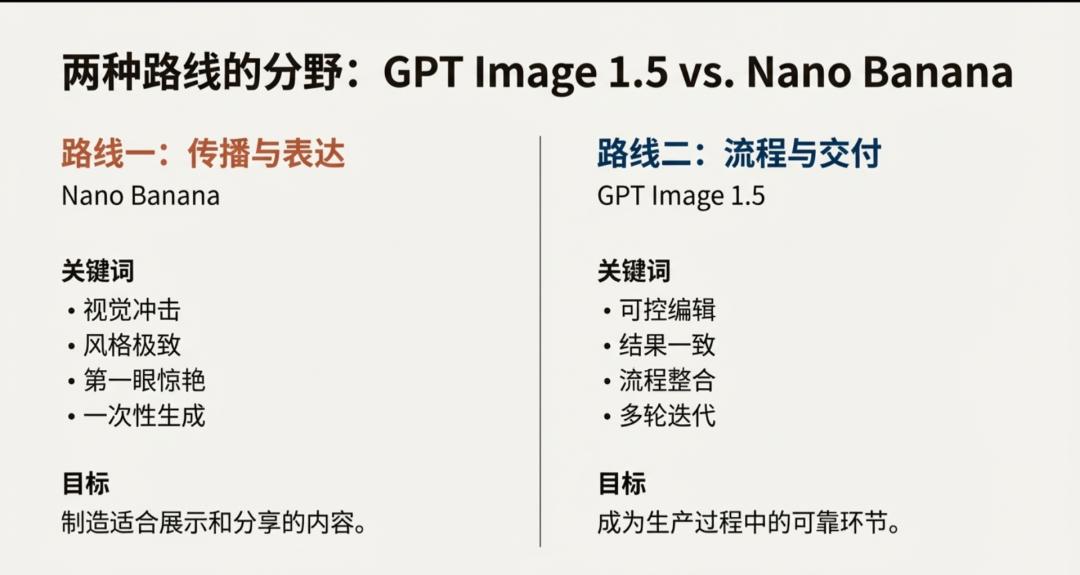
Placing GPT Image 1.5 within the current competitive landscape of AI image processing makes its positioning clearer.
Over the past year, Google's Nano Banana image generation model has garnered significant attention on overseas tech media and social media platforms. Its generated images are highly distinctive in their visual impact and stylistic representation, with many quickly going viral. This type of model excels at creating "eye-catching" images, making them ideal for display and sharing.
However, in practical use, this advantage comes with obvious trade-offs. A superior one-time generation doesn't mean it's suitable for repeated modifications. For tasks requiring multiple rounds of adjustments, partial editing often means regenerating, which is not inexpensive.
This is not a flaw in any particular model, but rather a result of the chosen approach. One approach emphasizes visual expression itself, pursuing aesthetic tension and dissemination efficiency; the other approach focuses more on the role of images in the production process.
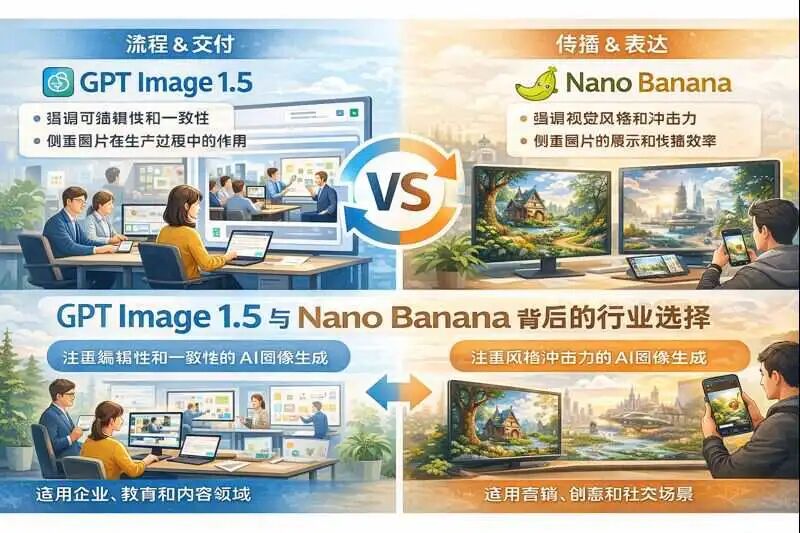
Image source: Generated by GPT Image 1.5
GPT Image 1.5 clearly belongs to the latter category. It doesn't attempt to achieve the ultimate in single-image quality, but rather focuses on editability and consistency. The generated results may not strive for a strong style, but are easier to modify, reuse, and extend.
This difference is particularly evident in product usage. For display-oriented needs, strong style models remain attractive; however, in enterprise, content organization, or educational settings, images often need to be constantly adjusted to adapt to different channels and stages.
From this perspective, GPT Image 1.5 and Nano Banana are not simply competitors, but rather represent two directions in AI image generation: one leans towards dissemination and expression, while the other leans towards process and delivery.
As AI image processing gradually moves towards large-scale applications, its importance is being increasingly amplified.
From Idea to Classroom: The Impact of AI Images Entering the Deliverable Phase
When AI images begin to have the ability to be stably modified and consistently output, their impact is no longer limited to the creative industry.
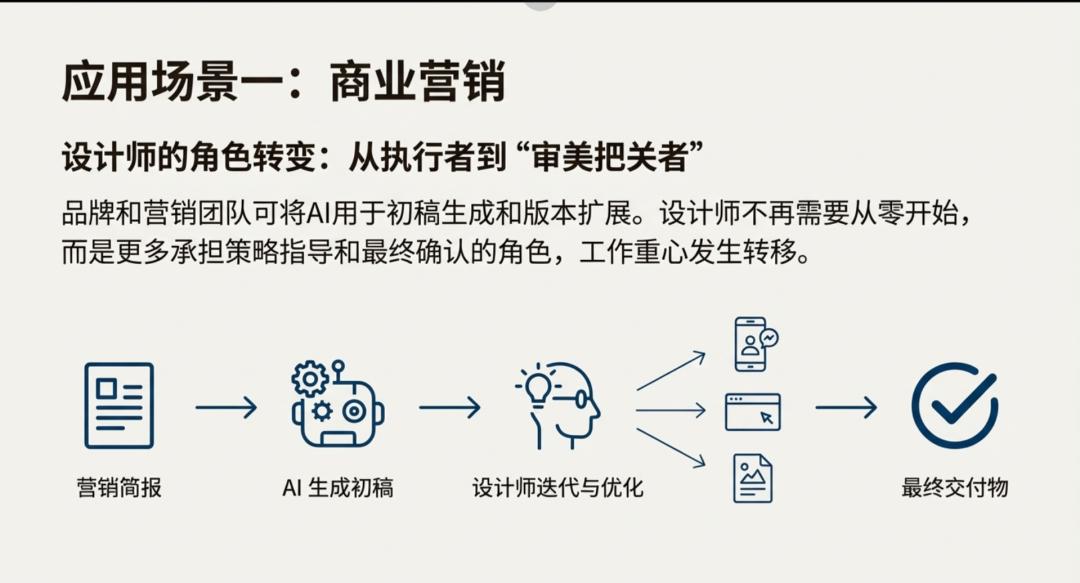
In commercial settings, brand and marketing teams have begun using AI-generated images for initial draft generation and version expansion. Designers no longer need to create every piece of material from scratch, but instead take on a greater role in aesthetic oversight and final approval. This shift does not signify a decline in the value of design, but rather a change in the focus of the work.
A similar logic is gradually emerging in the field of education.
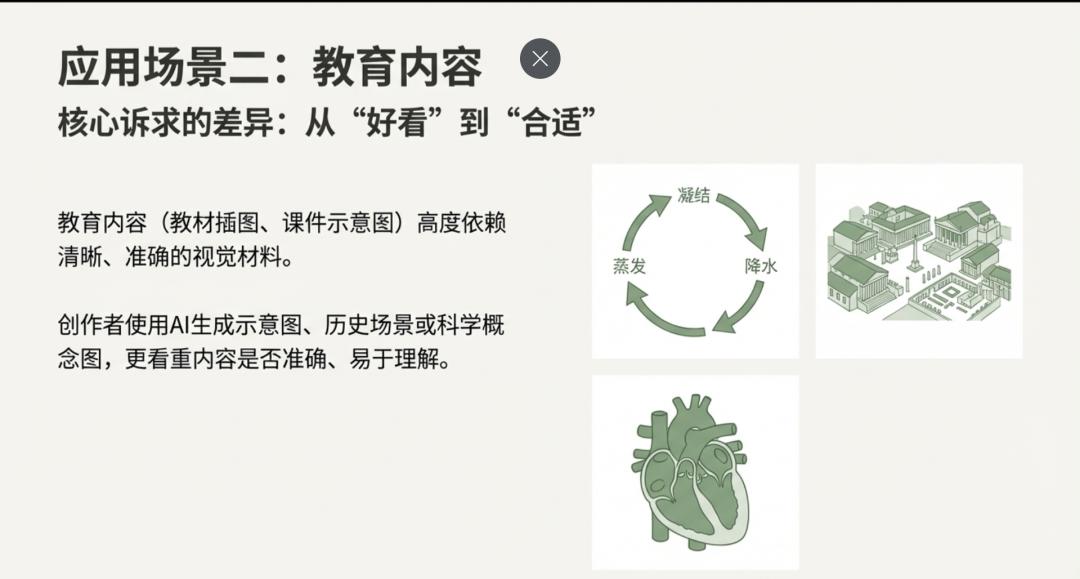
Educational content has long relied heavily on visual materials. Whether it's textbook illustrations, courseware diagrams, or supplementary visuals in online courses, they all need to be clear, accurate, and easy to understand. Unlike commercial creativity, the requirement for visual effects in education is not "good-looking," but "appropriate."
In recent years, some teachers and educational content creators have begun to experiment with AI image generation tools to create diagrams, historical scene reconstructions, or scientific concept maps. These applications do not pursue complex artistic styles, but rather focus on the accuracy and ease of understanding of the content.
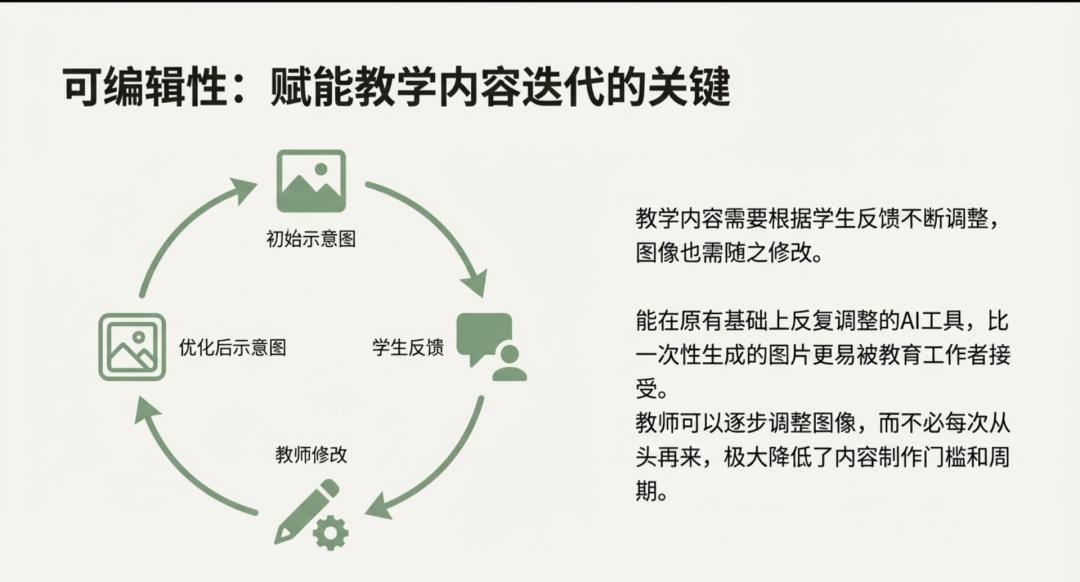
In this process, editability becomes particularly important. Teaching content often needs to be adjusted based on student feedback, and images also need to be modified accordingly. Compared to images generated in one go, AI tools that can be repeatedly adjusted based on the original content are more readily accepted by educators.
GPT Image 1.5's emphasis on stable modification capabilities makes it somewhat adaptable to educational scenarios. Teachers can gradually adjust the image content according to teaching needs, rather than generating it from scratch each time. This lowers the barrier to entry for production and shortens the content preparation cycle.
Of course, this doesn't mean AI images will replace teachers or educational content creators. On the contrary, increased image production efficiency may allow more energy to be devoted to instructional design and the content itself. AI will play a tool role, not a decision-making role.
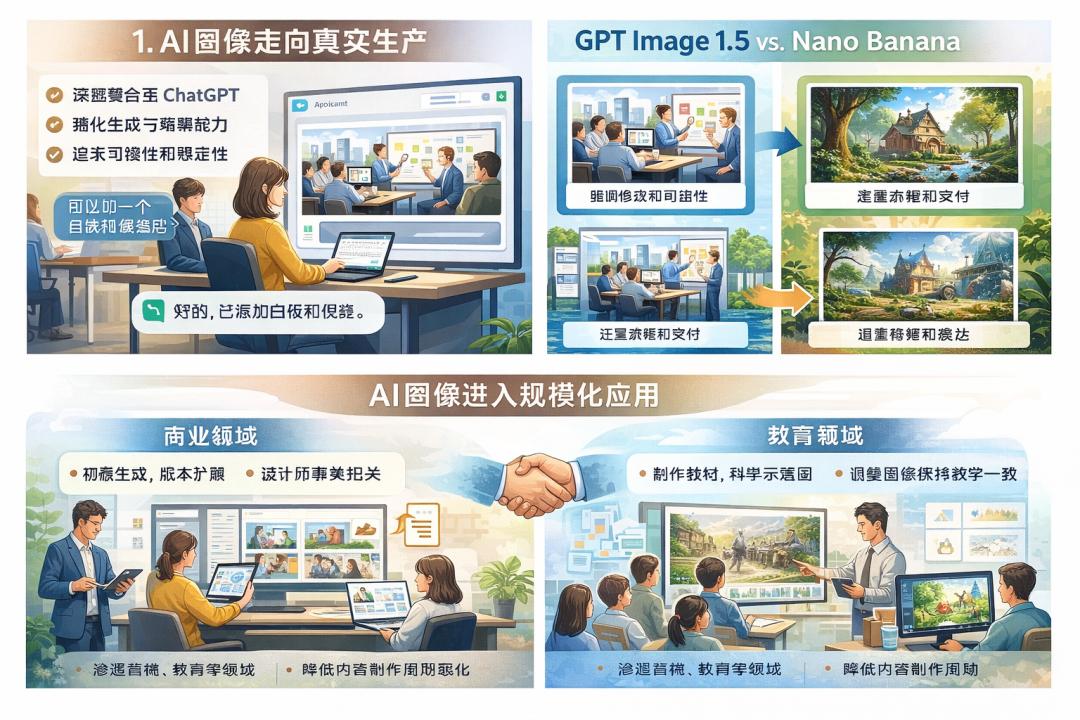
Image source: Generated by GPT Image 1.5
From business to education, GPT Image 1.5 embodies a similar trend: AI images are moving from "display capabilities" to "production resources." This change is not sensational, but it is profound enough.
This means that AI images are no longer just about generating a decent-looking picture, but are beginning to participate in real-world workflows, taking on the responsibility of being reusable and modifiable.
In this sense, GPT Image 1.5 is not trying to create a visual revolution, but rather is more pragmatically answering a question: when AI images truly enter the production stage, how should they exist?
This article is from the WeChat public account "Duojing" (ID: DJEDUINNO) , author: Ciyue, and published with authorization from 36Kr.