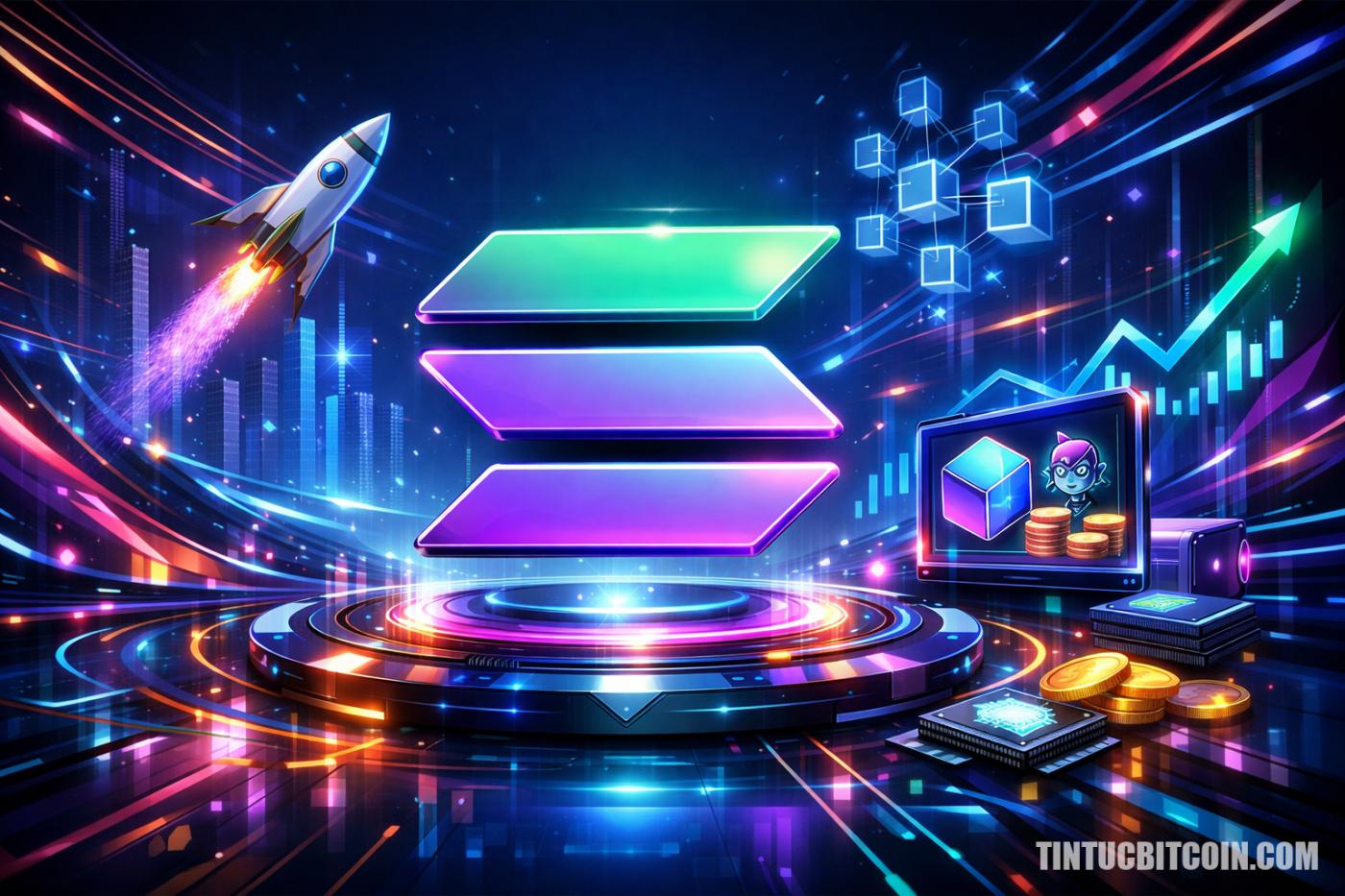
In 2026, Solana (SOL) is expected to enter a major upgrade phase, focusing on sub-1-second finality and resource optimization, thereby increasing its direct competitiveness with Ethereum (ETH) and the L2 ecosystem.
After transforming from a non-EVM chain into a formidable competitor in 2024–2025, Solana is preparing core-level changes to improve both performance and decentralization. The two main directions are upgrading the Alpenglow consensus mechanism and introducing a new Token standard based on SIMD-0266.
- Alpenglow aims to reduce transaction completion times to 100–150 milliseconds and lower validator costs.
- SIMD-0266 (P- Token) can reduce resource consumption by up to 98% and free up more Block space for other transactions.
- Both upgrades could boost on-chain activity and indirectly impact demand for SOL within the ecosystem.
Alpenglow is the biggest overhaul in Solana history.
Alpenglow is expected to be deployed in the first half of 2026 and represents the most profound change to the core Solana protocol to date, aiming for a finality of 100–150 milliseconds and optimized consensus mechanisms.
According to the original content, the Solana community overwhelmingly voted 98% in favor of this upgrade in September 2025. The related analysis is cited in the CARD tag: Solana
Alpenglow's most prominent goal is to reduce transaction completion times from approximately 12.8 seconds to 100–150 milliseconds, roughly 100 times faster. The original text compares this figure to even being faster than the Medium Google search time of around 200 milliseconds, and significantly outperforming Visa or Mastercard.
At peak-
Solana: 3,200 TPS, $0.006 fees
Base: 1/10 throughput, 500× the cost
Ethereum: 1/100 throughput, 10,000× the costThere's really only one viable chain for internet capital markets
(yes that's a log chart) pic.twitter.com/NZM7dwxytf
— Mary Gooneratne (@marygooneratne) October 11, 2025
This upgrade introduces two new components, Votor and Rotor, to replace the current proof-of-history and Tower BFT mechanisms. Another significant change is moving validator voting to off-chain, reducing costs and freeing up space for user transactions.
Sub-second finality unlocks a near-real-time experience for applications such as decentralized exchanges, games, and payments, making dApps responsive like traditional web services. In the original context, this makes the Solana blockchain suitable for virtually any type of financial operation imaginable.
Alpenglow also aims to lower the barrier to entry for smaller validators by eliminating voting transaction fees. The original text states that approximately $20 million in equivalent value is currently required to operate a profitable Solana validator.
The P- Token and SIMD-0266 standards could make Solana 10 times more resource-efficient.
SIMD-0266 proposes replacing the current SPL Token Program with a P- Token architecture, aiming to reduce resource consumption by up to 98% and increase Block utilization efficiency across the network.
SIMD-0266 is described as an “Efficient Token Program, ” a formal proposal to transition from the SPL Token program to the P - Token architecture. The related article is linked in the CARD tag: Solana
According to the original content, the P- Token can free up nearly 12% of Block Space for other transactions, thereby increasing effective throughput. This is because about 10% of the Block 's compute units are currently consumed by Token program commands, so this optimization has an impact on the entire network.
The P- Token design is described as having no heap allocation, zero-copy data access, and full backward compatibility, allowing clients to replace it without modifying the code. The proposal is currently undergoing a security audit and will require validator governance approval before activation. Estimates in the original document suggest the P- Token could "go live" in the second half of 2026.
How might the price of Solana (SOL) in 2026 be impacted by upgrades?
If Alpenglow and SIMD-0266 are implemented as expected, they could become powerful catalysts for on-chain activity, making Solana more attractive thanks to higher bandwidth and lower transaction fees.
The original text suggests that both upgrades will boost on-chain activity on Solana. As processing capacity increases and costs decrease, Solana could become "more attractive than Ethereum" in use cases requiring speed and cost efficiency.
Beyond performance, the demand factor for SOL is also emphasized: SOL is the underlying asset used within the ecosystem, so increased network usage can lead to increased demand for SOL ownership. Simultaneously, major upgrades often create a positive psychological effect, spreading to dApps on Solana in a way that supports ecosystem operations.
Frequently Asked Questions
When is Alpenglow expected to launch and what are the biggest improvements?
According to the original document, Alpenglow is expected to take place in the first half of 2026, with the prominent goal of reducing transaction completion time from approximately 12.8 seconds to 100–150 milliseconds, while optimizing the voting costs of validators.
How does SIMD-0266 (P- Token) make the Solana network "lighter"?
SIMD-0266 proposes replacing the SPL Token Program with a P- Token, which could reduce resource consumption by up to 98% and free up nearly 12% of Block Space. The original text also states that approximately 10% of the Block 's compute units are currently used by the Token program, so this optimization has a network-wide impact.
Why might these upgrades affect demand for SOL?
The original text argues that as performance increases and fees decrease, on-chain activity can scale, making Solana more attractive and indirectly increasing demand for SOL as the ecosystem's native Vai , while also improving market sentiment around the Solana dApp.