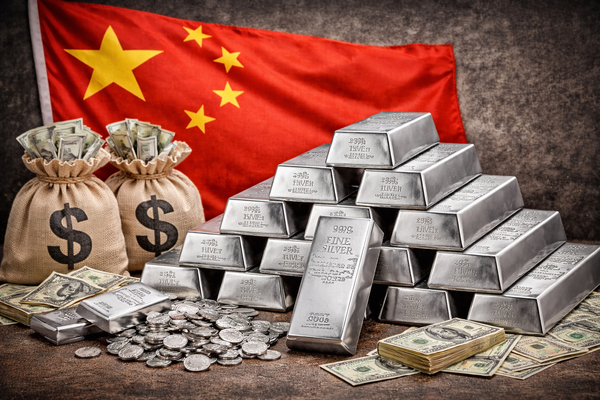
China's move to impose export controls on silver on New Year's Day is creating tension in the global raw materials market. China, which has been using rare earth elements as diplomatic and trade leverage amid the US-China conflict, is now seen as elevating silver to a strategic resource, strengthening its negotiating power.
According to the South China Morning Post (SCMP) and CNBC on the 1st, the Chinese government officially implemented export controls on silver, tungsten, and antimony starting that day.
The core of the new regulations is a comprehensive strengthening of silver export practices. The system has been changed from a quota system to one requiring government review on a case-by-case basis. Furthermore, the qualification requirements for exporting companies have been significantly strengthened. Annual production must exceed 80 tons (40 tons in the western region), and applicants must have exported continuously for the past three years to be eligible for review.
The market is noting that this measure represents a structural change beyond simple administrative regulation. While tungsten and antimony are already strategic minerals managed by China, silver has been classified as a general mineral. Some believe that this export control effectively adds silver to the list of national strategic resources. This suggests that a management system similar to that for rare earth elements could be applied to silver.
Silver is a safe-haven asset, but it's also a key material essential for cutting-edge industries like solar panels, semiconductors, and electric vehicles. Last year, silver prices soared by over 160%, significantly outperforming gold, which rose by about 60% over the same period. Against this backdrop, China, the world's second-largest silver producer after Mexico, is tightening export restrictions, potentially exacerbating global supply instability.
Experts interpret this measure as part of China's long-term strategy of gradually expanding the scope of strategic minerals and leveraging raw materials as a diplomatic and trade tool. With silver now included in the controls, following rare earth elements, there are also warnings that the entire global industrial supply chain could become more sensitive to Chinese policy changes.
Ultimately, silver is no longer simply a precious metal, but is now positioned as a "strategic asset" at the intersection of geopolitics and industrial strategy. The market is watching closely to see what impact China's decision will have on global silver prices and related industries.