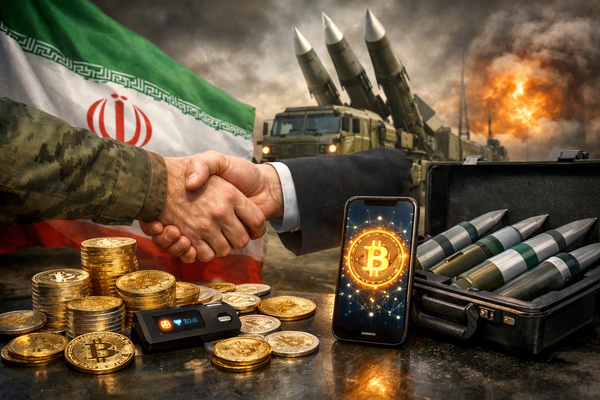
Iran has been emphasizing cryptocurrency as a means of payment for advanced weapons exports. This represents a public display of its intention to utilize digital assets to circumvent the dollar and international payment networks, which are blocked by international sanctions. This signal suggests that cryptocurrencies could expand beyond civilian payments into international military transactions.
According to the Financial Times (FT), Iran has proposed accepting cryptocurrency as a means of payment for the sale of advanced weapons systems, including ballistic missiles, drones, and warships, to foreign governments. The government also offered to allow for barter and payments in Iranian rial.
This proposal is interpreted as a strategy to evade Western financial sanctions and surveillance to facilitate the transaction. It seeks to actively leverage the characteristics of cryptocurrency, which allows for settlement without using the SWIFT (Society for Worldwide Interbank Financial Telecommunications) network or US dollar payments. The Financial Times noted that this is a rare case of a state publicly proposing cryptocurrency payments for strategic arms transactions.
Market observers believe this movement could accelerate the "geopolitical instrumentalization" of cryptocurrencies. While some states and non-state actors have already used digital assets to evade sanctions, offering them as an official payment option within regular arms export channels carries a distinct ramification. In particular, some argue that combining them with weapons systems in high demand in conflict zones, such as drones and missiles, could have a significant impact on the international security environment.
At the same time, regulatory authorities' response has become inevitable. If cryptocurrencies are used for national military transactions, existing anti-money laundering (AML) and sanctions enforcement systems could face limitations. It's possible that major countries are strengthening stablecoin regulations and blockchain tracking technology, reflecting these security risks.
This incident demonstrates that cryptocurrencies have moved beyond mere investment assets to impact international order and security. We are entering an era where the proliferation of digital assets is not only driving financial innovation but also acting as a geopolitical variable.