Author: Hotcoin Research
introduction
On December 30, 2025, Lighter's TGE once again brought the Perp DEX track into the spotlight, and also marked the end of the competition for on-chain perpetual contracts in 2025: At the beginning of the year, Hyperliquid dominated, occupying more than 70% of the market share; in the second half of the year, with the rise of new Perp DEXs with their own characteristics, such as Aster, Lighter, and EdgeX, Hyperliquid's market share dropped to about 20%, and it entered a new stage of comprehensive competition in technology, capital, incentives and real demand.
This article will begin by examining the background and development of the Perp DEX sector, analyzing the market landscape and key data performance in 2025. It will then review and analyze five representative Perp DEX protocols: Hyperliquid,Aster , Lighter , EdgeX, and Paradex, providing a comprehensive analysis from various dimensions, including background teams, technical architecture and functionality, token economics, and market data and performance. Furthermore, it will explore the potential risks and opportunities in the sector and forecast trends for 2026.
I. Background and Development History of Perp DEX
The early on-chain derivatives market was very small. Centralized exchanges (CEXs) have long dominated derivatives trading, offering excellent user experience, deep liquidity, and one-stop service. However, their centralization has also created risks: the industry turmoil of 2022-2023, especially the collapse of giants like FTX, made users increasingly aware of custody risks and the hidden dangers of opaque operations. This prompted funds and traders to seek decentralized alternatives, which laid the demand foundation for the explosive growth of the Perp DEX sector.
However, performance bottlenecks have consistently constrained the development of on-chain perpetual contracts: on-chain matching and settlement are often limited by blockchain throughput and latency, resulting in high slippage and insufficient market depth. To overcome this, early projects explored various paths: for example, dYdX was based on an order book but utilized off-chain matching (now migrated to an independent chain), while GMX adopted an on-chain multi-asset pool market-making model, providing perpetual trading but with liquidity limited by pool size. Although these pioneers proved the feasibility of on-chain perpetual contracts, they failed to truly shake up centralized exchanges in terms of trading experience and scale.
The development of Ethereum Layer 2 and application chains in recent years has laid the foundation for high-performance contract exchanges, raising latency and throughput to unprecedented levels. Hyperliquid has built an independent Layer 1 public chain specifically designed for derivatives, while EdgeX, Paradex, and others have achieved on-chain trading experiences in seconds or even sub-seconds using Layer 2 technologies such as StarkWare. These are further enhanced by incentive mechanisms such as transaction mining and airdrop points to attract users.
The Perp DEX sector entered a period of rapid iteration in 2024-25. In 2024, Hyperliquid took the lead, with its HYPE token airdrop and buyback program driving a surge in locked value and trading volume, at one point capturing 80% of the on-chain perpetual market share. In 2025, with the launch of several new platforms and their adoption of aggressive market strategies, Hyperliquid's monopoly in the Perp DEX sector was broken, officially entering a phase of fierce competition among numerous players.
II. Current Status and Data Performance of the Track in 2025
In 2025, the overall scale of on-chain perpetual contract trading experienced a significant leap. Monthly perpetual contract trading volume exceeded $1 trillion, rapidly increasing its share of the crypto derivatives market. On-chain perpetual contract trading volume at one point accounted for one-tenth of centralized exchanges, beginning to pose a substantial challenge to centralized giants. In particular, during the extreme market conditions on October 11th, the on-chain DEX handled $19 billion in position liquidation within a short period while maintaining overall stability. These data demonstrate that Perp DEX has grown from a niche testing ground into an indispensable part of the derivatives market.
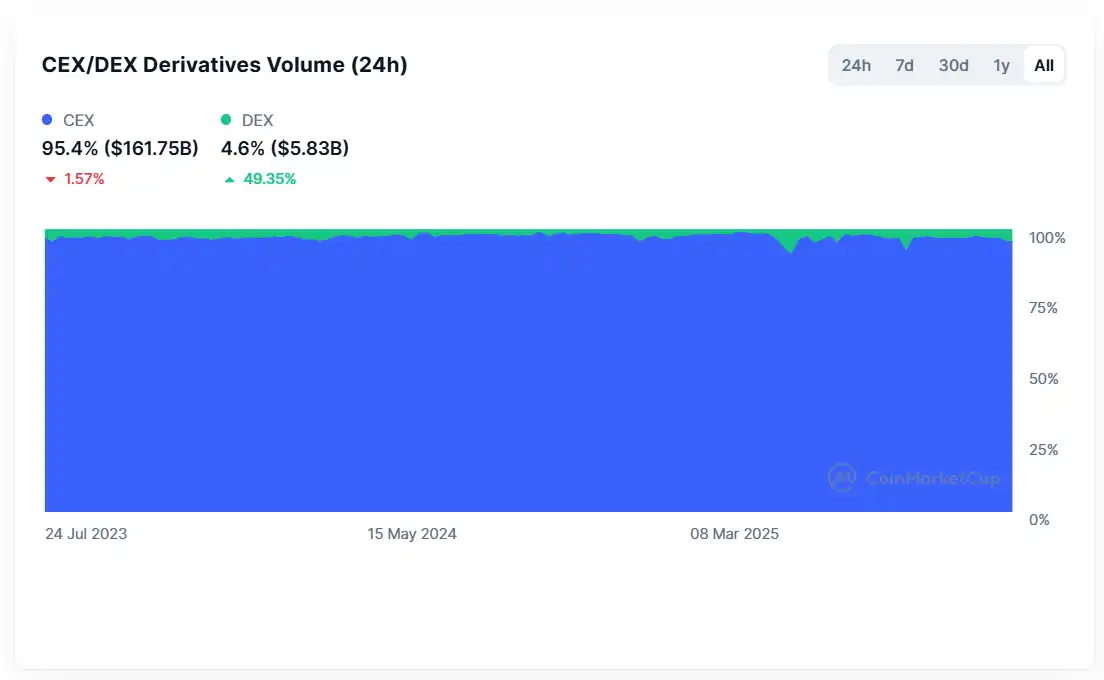
Source: https://coinmarketcap.com/charts/derivatives-market/
In terms of market structure, Hyperliquid firmly held the top spot in the first half of the year, accounting for approximately 70% of on-chain perpetual transaction volume. However, with the entry of newcomers in the second half, its market share declined continuously. According to data analysis on Dune, by the end of December, Hyperliquid's transaction volume share across the entire network had dropped to 17%. This was replaced by a new landscape of multiple strong players vying for dominance: Lighter quickly attracted a large number of high-frequency traders with its zero-fee strategy, achieving a 20% share in December; Aster gained a 15% market share through continuous incentives and Binance support; and EdgeX, emphasizing stability and professionalism, also secured about 10% of the market. Furthermore, newcomers such as Paradex, GRVT, and Pacifica further eroded the remaining share, weakening the dominance of the leading platforms. It can be said that the competition for users and liquidity among established and new Perp DEX platforms in the second half of 2025 intensified.
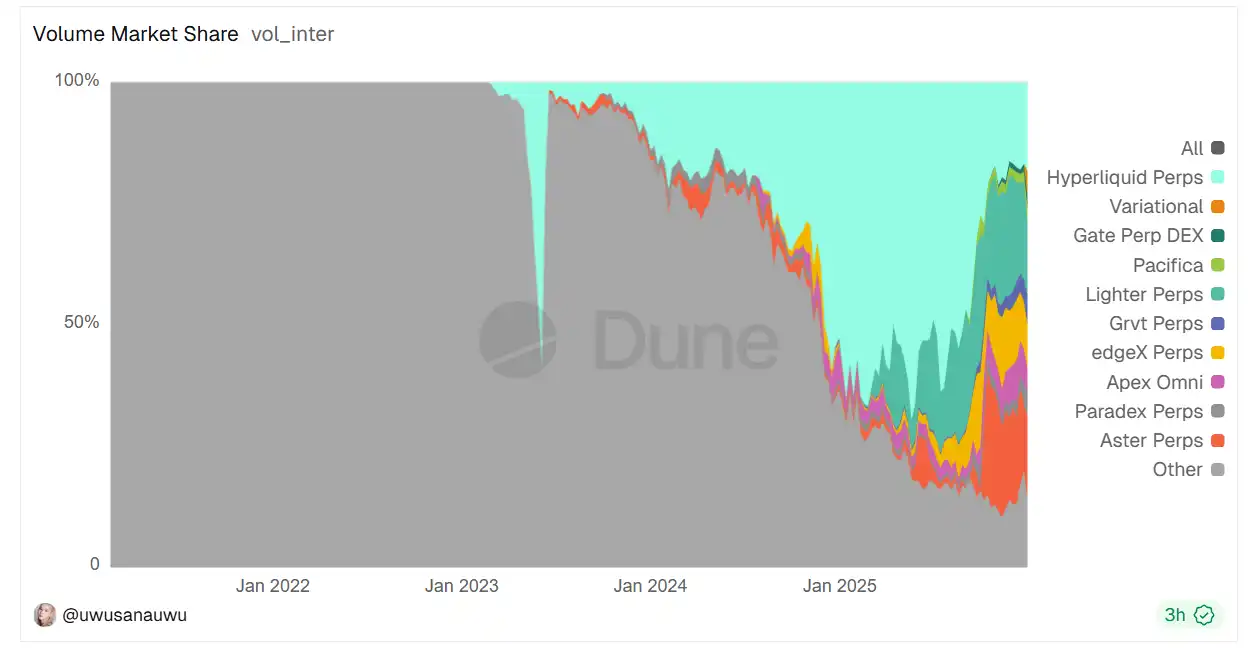
Source: https://dune.com/uwusanauwu/perps
However, looking at the Open Interest (OI) metric, data as of the end of December shows that Hyperliquid remains the undisputed leader in OI, with approximately $7.5 billion in open interest, accounting for 49% of the total OI across the four major platforms. This indicates that nearly half of the on-chain real-money positions remain with Hyperliquid. It is evident that Hyperliquid maintains a structural lead in trading depth and capital accumulation, while the massive trading volumes of newcomers like Aster and Lightner are largely driven by incentive-driven frequent wash trades rather than long-term capital investment.
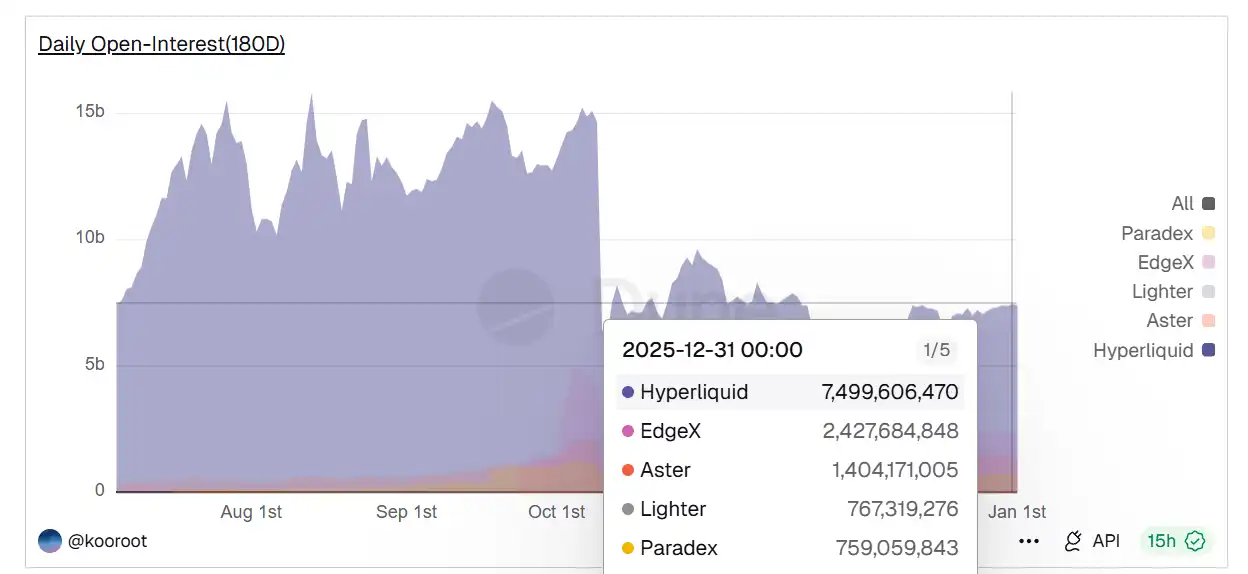
Source: https://dune.com/kooroot/top5-perpdex-comparison
In terms of revenue and profitability, the differentiation within the industry is equally evident. Since many new platforms adopt zero-fee or high-rebate strategies, actual fee revenue better reflects their "cash-generating" ability. Besides Hyperliquid, EdgeX is one of the few projects that has achieved sustainable high revenue: its monthly fee revenue exceeds $20 million, with an annualized revenue of approximately $250 million, second only to Hyperliquid. Platforms like Paradex and Extended have also shown some revenue potential. However, platforms like Lighter, which use zero-fee models to seize market share, have almost no fee revenue. Although their short-term trading volume has topped the charts, their protocol revenue is zero, and their profit model still needs to be validated after airdrops. It is clear that some new platforms are trading capital for market share, and whether they can truly establish commercial sustainability remains questionable.
III. Perp DEX Protocol Inventory
Based on trading volume and open interest, the current top 5 protocols in the Perp DEX sector include Hyperliquid, Aster, Lighter, EdgeX, and Paradex. Below, we will analyze the performance of these five representative Perp DEX protocols from different dimensions, including background team, technical architecture and functionality, token economics, market data, and performance.
1. Hyperliquid — The King of On-Chain Derivatives
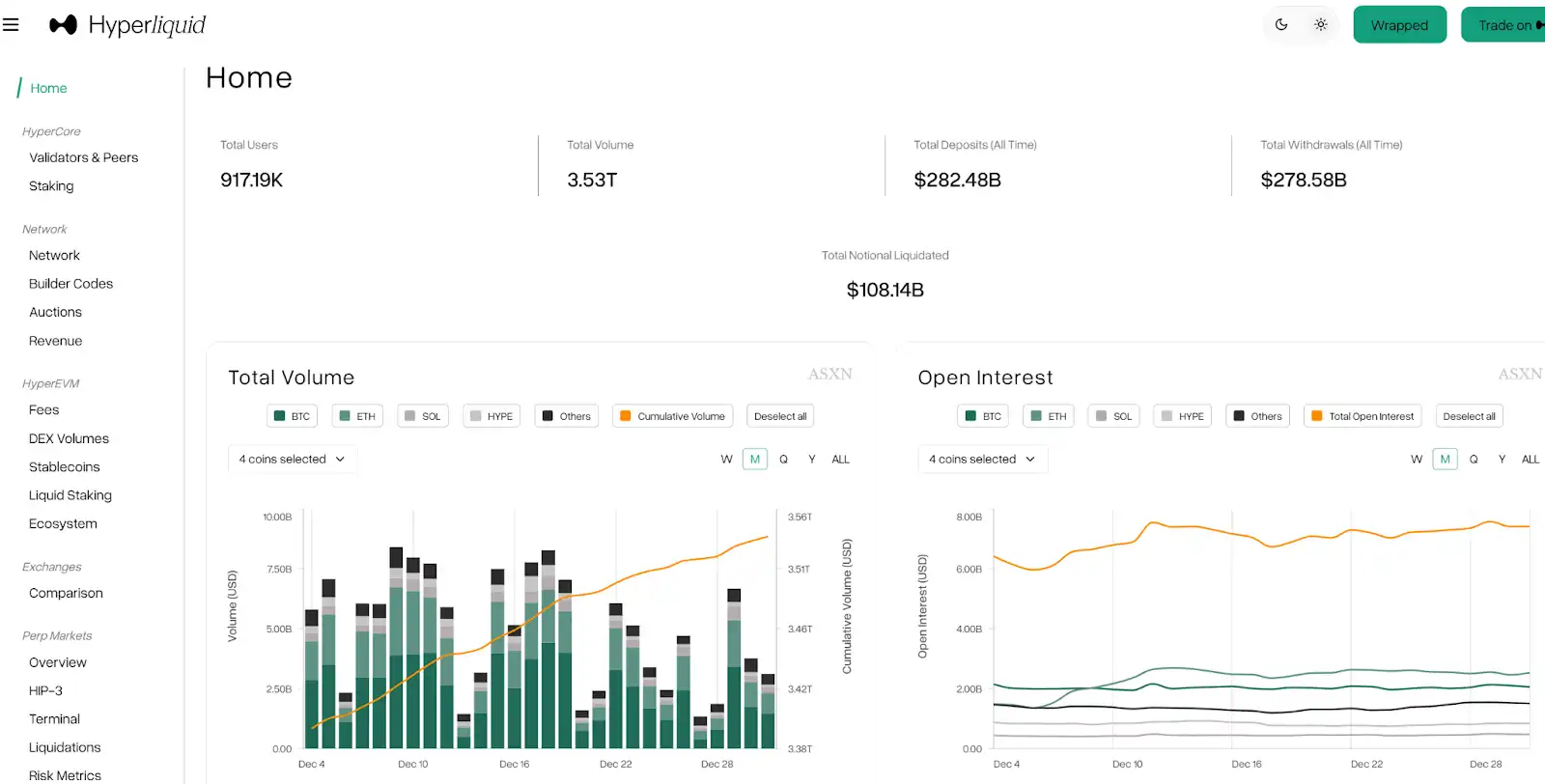
Source: https://wrapped.hyperscreener.asxn.xyz/summary
Background and Team: Founded in 2023 by Jeff Yan, Hyperliquid started with a team of only 11 people, yet within two years, it created a phenomenal on-chain derivatives platform. Hyperliquid was entirely self-funded and adhered to a community-driven approach. This self-reliant development method is rare in the crypto, but it earned Hyperliquid a reputation for being "decentralized and native." The project didn't engage in much market hype when it launched in July 2023, only gradually gaining public attention in 2024 through a large-scale airdrop and impressive data.
Product Features and Technology: Hyperliquid's biggest differentiator lies in its self-developed dedicated blockchain, theoretically capable of 200,000 transactions per second with sub-second order confirmation latency. Hyperliquid deploys all core modules such as Central Limit Order Book (CLOB) matching and clearing on this high-performance chain. Users experience a Binance-like interface and matching efficiency on the front end, but the underlying settlement is completely decentralized and requires no KYC. Furthermore, Hyperliquid plans to launch the general-purpose smart contract platform HyperEVM to support more applications. The officially promoted HLP vault plays a market-making role on the platform: participating in a large number of transactions as a counterparty and earning a portion of the transaction fees, funding fees, and clearing revenue. Currently, its TVL exceeds $390 million. This model effectively enhances platform liquidity and user stickiness, creating a win-win cycle for retail investors and market-making funds.
Token Economics and Incentives: Hyperliquid's governance token, HYPE, was airdropped in early 2024 with a highly community-centric distribution. 70% of the tokens were reserved for the community (airdrops, mining, etc.), and the platform pledged to use all transaction fee revenue to buy back and burn HYPE, directly translating protocol growth into token value support. This model led to a rapid expansion of HYPE's market capitalization after its launch. By the end of 2025, HYPE's circulating market capitalization was approximately $8.2 billion, ranking 15th among cryptocurrencies.
Data and Performance: Although Hyperliquid faced challenges in trading volume share in the second half of 2025, it remained firmly in the top tier based on key quality metrics. The platform's 24-hour trading volume consistently ranged between $3 billion and $10 billion; its open interest consistently accounted for more than half of the entire network. In terms of trading depth and liquidity, Hyperliquid's BTC perpetual contracts could accommodate approximately $5 million in positions within a ±0.01% spread. Regarding stability, the Hyperliquid platform has not experienced any major technical incidents to date, even during the October liquidation peak. Overall, Hyperliquid demonstrated its deep-rooted dominance in 2025: despite being overtaken in trading volume by newcomers, its leading position remains unshakeable thanks to its solid technology, genuine liquidity, and healthy economic model.
2. Aster — A Soaring Stock and a Crisis of Trust
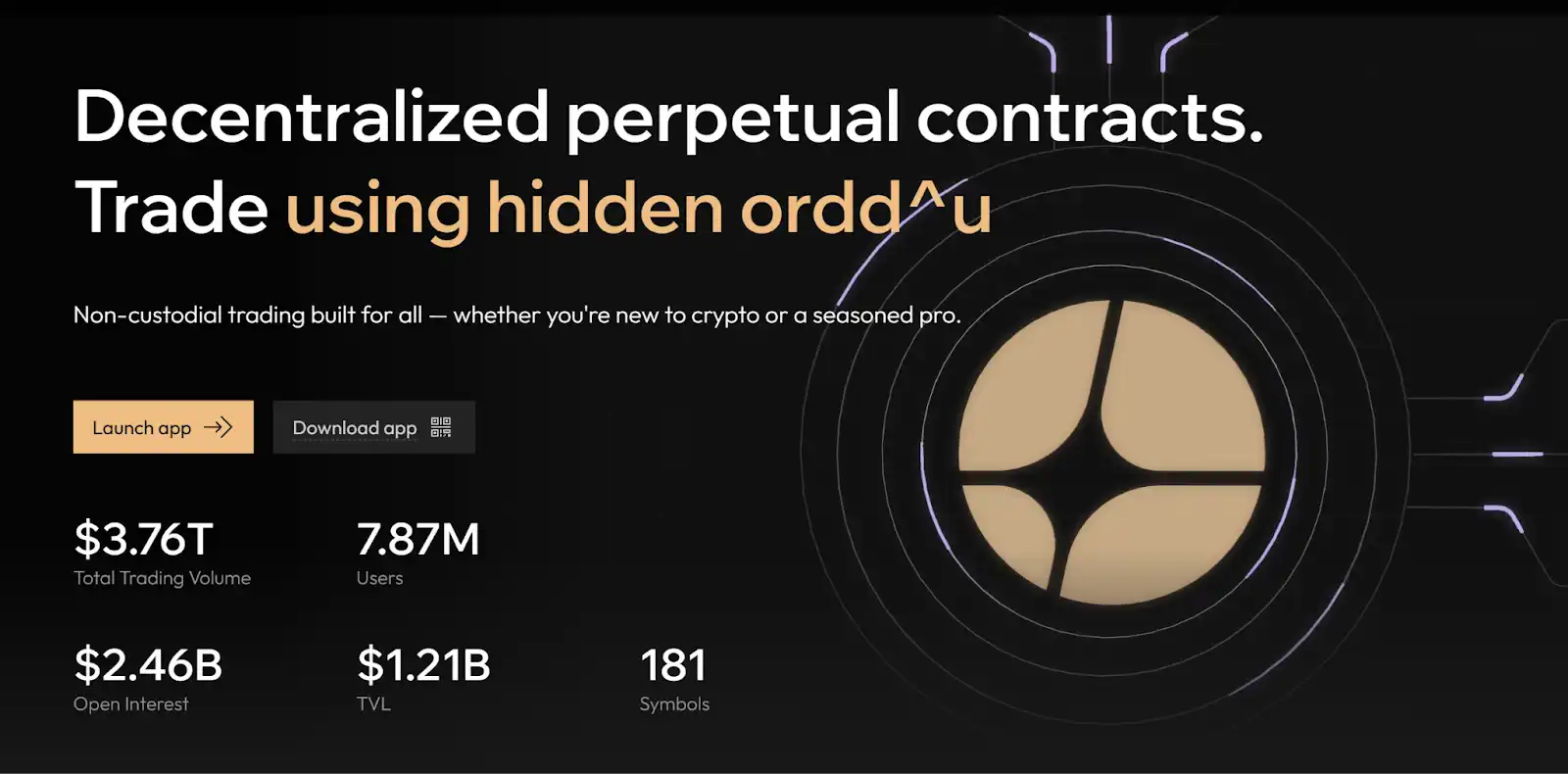
Source: https://www.asterdex.com/
Background and Team: Aster is a multi-chain perpetual contract exchange launched in early 2025, formed by the merger of Asterus and APX Finance. YZi Labs provided early support, and CZ (Center for Alibaba's blockchain platform) repeatedly promoted Aster on social media. This gave Aster a strong initial profile. Its goal is to create a high-speed derivatives platform supporting deployments on multiple chains, including BNB Chain, Ethereum, Arbitrum, and Solana, allowing users to trade assets across different chains without cumbersome cross-chain procedures.
Product Features and Technology: Aster certainly has commendable aspects in its product offerings. Firstly, its multi-chain deployment: it provides trading ports on chains such as BNB Chain, Ethereum , Arbitrum , and Solana , allowing users to trade across chains through a unified account without the hassle of switching chains. Secondly, Aster offers an astonishing leverage of up to 1001x, as well as advanced features such as hidden orders, catering to the needs of high-risk investors. Furthermore, its planned Aster Chain is a dedicated chain based on zero-knowledge proofs, which enhances transaction privacy and efficiency. Simultaneously, Aster allows users to participate in yield farming with a portion of their collateralized assets, and position margin can also earn interest, improving capital utilization efficiency.
Token Economics and Incentives: The total supply of ASTER tokens is 8 billion, with 53.5% allocated to airdrops, 30% to the ecosystem and community, and 5% to the team. Originally designed for monthly unlocking by the ecosystem, the continuously increasing circulating supply created persistent selling pressure. In October, the Aster team announced a revision to the token economics, delaying the unlocking of a large number of tokens originally scheduled for 2025 to the summer of 2026 or even 2035, but the market seems unconvinced. Currently, the ASTER token price is fluctuating around $0.7, a significant drop from its peak.
Data Performance and Controversy: In September 2025, Aster launched mainnet and token ASTER. Its token price surged from its initial offering price of $0.08 to $2.42 within a week, a 2800% increase. The platform's daily trading volume also climbed to $70 billion in a short period. From late September to early October, Aster briefly captured over 50% of the market share thanks to its frenzied trading activity, becoming a true dark horse. Many investors saw Aster as the next Hyperliquid, hoping it would replicate its success. However, on October 5th, the authoritative data aggregation platform DeFiLlama announced the removal of Aster data, citing "the discovery that its trading volume was almost perfectly synchronized with Binance, indicating serious anomalies." Furthermore, Aster refused to provide DeFiLlama with its backend trading data to prove its innocence. On-chain tracking revealed that 96% of ASTER tokens were concentrated in 6 wallets, and its trading volume/OI ratio was as high as 58, clearly caused by frequent wash trading. After the news broke, the price of ASTER coins plummeted by more than 10% that day, and its brand reputation was questioned.
3. Lighter — A disruptive technology with zero transaction fees
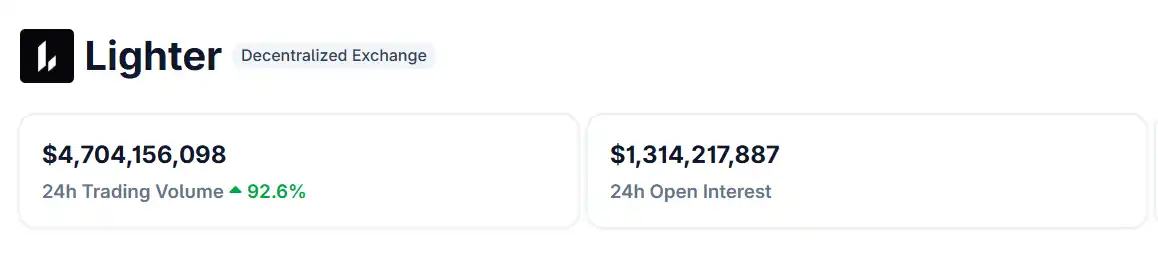
Source: https://www.coingecko.com/en/exchanges/lighter
Background and Funding: Lighter emerged as a dark horse in the on-chain perpetual blockchain race in 2025. Founded by former Citadel hedge fund engineers, its core team is backed by top-tier investment institutions such as Peter Thiel, a16z, and Lightspeed, raising $68 million in its seed round and achieving a post-money valuation of $1.5 billion. This strong capital backing provided Lighter with ample development resources in its early stages. On October 2, 2025, Lighter officially launched. The name "Lighter" signifies a "lighter and faster trading experience," reflecting the team's technical strength and ambition.
Product Features and Technology: Lighter is built on ZK Rollup, fully leveraging the security of the Ethereum mainnet while achieving scalability through Layer 2. A key technological highlight is its use of zero-knowledge proofs for cryptographic verification of every transaction, ensuring transaction data privacy and validity. A solution provided by StarkWare is used to accelerate proof generation, enabling the platform to achieve high-frequency matching while ensuring security. Furthermore, Lighter features a unique "escape pod" mechanism: if the L2 platform itself fails, users can withdraw funds from Layer 2 back to the mainnet via a pre-deployed smart contract, preventing funds from being trapped for extended periods. Overall, Lighter's technological approach is bold, aiming to achieve a significant performance leap without compromising security and decentralization.
Token Economics and Incentives: The token $LIT will be TGE on December 30, 2025. 50% will be allocated to the ecosystem (25% of which has already been directly airdropped, redeemed at a 1:20 exchange rate with tokens), and the remaining 50% will go to the team and investors (with a vesting lock-up period). Protocol revenue will be used to buy back LIT or as ecosystem incentives, aiming to align the interests of the community and the project in the long term. As of January 3, 2026, the latest price is $2.50, with a circulating market capitalization of $650 million and a FDV of $2.6 billion.
Market Performance and Controversy: Lighter adopted an aggressive zero-fee strategy to attract users. Whether placing orders or taking orders, transaction fees were all 0%, with protocol revenue coming entirely from HFT and market makers. In terms of results, Lighter's zero-fee policy was indeed effective. Within just a few weeks of launch, the number of users surged to over 56,000, and daily trading volume stabilized at $7-8 billion. A large influx of arbitrageurs and quantitative trading teams flooded the market, propelling it to the top of the on-chain DEXs in terms of trading volume. However, Lighter's Vol/OI ratio once reached over 8, meaning that most funds were frequently opened and closed for repeated use, rather than held for extended periods. Once the airdrop ended, this speculative flow could recede instantly. This highly aggressive expansion also tested the stability of the Lighter system. In mid-October, the platform experienced a downtime of approximately 4 hours, during which users were unable to place orders or withdraw funds. Lighter's LLP liquidity pool suffered a loss of about 10%, exposing shortcomings in system stability and risk control under extreme market conditions. In addition, the platform experienced UI lag and minor bug reports during peak hours, which affected the user experience to some extent.
4. EdgeX — Institutional-grade, robust exchange
Source: https://www.edgex.exchange/
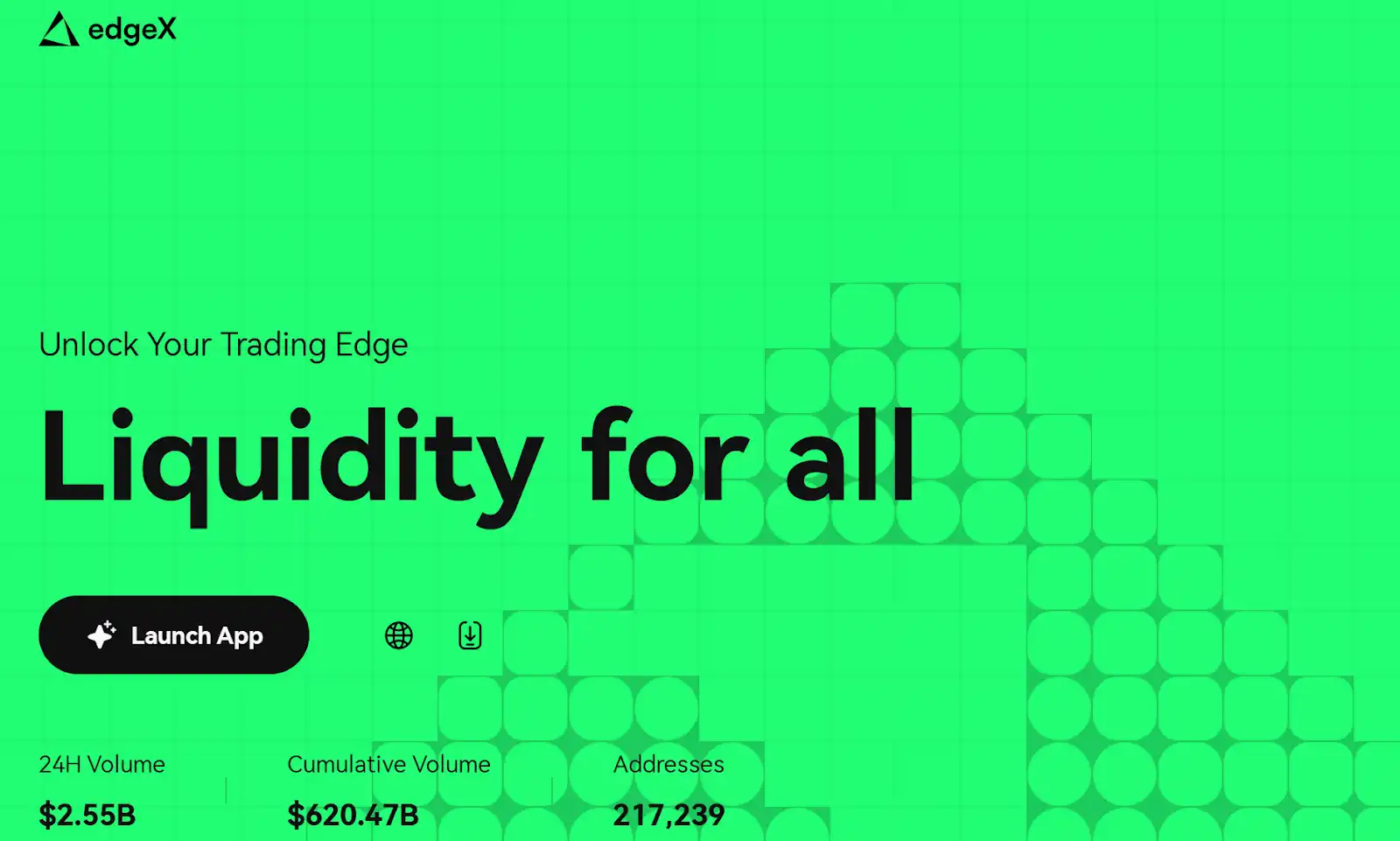
Background and Team: EdgeX is a professional perpetual contract platform incubated by Amber Group, a leading Asian crypto financial institution, and launched in September 2024. EdgeX has a strong TradFi background and was built by a team of experts proficient in institutional services. Amber Group, a veteran market maker with $5 billion in assets under management, not only provided seed funding but also injected strong liquidity support and market operation capabilities into EdgeX, attracting attention from the institutional community and the Asian market from the moment it launched.
Product Features and Technology: EdgeX is built on StarkWare's StarkEx engine, employing a hybrid model of centralized matching and decentralized settlement: order matching is executed on StarkEx, and transaction results are packaged and recorded on the blockchain. EdgeX's main selling points are low fees and deep liquidity, with its transaction fees generally slightly lower than Hyperliquid: 0.012% for pending orders (HL is 0.015%), and 0.038% for takers (HL is 0.045%). In terms of liquidity, thanks to the support of Amber Group, the order book depth and spreads on the EdgeX platform are exceptionally good. Data shows that within ±0.01%, EdgeX BTC perpetually can accommodate $6 million in positions (better than HL's $5 million), and slippage on various mainstream trading pairs is generally lower than its competitors. Furthermore, EdgeX places great emphasis on mobile experience: the official iOS/Android app integrates MPC wallet technology, allowing users to use it without memorizing seed phrase, significantly lowering the barrier to entry.
Token Economics and Incentives: EdgeX has not yet issued a platform token, EGX. To compensate for the disadvantage of not having a token, EdgeX has designed a trading points reward mechanism, but it is relatively transparent and restrained. The distribution of these points is clearly defined: 60% from trading volume, 20% from referrals, 10% from TVL/LP, and 10% from liquidation/OI, with a public statement that it will never reward wash trading. User expectations for the future EGX token are also relatively rational. The community predicts that EdgeX will allocate approximately 20-35% of its tokens on TGE to points holders.
Market Data and Performance: EdgeX's performance in 2025 was commendable, aptly described as "steady growth." According to CoinGecko data, EdgeX's 24-hour trading volume was approximately $2.5 billion, and its open interest (OI) was approximately $1.3 billion, ranking fourth among Perp DEX platforms. Although its market share in trading volume was only 5-6%, EdgeX's annualized revenue was approximately $500 million, second only to Hyperliquid. In short, EdgeX's strength lies in its stability and professionalism; it excels in many aspects but lacks a truly outstanding feature. Its token issuance was relatively late, and how it will attract attention after missing the airdrop frenzy remains to be seen.
5. Paradex — A full-featured on-chain derivative "super DEX"
Source: https://www.paradex.trade/
Background and Team: Paradex was incubated by the crypto institutional trading network Paradigm. Founded in 2019, it focuses on serving hedge funds, market makers, and other institutions, initially providing over-the-counter options matching services, and at one point held a 30% share of the global crypto options market. In early 2025, Paradex launched its beta test, gradually opening to public access by mid-year, positioning itself as a high-performance decentralized trading and asset management platform.
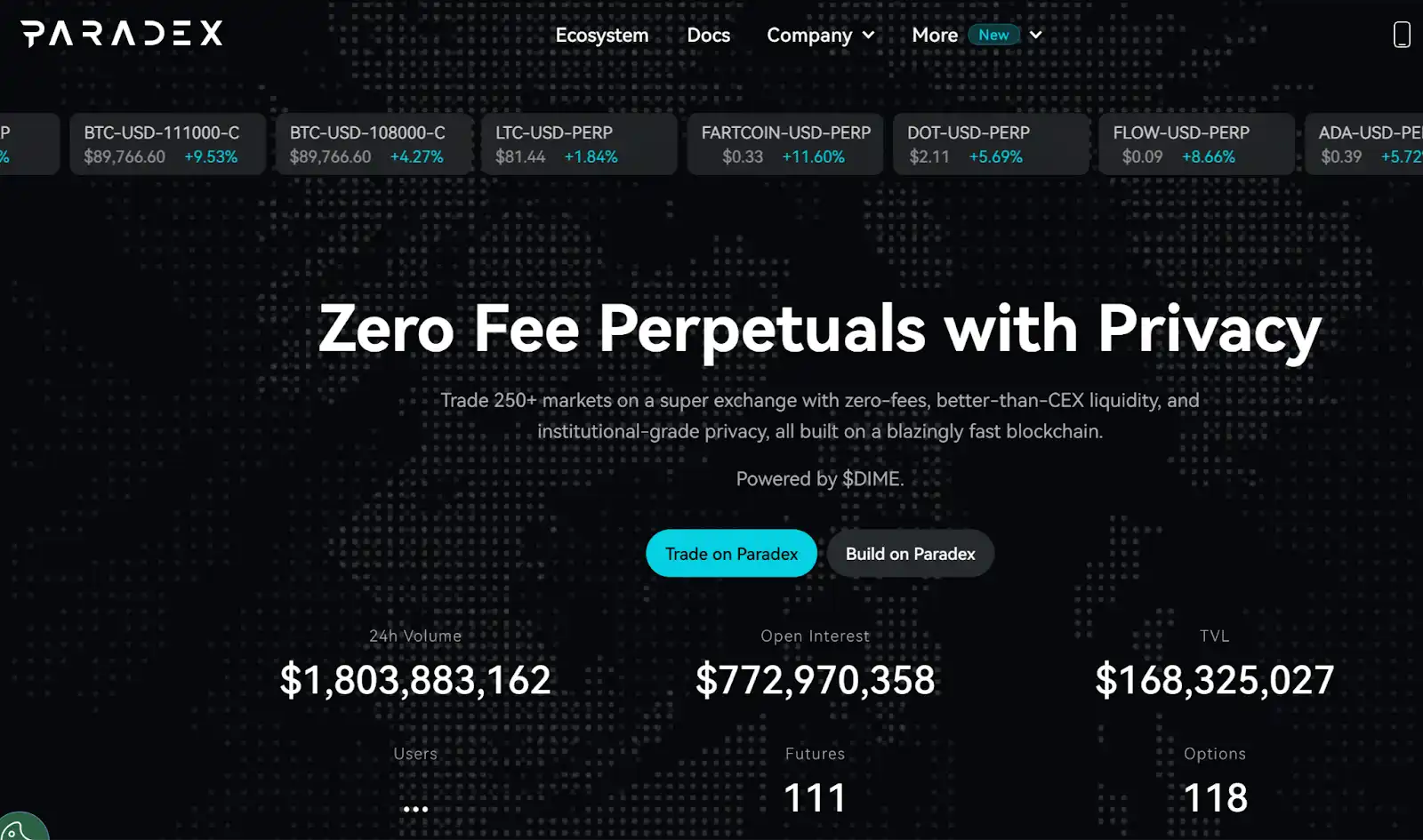
Product Features and Technology: Paradex has built its own Ethereum Layer 2 blockchain, Paradex Network, based on the Starknet framework, supporting highly customized on-chain parameters. All transactions on the Paradex web platform, except for the BTC/ETH market, are fee-free. Professional users accessing the API only incur a 0.02% taker fee, with no maker fees. Paradex plans to launch perpetual futures, perpetual options, and spot trading in the future. All transactions are settled through a unified account, supporting isolated margin, cross margin, and even combined margin modes. Paradex also incorporates a series of DeFi asset management functions, supporting direct lending within the same account to improve capital efficiency. Furthermore, Paradex may introduce a privacy trading mode in the future to meet the needs of some institutional users who do not disclose their positions. In short, while other perpetual DEXs focus on incentives and performance, Paradex takes a different approach by focusing on product innovation, striving to become a comprehensive and diversified on-chain exchange.
Token Plan and Incentives: Paradex has not yet issued a token, but the official token economics have been announced: 26.6% for community rewards, 6% for the foundation budget, 25.1% for the core team, 3.8% for future contributors, and 13.5% for Paradex shareholders. The platform token is named DIME, which has multiple uses: serving as the gas fee for the Paradex Chain, transaction fee discounts, staking rewards, liquidity mining, and governance voting, acting as a value carrier throughout the entire ecosystem. Paradex announced that it will launch DIME in 2025 and allocate 20% of its tokens for a genesis airdrop. Paradex's points incentives are relatively moderate and transparent, without any outrageous volume manipulation. Its Vol/OI ratio is typically around 1-2, close to the normal levels of Hyperliquid, and the official team has repeatedly emphasized that it values long-term value more than short-term speculation.
Market Data and Performance: Paradex's TVL is approximately $170 million, daily trading volume is approximately $2 billion, and online interest (OI) is approximately $770 million. While these figures are relatively small compared to giants like Hyperliquid, its growth rate is steady and has not experienced significant fluctuations. Paradex enjoys a good reputation among professional derivatives traders, especially those looking to explore on-chain options and advanced strategies. Its product line is currently expanding rapidly: according to its official X account, spot trading will launch in mid-to-late January 2026, followed by community-created meme token trading and the issuance of the DIME token, among other significant developments. If its "unified account, multi-functional trading" model succeeds, it will create a differentiated competitive advantage in the market.
IV. Opportunities and Risks Analysis of the Perp DEX Track
1. Opportunities Facing the Perp DEX Sector
1) Significant room for market penetration growth: Despite a surge in on-chain perpetual transaction volume in 2025, its share of the overall crypto derivatives market remains relatively low, at approximately 5-10%. The vast majority of contract trading still occurs on centralized platforms, such as Binance, where daily futures volume reaches trillions of dollars. As decentralized trading experiences approach those of centralized exchanges (CEXs), user demand for mitigating centralized risks and enjoying the freedom of self-custody will continue to grow. In the coming years, on-chain derivatives are expected to further capture market share; even if it only reaches 20-30%, it still represents several times the current trading volume growth potential for DEXs.
2) New technology dividends empower the industry: The continuous maturation of new technologies such as ZK proofs, sharding, and notary networks will drive on-chain performance to a new level, reduce costs, and expand product boundaries. For example, Paradex's planned perpetual options and other innovations are achieved through breakthroughs in underlying technology. There is reason to believe that the compounding effect of technology will continue to help decentralized exchanges narrow the gap with centralized giants, and even create new product forms that the latter do not possess.
3) User Education and Changing Habits: Following events like FTX, the new generation of crypto users is more receptive to DeFi products. Many users who previously only traded contracts on platforms like Binance tried Hyperliquid and EdgeX in 2025 and left positive reviews. With word-of-mouth and KOL influence, on-chain trading is moving from a niche community to the mainstream. This means that Perp DEX's potential user base is expanding, and the unique appeal of DeFi, such as community governance and airdrop incentives, will translate into higher user retention rates.
4) Capital and Institutional Entry: In 2025, several top institutional funds began to venture into the Perp DEX field: 21Shares listed HYPE's ETP product; traditional institutions such as Amber directly incubated edgeX; and Paradigm directly entered the market with Paradex. These signals indicate that compliant capital is optimistic about the future prospects of on-chain derivatives and is willing to provide liquidity and infrastructure support. With clearer regulations, more Wall Street or crypto funds will participate in the future through DAO investments, liquidity market making, and other means, injecting new vitality into the sector.
5) Ecosystem Synergies: Perp DEX has strong synergies with other DeFi areas (lending, yield strategies, stablecoins, etc.). Paradex has begun exploring combining perpetual contracts with other DeFi modules to create new use cases. This foreshadows richer opportunities for cross-protocol collaboration and ecosystem integration. For example, perpetual DEXs can provide hedging tools for on-chain assets, and interest rate derivatives of lending protocols can be priced through perpetual markets.
2. Potential Risks in the Perp DEX Track
Beneath the apparent prosperity of the Perp DEX sector in 2025 lies a multitude of hidden risks that investors should be wary of.
1) Data manipulation and excessive incentives: Aster's alleged data manipulation led to its collapse in credibility, and Lighter's excessive incentives created a bubble risk. These examples remind us that short-term trading data can be manipulated, but only holdings and revenue are the hard indicators. Investors should not be misled by exaggerated trading volumes.
2) Technical and Security Risks: New platforms often employ complex architectures or self-developed blockchains in pursuit of high performance, which increases the probability of vulnerabilities and failures. Lighter experienced a database crash and outage just 10 days after its mainnet launch, and self-developed blockchains like Hyperliquid have also faced questions about their consensus mechanisms and security, which have not undergone long-term testing. Furthermore, technical risks such as smart contract vulnerabilities, matching failures, and oracle malfunctions cannot be ignored.
3) Token Economic Risks: Many Perp DEX platforms regard token price as the lifeline of their ecosystem, stimulating the price through buybacks, dividends, and other means. However, the secondary market is volatile, and a sharp drop in the platform's token price could, in turn, dampen user enthusiasm or even trigger a run on the platform. For example, if the price of LITER falls short of expectations after Lighter's listing, a large number of users engaging in wash trading may sell off and leave the market.
4) Risk of extreme market volatility: The current size of the on-chain contract market is still relatively small compared to CEXs. In the event of abnormal volatility, situations such as liquidity depletion and sudden increases in slippage can still occur. Once a large-scale market event similar to the "10.11 crash" in 2025 occurs, with liquidations of tens of billions of dollars, some platforms with weak risk resistance may collapse or even become insolvent.
5) Compliance Policy Risks: With the surge in on-chain derivatives trading volume, regulatory scrutiny has increased. Many countries and regions prohibit unauthorized platforms from offering high-leverage contract trading to their residents, and even decentralized platforms may face restrictions. While decentralized protocols themselves are difficult to completely shut down, regulatory risks could undermine user confidence and affect the scale of capital inflows.
V. Outlook for 2026: A Fierce Competition, Continued Reshuffling and Upgrading
Looking ahead to 2026, the on-chain perpetual contract market is expected to enter a new, more mature, and more competitive phase. Based on the current landscape and development trends, the following trends can be predicted:
1. The landscape is evolving, and the reshuffling continues: Hyperliquid, as a seasoned leader, is expected to solidify its position in the top tier thanks to its strong online activity (OI) and community foundation. Lighter, if it can maintain user activity, will become the most formidable challenger in terms of trading volume; Aster, with Binance's support, is expected to see its market share rebound; EdgeX will likely dominate the institutional and stable user market. Paradex attracts users with its product differentiation and has the potential to leap from the second tier in 2026. The overall landscape will be characterized by "one dominant player and several strong contenders": Hyperliquid will maintain its lead, while the other platforms will each occupy niche markets, narrowing the market share gap between the leading platforms. At the same time, the reshuffling will continue, intensifying the weeding out of smaller platforms.
2. A Return to Rationality, Emphasizing Quality Growth: After the frenzied arms race of inflated trading volume in 2025, market participants will become more rational, realizing that ranking by trading volume is no longer meaningful. They will instead focus on indicators that better reflect true market health, such as open interest, revenue, and user retention. It is expected that the Vol/OI ratio of various platforms will generally fall back to a reasonable range in 2026, new user growth will become more organic, and the vicious incentive war may come to an end. Of course, marketing will continue, such as various trading competitions and limited-time zero-fee offers, but this competition will focus more on improving user experience rather than simply inflating data. At the same time, with the implementation of numerous airdrops, the number of speculators will decrease, while the proportion of traders with genuine needs will increase. Prioritizing quality and stable operation will become the new consensus in the industry.
3. The Rise of Product Diversification: In 2026, we may see Perp DEX expand beyond perpetual contracts to encompass the entire exchange product line. Paradex's planned launch of perpetual options and spot trading will serve as a litmus test: if successful, other platforms will inevitably follow suit, developing new contract types such as options and futures (fixed-day futures), providing a wider range of derivatives tools. Furthermore, Real Asset (RWA) contracts may emerge, allowing users to trade contracts in traditional markets such as gold and stock indices on-chain. Simultaneously, social trading and algorithmic strategies will be integrated into the platform, deepening the trend of exchange + wealth management integration.
4. Regulatory and Compliance Exploration: 2026 may be a year in which the regulatory framework for DeFi derivatives gradually takes shape. Several major jurisdictions may issue guidance or regulations for decentralized derivatives. There are rumors that EdgeX is considering launching a regulated version for institutional access, similar to dYdX's launch of a custodial version. Hyperliquid, if it wants to further penetrate the US market, may also evaluate the possibility of registering a derivatives trading platform (SEF). Overall, the gray areas of the DeFi space will gradually be standardized in 2026, which presents both challenges and opportunities for the Perp DEX track, which is dominated by anonymous retail users. Standardization will help attract more mainstream funds, but may also conflict with the decentralized philosophy. Platforms will likely adopt a two-pronged approach: retaining an anonymous open access point while establishing a separate compliance window to meet regulatory requirements.
5. Clash of Old and New Forces: 2026 may also witness a direct confrontation between traditional giants and on-chain upstarts. On one hand, established centralized exchanges are unlikely to sit idly by and watch their market share be eroded; entering the DeFi derivatives market will be a natural strategy. Binance, OKX, and others are already deploying decentralized products. Binance's previous investment in Aster may just be the beginning; in the future, it's possible they will launch their own decentralized contract trading function, linking it with their own CEX to provide a dual-track service of "centralized + decentralized." Similarly, emerging platforms like Bitget may also incubate their own DEXs. The entry of centralized platforms will bring more resources and user traffic to the sector, but it also means more intense competition. On the other hand, new on-chain native projects will continue to emerge, attempting to challenge existing leaders with newer concepts or mechanisms.
In conclusion, 2025 saw the Perp DEX sector experience a remarkable surge, from Hyperliquid's dominant lead to fierce competition among numerous players. 2026 will mark a transition from rapid, unregulated growth to more refined, sophisticated development. The overall market will mature and stabilize, moving away from indiscriminate volume manipulation towards high-quality competition; product offerings will become more diverse and sophisticated, evolving into comprehensive derivatives platforms. Looking ahead, the battle for on-chain derivatives will continue, and we eagerly await the emergence of new paradigms and legendary players.
about Us
Hotcoin Research, the core research arm of the Hotcoin exchange, is dedicated to transforming professional analysis into practical tools for your investment decisions. We analyze market trends through our "Weekly Insights" and "In-Depth Research Reports"; and our exclusive "Hotcoin Selection" (AI + expert dual screening) helps you identify potential assets and reduce trial-and-error costs. Every week, our researchers also host live streams to discuss hot topics and predict trends. We believe that warm support and professional guidance can help more investors navigate market cycles and seize the value opportunities of Web3.
Risk Warning
The cryptocurrency market is highly volatile, and investing in it inherently carries risk. We strongly recommend that investors fully understand these risks and invest within a strict risk management framework to ensure the safety of their funds.
Website: https://lite.hotcoingex.cc/r/Hotcoinresearch
Mail: [email protected]