 Controversies surrounding Bitcoin's environmental impact continue, with many criticizing the network's energy consumption. However, ESG researcher Daniel Batten argues that many of these common accusations are being refuted by scientific studies and factual data.
In a chain of posts on X on Saturday, Daniel Batten stated that nine common criticisms about Bitcoin mining's energy consumption contradict peer-reviewed studies and grid-level data.
"Every groundbreaking technology in its early stages comes with accusations stemming from a lack of understanding, insufficient data, and fear of the unknown," Batten observed.
Earlier in November, Dow Jones criticized Harvard University for investing part of its endowment fund in BTC, calling Bitcoin "fake currency, a money laundering tool, and an environmental disaster." In July, Bloomberg also argued that Bitcoin "devours electricity that should be for the world's poor."
Some environmental researchers still argue that the indirect emissions and opportunity costs associated with Bitcoin mining are difficult to measure accurately.
Misconception 1: Bitcoin consumes resources and destabilizes the power grid.
Batten argues that the view that Bitcoin consumes excessive energy, water, and electronic waste per transaction is incorrect . He cites four peer-reviewed studies that conclude Bitcoin's resource usage is independent of the number of transactions .
He also cited the University of Cambridge 's Digital Mining Industry Report 2025 , which shows that Bitcoin's energy consumption is largely independent of volume , meaning the network can scale without increasing resource consumption.
Regarding the power grid, Batten argues that Bitcoin mining does not destabilize the grid, but rather helps stabilize it through its ability to flexibly adjust load , especially in areas that rely heavily on renewable energy, such as Texas.
Misconception 2: Bitcoin mining increases electricity prices.
According to Batten, there is no data or scientific research to prove that people have to pay higher electricity bills because of Bitcoin mining . On the contrary, some cases show that mining even helps reduce electricity prices by utilizing surplus power.
Misconception 3: Comparing Bitcoin to an entire nation's electricity consumption.
Batten argues that comparing Bitcoin to countries' electricity consumption is misleading , because according to the IPCC , the focus should be on energy transition , not just reducing consumption.
Previously, Morningstar reported that the global computer network supporting Bitcoin consumes more electricity than both Thailand and Poland.
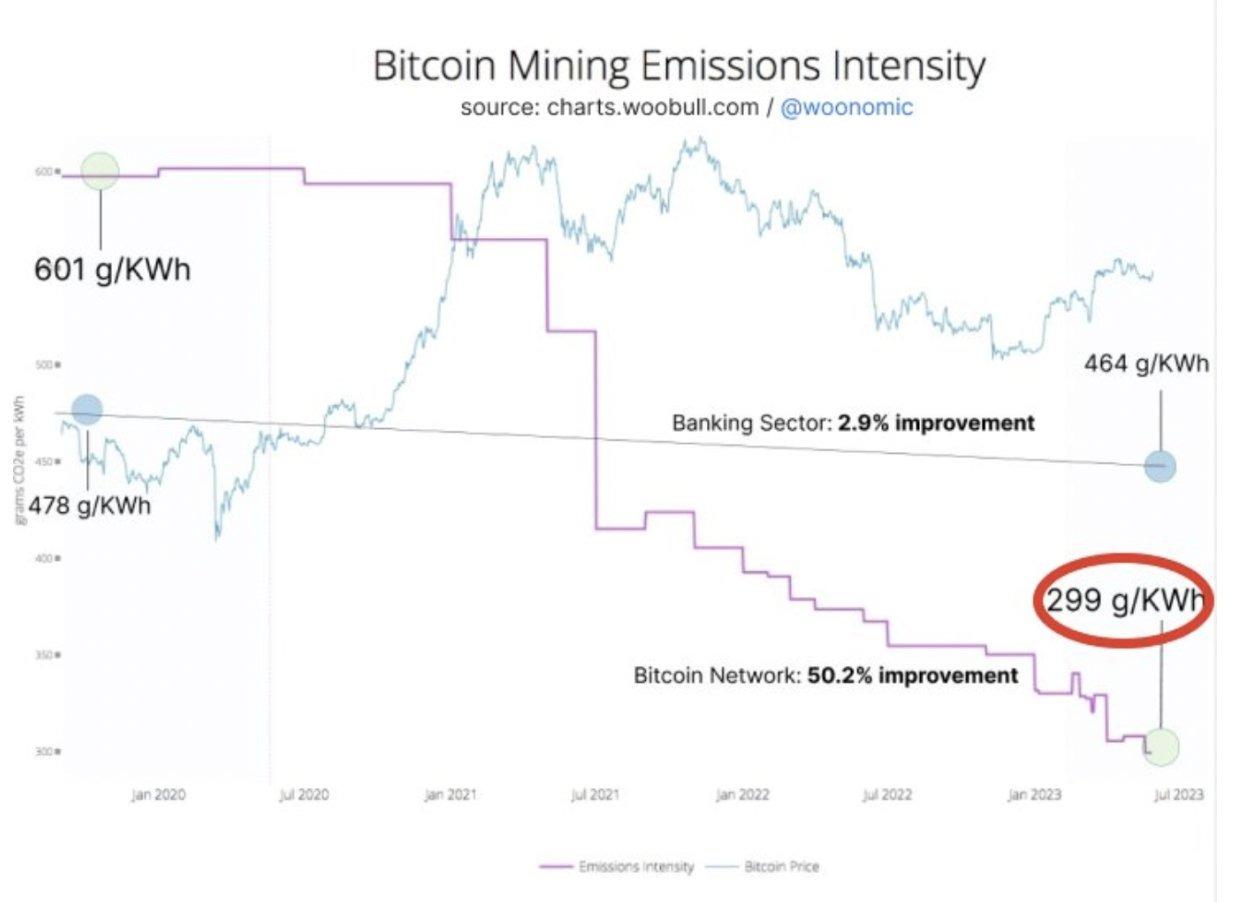
Misconception 4: Bitcoin has a very high "carbon footprint".
Batten refutes this view, arguing that Bitcoin mining does not generate direct emissions , but only indirect (scope-2) emissions from electricity use.
He emphasized:
"Bitcoin mining is currently the only global industry with independent, reliable data showing it has surpassed the 50% threshold of using sustainable energy ."
Proof-of- Stake isn't necessarily better than Proof-of-Work.
Batten also rejected the argument that Ethereum's proof-of- Stake (PoS) mechanism is more environmentally friendly than Bitcoin's proof-of-work (PoW). According to him, this comparison equates energy consumption with the level of harm caused .
He argued that Proof of Work offers many benefits, such as:
Reduce methane emissions
Stabilize the power grid.
Increase renewable energy capacity
Utilizing wasted renewable energy
Bitcoin mining promotes renewable energy.
Batten also rejected the view that Bitcoin mining "takes away" other people's renewable energy. He stated that in reality, Bitcoin mining is helping more people access renewable energy .
Batten cites the example of the Gridless project in Africa, where Bitcoin mining has helped provide renewable electricity to approximately 28,000 people .
Finally, he asserted that the argument "Bitcoin mining wastes energy" is a subjective judgment , because according to studies by Moghimi and Lai & You, mining significantly reduces wasted renewable energy and improves the economic efficiency of microgrids.
According to Batten, only energy waste can be called "wasteful" if it doesn't create any value for people , something Bitcoin – in his opinion – clearly doesn't do.