
Have you ever felt helpless because you were charged as much as 8% in fees for a cross-border remittance? Have you ever missed a business opportunity because traditional cross-border payments take 3-5 business days to arrive? When you travel abroad, have you ever lost 2%-5% of your funds due to currency exchange rate differences?
Behind these pain points lies a massive market worth $36.3 trillion—the on-chain settlement volume of stablecoins surpassed the combined volume of Visa and Mastercard in 2024. Surprisingly, however, its penetration rate in the real economy is less than 6%. This striking contrast reveals a trillion-dollar market opportunity: whoever can bridge the "last mile" between stablecoins and the real economy will define the next generation of global financial infrastructure.
I. Market Pain Points: The Disconnect Between Digital Assets and the Real Economy
According to World Bank data, the average annual cost of global remittances in 2023 was approximately 6.2% of the remittance amount. These costs mainly come from the following sources:
● Fixed fee: Usually between $15 and $50, depending on the bank and the amount transferred.
● Currency conversion spread: The exchange rate offered by banks usually includes a hidden markup of 2% to 5%.
● Correspondent Bank Fees: When funds pass through an intermediary bank, fees ranging from $10 to $30 may be charged, and these fees are often opaque.
Meanwhile, approximately 1.4 billion adults worldwide remain excluded from the traditional banking system. However, a GSMA report points out that mobile internet access is rapidly expanding in these regions, enabling them to access financial services via their mobile phones. In many emerging market countries such as Argentina and Turkey, persistently high inflation rates (often exceeding 10% or even higher) have severely eroded the purchasing power of local currencies, leading to a surge in demand for safe-haven assets such as US dollar stablecoins.
However, the reality is that stablecoin applications have fallen into an awkward situation of "on-chain prosperity, offline desert":
● High user experience barrier: Technical concepts such as private key management, gas fees, and cross-chain operations can be daunting for ordinary users.
● Limited payment scenarios: Only 6% of offline merchants support cryptocurrency payments.
● Regulatory uncertainty: The global compliance framework is still under construction, raising concerns about the security of user assets.
● Liquidity fragmentation: Different on-chain stablecoins are like "data silos," resulting in high exchange costs.
On one hand, there are the high costs and inefficiencies of traditional financial services; on the other hand, there are numerous obstacles to the real-world application of stablecoins. This is the core contradiction in the current digital finance field. Solulu has targeted this key pain point, aiming to build a bridge connecting the massive on-chain liquidity with the broad needs of the real world, making stablecoins a truly accessible everyday payment tool for everyone.
II. Solulu's Solution: A Five-in-One Financial Infrastructure
1. Global Multi-Currency Stablecoin Exchange Center: From Aggregation to Dominance
Solulu's stablecoin swap platform aims to be the gateway to the ecosystem and a core hub for global stablecoin liquidity. Its technical architecture is based on three pillars:
The liquidity deep integration platform integrates liquidity through multiple layers, such as strategic partnerships with top market makers and financial institutions to provide deep initial liquidity; a built-in intelligent routing system that automatically finds the best price across multiple decentralized exchanges and liquidity pools when a user initiates a swap; and a proprietary liquidity pool program to build core liquidity depth for the platform, enhancing price stability and market resilience.
SOLULU natively supports a diverse blockchain ecosystem , encompassing multiple blockchain assets . Currently, the platform fully covers eight major networks, from Ethereum and BNB Chain to Polygon, Arbitrum, Optimism, Base, Solana, and TRON, ensuring a unified and seamless cross-chain experience for users. Its technical architecture boasts high flexibility and scalability, making it well-prepared for smooth integration into next-generation networks such as Avalanche and Sui.
To promote ecosystem cooperation, the platform provides highly available, low-latency exchange APIs for exchanges, wallets, and other financial institutions, aiming to meet the large-scale business integration needs of institutional users and partners.
2. Virtual U-card System: Redefining the Encrypted Payment Experience
The virtual U-card's core parameter activation process achieves a minute-level response time; after completing KYC verification, users can generate a virtual card within one minute. The card supports stablecoin deposits from eight mainstream public blockchains, including Ethereum, BNB Chain, Polygon, Arbitrum, Optimism, Base, Solana, and TRON networks.
In terms of consumption scenarios, the card has achieved online merchant coverage in over 100 countries and regions worldwide. Its fee structure is significantly lower than that of traditional cross-border transaction cards, aiming to maintain a substantial cost advantage for users.
The multi-layered security protection system adopts a dynamic protection mechanism: it supports one-click reset of the dynamic CVV security code within the App; it provides flexible quota management functions; it is equipped with an instant freeze/unfreeze emergency response; and it establishes a 24/7 real-time transaction alert and monitoring system.
In practical applications, this feature offers a revolutionary solution for cross-border financial scenarios. For example, overseas workers in the Philippines can use their USDT earnings from working abroad for household spending in Manila via the Solulu U-card. The entire process achieves a seamless transition from on-chain assets to offline consumption, significantly optimizing transaction costs compared to traditional cross-border remittance models.
3. International Trade Settlement Networks: Reshaping Global Trade Finance
Solulu targets the disruptive potential of stablecoins in cross-border trade. Its solutions aim to systematically address the pain points of speed, cost, and transparency in traditional trade settlements.
Smart contract-enabled platforms develop standardized "trade smart contract" templates. Buyers and sellers can lock payments in smart contracts, and the contract automatically executes payment once pre-defined conditions (such as receipt of an electronic bill of lading) are met. This records key transaction nodes on the blockchain, increasing transparency and aiming to significantly shorten settlement cycles.
In addition, Solulu has established a deep partnership with Web3 cross-border e-commerce platform Caviar, aiming to jointly build an e-commerce ecosystem centered on stablecoins, combining Solulu's settlement capabilities with Caviar's mature e-commerce network.
4. Flow Pool Project: Building an Ecological Value Sharing Mechanism
The liquidity pool program is a key driver of the Solulu ecosystem. Its function is to build a value cycle of "co-building the ecosystem and sharing the benefits" so that liquidity providers can obtain sustainable returns.
The sophisticated yield model allows participants to stake stablecoins to access different tiers of liquidity packages. The yield model includes:
● Basic Returns: Earn competitive stablecoin returns daily.
● Arbitrage Quota: Participants can obtain an additional arbitrage quota to purchase future platform tokens SOLU at a discounted price.
The team collaboration and risk control plan includes a referral reward mechanism, from which users can be incentivized. Meanwhile, the platform ensures the long-term health and stability of the system through mechanisms such as revenue capping.
5. Social Finance: The Convergence of Payment and Communication Paradigms
To make the exchange of value as simple and natural as the transmission of information, Solulu created the "Solulu Chat" module, which seamlessly integrates bank-grade payment functionality into the instant messaging experience.
Core social payment functions
● Stablecoin Red Packets: Supports sending digital red packets of specified amounts in one-on-one chats or group chats, suitable for scenarios such as holiday celebrations and community incentives.
● Group Fund Pool: A "group wallet" powered by smart contracts can be created for collective activities or projects, with income and expenditure records being open and transparent to group members.
● Integrated payment experience: When communicating with merchant customer service, users can directly complete product inquiries and payments within the chat interface, greatly shortening the transaction path.
By seamlessly embedding payments into the high-frequency social scenario, Solulu Chat aims to build strong user stickiness, lower the barrier to entry for Web3, and bring sustained vitality and network effects to the platform.
The five core businesses mentioned above are not simply an aggregation, but rather form the solid pillars of the Solulu ecosystem. They are interconnected, creating a complete closed loop from asset exchange to practical application, from personal consumption to corporate settlement: the exchange center provides the entry point, the U-card connects consumption scenarios, trade settlement serves corporate needs, the liquidity pool ensures system liquidity, and social finance enhances user stickiness through high-frequency interaction. This combined approach precisely addresses industry pain points, truly transforming stablecoins from trading assets into practical tools, laying a solid foundation for building next-generation financial infrastructure.
III. Token Economics: The Flywheel Effect of Value Capture
The SOLU token's economic model is meticulously designed, with its core principle being to deeply link the token's value with the healthy development of the platform's ecosystem, forming a self-reinforcing positive cycle. This model, through a carefully planned distribution mechanism, diverse practical applications, and a robust deflationary policy, ensures that long-term participants can share in the platform's growth dividends.
Distribution Mechanism: Emphasizing Transparency and Long-Term Focus
The token distribution scheme is extremely transparent, and every aspect serves the long-term development of the ecosystem:
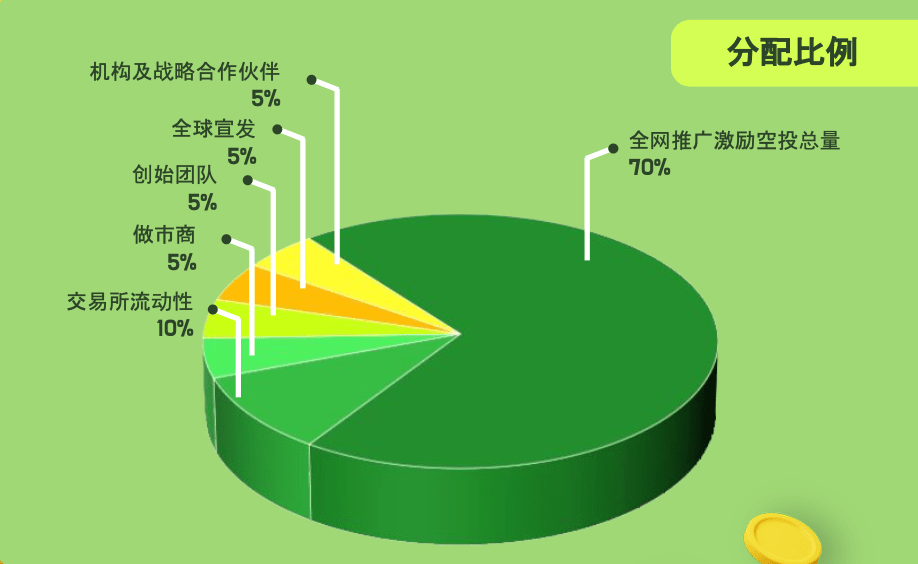
● Ecosystem building as the core (70%): The vast majority of tokens are used for network-wide promotion incentives, and are gradually released through community activities and airdrop rewards to ensure that the ecosystem has the momentum for continuous growth.
● Team (5%) and partners (5%) advance and retreat together: The tokens of the founding team and strategic partners are all subject to a long-term lock-up mechanism, with a linear release cycle of 24-36 months, to ensure that the interests of all parties are deeply tied to the long-term development of the project.
● Market makers (5%) and liquidity (5%): the two pillars of market stability: the tokens reserved for exchange liquidity and market makers will be released in an orderly manner according to market development needs to maintain a stable and healthy trading environment.
● Long-term brand investment (5%): Global marketing funds are managed by the community foundation and used for ongoing brand building and marketing to safeguard the long-term value of the ecosystem.
Diverse application scenarios: a value cycle that runs through the ecosystem
SOLU is deeply integrated into every key aspect of the platform, creating continuous intrinsic demand:
● Payment and Discounts: In the future, users can use SOLU to pay all platform fees and enjoy discounts, fulfilling the most direct user needs.
● Governance and Voting: The token will evolve into a governance token, granting holders voting rights on key platform decisions and enabling community co-governance.
● Staking and Returns: Users share platform income and dividends by staking SOLU, which serves as a threshold for obtaining advanced features (such as high-level U cards), thus incentivizing long-term holding.
● Ecosystem Incentives: As the core reward for all incentive activities (such as the Flow Pool Program and Referral Rewards), it continuously rewards participants who contribute to the ecosystem.
Deflation Mechanism: A Clear Engine for Value Growth
To combat inflation and drive long-term value appreciation, the model incorporates a robust deflationary mechanism:
● Sustainable Buyback and Burn: The platform will use a portion of its profits and all transaction taxes generated from the liquidity pool program to periodically buy back and burn SOLU on the open market.
● Clear deflation target: The project sets a clear target to eventually burn the total circulating supply from 1 billion to 210 million, providing long-term holders with a clear expectation of value.
Ingenious closed-loop logic
The economic architecture of the SOLU token forms a sophisticated closed-loop system, perfectly integrating platform utility, token scarcity, and user benefits. At its core, this mechanism works as the trading volume and revenue of the Solulu platform increase, with the funds used for buying back and burning SOLU expanding accordingly. Continuous buybacks and burns directly reduce the circulating supply of SOLU, making it increasingly scarce. This increased scarcity naturally drives up its market value and stakers' returns. Higher value expectations and return potential attract more users to hold, stake, and use SOLU to participate in ecosystem development. This, in turn, injects more active trading, deeper liquidity, and broader application scenarios into the platform, further accelerating the prosperity and growth of the platform ecosystem—ultimately forming a self-driven, ever-enhancing value creation flywheel.
IV. Compliance Strategy: Gaining Access to Major Global Markets
Solulu regards compliance as the core cornerstone of its business development and adopts a "hub-and-spoke" strategic layout—obtaining core licenses in key financial hubs and using these as a basis to radiate to a wider global market.
Currently, the platform has successfully obtained a US MSB license and is actively pursuing license applications in major financial markets such as New York State, the UAE, Singapore, and Hong Kong. To ensure professionalism and forward-thinking compliance, Solulu has assembled an expert team comprised of former regulatory officials and senior financial lawyers.
At the implementation level, the platform has established a comprehensive risk management system: a tiered KYC verification system provides corresponding service levels for users with different needs, and it will integrate top blockchain analysis tools such as Chainalysis and Elliptic to achieve 24/7 transaction monitoring and risk warning.
This deep commitment to compliance reflects Solulu's determination to build a trustworthy financial platform—only by establishing a solid foundation of compliance can it truly win the long-term trust of users and regulators, paving the way for the steady expansion of its global business.
V. Conclusion: Building a New Era of Finance
Looking back at the history of fintech development, every disruptive innovation follows a similar trajectory: from geek toys to mass-market tools, from fringe experiments to core infrastructure, from optimizing user experience to reconstructing the ecosystem. Today, we stand on the eve of a stablecoin explosion—the policy window has opened, technological bottlenecks are being gradually overcome, funds are continuously flowing in, and market demand is strong. These four factors converge to outline a clear contour of new financial infrastructure.
The time is ripe. In 2026, Solulu will focus on four core breakthroughs: opening up the virtual U-card globally, bridging the last mile between crypto assets and physical consumption; redefining the transfer experience with social payment functionality; opening new cross-border payment channels for SMEs through the trade settlement network; and completing the value loop layout of the SOLU token. This is not only a product roadmap, but also the starting gun for the explosive growth of the entire ecosystem.
For astute investors, this is a crucial window into positioning themselves in next-generation financial infrastructure; for entrepreneurs seeking breakthroughs, it's a historic opportunity to restructure the cross-border trade settlement system; and for ordinary users yearning for financial freedom, it's the first true chance to achieve asset autonomy. In 2026, everyone will find their place in the Solulu ecosystem, witnessing together the transformation of stablecoins from concept to large-scale implementation.