Original article by Odaily Odaily( @OdailyChina )
Author|Wenser ( @wenser2010 )

As 2025 came to a close, the prediction market also delivered its own results.
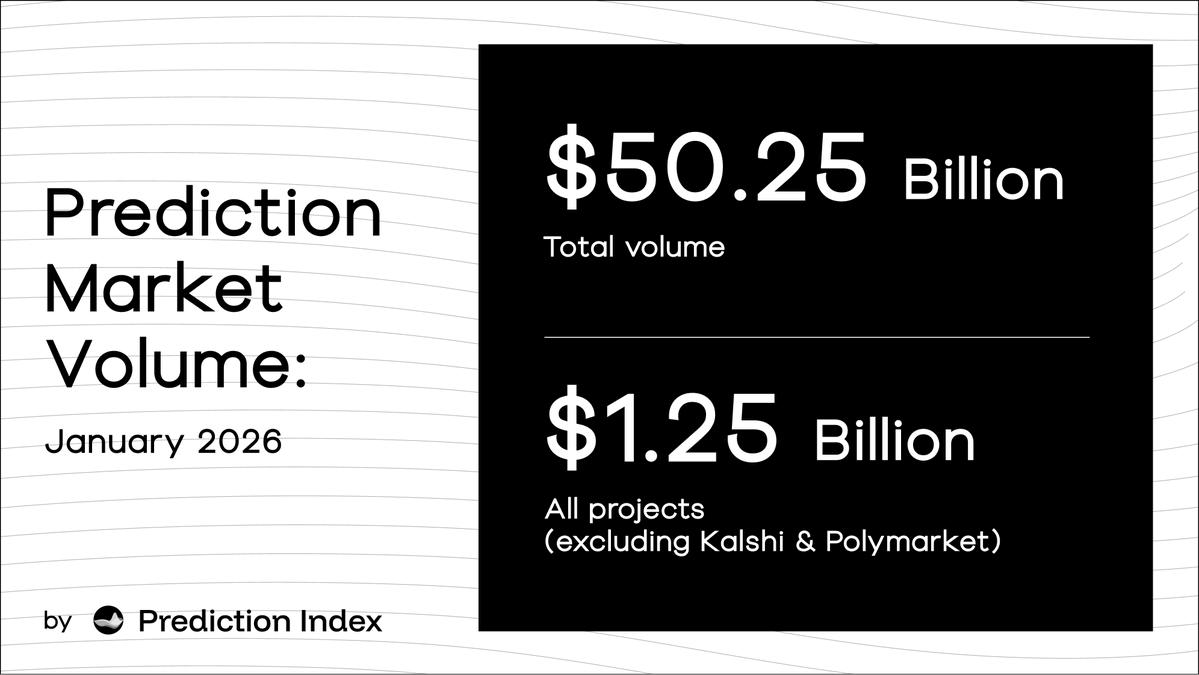
According to data from PredictionIndex.xyz, the total transaction volume in the prediction market sector reached $50.25 billion in 2025. Excluding Kalshi and Polymarket, the remaining portion of the ecosystem accounted for $1.25 billion in transaction volume. Furthermore, according to data released by KalshiData, Kalshi's total nominal transaction volume for the year reached $23.8 billion, a year-on-year increase of 1108%. With both Polymarket and Kalshi exceeding $10 billion in valuation, these achievements undoubtedly inject a strong boost into the capital market and user base. In 2026, the prediction market sector will continue to be a focal point in the crypto space.
Odaily Odaily will provide a summary and brief analysis of the overall data for the 2025 forecast market in this article for readers' reference.
The projected total market size for 2025 is in the $50 billion range, with Kalshi and Polymarket holding over 97.5% market share.
PredictionIndex.xyz conducted an end-to-end indexed tracking of the prediction market ecosystem, covering the market, infrastructure, endpoints, and new experimental projects. The final results are as follows—
- According to incomplete statistics from the platform, the total transaction volume of the market is projected to be approximately US$50.25 billion in 2025.
- Excluding Kalshi and Polymarket, the rest of the ecosystem generated $1.25 billion in transactions.
- This long-tail market is key to testing and evolving new market designs, incentives, and concepts, and involves projects including azuroprotocol, TrendleFi, hyperstiti0ns, Limitless, MyriadMarkets, overtime, footballdotfun, xodotmarket, predictonfliq, DGbet_official, and BRKTgg.
If this data shows us the current "duopoly" structure of the prediction market, then the 2025 data provided by KalshiData, a subsidiary of the Kalshi platform, shows us in more detail the popularity of the current hot sectors.
Kalshi's 2025 performance: Trading volume reached $23.8 billion, an increase of more than 11 times year-on-year.
On January 3, KalshiData announced that all of Kalshi's metrics achieved record growth in 2025.
In terms of nominal transaction volume, the total for the year reached US$23.8 billion, representing a year-on-year increase of 1,108%, or approximately 12.1 times.
- December saw a record high of $6.38 billion in monthly spending;
- Weekly spending hit a record high of $1.7 billion in the fourth week of December;
- It set a new daily record of $381.7 million on December 21.
In terms of transaction volume, the total reached 97 million transactions throughout the year, representing a year-on-year increase of 1680%, or approximately 17.8 times.
- The number of transactions in December was 27.67 million;
- The fourth week of December saw 7.6 million transactions.
- The number of transactions on December 21st reached 1.5 million, both setting new historical records.
In terms of holdings, the total reached US$225 million, a year-on-year increase of 169%, or about 2.7 times.
- It set a new daily record high of $533 million on March 9th.
- Weekly spending hit a record high of $530 million in the first week of March.
- February saw a record monthly high of $499.5 million.
In terms of the number of trading contracts, the total reached 23.8 billion for the whole year, an increase of 1,108% year-on-year, or about 12.1 times.
- December saw a record high of 6.38 billion units sold;
- The fourth week of December saw a record high of 1.7 billion units sold.
- On December 21, it set a new single-day record with 382 million units sold.
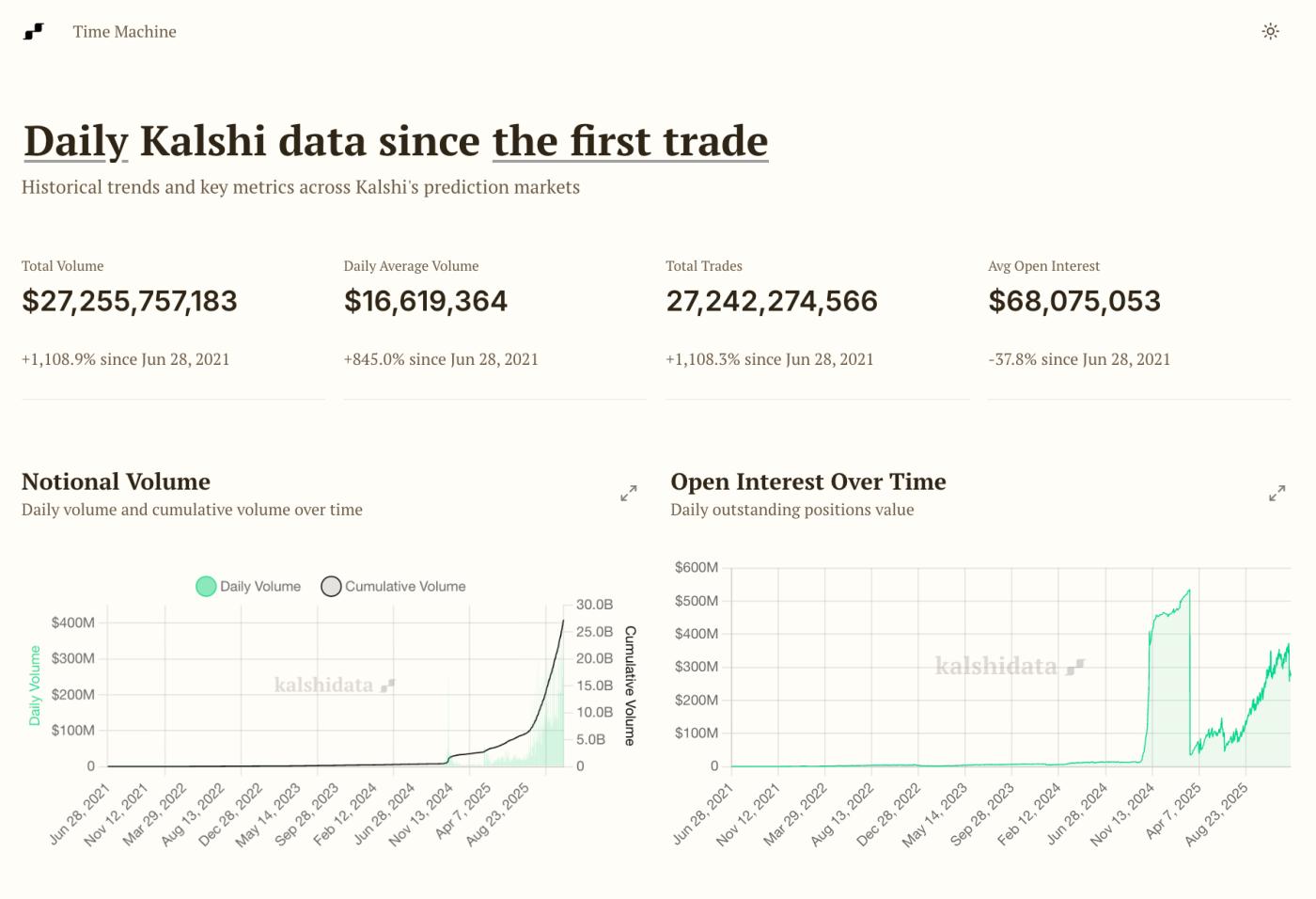
According to data from the KalshiData website , since its launch on June 28, 2021, Kalshi's total historical transaction volume has reached $27,255,757,183, with an average daily transaction volume of $16,619,364 and a total of 27,242,274,566 transactions.
As for Polymarket, although it promotes the concept of "on-chain prediction market", its transaction volume data in 2025 is rather vague, perhaps due to differences in statistical methods and transaction data channels.
Polymarket's 2025 projections: Trading volume expected to be around $22-25 billion.
According to DefiLlama data , Polymarket's total DEX trading volume in 2025 is estimated at approximately $10.5 billion.
According to data from Dune , Polymarket's total transaction volume in 2025 is estimated at approximately $22.5 billion.
According to PredictionIndex.xyz , Polymarket's historical cumulative trading volume is $23.2 billion.
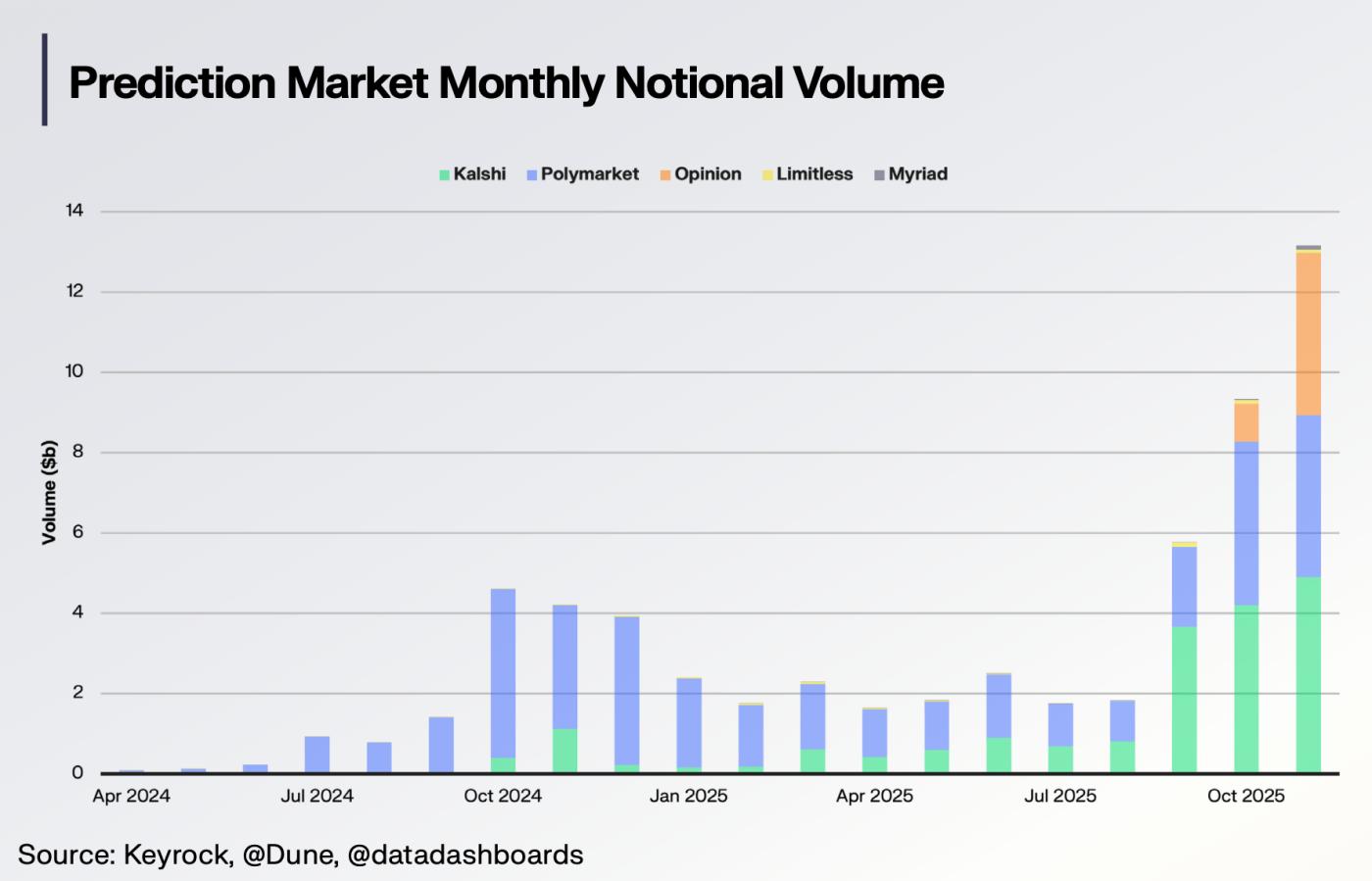
According to the "Prediction Market Report" jointly issued by Keyrock and platforms such as Dune, the total trading volume of prediction markets in 2025 is $44 billion, of which Polymarket's trading volume is approximately $21.5 billion (Odaily Odaily note: In contrast, Kalshi's trading volume is approximately $17.1 billion).
Based on the information above and the data provided by Kalshi's official platform earlier, which states that "Kalshi's annual trading volume is $23.8 billion," we take a relatively middle value and estimate that Polymarket's total trading volume in 2025 will be approximately $22 billion.
Predictions by market segment: Sports ranked first, followed by political events and cryptocurrencies in second and third place respectively.
According to the "Prediction Market Report" jointly issued by Keyrock and platforms such as Dune, specifically regarding prediction market betting events,
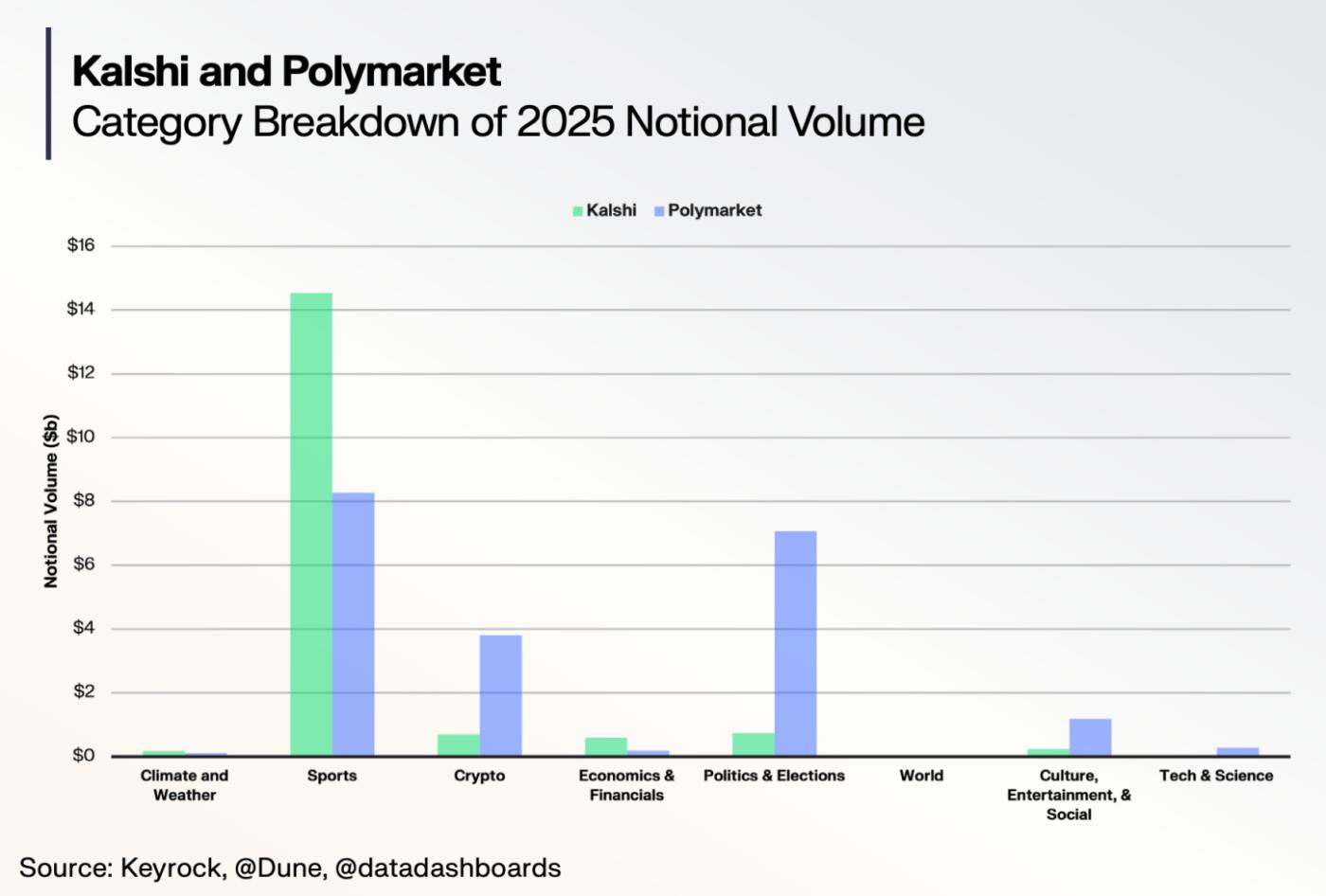
In 2025, Kalshi will still be primarily focused on sports, with sports accounting for approximately 85% of its nominal trading volume.
In contrast, Polymarket presents a more diversified portfolio—
Sports (39%), politics (34%), and cryptocurrencies (18%) collectively drive over 90% of prediction market betting activity.
In addition, based on transaction volume,
- Economic analysts predict that event-related trading volume will increase by 905%, reaching $112 million.
- Transactions related to technology and scientific prediction events increased by 1637% to $123 million;
- Open interest events were led by economics (growing 7 times to a market size of approximately $800 million) and society and culture (growing 6 times to a market size of approximately $700 million), indicating the growing use of macro hedging and long-term perspective positioning.
- Other categories (such as culture and society) also saw significant growth, with the overall contract opening volume increasing from approximately $3.3 billion at the beginning of 2025 to around $13 billion, resulting in a substantial improvement in market depth and liquidity.
Predicting that the market also has "peak and off-peak seasons": the second half of the year becomes a period of explosive growth in trading volume.
It's worth noting that as of late August 2025, data showed that Polymarket's trading volume remained at around $7.5 billion to $8 billion. However, with the surge in various unforeseen events, political incidents, and sporting events in the second half of the year, both Polymarket and Kalshi experienced a "trading boom."
In September, Kalshi and Polymarket's combined transaction volume reached $1.44 billion ;
In October, the market trading volume was projected to reach $8.7 billion , with Kalshi leading and Polymarket following.
In November, Kalshi and Polymarket's combined transaction volume approached $10 billion , with Kalshi's transaction volume reaching $5.8 billion, a 32% increase month-over-month, and Polymarket's transaction volume reaching $3.74 billion, a 23.8% increase month-over-month.
In December 2025, analyst Patrick Scott reported that the binary options market had traded over $13 billion in November 2025, more than three times the peak trading volume during the 2024 election. Polymarket, Kalshi, and OPINION accounted for the vast majority of the trading volume. Binary options are now used in areas such as political speeches, sporting events, and corporate financial reports, becoming a probabilistic layer for world events and news.
Considering Kalshi's trading volume of $6.38 billion in December, Polymarket's trading volume is bound to be equally impressive, with the overall market trading volume projected to reach $13-15 billion by December 2025.
The top 5 prediction market stars have been revealed: Kalshi, Polymarket, and others.
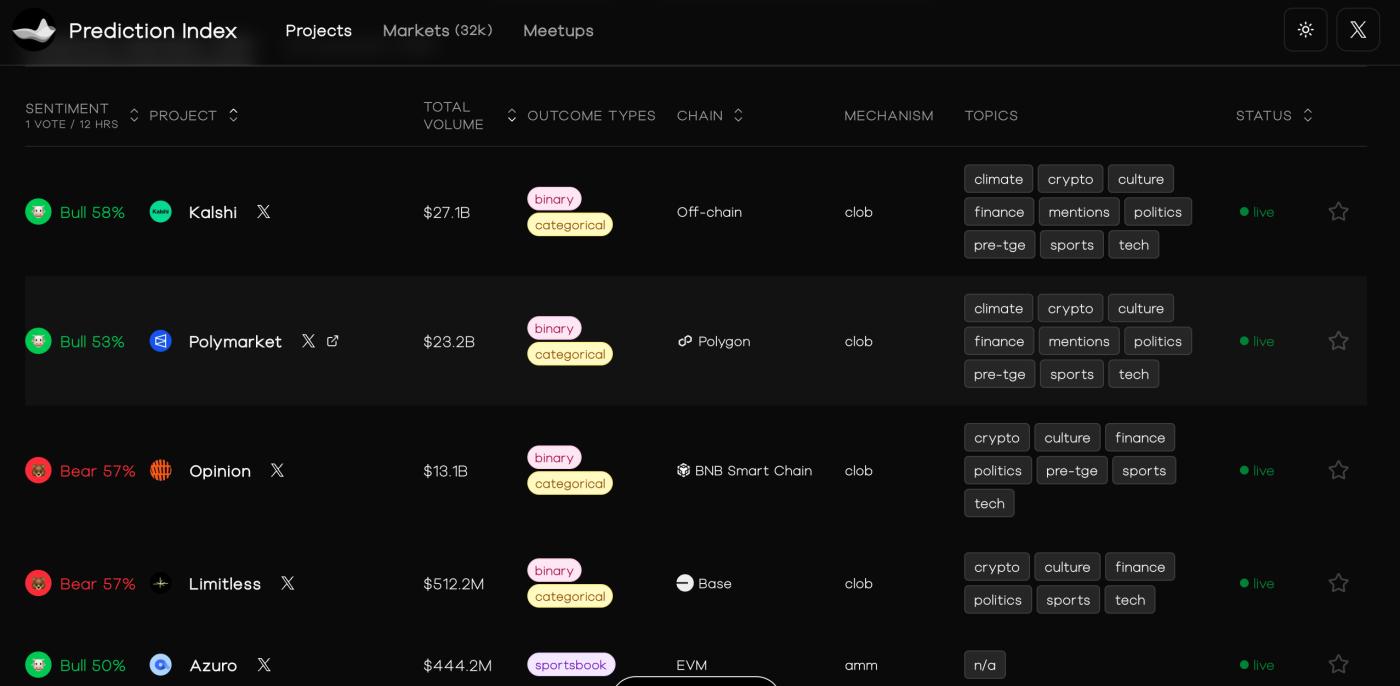
Finally, we can refer to the existing statistics from the PredictionIndex.xyz website . As of the time of writing, the top 5 platforms in terms of predicted market trading volume are as follows:
- Kalshi, with a historical transaction volume of approximately $27.1 billion;
- Polymarket, with a historical transaction volume of approximately $23.2 billion;
- Opinion's historical trading volume is approximately $13.1 billion (Note from Odaily: Considering the platform's launch date and mechanisms, there may be issues with trading volume manipulation; this information is based solely on data from the platform).
- Limitless's historical transaction volume is approximately $512 million.
- Azuro's historical transaction volume is approximately $444 million.
Previously, Kalshi's CEO had predicted the prediction market would be worth around $150 billion. Although the actual trading volume in 2025 was only one-third of what he predicted, considering that the prediction market was not even fully developed in 2024, his estimate of a $150 billion market size was not unfounded. With a series of highly anticipated prediction events, including the 2026 US midterm elections and the World Cup, the overall prediction market size may still grow tenfold in 2026.
Of course, as we mentioned in our previous article , "Only 10% of Prediction Markets Will Survive to the End of the Year—This Is Not an Exaggeration," a popular sector does not mean that all projects and platforms will thrive. For ordinary players like us, considering limitations such as liquidity depth and fund allocation, specializing in 1-3 mainstream platforms might be a better choice.