The debate between open and closed software architectures in Artificial Intelligence is far from new - but the stakes have never been higher. Closed AI systems launch with a big splash and tight control from the central players - but history shows time and time again that open ecosystems, driven by collaboration and shared tools, outshine their closed cousins in terms of speed, adaptability, and ultimately what they achieve in the long run.
How Community Collaboration TurboBoosts Innovation
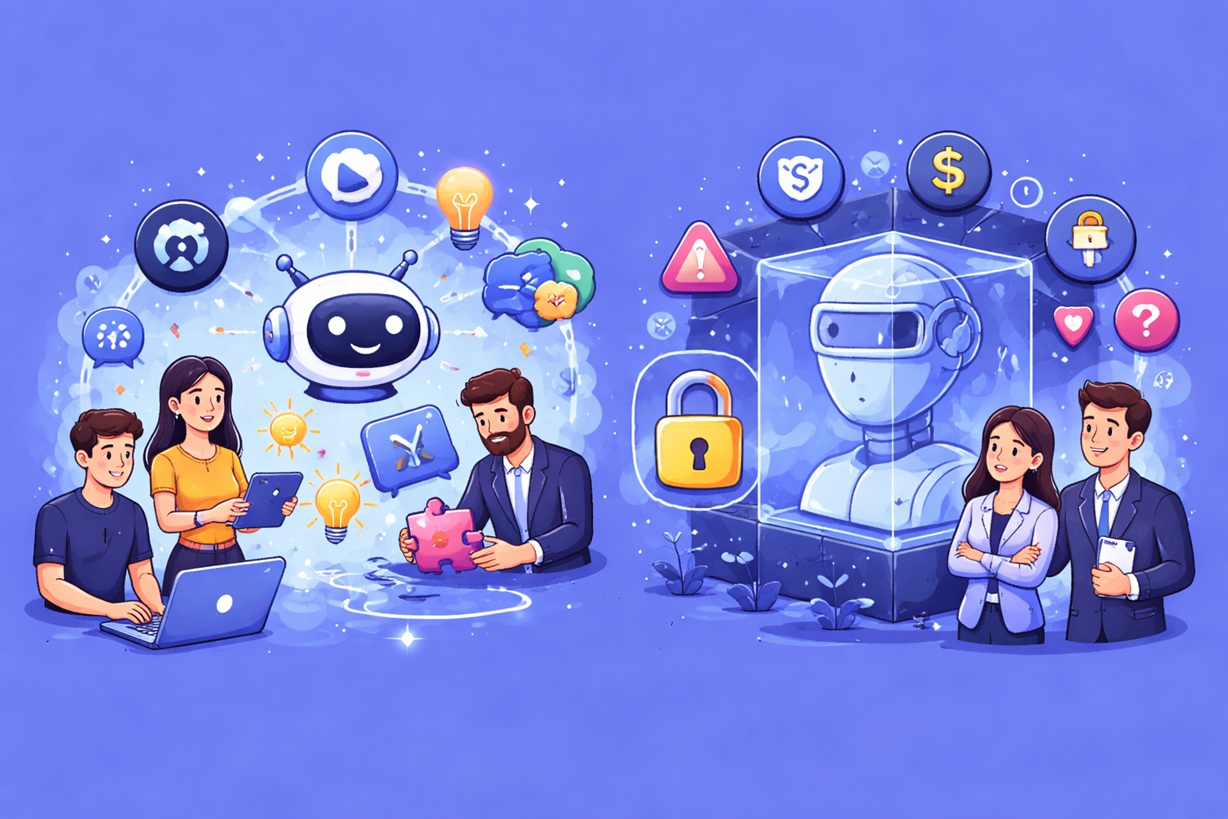
Closed AI systems are limited by the talent pool of a single company. Open ecosystems, on the other hand, draw on a huge worldwide network of coders, researchers, and hobbyists. When an open-source project is released, the community steps up and quickly optimizes it, shrinks it down to fit on consumer hardware, and builds some amazing specialized plugins that the original team may never have even thought of.
This is the kind of collaborative environment you find the most exciting and promising AI startups turning up these days. By building on top of open foundations, these new ventures can avoid the massive R&D costs of foundational training and focus on solving some really tough, high-value problems. Looking at some of the emerging leaders in this space gives a great insight into how decentralized innovation is now outpacing the carefully laid plans of the big tech players.
The Pros and Cons of Developer Adoption in Open vs Closed Platforms
For developers and investors, the biggest risk with a closed platform is often the one that bites back against them. Developers are increasingly wary of 'platform risk' - the danger that a single provider might suddenly jack up the price, limit access, or shut down the API entirely.
Open ecosystems are, in fact, pretty resilient. If a key contributor shifts focus, the community can fork the project and keep on going. The security of knowing development can carry on if something goes wrong draws in a higher volume of developer talent, leading to a richer library of documentation and integrations. And because the code is out in the open, security vulnerabilities can be spotted and fixed at a pace that in-house teams of a proprietary project struggle to match.
Lowering the Barrier to Entry for Experimentation
Closed models often put walls up to innovation behind steep subscription fees or restrictive usage policies. Open models, on the other hand, make it much easier for anyone to jump in and start playing. This freedom allows for a 'fail-fast' culture of experimentation - which is vital for making AI a reality. It lets researchers in underfunded areas or startups with very limited seed capital contribute to the global AI conversation.
This level of democratization ensures that AI breakthroughs aren't confined to a handful of high-powered Silicon Valley boardrooms - but are instead spread across a wide range of industries - from local, practical healthcare solutions to decentralized financial tools that can change people's lives.
The Future of the AI Landscape
As we look to 2026 and beyond, the gap between open and closed systems is likely only going to get wider. While proprietary models may have a temporary edge in raw compute power, the adaptability and collective know-how of open ecosystems set a superior path forward.
For founders and investors, the choice is clear now - the future belongs to those who build with the light of community transparency, not behind the closed doors of a proprietary black box.
#OpenSourceAI #Innovation