China's payment industry is facing squeezed domestic profits and a wave of license cancellations. Leading companies are increasing their investment to seek high-fee markets overseas. However, overseas expansion requires dealing with high license costs, complex compliance requirements and geopolitical risks. Companies are building global settlement capabilities by setting up operations in the Middle East and Southeast Asia. The overseas expansion of payment has entered an endurance race phase that relies on compliance infrastructure and long-term investment.
Article author: Sleepy.txt
Article source: Beating

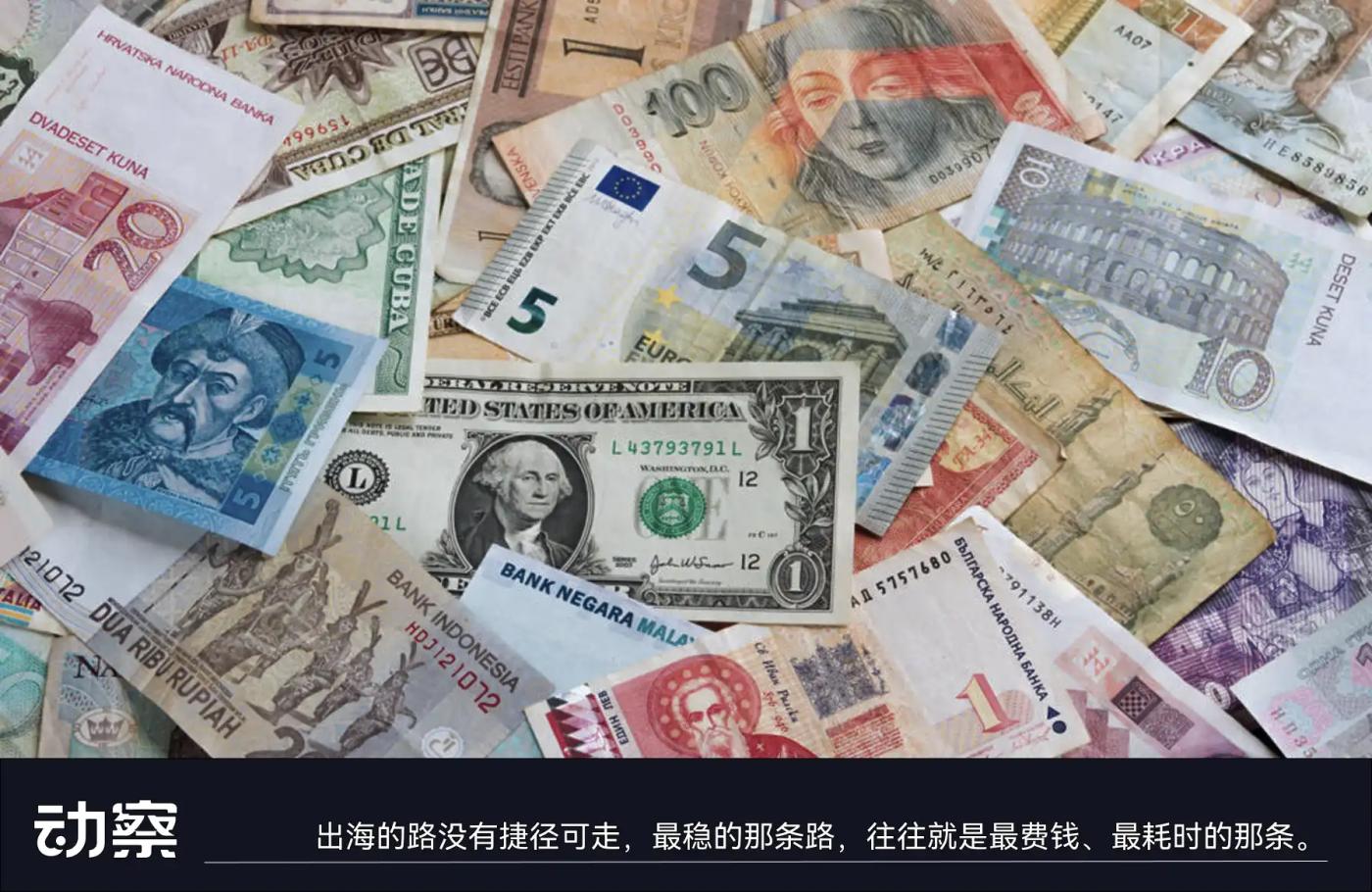
China's payment industry is undergoing an unprecedented reshuffle.
On one hand, small and medium-sized players are leaving the market in droves. By the end of 2025, the People's Bank of China had revoked 107 payment licenses, reducing the number of licensed institutions to 163, a decrease of more than 40% from the industry's peak.
On the other hand, leading institutions are aggressively expanding their market share regardless of cost. In 2025, Tencent's Tenpay completed a business registration change, with its registered capital surging from 15.3 billion yuan to 22.3 billion yuan. Following closely behind, Douyin Pay and JD.com's NetEase Pay launched capital increases of hundreds of millions or even billions of yuan.
When profits in the existing market are squeezed to the limit and domestic regulatory red lines are tightening, there is only one way out: going overseas.
The reason why industry giants are willing to spend heavily to migrate overseas is that profit margins in the domestic market have become razor-thin. Domestic payment rates have long hovered around the critical threshold of 0.3% to 0.6%, while the average rate for overseas cross-border payments is often as high as 1.5% to 3%. Faced with the allure of this 3 to 5 times interest rate difference, all capital seeking growth has no choice but to turn its attention to the global market.
However, gaining a foothold in this market is no easy feat. Overseas markets are no longer the so-called blue ocean; they are rife with stringent regulatory red lines and complex financial maneuvering. Going global with payments is a costly and protracted war.
Grab a license plate, buy time
The first step to entering this blue ocean market is to find a way to get an entry ticket.
An overseas payment license is the only ticket to enter a local settlement system. But the cost of this ticket is far greater than imagined. The application fee is just the visible expense; the real bulk of the cost is the capital tied up and opportunity cost incurred by the lengthy review process.
In the US market, for example, the application process for a Money Transmission License (MTL) typically takes 12 to 18 months. The application fee, often in the six figures in US dollars, is just the tip of the iceberg; the real hurdle is the extremely high cost of capital tied up. In California and New York, for instance, the deposit is as high as $500,000 and $1 million respectively. Application fees in a single state are usually in the thousands of dollars, while annual maintenance fees vary by state, reaching tens of thousands of dollars in some. These costs are enough to bankrupt most growing businesses.
However, these costs can also become a company's competitive advantage. Once the long period of financial drain is over, the company will reap huge profits from explosive business growth.
Airwall is a prime example. Over the past decade, Airwall accumulated more than 80 payment licenses globally. This years of preparation finally paid off in 2025. In 2025, their annualized revenue (ARR) broke through the $1 billion mark. It's worth noting that it took them nine years to earn their first $500 million ARR, but the doubling from $500 million to $1 billion took only one year.
Lianlian Pay is another company that leveraged its licenses to achieve explosive business growth. With 66 global licenses, Lianlian Pay's total global payment volume (TPV) reached 198.5 billion yuan in the first half of 2025, a surge of 94% year-on-year.
Many financial giants who lack patience often choose to spend money to buy time.
Payoneer spent nearly $80 million to acquire EasyPay, essentially to buy a license. Later, Airwallex acquired Shangwutong, and Sunrate acquired Transfar Payment, all for the same reason: to circumvent the lengthy license approval process.
Given that the cost of admission tickets is already so high, can the costs be diluted through economies of scale in subsequent operations? The reality is probably not as optimistic as imagined.
Compliance costs and talent shortage
A compliance system is the foundation for global clearing and settlement, and also the heaviest hidden cost of payments going global.
The first compliance hurdle for payment companies going global is the Anti-Money Laundering (AML) and Know Your Customer (KYC) system. Every time a company enters a new market, it must establish a customer identity verification process that complies with local regulations.
In the European Union, this means compliance with the General Data Protection Regulation (GDPR) and the fifth version of the Anti-Money Laundering Directive (5AMLD); in the United States, it means compliance with the Bank Secrecy Act (BSA) and the Financial Crimes Enforcement Network (FinCEN).
Building each compliance system requires dedicated legal, risk control, and technology teams, often costing millions of dollars. Even more challenging is that compliance standards are not static. In 2025, the EU's Digital Operations Resilience Act (DORA) came into effect, requiring all financial institutions to establish stricter cybersecurity and incident reporting mechanisms.
This means that payment companies not only need to comply with existing rules, but also need to continuously track, interpret, and implement new regulatory requirements. Each regulatory update can trigger a chain reaction of system upgrades, process restructuring, and staff training.
This pressure comes not only from overseas but also from domestic regulators' "look back." Because cross-border business involves sensitive fund outflows, domestic regulators are rapidly tightening their requirements for offshore compliance. In 2025, the domestic payment industry received approximately 75 fines, totaling over 200 million yuan. Behind these fines, three types of anti-money laundering violations have become the hardest hit areas.
Even more troublesome for companies than this obvious loss is the talent gap that underpins this system.
China has no shortage of highly efficient internet talent, but there is an extreme scarcity of multi-skilled professionals in the global financial compliance field. This scarcity creates a huge gap between the value of compliance professionals and that of ordinary positions. In top private companies in China, an annual salary of 1.5 million RMB is merely a starting point. However, if you look at Hong Kong or the United States, where financial infrastructure is more mature, this figure jumps to over 2.5 million HKD or 350,000 USD.
For every penny of profit gained by companies venturing overseas, they have to pay a higher price in terms of human resources. But the question is, once these companies have finally paid their dues and obtained their tickets, is a period of guaranteed profits truly waiting for them?
Cross-border tuition fees
Cross-border expeditions are never cheap; all transnational ambitions will eventually have to pay an extremely expensive toll.
Take Paytm, once dubbed the "Indian version of Alipay," as an example. After Ant Group invested approximately 3.36 trillion rupees, the company once held half of the Indian market. However, a ban issued by the Reserve Bank of India in January 2024 prohibited it from accepting deposits, conducting credit transactions, and cut off its payment facilities, directly plunging it into crisis.
The so-called ban is essentially India's rejection of Chinese investment. When a national-level financial instrument bears a deep Chinese imprint, its rise in India's home turf becomes an intolerable original sin.
By August 2025, when Ant Group completely exits the company, the loss of its original investment will be as high as 1.57 trillion rupees (about 2 billion US dollars). This will also deal a huge blow to Paytm itself, causing its revenue to plummet by 32.7% year-on-year.
Paytm's failure serves as a reminder that what appears to be settling accounts is actually setting the rules; whoever controls the payment channels holds the key to business success. Currently, Chinese manufacturing is in a "great age of exploration," with new energy vehicles and smart home appliances surging overseas. This overseas expansion model is essentially companies venturing into the world alone.
Unlike us, Japanese giants often bring a complete trading company and financial system with them when they go global. Companies like Mitsui and Mitsubishi not only sell cars, but also control the entire financial chain from factory to retail through their internal affiliated financial companies and banking consortia. When Japanese cars are sold in South America or Southeast Asia, these trading companies directly provide inventory financing to local dealers and offer highly competitive loans to consumers. This means that Japanese automakers control every financial link in the sales network.
In contrast, Chinese automakers' overseas expansion is more like running naked. Although exports reached 6.4 million vehicles in 2024, the financial support system is still lacking. Our automakers generally face problems such as high financing costs and difficulty in receiving payments overseas. In markets like Russia or Iran, due to the lack of such full-chain financial control, the payment chain becomes instantly vulnerable in the event of exchange rate fluctuations or settlement sanctions.
Although China Export & Credit Insurance Corporation (SINOSURE) underwrote $17.5 billion in vehicle exports in 2024, relying solely on minor policy adjustments is clearly insufficient to meet the future target of exporting tens of millions of vehicles annually. Large businesses require robust financial management; without a truly market-savvy and globally-manageable financial service system to support Chinese automakers, even the biggest strides will lack a solid foundation.
Having hit a wall in the deep waters of globalization rules, could finding a geopolitical safe haven become an effective bargaining chip for Chinese companies to gain growth space?
Fragmented globalization
When doing business overseas, the real key to success often lies not in commercial competition, but in the uncontrollable external rules.
What often kills a payment company going global is not technological backwardness, but rather a decree from local regulatory authorities. Take Paytm as an example: against the backdrop of increasingly complex Sino-Indian relations, even with hundreds of millions of users in the Indian market, Paytm is destined to become a prime target. The same logic applies to the scrutiny TikTok faces in the US. As long as concerns about "data security" persist, its payment business can never truly achieve a closed loop. This has become a rigid risk that cannot be completely avoided with money when going global.
In this environment, Chinese companies are forced to adopt a "China + 1" survival strategy, retaining their core bases in China while diversifying key supply chains and settlement routes to regions with lower geopolitical risks.
This explains why the Middle East became a hub for capital in 2025. The UAE's relatively friendly political climate and its e-commerce potential exceeding $50 billion provided a rare buffer for Chinese payment companies. By 2025, Dubai will have over 6,190 active Chinese corporate members, collectively seeking an offshore settlement solution that can bypass the pressures of the traditional SWIFT system.
However, the threshold for these so-called "safe havens" is rising daily. Places like Vietnam are rapidly tightening their "origin laundering" policies to avoid tariff troubles, and are strictly investigating companies that simply want to rebrand their products for export. This shift in policy is directly forcing many payment and logistics companies to relocate, turning their attention to the Indonesian market, which offers more flexibility in policy.
According to a McKinsey 2025 report, the global payments landscape is crumbling. For today's payment players, simply having a competitive product is no longer enough; you also need to learn to dance in shackles, navigating the cracks of international politics like walking a tightrope to find that extremely limited space for survival.
end
The current overseas expansion of payment systems has moved beyond simply showing off. The real challenge now is no longer researching the interaction logic of the interface, but rather seeing who has the ability to repair or even replace the outdated global financial system.
In the competition to expand overseas, the depth of one's pockets is essentially the tolerance for risk. When all the speculators who wanted to exploit loopholes and take shortcuts have left the market, the second half of the overseas payment industry has become an endurance race for "honest people".
In the past, we were used to "fast" and to using the advantages of our business models to disrupt the old world. But now, we must get used to "slow" and to building our credit assets brick by brick in a foreign financial environment.
For China's payment giants, going global is no longer an option, but a perilous expedition. There are no shortcuts to overseas expansion; the safest path is often the most expensive and time-consuming. Only when every investment is transformed into solid compliance infrastructure can Chinese companies finally move beyond simply setting up stalls to sell goods in front of others, and begin to operate their own payment systems.