WLFI has embarked on its DeFi expansion path, supported by a "regulatory premium," by applying for an OCC National Trust Bank license and launching WLFI Markets.
Written by: Sanqing, Foresight News
On January 12, World Liberty Financial (WLFI), a project of the Trump family, launched the lending platform World Liberty Markets.
On January 7, WLFI announced that its subsidiary, WLTC Holdings LLC, had filed an application with the Office of the Comptroller of the Currency (OCC) to establish the World Liberty Trust Company, National Association (WLTC), a national trust bank designed specifically for stablecoin operations.
WLFI's USD-pegged stablecoin USD1 saw its circulating supply exceed $3.4 billion within a year (CoinMarketCap data), making it one of the fastest-growing USD-pegged stablecoins.
Through the federal regulatory system and the liquidity lending market, WLFI is not only looking for application scenarios for USD1, but also trying to break down the walls between TradeFi and DeFi.
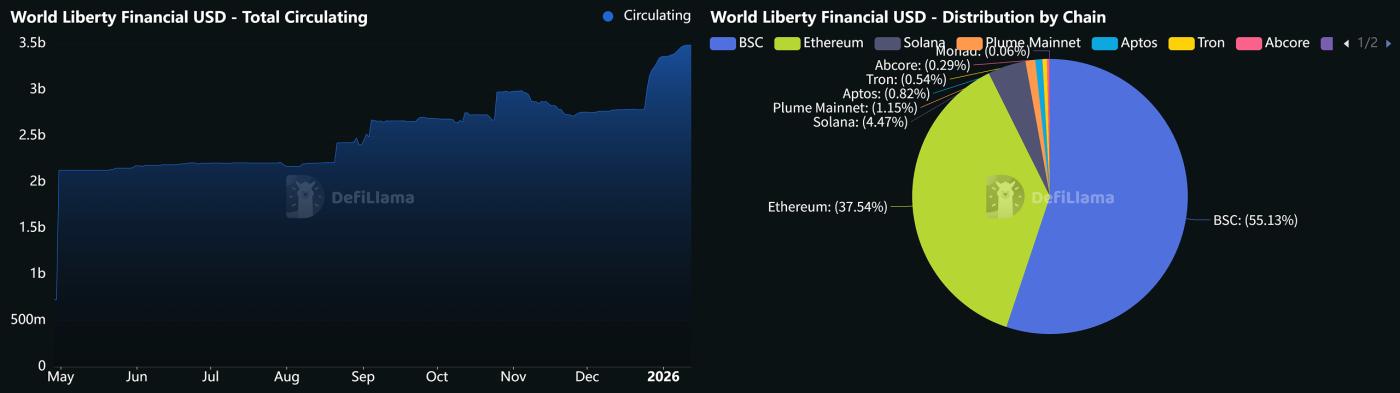
USD1 Total Market Cap Curve and Chain Share | Source: DeFiLlama
World Liberty Markets, a DeFi lending platform: Practical application of USD1
Five days after submitting its license application, WLFI launched World Liberty Markets, marking the start of its DeFi business in the practical stage. Built on the Dolomite protocol, the platform debuted on Ethereum and demonstrates an intention to expand across multiple blockchains.
World Liberty Markets is positioned as a lending market centered around USD1. Users can not only deposit assets on the platform to earn interest, but also borrow other tokens using their assets as collateral.
The lending asset system is centered around USD1, while also being compatible with various collateral such as ETH, USDC, USDT, WLFI, and cbBTC, covering mainstream crypto assets and the protocol's own tokens. This platform structure not only serves the need for USD1 to accumulate assets but also provides support for establishing a liquidity foundation for it in DeFi.
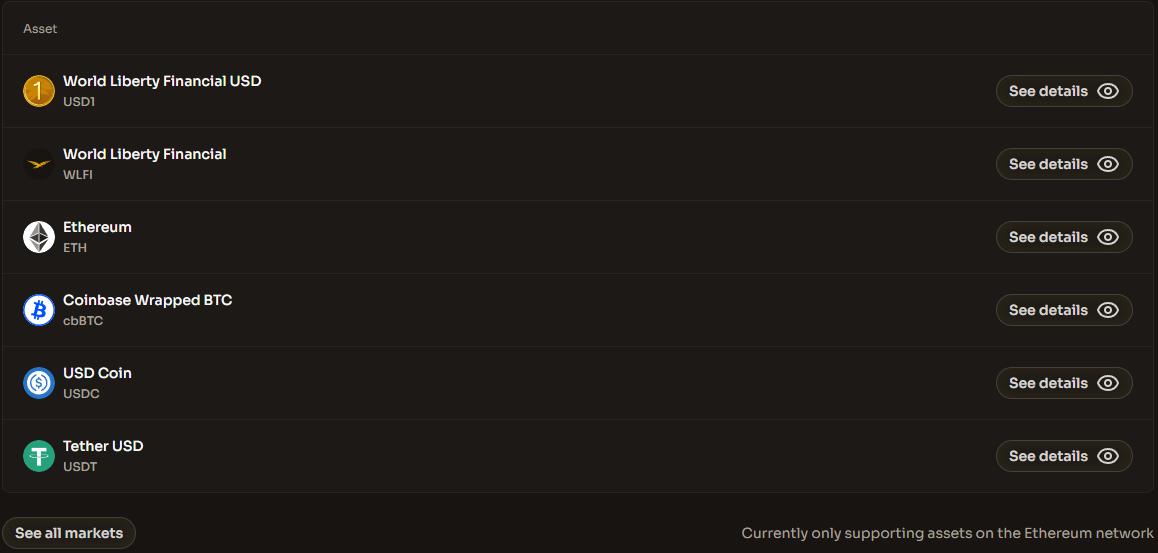
Cryptocurrencies currently supported by WLFI Markets | Image source: WLFI official website
In terms of governance, WLFI token holders have the right to propose and vote, and can make decisions on key matters such as increasing collateral assets, adjusting interest rate parameters, or setting user incentives.
The platform's launch immediately triggered a market response. Dolomite, the provider of the underlying protocol architecture, saw its native token DOLO surge by 71.9% on the first day.
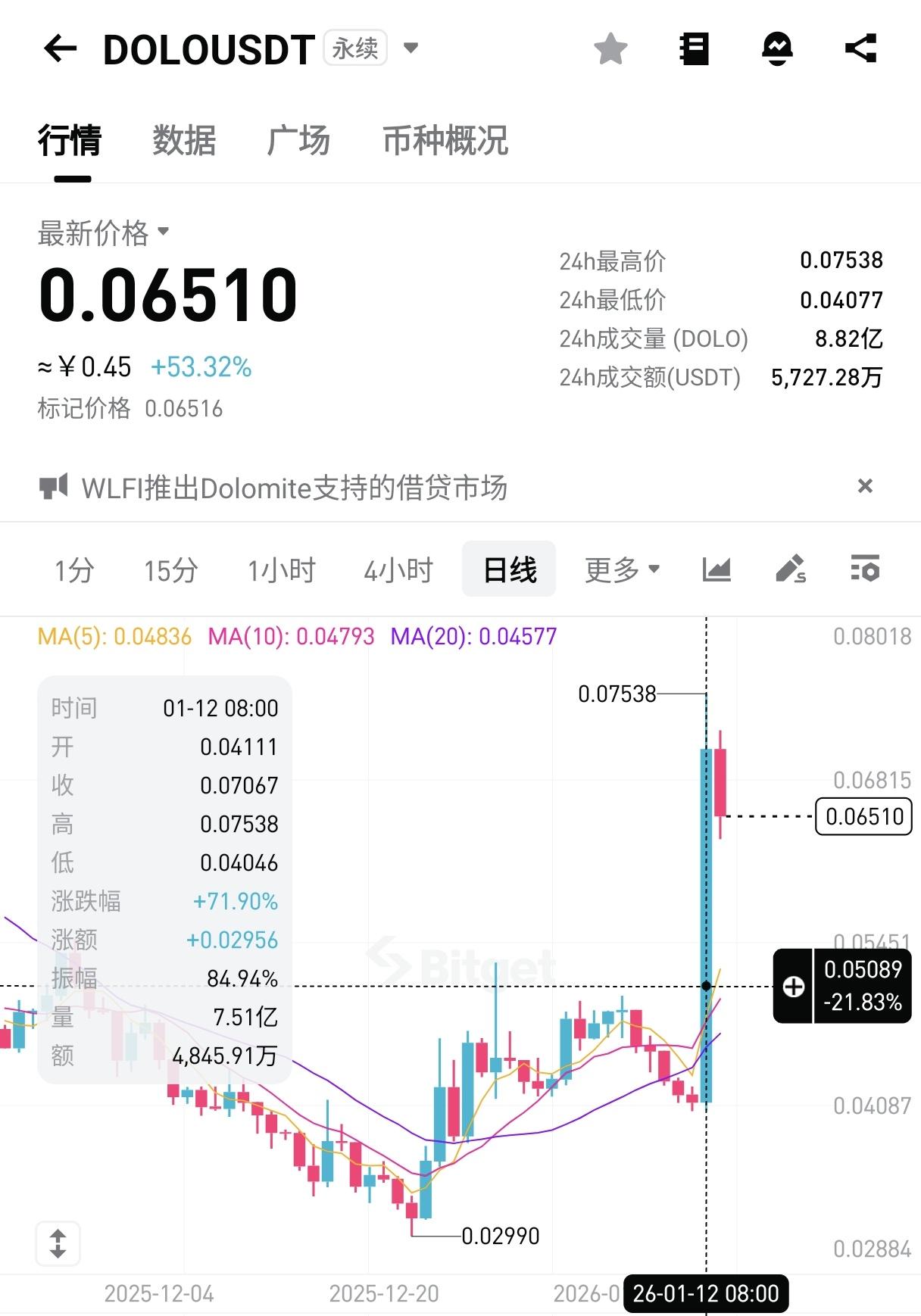
DOLOUSDT Daily Chart | Source: Bitget
Meanwhile, WLFI has also launched an early-stage incentive program to attract early adopters by increasing the returns on USD1 deposits. According to the WLFI Markets page, the USD1 lending incentive is provided by Merkl, and the annualized interest rate changes in real time.
While the regulatory application is still under review, the launch of World Liberty Markets allows WLFI to proactively establish its business scenarios. Regardless of the final outcome of the licensing process, USD1 has begun to move from an issuance concept to on-chain lending applications, truly entering the race to compete with the mainstream DeFi ecosystem.
National Trust Bank License Application: Stablecoin Business Moving Towards Regulatory Framework
The core objective of the subsidiary World Liberty Trust Company (WLTC) that WLFI plans to establish is to obtain a national trust bank license from the OCC. If the application is approved, it means that USD1's operation will shift from a third-party cooperation model to a "full-stack" model directly regulated by the federal government.
WLTC's pre-defined business scope includes: directly handling the minting and burning of USD1 without relying on external intermediaries; providing direct exchange services between the US dollar and USD1; and providing regulated custody services for assets such as USD1, gradually replacing third-party service providers such as BitGo.
The significance of this license extends far beyond business integration itself. Obtaining an OCC license means the project enters a federally regulated system, which has a profound impact on user trust and institutional adoption.
Binance has been deeply involved in the creation of USD1 and has added trading pairs, while Coinbase has also listed the asset. This regulatory endorsement further reduces user concerns, and by directly accepting federal regulation, WLFI can better comply with regulatory requirements such as the GENIUS Act.
WLFI also hopes to prevent any potential conflicts of interest through its structural design. In response to potential political scrutiny, WLFI CEO Zach Witkoff stated that the trust's structure is designed to avoid conflict, and that Trump and his family members will not serve as executives or exercise day-to-day control.
Meanwhile, USD1 has gradually gained more institutional support, indicating its increasing penetration in the industry. Abu Dhabi-based investment firm MGX used USD1 to purchase $2 billion worth of Binance shares, a transaction that served as significant external endorsement for the currency.
Despite rapid progress, WLFI still faces multiple uncertainties. Discussions regarding conflicts of interest will be a focal point during the OCC's approval process. Although Zach Witkoff emphasized that the Trump family does not hold executive positions or have voting rights, the timely approval of the application remains uncertain given the highly sensitive political climate.
Furthermore, while USD1 has grown rapidly, it still lags significantly behind the two leading stablecoins, USDT and USDC, in terms of liquidity depth and application scenarios. To expand further, WLFI needs to prove that its advantages come not only from compliance narratives and endorsements, but also from providing a technological experience, capital efficiency, and DeFi composability comparable to or even better than mainstream products.
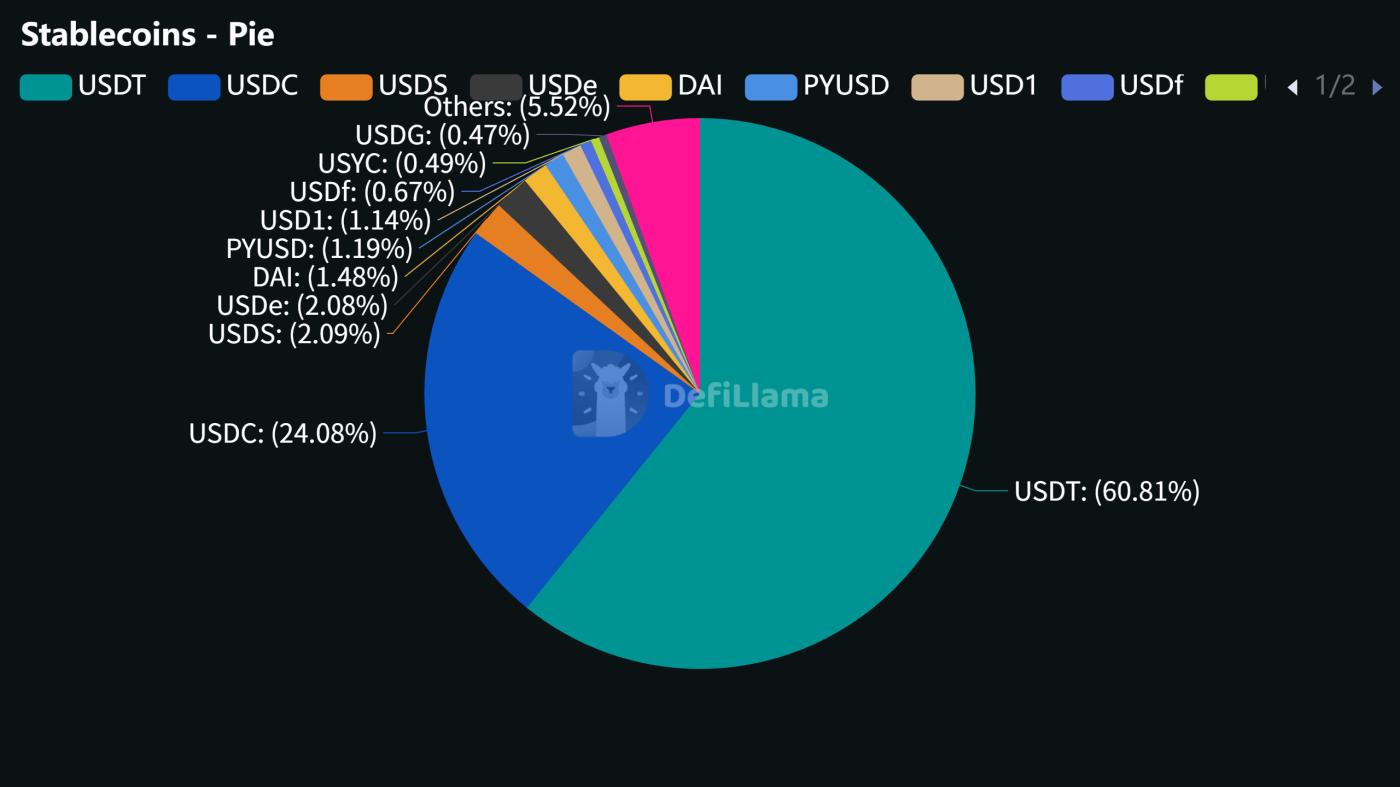
Market capitalization breakdown of various stablecoins | Source: DeFiLlama
The relationship between licenses and DeFi lending: indirect but strategically complementary.
As the OCC gradually approves similar licenses for companies including Circle, Ripple, BitGo, Paxos, and Fidelity, a regulated cryptocurrency banking system is taking shape.
There is no direct regulatory link between the National Trust Bank license and DeFi lending, but there is significant indirect support.
Enhance USD1's credibility and liquidity in DeFi. Federal regulatory status provides USD1 with credit backing, attracting more funds to liquidity pools and improving the depth and stability of the lending market.
Bridging TradeFi and DeFi. The fiat currency access provided by the license lowers the barrier to entry for users, making it easier for traditional users to participate in DeFi lending.
Building a truly closed-loop business system. In the future, WLFI plans to launch a mobile app, a USD1 debit card, and RWA integration (such as tokenized real estate as collateral), all of which will benefit from regulatory clarity and credit backing.