On January 14th, data showed that the 52-week correlation between Bitcoin and gold had dropped to zero for the first time since mid-2022, and may turn negative by the end of January. Historically, in similar scenarios, Bitcoin typically sees an average increase of 56% within about two months, corresponding to a price range of approximately $144,000 to $150,000.
Analysts point out that the divergence between Bitcoin and gold price movements often foreshadows a strong upward trend for BTC. The current macroeconomic environment is also considered bullish, including a global liquidity rebound (M2 growth) and the Federal Reserve's quantitative easing (QT) nearing its end. Matt Hougan, head of research at Bitwise, stated that a new round of global monetary easing has begun and may continue to drive Bitcoin prices upward into 2026.
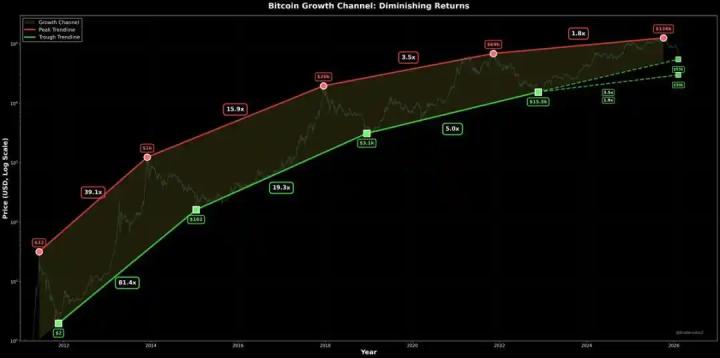
From a cyclical perspective, analysts believe that Bitcoin's price movement is replicating the path of the 2020-2021 bull market, having transitioned from a long-term consolidation phase into the early stages of a quasi-parabolic upward trend. If this historical fractal pattern continues, BTC's target price for this round may point to around $150,000.