Cryptocurrency , a 25-year-old game, is a story about Venezuelans surviving and fleeing. You never know where a butterfly flapping its wings will lead to a hurricane.
Nine days after the US raid on Venezuela and the arrest of its president, Maduro, a game called RuneScape once again made history. On that day, RuneScape had over 258,000 concurrent online players, the highest number in the game's 25-year history.
Two seemingly unrelated things have been magically connected.
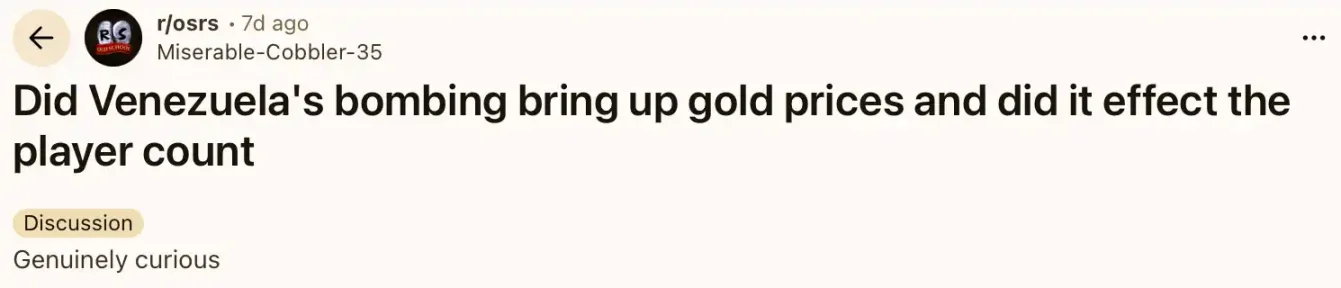
Will the US attack on Venezuela cause a rise in gold prices and changes in the number of players on RuneScape?
While the world focuses on international oil prices or the Venezuelan stock market due to the turmoil in Venezuela, RuneScape players are paying attention to the changes in gold coins and prices within RuneScape, as well as the number of RuneScape players.
If Maduro's "departure" from Venezuela marked the end of an era, then Venezuelan players' "departure" from RuneScape also marks the end of an era.
The end of an old era simply means history marches on relentlessly and eternally; it cannot be equated with new hope. Venezuelans, RuneScape, and cryptocurrency—these three elements were once so intensely intertwined; it was a story of survival and escape.
Survive
Venezuela was once one of the richest countries in South America because of oil, but its economy began to gradually collapse starting in 2013.
The collapse was like a snowball rolling down a mountain, constantly expanding and accelerating. Between 2013 and 2021, Venezuela's GDP cumulatively declined by approximately 75%–80%, making it the most severe economic collapse worldwide in the past 45 years caused by non-war factors, larger in scale than the Great Depression in the United States and the collapse of the Soviet Union. By 2021, 95% of Venezuelans lived below the poverty line, with 77% living in extreme poverty.
In August 2018, on the eve of the reformation of Venezuela's currency, the Bolivar, the country's annual inflation rate had already exceeded 48,000%. In just four months, the black market exchange rate of the Bolivar to the US dollar plummeted from 1 million to 1 to approximately 7 million to 1, rendering the banknotes worthless.
In this increasingly chaotic world, Venezuelans discovered RuneScape. At that time, the exchange rate of "gold," the game currency of Old School RuneScape (hereinafter referred to as OSRS), to the US dollar was approximately 1,000,000 to 1,250,000, which was far more valuable and stable than the bolivar.
Although OSRS launched in 2013, it was actually a fork of the RuneScape version from August 2007. Jagex, the company behind the game, attempted to bring the older version back to the modern era in an effort to reverse player churn and negative reactions to updates.
This attempt was unexpectedly successful, and OSRS continued to develop afterward, ensuring the enduring popularity of the RuneScape IP. This attempt also seemed somewhat fateful, as it was an older version that could be played via a web browser, with low hardware requirements, attracting a large influx of Venezuelan players who worked within this virtual game world to solve their real-world survival problems.
There's an old YouTube video from February 2018 showing someone playing OSRS on a Canaima laptop with only 2GB of memory. In the 2010s, the Venezuelan government distributed millions of free Canaima computers to students to aid their learning.
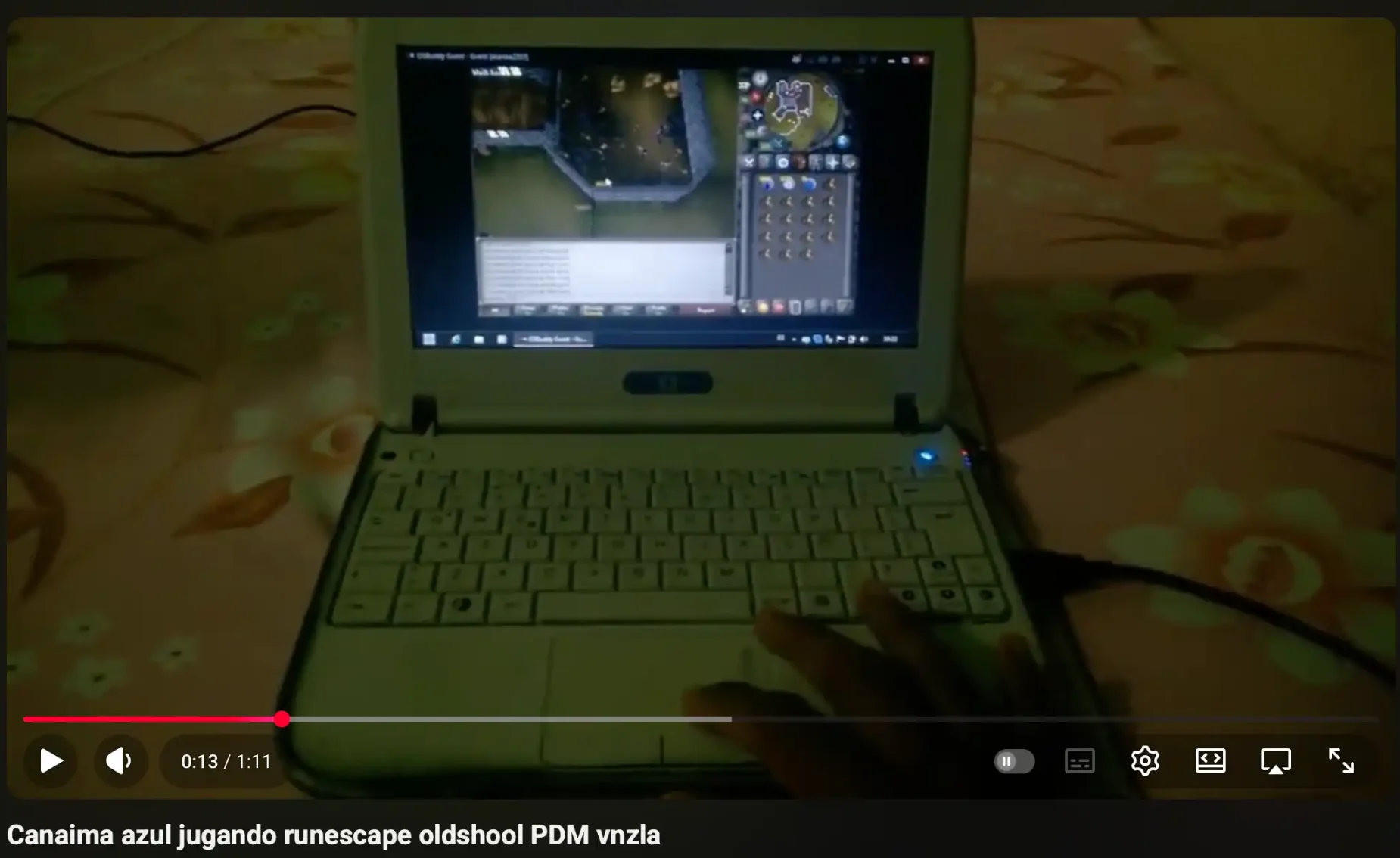
Who would have thought that while knowledge failed to help these children change their fate in the face of national decline, this computer, with its extremely limited capabilities, helped them catch their breath in the face of survival difficulties.
Venezuelan players began using OSRS to make a living at least as early as 2017, or even earlier. In September 2017, a Reddit post teaching OSRS players how to hunt down Venezuelan players in the game's "Eastern Dragon Zone" went viral and subsequently became an important meme in OSRS history.
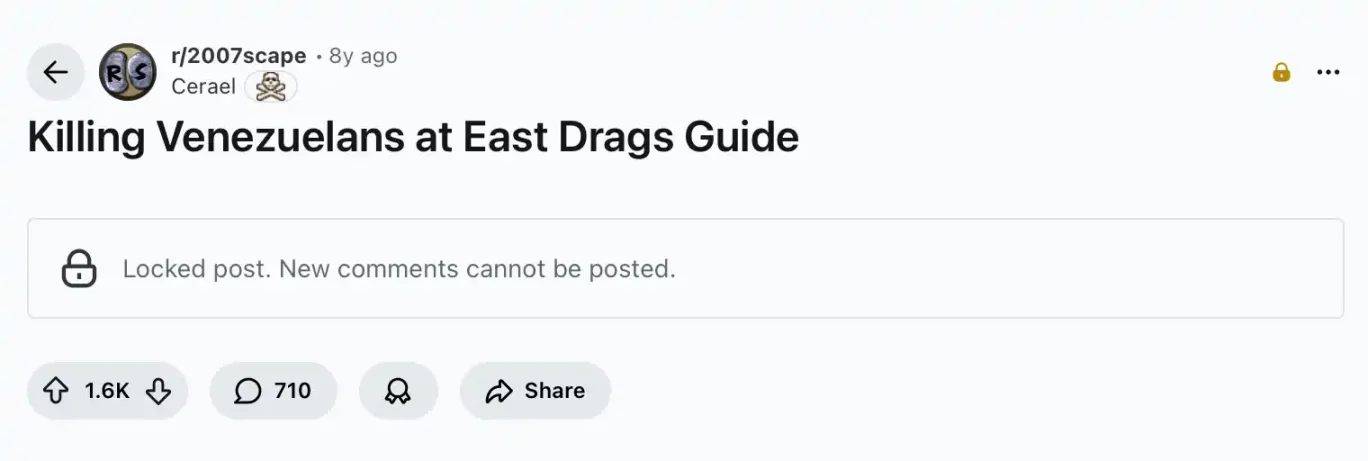
"Eastern Dragon Zone" refers to the eastern part of the "Graveyard Hunter Zone" in OSRS, where a monster called "Green Dragon" spawns. Venezuelan players flocked to this area from 2017 to 2019. They relentlessly slayed the Green Dragon, selling its bones and hides on the RuneScape marketplace for gold coins, which they then converted into Bitcoin or other cryptocurrencies.
According to an article posted in August 2017 by Steemit user "fisherman," farming the Green Dragon could earn 500,000 OSRS coins per hour, equivalent to $0.50. This method of making money was even featured in Venezuelan newspapers.
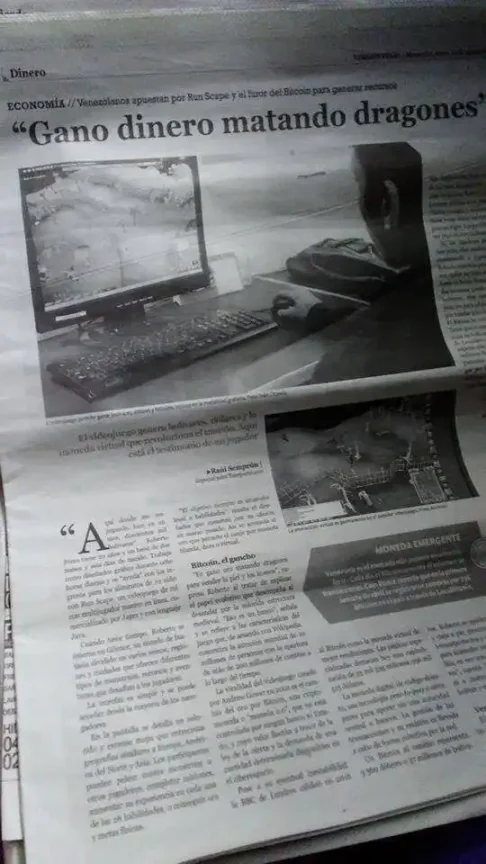
Advanced players will then hunt another giant winged snake boss, "Zurlah," which will increase their hourly earnings to $2-3. This hourly wage is more than most college-educated people in Venezuela earn.
Several years ago, when Venezuelan players were most active in making a living by trading gold on OSRS, they were interviewed by several English-language media outlets. Those interviewed generally earned $100 or more per month from OSRS, while their parents only earned around $10 per month. In their view, OSRS was very well-known among Venezuelans and could be considered a mainstream way to earn money, enough to support their families and protect them from the impact of the bolivar's devaluation on their hard work.
Just as in Hong Kong we see many Filipino domestic helpers filling the gaps in daily household chores, Venezuelan players in the OSRS world fill the gaps in the tedious and repetitive grind for levels and resources. Besides farming dragons, snakes, and deer for materials, Venezuelan players also take on jobs like leveling up skills and crafting items. However, unlike their Filipino counterparts in Hong Kong, Venezuelan players don't leisurely stroll the streets in groups enjoying coffee. Due to Jagex's crackdown on real-world trading of in-game items, Venezuelan players, much like cryptocurrency users using burner addresses to avoid phishing attacks, have multiple burner accounts to mitigate the risk of account bans.
In March 2019, Venezuela experienced a nationwide blackout. During those days, the Green Dragon lost its most loyal dragon slayers, causing a sharp drop in the supply of dragon bones in the market and a subsequent price increase.
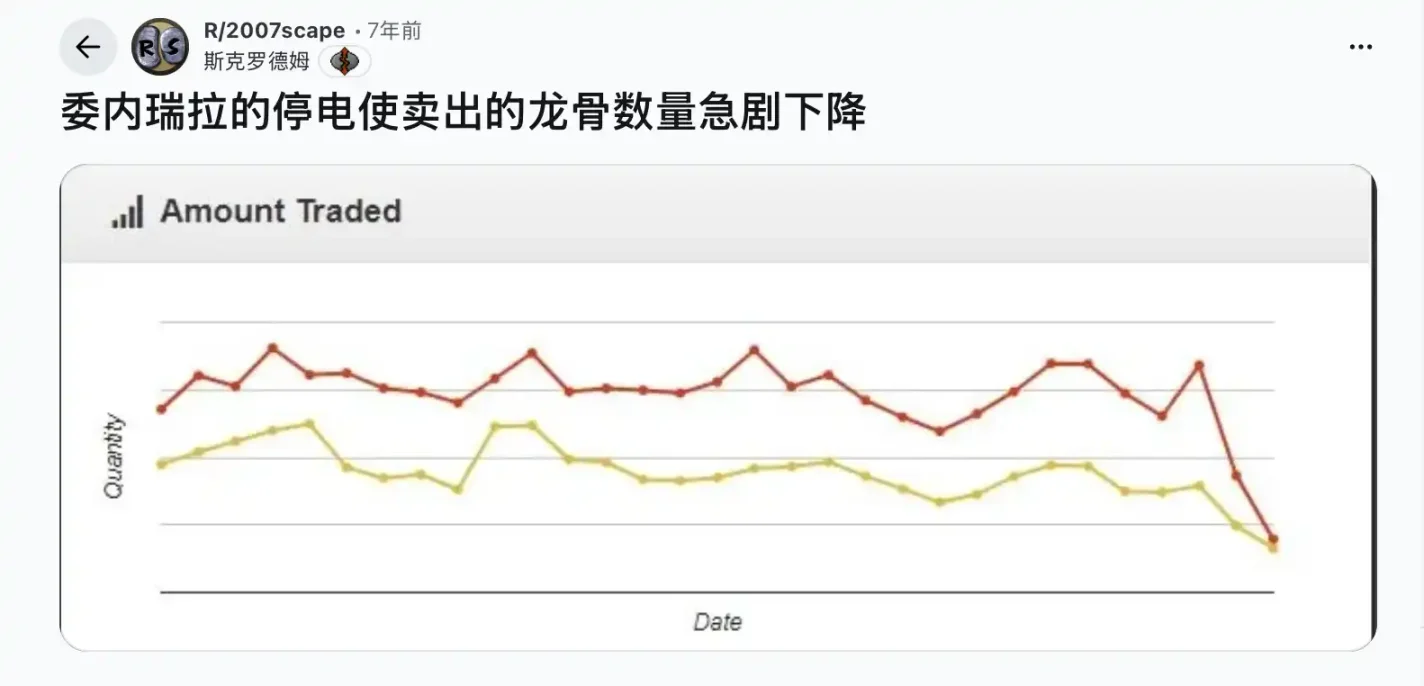
Players have a love-hate relationship with these Venezuelan gold farmers. On one hand, Venezuelan players are generally genuinely manual players. Unlike players from other countries and regions who have the resources to run gold farming studios and earn large sums of money, they are truly earning gold through manual gameplay, just like any other player, simply for survival. Sometimes, more casual players even believe that the existence of Venezuelan players actually provides a better gaming experience for those who don't want to grind too much; they don't need to spend a lot of money to directly experience the fun they want in the game.
On the other hand, such profit-seeking behavior will inevitably affect the gaming experience of normal players and the game's economic mechanisms. The actions of Venezuelan players in the OSRS world, driven by their need for real-world survival, will in turn affect the survival of the OSRS world itself. For years, opinions about Venezuelan players have been hotly debated on Reddit, ranging from anonymous malice to anonymous warmth.
Until the Venezuelan player left.
get away
In today's OSRS world, only the legends of Venezuela are heard, and the goldsmiths of yesteryear are nowhere to be seen.
Starting in 2023, Venezuelan players began to gradually leave OSRS. As Venezuela's economy continued to collapse, the price of gold on OSRS also fell. The tireless, uninterrupted operation of robots began to compete with manual labor in Venezuela, leading to a surge in OSRS gold production and a corresponding decline in the price. Currently, the price of OSRS gold to the US dollar is approximately 1 million units of gold: 0.16 – 0.2 US dollars.
For Venezuelan players, the gold farming hasn't stopped; they've simply moved to more cost-effective places—they've turned to games like Tibia, Albion Online, and World of Warcraft, continuing to seek a living in the virtual world.
But there will always be people asking, "Is this the right way to live?" As a result, some players resolutely leave these virtual game worlds, and even leave their real-world countries.
According to the latest data from earlier this year, approximately 7.9 million Venezuelans have fled the country, making it one of the largest refugee crises in Latin American and even global history. In English-language media, we can see interviews with Venezuelans who escaped Venezuela by earning money through OSRS (Office of the Venezuelan National Economic and Social Development).
José Ricardo, an OSRS gold middleman, profits by buying OSRS gold and reselling it. In an interview a few years ago, he said he earned between $800 and $1200 a month. He invested those profits in cryptocurrencies and had enough money for vacations in Brazil, Colombia, Trinidad, and Tobago. He still lives in Venezuela, but that's just one option; he doesn't want his life to be confined to one place or one thing forever.
Victor Alexander Rodriguez, starting in early 2017, decided to earn money by playing OSRS for 14 hours a day with his sister to supplement their income. From the very beginning, he and his sister discussed, "One day, we'll leave." Together, they managed to scrape together $500 through OSRS and traveled to Peru in 2018. Later, he became a security guard, earning a higher salary than he did playing OSRS. In his free time, he occasionally returns to the world of OSRS on his phone, but this time, he's truly a player enjoying the game.
But not every escape story is so rosy. Bran Castillo once described the experience of a friend of a friend—who successfully earned enough money to go to Peru through OSRS, continued using OSRS there, but the income level that was sufficient in Venezuela couldn't sustain him in Peru. On Reddit, Venezuelan users have answered questions about this; while their public services have quality issues (most absurdly, the first time logging into OSRS relied on mobile data because the broadband copper core was stolen), they generally don't need to pay much, and the money they earn is mainly for basic necessities.
There are even darker rumors circulating that some Venezuelan OSRS female gamers, after fleeing the country, didn't know how to make a living and turned to prostitution...
OSRS players share a belief: "This game never ends. You're not leaving; you're just taking a break."
The most touching blessing I've ever seen is, "I hope that one day, we won't have anything to worry about besides the joy of the game, and can simply enjoy it."
Conclusion
Venezuela's connection to the cryptocurrency industry is both numerous and profound. We now discuss the Maduro regime's potential Bitcoin reserves of up to 600,000 coins, analyze in depth why Venezuela's Petro cryptocurrency failed, and examine the economic and daily life changes brought about by USDT becoming a widely adopted de facto currency…
But this time, when we tried to find the stories of "people" rather than starting from the phenomena and perspectives of "industry macro," we saw how cryptocurrency and a 25-year-old game helped Venezuelans solve their livelihood problems. Entangled in the virtual world, conveying emotions and fighting, all for survival in the real world, or to escape that damned fate.
Without cryptocurrencies overcoming geographical, linguistic, and cultural barriers, forging a sufficiently large global consensus on value, and providing a solid foundation of world-class trust at the settlement level, the stories of OSRS and Venezuela might not have unfolded.
Whether it's struggling to maintain a broken life in the virtual world or escaping both the virtual and real worlds to pursue new hope, these seemingly trivial daily choices actually promote the progress of the industry.
Their stories have faded into the background of OSRS and have become mere outsiders in the cryptocurrency industry, yet they represent the real hardships and struggles behind the industry's progress.