Professor Guo Yike systematically elaborated on Hong Kong's development positioning, technological practices, and future direction within the framework of generative artificial intelligence.
Article author and source: HKGAI
The World Artificial Intelligence Conference (WAIC) has moved to Hong Kong for the first time, with the 8th annual "WAIC UP!" event held today at the Hong Kong Science Park. Professor Yi-Ke Guo, Chief Vice-President of the Hong Kong University of Science and Technology and Director of the Hong Kong Generative Artificial Intelligence Research and Development Center (HKGAI), was invited to deliver a keynote speech entitled "From Research to Application: Hong Kong's AI Development Path and the Bridging Role of 'Hong Kong Language Connect'", systematically elaborating on Hong Kong's development positioning, technological practices, and future direction within the framework of generative artificial intelligence.
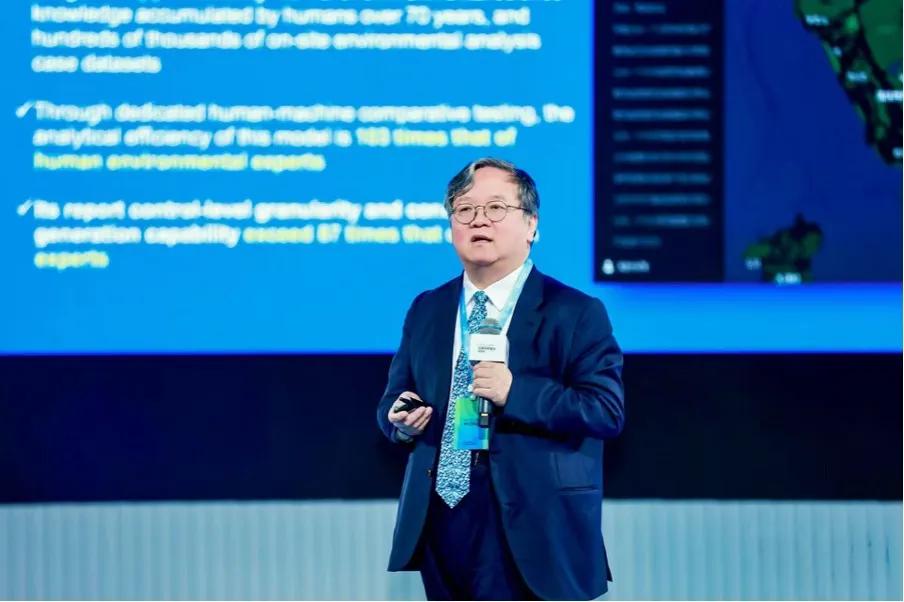
The important role of Sovereign AI
Professor Guo Yike said, "Sovereign AI is not only about large model technology, but also covers computing infrastructure, data sovereignty, governance structure and public service capabilities. It is an important component of the next generation of urban digital infrastructure."
He described Hong Kong as "small but complete," possessing a sound rule of law, a multilingual society, and a mature governance structure, making it particularly suitable for pioneering the verification of the feasibility of sovereign AI in urban governance, public services, and people's livelihood applications, and providing empirical experience for larger-scale promotion.
Building an AI industry ecosystem with Hong Kong characteristics
Professor Guo Yike stated that since its establishment in October 2023, HKGAI has focused on the research and development of core technologies and applications of generative artificial intelligence. He pointed out that HKGAI's core mission is not simply technology research and development, but rather to build a complete and sustainable city-level AI infrastructure for Hong Kong.
He pointed out that the center has built a high-performance computing platform, a self-trained large-scale language model, and a secure and compliant local data and governance architecture for Hong Kong, starting from scratch. This provides the government, public institutions, and society with a long-term, evolvable foundation for AI capabilities.
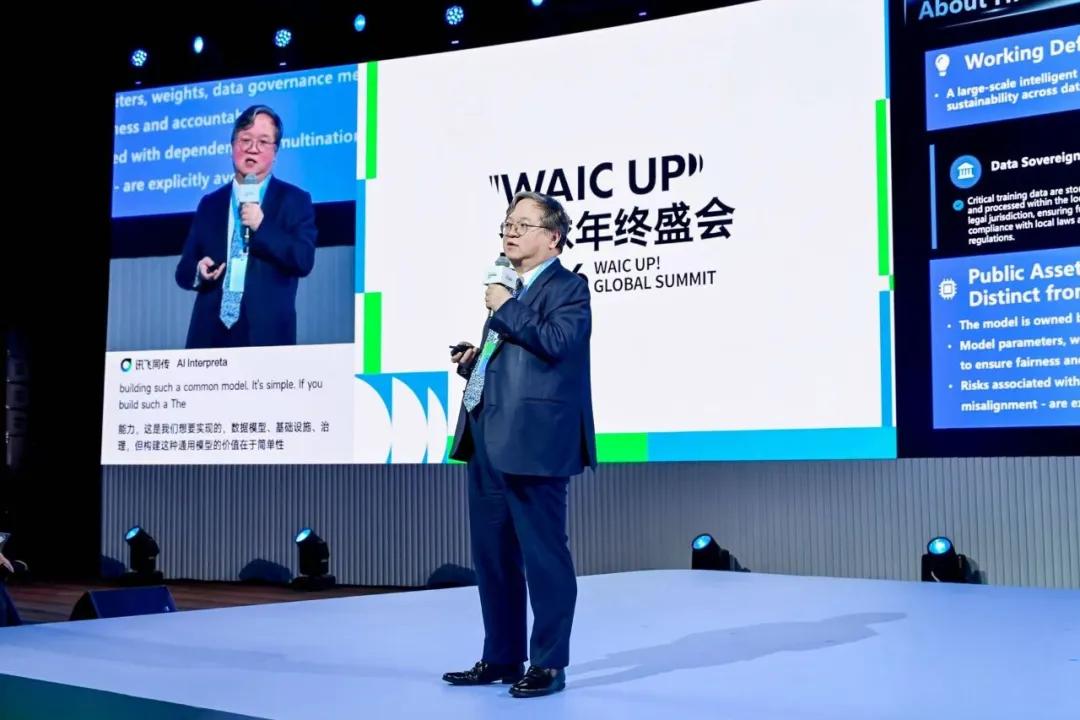
"HK Call": A Citizen-Centric AI Service Demonstration
In his speech, Professor Guo Yike highlighted HKChat, a citizen-level AI application independently developed by HKGAI. This application is centered on Hong Kong's bilingual (Cantonese, Mandarin, and English) environment, supporting natural conversation in Cantonese, Mandarin, and English. It also integrates local government data and public information to provide services such as real-time traffic updates, weather forecasts, legal advice, financial information, and document analysis.
Professor Guo stated that "HK Call" emphasizes the "actionable" AI design concept, not only answering questions but also directly supporting actual decision-making and actions. Since its launch, the platform has recorded over 600,000 registered users, becoming an AI assistant in the daily lives of Hong Kong citizens.
Towards a Symbiotic Urban Future of AI × Web3
Looking to the future, Professor Guo Yike pointed out: "Artificial intelligence is moving from 'conversational tools' to 'agent-driven intelligence.' HKGAI is actively integrating Web3 infrastructure to study the identity, transaction, collaboration, and governance models of AI agents in the virtual and real worlds, exploring a new urban form of 'human-AI symbiosis.'"
He added that Hong Kong possesses unique advantages in its legal system, policy-making, and fintech, and is well-positioned to provide valuable best practices for the world in areas such as AI governance, computing power integration, and decentralized architecture.
In his concluding remarks, Professor Guo pointed out that Hong Kong is promoting sovereign artificial intelligence from scientific research to large-scale application on a city-by-city basis. HKGAI will continue to work with the government, academia, and industry to deepen AI infrastructure construction, promote responsible innovation, and build Hong Kong into an important demonstration city for sovereign AI development in China and even globally.
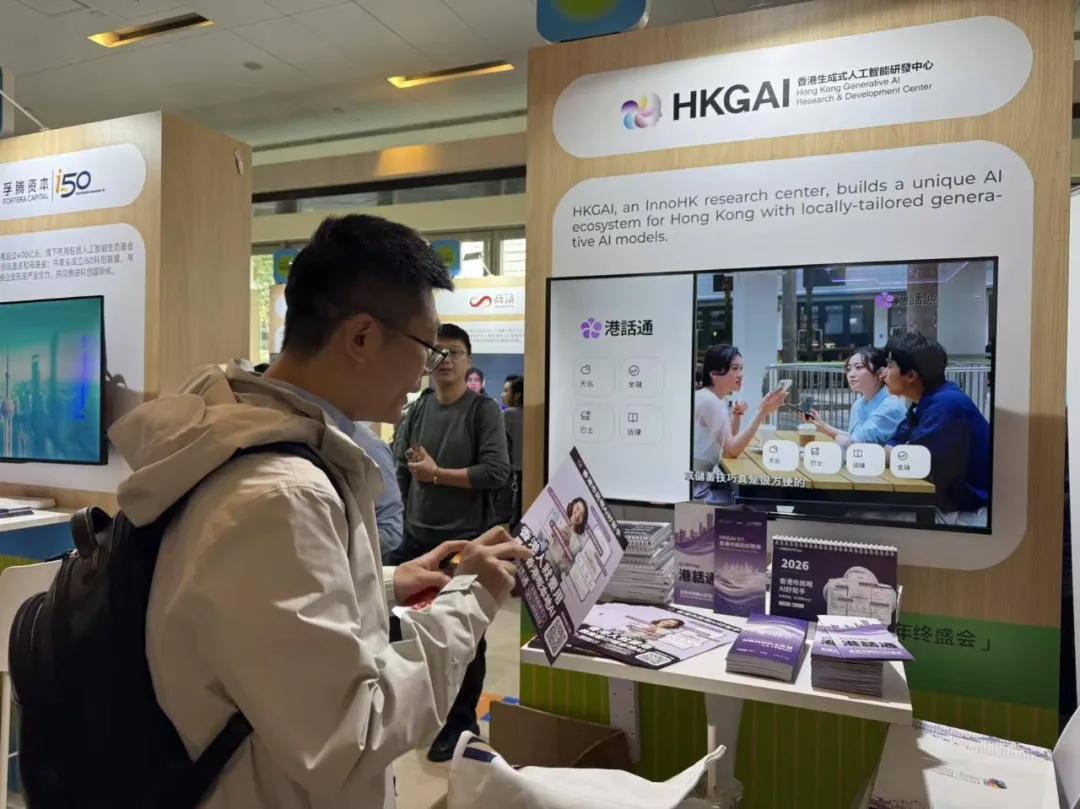
In addition, "HK Call Connect" also set up an exhibition booth at the "2026 WAIC UP!" year-end event, showcasing its latest functions and application scenarios to attendees, industry professionals, and the public. Through on-site demonstrations and exchanges, the team introduced how "HK Call Connect" integrates with local data to bring a smarter and more convenient experience to citizens' daily lives and public services, attracting many visitors to stop and learn more.