According to ChainCatcher, Garrett Jin, suspected to be the "1011 insider whale," posted on the X platform that comparing the current Bitcoin market to 2022 is highly unprofessional. He believes there are fundamental differences between the two in terms of long-term price structure, macroeconomic background, investor composition, and token distribution. He points out that the current macroeconomic environment is diametrically opposed to the high-inflation and interest rate hike cycle of 2022: the situation in Ukraine is easing, CPI and risk-free interest rates are declining, and the AI technology revolution is likely to drive the economy into a long-term deflationary cycle. Interest rates have entered a phase of rate cuts, and central bank liquidity is returning to the financial system, defining the risk-averse behavior of capital.
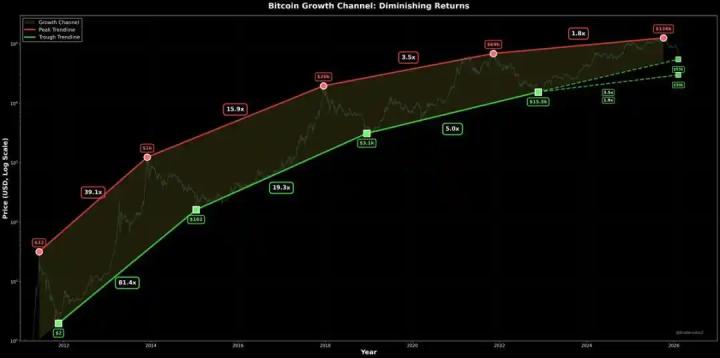
Since 2020, Bitcoin has shown a clear negative correlation with the year-on-year change in CPI, and with the AI-driven technological revolution, long-term deflation is a high-probability outcome. Technically, 2021-2022 saw a weekly M-top pattern, while 2025 represents a breakout from the upward channel, probabilistically more likely a "bear trap" before a rebound. He pointed out that for a bear market like the one in 2022 to repeat itself, stringent conditions must be met simultaneously, including a resurgence of inflationary shocks, central banks restarting interest rate hikes or quantitative tightening, and a decisive drop in prices below $80,850. It is premature to be bearish before these conditions are met.
In terms of investor structure, the period from 2020 to 2022 was a highly leveraged speculative market dominated by retail investors. However, since the launch of Bitcoin ETFs in 2023, structural long-term holders have entered the market, effectively locking up supply and significantly reducing trading speed and volatility. Bitcoin has shifted from its historical volatility of 80-150% to a range of 30-60%, becoming a distinctly different asset. The current market has entered a more mature institutional era, characterized by stable underlying demand, locked-up supply, and institutional-level volatility.