(This article is a compilation, written and provided by Oops Panda, and does not represent the views of Dongqu, nor is it investment advice, buy or sell recommendation. See the liability warning at the end of the article for details.)
In consumer culture, the IPs that can truly survive in the long term often do not start with technology, but rather with a sense of "anticipation".
The enduring popularity of blind boxes and designer toys stems from a simple yet powerful logic: people are not just buying an object, but rather a moment of discovering the unknown and the process by which the character gradually becomes meaningful over time.
Oops Panda is a project that brings this logic to Web3.
It's not a gimmick, nor is it simply an outer shell superimposed on blockchain; rather, it's an underlying design philosophy.
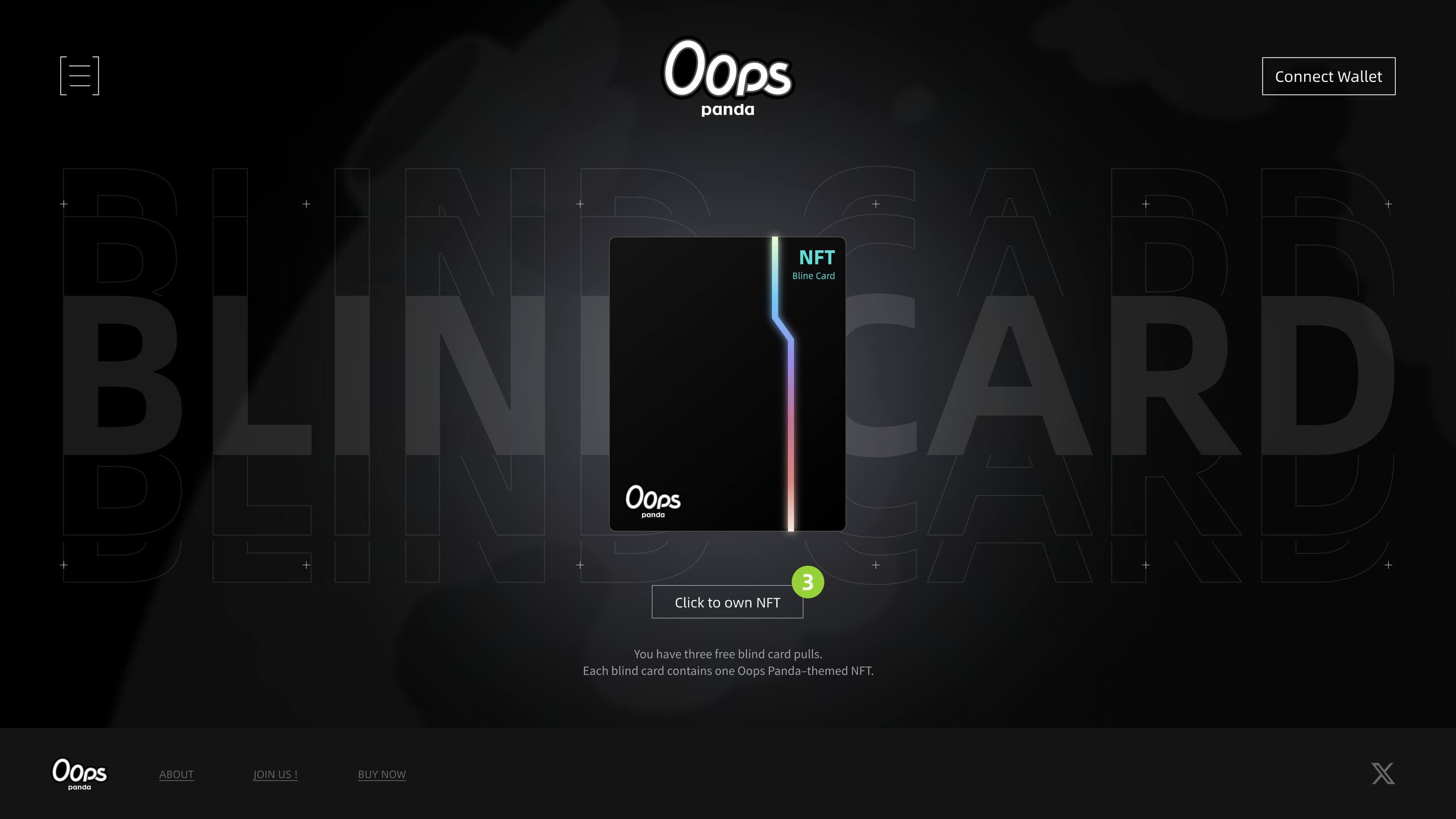
At first glance, Oops Panda appears in a familiar and friendly way: a world centered around characters and unfolding gradually. Like opening a blind box, the initial encounter isn't about "collecting them all," but about curiosity.
But Oops Panda doesn't stop at just collecting.
Unlike traditional blind boxes that emphasize "ownership," Oops Panda focuses more on "what continues to happen." The characters are not fixed images, but rather grow through continuous interaction, changing in terms of emotions, narrative, and symbolic meaning.
Therefore, Oops Panda focuses not on "what you get", but on "what you are participating in".
Essentially, Oops Panda is more like a designer toy ecosystem in the Web3 era. Just as Pop Mart has developed physical toys into long-term operating character IPs, Oops Panda explores how characters can grow when ownership, participation, and narrative can all be programmed.
The project deliberately didn't define a complete answer from the outset. Characters enter the world in an incomplete state, the story is broken down into fragments, and meaning is presented in layers. This isn't a lack of planning, but rather an invitation.
The emotional connection between participants and their roles does not stem from momentary gratification, but from long-term accumulation. Over time, the depth of a role depends on how the community interacts with it and how they collectively shape its trajectory.
Oops Panda is more of an ongoing process than a one-off release. New content is not unlocked through passive consumption, but rather gradually revealed through collective participation.
Here, opening the blind box is no longer the climax, but the beginning of a relationship.
At the same time, Oops Panda avoids many problems common to Web3 collectibles. It does not rely on artificially created scarcity or frequent releases to maintain popularity, but instead emphasizes "anticipation" and "continuity".
Its value is primarily emotional, and only secondarily an asset. Owning it means the future is still unknown, while participating means you can have an impact.
This is precisely what contemporary successful IPs have in common: they generate anticipation.
Oops Panda is trying to rebuild that sense of anticipation on the blockchain.
By embedding character growth, narrative progression, and participation signals into the system architecture, the project ensures that every interaction leaves a trace. Characters "remember," the world changes, and meaning accumulates.
If blind box culture represents the role experience of the offline consumption era, then Oops Panda is exploring the next step of the blind box logic in the Web3 context.
The box was opened.
But the story has only just begun.