Publication Date: January 26, 2025 Author: BlockBeats Editorial Department
Over the past 24 hours, the crypto market has seen a simultaneous surge in both macro sentiment and ecosystem developments. Mainstream topics have focused on the resurgence of speculative fervor surrounding meme coins and the renewed exposure of on-chain security risks: on one hand, narratives surrounding Clawdbot and $PENGUIN have fueled sentiment; on the other hand, the theft of government-seized assets and the Ledger data breach have raised concerns about custody and privacy. Regarding ecosystem development, Ethereum is simultaneously advancing RWA tokenization and post-quantum security, while the Perp DEX sector has once again sounded the alarm for risk control due to a vulnerability incident, leaving the market oscillating between excitement and caution.
I. Mainstream Topics
1. Clawdbot meme coin sparks discussion
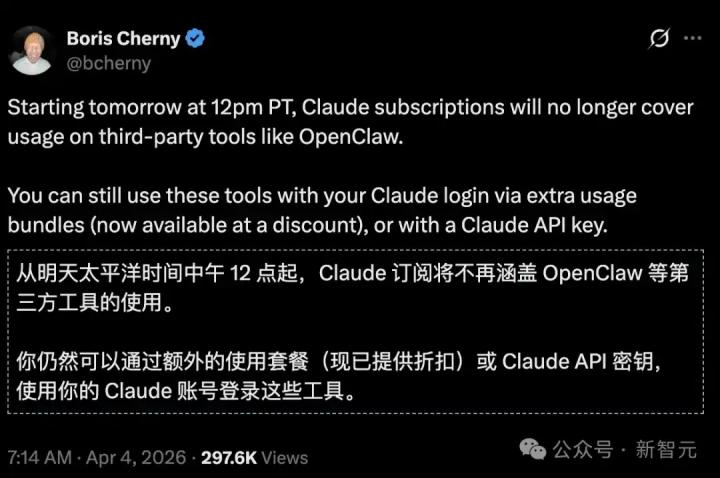
The AI automation tool Clawdbot (positioned as a personal assistant, capable of handling emails and tasks) has recently gained widespread attention due to the launch of its meme coin version on Pumpfun. It's worth noting that the token creator explicitly stated they "do not participate in or support this coin," but this "separate statement" has been interpreted by the market as reducing the project team's room for malicious activity, driving up the coin price in the short term and alleviating community concerns about rug pulls.
Discussions surrounding Clawdbot have split into two lines: on one hand, users rate the tool itself highly, with some sharing their actual usage experience on VPS and emphasizing its efficiency value as a life/business assistant; on the other hand, voices are also focusing on security risks—for example, granting Gmail permissions could indirectly connect to a series of critical services, posing potential risks. Regarding meme coin, community opinions are clearly divided: bulls believe it is performing strongly and presents a speculative window; opponents directly label it a "shit coin," criticizing the developers for lacking responsibility towards market sentiment. Some users suggest running it locally on dedicated devices like a Mac mini to build a long-term memory bank and minimize reliance on cloud services. Overall, the focus is on the tug-of-war between the "utility of the tool" and the "speculative nature of the token."
2. $PENGUIN reignites onchain sentiment.
As a representative meme coin that has recently gained popularity in onchain trading, the early performance of $PENGUIN was seen by many as a signal of a return to market risk appetite: it once broke through a key psychological level, with its market value soaring to approximately $120 million, but subsequently experienced a sharp pullback, with volatility remaining the dominant theme.
Prominent user JoeyMoose publicly disclosed his $100,000 investment, which has now fallen to $66,000, further reinforcing the reality that Meme coin's market is "high-risk, high-reward." Market sentiment towards $PENGUIN is generally optimistic, with some viewing it as a crucial turning point for Meme's revival after 2024, even betting on it reaching a market capitalization of $1 billion; however, others warn of a rapid short-term pullback risk, with the possibility of it falling back to around $15 million in extreme circumstances.
The discussion also spilled over into related narratives and new targets, including similar themes like $METALS, and a new project by the same creator, $GRIZZLY. Some users even speculated that the "Penguin meta" might only be a short-term trend (3-5 days) and would soon be replaced by the stronger "Whale meta." The overall atmosphere was a typical mix of excitement and caution.
3. ZachXBT exposes government-seized assets theft case.
On-chain investigator ZachXBT has revealed new details about John Daghita (online name Lick) stealing assets from US government-seized addresses: the amount involved exceeds $40 million, and his father's company, CMDSS, holds a Virginia government IT contract responsible for managing/disposing of seized crypto assets. John is accused of obtaining access through unknown means, and after the incident gained traction, his company's accounts, website, and LinkedIn profile were all suspended. The case is currently believed to involve potential losses exceeding $90 million, and the perpetrator continues to provoke on Telegram after the exposure. David Bailey has called on the Treasury Department to expedite efforts to strengthen private key protection within the Department of Justice to prevent further losses.
The community was generally shocked by the details of the incident, and the main focus of the discussion gradually shifted from "individual crime" to "government-level escrow risks": some believed that John's high-profile boasting, driven by emotion, ultimately dragged his father's company into collapse, facing prosecution and imprisonment; others took the opportunity to mock him as "the worst son of the decade." Meanwhile, the controversy further pointed to the government's inadequate security capabilities in managing crypto assets, raising extended concerns about the security of Bitcoin's strategic reserves.
This incident reinforces an old adage in the crypto world: "Not your keys, not your coins." In the market context, it's not just a security reminder, but also a stress test of the credibility of "national-level asset custody."
II. Mainstream Ecosystem Dynamics
1. Ethereum
Ethereum vault company ETHZilla has made a rare "cross-industry move": through its newly established aerospace subsidiary, it purchased two CFM56-7B24 jet engines for $12.2 million and has signed a lease agreement with a major airline. Behind this deal is ETHZilla's recent plan to reposition funds from the sale of at least $114.5 million in ETH, aiming to promote the tokenization of real-world assets (RWAs) covering asset types such as aircraft engines, auto loans, and home loans. The first tokenized product is expected to launch in the first quarter of 2026.
This move quickly ignited controversy. Some in the community saw it as a peculiar shift in RWA's narrative, moving from "storytelling" to "buying assets and generating cash flow," viewing it as a bold experiment. However, the opposition was sharper, questioning whether the sale of ETH to shift to non-core assets constituted a "poor capital allocation," and viewing the 97% plunge in its stock price as a direct vote from the market. Critics described it as a "desperate turn," worrying that its true purpose was not innovation, but rather finding a new narrative outlet.
In contrast, the Ethereum Foundation announced a $2 million investment to establish a post-quantum security team, headed by Thomas Coratger, to shift the focus from research to engineering implementation. This includes testnet development, a bi-weekly development meeting mechanism, and two $1 million cryptography bounty programs to proactively address the potential impact of quantum computing on signature systems.
The community as a whole is positive about the team's formation, seeing it as a long-term strategy to "harden the underlying layer" of Ethereum ahead of schedule; however, some have cautioned that migrating from the existing signature system to a post-quantum solution may bring challenges to network compatibility and upgrade pace. Overall, these two lines of thought jointly signal that the Ethereum ecosystem is simultaneously moving towards "real-world asset expansion" and "future security upgrades," but the market's tolerance for execution quality and costs is decreasing.
2.Perp DEX
HyperEVM's lending protocol, hyporrFi, suffered a vulnerability attack stemming from an arbitrary call vulnerability in a helper contract, resulting in the theft of some funds. The team subsequently confirmed that the core Euler vault, EVC, and other liquidity pools were unaffected, and the risk was confined to a single contract. Following the incident, the team quickly patched the front-end UI, removed the problematic contract, and isolated the vulnerability. Defimon Alerts also issued an immediate alert through its monitoring system to help mitigate further losses; no new financial risks have been observed so far.
The community's attitude towards the incident is relatively complex: on the one hand, many people acknowledge the team's performance in transparent communication and rapid response, believing that this was key to preventing the incident from escalating; on the other hand, some people use this incident to remind that the "single point of failure" of DeFi protocols is still fatal—attackers often act immediately after a user completes their first large authorization, and once more authorizations accumulate, the losses may be further amplified.
The discussion also extended to systemic risks within the Perp DEX ecosystem: many users suggested avoiding the main UI until a fix is confirmed, emphasizing that auditing, access control, and on-chain monitoring must shift from being "plus points" to "basic survival requirements." Overall sentiment is cautious, and market patience regarding security incidents is rapidly waning.
3. Other: Ledger data exposed to further security vulnerabilities; WLFI's ETH swap sparks speculation of a "rotation signal".
Hardware wallet maker Ledger is once again embroiled in a data security controversy: a dataset related to Ledger users (approximately 3,000 records, primarily involving Australian users) has been revealed to be for sale on a cybercrime forum, with samples showing newly exposed customer information. This leak is alleged to have originated from a security issue with the third-party payment processor Global-e, leading to the leakage of customers' PII (Personally Identifiable Information).
The community reaction was generally strong, with criticisms pointing to Ledger's excessive data collection, which bordered on "spyware-level" practices, and the centralized databases in the supply chain and payment links posing a long-term "honeypot risk." Many users suggested switching to alternatives like Trezor, while the discussion escalated to broader privacy issues: once physical addresses are linked to asset identities, the threats posed by leaks will be long-term and irreversible.
Meanwhile, WLFI (World Liberty Financial) was observed to have exchanged 93.77 WBTC (approximately $8.08 million) for 2868 ETH, sparking speculation about a shift in fund flows. Supporters saw this as a "smart money rebalancing signal," believing ETH might be entering a more profitable investment range, even resonating with the "post-quantum security narrative." Cautious observers cautioned that this could simply be a portfolio rebalancing and shouldn't be overinterpreted. The overall sentiment was optimistic, but caution remained regarding volatility and overheated narratives.