
The shift from Web2 to Web3 is more than just a technical upgrade – it's a whole different beast when it comes to user behaviour. In the old Web2 world, you'd get users by essentially 'click and convert'. But in Web3, the journey is a whole lot more complicated - think higher barriers to entry, a lot more skepticism to overcome, and that all-important hurdle of getting users to take care of their own stuff (i.e., self-custody).
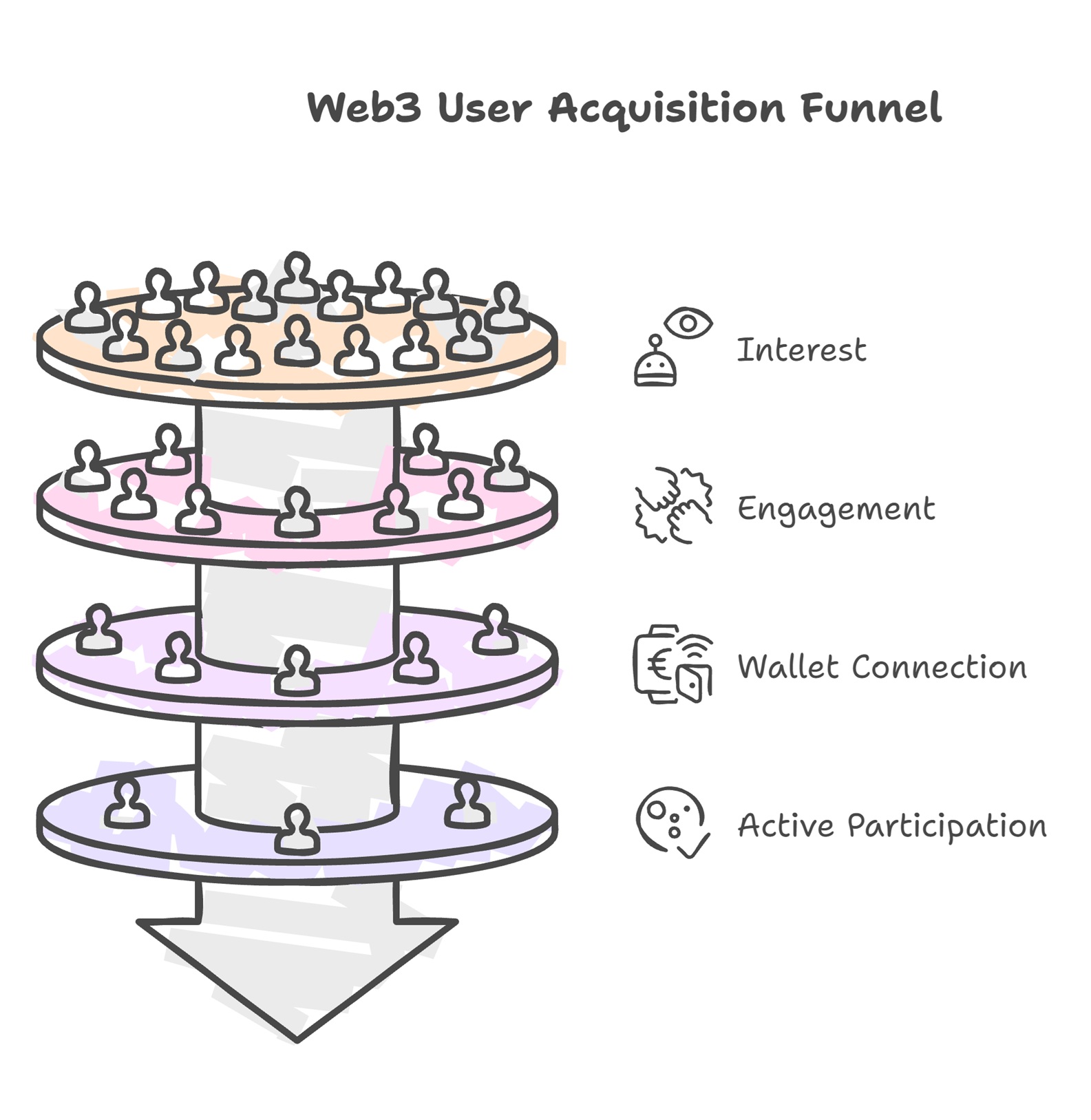
If you're building a sustainable Decentralized Application (dApp), you need growth teams that design acquisition funnels that put trust and education ahead of just piling on the traffic.
Web3 Funnels vs. The Old Model
How it used to be in Web2 was simple: ad, click, sign up with an email. But in Web3, that 'sign-up' is now replaced with connecting a wallet - a high-stakes move where users are basically handing a protocol access to their digital identity and assets. As a result, the Web3 funnel is a whole lot broader at the top, and you need to nurture those users a lot longer before they're willing to "convert" (i.e., connect their wallet). This means the funnel is actually a lot more complex than what we used to see in Web2.
Getting this right often requires a team with real experience in getting ecosystems aligned and educating users. For many teams, the most effective way to bridge this gap is to actually partner with a web3 digital marketing agency - that way, every single touchpoint from social media discovery to on-chain action is meticulously mapped out to make sense to the user. And for deeper insights into making these trust-based strategies work, exploring some of the more advanced Web3 marketing frameworks can give you a real edge in a market that's already pretty crowded.
The Six Stages of the dApp Acquisition Funnel
If you want to turn a curious user into a long-term contributor, your funnel needs to get them through these six distinct stages:
- Awareness: You get discovered through crypto-friendly channels like Twitter, Farcaster, or some niche SEO work. The goal here is to get in front of the right people without being too pushy.
- Curiosity: The user actually visits your site or docs - they're looking for what's in it for them, and wondering if it's safe.
- Building Trust: This is where social proof, audits, and clear documentation come in - you need to address the fears that are holding users back, like the risk of messing up smart contracts.
- Education: Before they actually connect their wallet, users need to understand what this thing does for them. An interactive demo or a "gasless" sandbox can really help demystify the user experience.
- Wallet Connect: This is the moment of truth - the point where users commit to actually using your dApp. You need to make this as seamless as possible, supporting a bunch of different wallet providers (MetaMask, Coinbase, WalletConnect) with clear, human-readable language.
- First Action: The 'Aha!' moment - whether it's swapping something, minting something, or voting on something, the first transaction needs to be super easy and really rewarding.
Solving for Friction and Long-Term Usage
The biggest mistake dApps make is designing for that one-off wallet connection - it's a vanity metric if users never come back. If you want sustainable growth, you need to focus on retaining users - turning "mercenaries" (users who are only in it for the short-term incentives) into "missionaries" (users who actually care about the protocol and its value).
And the biggest enemy here is friction - every extra signature, every high gas fee, every cryptic error message is just a leak in your funnel. By focusing on designing a user experience that's centered around the user's goals and needs (abstracting away the technical complexity of the blockchain), you allow users to focus on what your dApp actually does for them, rather than trying to figure out how to use it.
#Web3UserAcquisition #dAppGrowth #Acquisition