 Goldman Sachs reveals its crypto portfolio worth over $2.3 billion for the first time. (Image: CoinGape)
Goldman Sachs revealed its significant exposure to the cryptocurrency market for the first time in its portfolio report submitted to the U.S. Securities and Exchange Commission (SEC) for the fourth quarter of 2025, showing that the bank holds more than $2.36 billion in digital assets .
According to 13F filings, Goldman's crypto portfolio includes approximately $1.1 billion in Bitcoin, $1.0 billion in Ethereum, $153 million in XRP , and $108 million in Solana . This total represents 0.33% of the bank's reported portfolio , a small percentage compared to the size of its balance sheet, but large enough to reflect a marked shift in Wall Street's approach to digital assets.
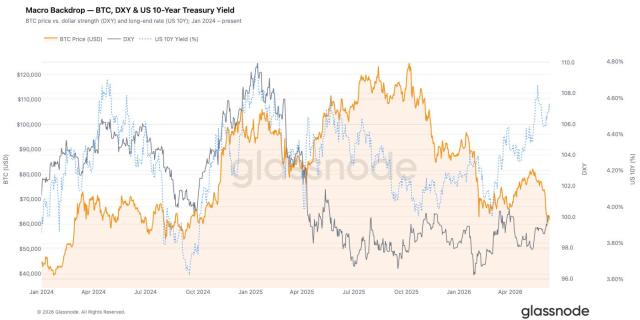
However, the above figure only reflects the situation at the end of the year. Since then, the sharp correction in Bitcoin has caused the market value of this portfolio to decline significantly. Estimates based on price fluctuations show that Goldman's Bitcoin position alone has evaporated hundreds of millions of dollars from the books.
On the other hand, Goldman Sachs does not hold physical XRP , but invests through spot ETFs linked to the coin, valued at approximately $152 million. Across the US market, XRP ETFs currently manage over $1.04 billion in net assets. After 56 trading days, these funds have only recorded 4 sessions of Capital outflows, indicating that institutional capital remains in an exploratory state, rather than a massive withdrawal.
Goldman's allocation structure is also noteworthy. Ethereum is positioned almost on par with Bitcoin in terms of investment scale, implicitly assessing the blockchain ecosystem from a store of value story to an infrastructure Vai for smart contracts and decentralized finance. For Goldman, this is no longer a single gamble on Bitcoin, but a portfolio spread across various technologies.
Strategically, the bank chose to approach crypto through tightly regulated products such as ETFs, rather than directly holding Token, thereby avoiding custody risks and legal disputes, while keeping its positions within the control of the traditional financial system. This is also a model that many large institutions are adopting in the context of ongoing regulatory changes in the US.
Changpeng Zhao (CZ) , founder of Binance, also believes that Goldman Sachs' continued expansion of its exposure to crypto amidst a market correction is a noteworthy signal. According to him, cryptocurrency may be one of the few areas where individual investors entered earlier than large banks, but current trends suggest Capital is gradually shifting towards institutions. If retail investors withdraw while financial institutions increase their positions, the timing advantage may be reversing.
"Goldman Sachs' Q4 2025 13F filing reveals $2.36 billion in crypto assets, marking a 15% quarter-over-quarter increase despite market volatility."
— CZ 🔶 BNB (@cz_binance) February 10, 2026
Crypto is probably the only place you had an earlier start than the banks. But if you sell your crypto last quarter, while the banks… https://t.co/nNw9l1apOC
Goldman Sachs specializes in advising governments and corporations on mergers and acquisitions, securities issuances, and corporate restructuring. As of early 2026, Goldman Sachs is overseeing approximately $3.6 trillion in assets for institutional and individual clients. Therefore, any change in the bank's portfolio has implications that extend beyond the absolute scale of the investment.
Notably, this move contradicts Goldman's previous public stance. Prior to 2020, the bank's leaders and research team considered Bitcoin a speculative asset, lacking the practical value of currency and not generating intrinsic cash flow.
Amidst a deep correction in the cryptocurrency market, Goldman's portfolio reflects both the integration of traditional finance and digital assets and exposes the fine line between innovation and risk. Crypto has entered Wall Street, but the price of volatility is still being measured in real money, right on the books of the world's largest banks.
Coin68 compilation