In 2026, with crypto stocks, RWA, and stablecoins continuing to be market darlings, the crypto market is merging with traditional finance at an even faster, more visible pace. However, a more structural question is emerging: if stablecoins are containers for funds, then what are the pathways for these funds to flow?
The answer provided by Matt, the founder of Lorenzo, is a new financial species that combines institutional compliance with on-chain flexibility—OTF (On-chain Traded Fund). This asset issuance structure, known as "on-chain ETF," is not just a product aggregation tool, but also the starting point for Lorenzo's vision of an "on-chain investment bank."
In this exclusive interview, BlockBeats has an in-depth conversation with Matt, the founder of Lorenzo, recounting his journey from a Wall Street quantitative firm to the crypto industry. The interview also details the design philosophy, risk model, and platform concept behind sUSD1+OTF: how to build an on-chain financial product with "stable returns + composite strategies"? And how, based on this, through different product forms such as OTF and Lorenzo Earn, can end-users and institutions participate under the same asset entry point and the same return logic?
From its early experiments with BTCFi to its current role as an on-chain investment bank and a USD1 investment partner officially partnered with WLFI, to its gradual development of an on-chain asset management system centered on OTFs and extending to Lorenzo Earn, and its recently launched new community incentive mechanism, Lorenzo is attempting to integrate "product structure, revenue paths, and user participation" into a single long-term framework. Matt is trying to answer a question that only a long-term thinker would ask—if the crypto world also has an "asset management industry," where should its standards and order be established? This is not only a strategic turning point for Lorenzo, but also one of the outlines of the next stage of on-chain finance.
The following is the content of the interview:
BlockBeats: Please give a brief self-introduction so that readers can better understand you and your background.
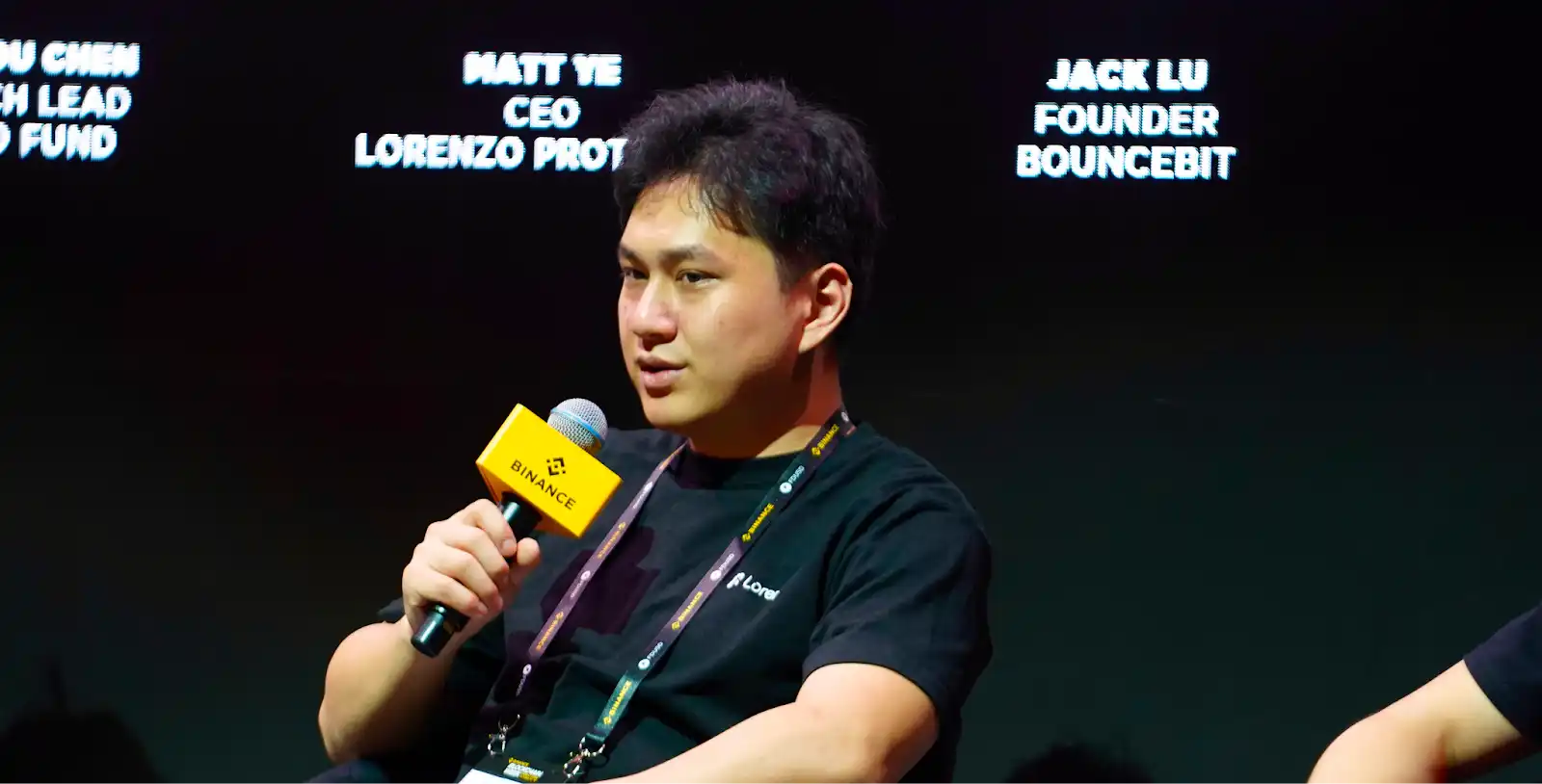
Matt: I majored in computer science for my undergraduate degree at Fudan University, and then went on to UIUC for my master's degree. When I graduated, I actually had a few options—most of my classmates went to big companies in the Bay Area, like Google and Facebook, while many others went into quantitative finance, such as joining hedge funds or companies like Jump Trading.
After careful consideration, I realized I was more interested in FinTech than traditional internet. I was particularly intrigued by how technology could reshape trading, payment, and investment processes. So, after graduation, I joined some quantitative firms and gained a deeper understanding of how Wall Street operates, including how they manage assets and build a technological architecture to support massive amounts of capital and trading volume.
My experience working at these companies made me realize that although their systems were very mature, their internal processes were actually very complex. The flow of funds required many steps, which was inefficient, costly, and the system's response speed was not fast enough.
And this is precisely the problem that Crypto can solve. In the crypto world, it offers clear advantages in both financial efficiency and accessibility. This is one of the reasons that initially sparked my interest in crypto technology. Later, I entered the industry and founded my first project—Lorenzo.
After Lorenzo was founded, what were the initial goals it set, and what are the core problems it truly wants to solve today?
Matt: From the very beginning, we really wanted to solve two core problems. The first problem was how to make it the simplest way for ordinary users to participate in investment and wealth management?
Many people lack sufficient understanding of the crypto world, or even traditional finance, and may not have the time to conduct extensive research. Therefore, we hope to design a mechanism that allows everyone to participate as easily as using Alipay's Yu'ebao (a money market fund) and obtain relatively stable returns.
The second question is, what kind of structure should we use to issue "income-generating products"?
This actually involves a deeper financial design issue—what kind of product form do we need to build that can both enable funds to operate efficiently, adapt to the mechanisms on the blockchain, and also have scalability?
Our final answer is a "yielding asset certificate," which we consider to be the more ideal form.
Why emphasize "yield-generating"? Because the most fundamental aspect of finance is maximizing the efficiency of capital utilization. Simply put, the number of times you can "turn over" the same amount of capital determines your maximum potential return. Take McDonald's, for example. Why can it expand so rapidly? After opening a store and buying land, it can mortgage that land and the store to obtain new funding, and then continue opening new stores. This is a very typical high-leverage model and a prime example of extremely high capital efficiency.
In the on-chain world, to achieve similar financial leverage and reuse, there must first be a "tokenized yield product." This product can be used as collateral, lent out, and combined with other financial structures. Otherwise, all your funds can only sit there statically, unable to leverage larger amounts of capital.
This is the first core issue we need to address—designing a composable, scalable, and revenue-generating asset certificate.
Another aspect is how to manage the underlying funds. In this part, we referenced many practices of traditional funds, such as asset management companies like Fidelity. They have very mature investment research and risk control systems, but we don't completely copy them. We are closer to the "FoF (Fund of Funds)" model—the underlying layer consists of multiple strategy portfolios. We select strategy providers, diversify our investments, and optimize the overall return structure of the pool through dynamic rebalancing.
When designing our wealth management products, we drew inspiration from a traditional financial practice: the execution of a strategy may be carried out collaboratively by multiple trading desks. In other words, a sum of money may be distributed among different trading teams, but they all adhere to the same overall strategic framework. This structure helps improve the overall efficiency of asset execution and allows for a better balance between risk control and return optimization.
We also adopted this concept. Although our products appear to follow a unified strategy on the surface, behind it lies a more refined execution architecture—managed collaboratively by multiple teams. This approach not only improves operational efficiency but also helps to further enhance overall capital utilization and profitability.
In fact, this structure is commonly used in traditional financial markets for many ETFs. ETFs are essentially a vehicle for generating returns by combining different strategies. However, in the crypto space, such an architecture is almost nonexistent. While there are some "financial products" on the market, there are no truly meaningful tokenized tools capable of supporting complex strategies and possessing high reusability.
Therefore, we hope that Lorenzo will take on a role as an on-chain "ETF issuance platform." We will tokenize various yield-generating asset strategies, turning them into financial products that users can directly purchase and combine. We collectively call these products OTFs (On-chain Traded Funds), which is the core starting point for our initial design of OTFs.
What is OTF? Design Concept and Mechanism Breakdown
BlockBeats: sUSD1+OTF is Lorenzo's first recently launched OTF, aiming to build a unified on-chain yield experience. What is the initial intention and positioning of this product? Compared with traditional financial products, what is the main difference?
Matt: Our initial intention was very clear—we hoped to package the most valuable sources of income into one asset through a one-time consolidation. The motivation behind this was that we observed that many ordinary users still face very high barriers to accessing high-quality income channels.
For most non-professional users, RWA (Retail Assets) such as US Treasury bonds are a relatively stable and easy-to-understand way to generate returns; while quantitative strategies, although slightly more complex, are also a very mature and common investment path in traditional financial markets. The problem is that it is not easy for ordinary users to access both types of assets at the same time.
Especially for the quantitative component—you either participate in structured financial products on exchanges or choose one of the few "quantitative + return" products on the market. However, these products are not readily available, and their returns often fail to meet users' expectations.
Therefore, a core objective in designing our OTF products is to allow users to access multiple high-quality sources of returns, such as US Treasury bonds and quantitative strategies, through a single asset.
The specific approach involves first purchasing some high-quality RWAs (such as tokenized US Treasuries) as collateral, then using these collaterals to borrow more funds to run a quantitative strategy. This "two-tier yield structure" can theoretically bring higher returns, but it is extremely complex for ordinary users, involving multiple aspects such as collateralization, lending, strategy combination, fund management, and risk control.
What we want to do is encapsulate all these complex processes into a single product, creating an on-chain financial asset that users simply "buy and hold." We hope this will become a standard entry point for "stablecoin investing." In other words, regardless of what type of USD stablecoin a user holds, they can invest in this asset and receive long-term, stable returns, much like a savings account.
Ultimately, what we want to achieve is to create an on-chain "savings standard"—a composite asset that is truly priced in stablecoins, has a transparent structure, a clear profit path, and represents the current optimal on-chain profit efficiency.
Users don't need to manage strategies themselves when using our product. We've built a dynamic adjustment mechanism in the backend to ensure that revenue strategies always remain adaptable to the market.
For example, if the existing quantitative strategy is underperforming, or if we determine that its alpha is starting to fail, we will proactively replace it with a more stable, neutral strategy portfolio to ensure the overall return experience for users. This is actually very similar to the management model of traditional funds—strategies are not static, but are dynamically optimized according to market conditions.
BlockBeats: The Financial Abstraction Layer (FAL) built by Lorenzo is the core underlying layer of OTF. Could you please provide a more detailed introduction?
Matt: FAL primarily plays two roles. First, it's an open asset issuance platform. We understand Lorenzo's positioning as closer to an "on-chain client investment bank"—this analogy isn't arbitrary, but rather because we are indeed acting as a matchmaker between the two ends.
From a funding perspective, we function like an "on-chain wealth management platform": we issue various wealth management products, and users can subscribe, redeem, and withdraw on the platform. They can also use the asset certificates they hold for secondary market trading, derivatives deployment, and even collateralized lending and pledging. These assets possess strong financial composability.
From the perspective of revenue, we will not only develop some strategy products in-house, but more importantly, we will provide tokenization services to external strategy providers to help them tokenize their traditional revenue strategies and issue them on the blockchain.
These strategies may include: compliant funds and RWAs (such as tokenized US Treasury bonds, fund shares, etc.); third-party quantitative strategies; and even some structured centralized financial products. As long as they have a clear return path and the ability to be packaged and disclosed, we can help them to tokenize.
Therefore, the core function of FAL is to efficiently match the funding side with the profit side.
On the one hand, investors can freely choose the types of products they want to invest in; on the other hand, strategists can also gain stronger fundraising capabilities, more transparent issuance channels, and brand empowerment through Lorenzo. We hope it is not just a product platform, but also an "on-chain asset management and issuance infrastructure".
What we're actually doing is building a platform-based infrastructure. The OTF mentioned earlier is just one of the entry points, and one of the core elements supporting all of this is asset tokenization.
Why is asset tokenization so important? Especially in the current environment, its significance is even more pronounced.
We can compare this to the process in traditional finance. For example, if you buy an ETF or a stock in the traditional market, you can use these assets further, such as for mortgage financing or other secondary operations. However, the process is extremely complicated. You need a series of steps, including asset valuation, bank risk control review, and contract signing. This whole process is both lengthy and cumbersome, and very inefficient.
However, if you complete your subscription on-chain—for example, by subscribing to one of our OTF products—once the transaction is confirmed, this asset certificate can be immediately used as collateral in all compatible lending protocols on the chain to quickly borrow funds. The entire process may take no more than five minutes and is fully automated, requiring no human intervention.
At the same time, if you need temporary liquidity, you can sell these tokens directly on the blockchain, with almost instantaneous monetization. This is very different from the "trading time restrictions" of traditional markets—for example, you cannot operate at all when the US stock market is closed, while the on-chain financial system operates 24/7.
Therefore, we believe that on-chain asset tokenization not only improves capital efficiency, but also represents a major upgrade in asset liquidity and portfolio diversification within traditional finance. This is a structural innovation not found in consumer-facing wealth management.
BlockBeats' sUSD1+ OTF is open to both institutional and general users. What kind of user experience does the OTF offer to these two groups? How does Lorenzo lower the barrier to entry and democratize institutional strategies in terms of complexity, security, and liquidity?
Matt: From the perspective of the operation process, we actually provide the same experience for institutional and individual users, as they all interact through a unified front-end interface.
When users deposit funds on the platform, we conduct some basic compliance procedures. Currently, we do not implement very strict KYC, but we have a complete AML (Anti-Money Laundering) and KYT (Know Your Funds) system that automatically checks whether the source of funds is safe, such as whether it involves sanctioned addresses or comes from the OFAC blacklist.
Once the funds are approved, they will be deployed into the corresponding strategy and enter the execution logic behind the product, including purchasing RWA, participating in quantitative strategies, and connecting with other DeFi yield protocols.
Whether you are an individual user or an institutional investor, the entire flow of funds and the strategy participation path are basically the same. We intend to standardize and modularize this experience to lower the technical barrier for institutional access, while also allowing ordinary users to obtain an institutional-level asset management experience.
I believe this is a very key differentiator for our product, mainly in two aspects:
First, it's difficult for ordinary users to access truly high-quality quantitative strategies. On one hand, their individual capital is limited, making it impossible to meet the minimum investment thresholds of most strategy providers; on the other hand, many excellent quantitative strategies are not open to the public and typically only serve a small number of limited partners (LPs), operating as closed-end funds. This means that even if ordinary users are willing, they cannot participate.
However, through institutional channels, we have the capability to access these high-quality strategies. We participate as an institution, then assetize and modularize these strategies, allowing ordinary users to share the same level of returns as institutions in a low-barrier manner. This is the pathway we hope to create for our users.
Secondly, ordinary users cannot systematically tokenize their funds. Even if you participate in a financial product, you cannot use it as an asset for further on-chain financial activities such as collateralization, lending, and reinvestment. However, we integrate institutional and individual users into the same asset structure through a unified asset issuance mechanism.
Once you hold a token of a financial asset, whether you are an institutional or individual user, you can access all downstream financial services built around that asset—including on-chain lending, trading, staking, and more. This means that, in terms of user experience, individual users will, for the first time, have the same asset usage rights and liquidity as institutions.
These two points combined make our platform a truly unified wealth management portal that connects individual consumers and institutional clients, something that many traditional wealth management platforms currently cannot achieve.
Why USD1? USD1's value proposition and differentiation.
BlockBeats: First of all, congratulations to Lorenzo for winning the USD1 $1M incentive event co-organized by WLFI, BNB Chain, and other parties. We also saw WLFI strategically buy into $BANK. As the official USD1 partner investment platform, we would like to take this opportunity to further understand Lorenzo's understanding of USD1 and its ecosystem strategy. In sUSD1+OTF, stablecoins become the "yield engine" for the first time. Where did this design inspiration come from? What characteristics should your ideal stablecoin product possess?
Matt: I think there are a few key points. First, from a broader perspective, the trend of stablecoins becoming a global financial engine is almost irreversible. At the current stage, stablecoins are the financial instrument most likely to drive crypto's widespread adoption.
We've been asking, "Where will the incremental funds come from? Where is the breakthrough for mass adoption?" Looking back now, the most promising entry point is actually stablecoins. This is because they possess the characteristic of "greatest common denominator": they can be accepted by the most people and can accommodate the most funds. Moreover, they are naturally suitable for high-frequency, low-friction financial activities such as payments, settlements, and cross-border transactions.
Bitcoin is certainly still a globally recognized asset, but if we're talking about "crypto assets that everyone uses every day," then only stablecoins can penetrate into every payment, every investment, and every transaction.
It's highly likely that this role will be filled by USD stablecoins. While other forms of stablecoins may also have opportunities, USD stablecoins currently have the strongest penetration and acceptance.
Moreover, given the global demand for settlements and the pressure of government debt, there is now an even greater need for a faster, cheaper, and 24/7 payment network to absorb the strain on the global financial system. Stablecoins represent the most likely path to solving this problem and are currently the solution that best serves the interests of all parties involved.
Now that we have realized that stablecoins are a key vehicle for mass adoption, the question arises: in the crypto world, how do we build a structure around stablecoins similar to a wealth management platform in traditional finance?
After all, in the traditional financial system, wealth management platforms have been developing for hundreds of years, with complete product systems and risk models. However, in the crypto space, wealth management products centered around stablecoins are still a very new field.
Therefore, what Lorenzo aims to promote is to create a financial product issuance platform based on stablecoins, providing users with diversified and structured asset choices, similar to ETFs. For example, today you can choose a product with lower risk and more stable returns, or you can choose a strategy pool with higher risk but greater return flexibility, just like the multi-style portfolio in the traditional ETF market.
As our blue-chip product, sUSD1+OTF has two basic requirements for its design:
1. It must be able to accommodate a very large amount of funds and have institutional-level capacity.
2. It can maintain extremely low risk and provide a reasonable level of return even with a large scale. In other words, it is an asset that is close to the "risk-free rate" but more efficient than traditional bank savings.
Therefore, we chose RWA+ neutral quantization strategy as the underlying structure.
RWA is currently one of the assets in the market capable of absorbing large amounts of capital, such as tokenized US Treasury bonds represented by T-bill (US Treasury bonds). As long as the credit of the US dollar remains intact, it can essentially be considered risk-free. A neutral strategy, characterized by no exposure to market direction, low volatility, and high stability, can also well meet this requirement.
In summary, our product logic is to construct a stable-return composite asset using two pillars—RWA (Return on Investment) and a neutral strategy—under extremely low risk, while possessing both institutional-level scale and C-end availability. This robustness has been proven in real-world trading. On October 11, 2025, when $19 billion was liquidated across the entire network, and most protocols experienced yield drawdowns, sUSD1+ OTF achieved a positive daily return of 1.1%, with a nearly 7-day APY approaching 50%. Our initial intention in designing this product was to provide a yield asset with strong risk resistance.
BlockBeats: Compared to USDT/USDC, what is the biggest difference between USD1 in terms of its underlying logic or market positioning?
Matt: First, let's review the current situation. USDT's current advantages are undeniable. It has the highest adoption rate in DeFi and exchange trading pairs, is supported by almost all mainstream platforms, and is very strong in terms of liquidity and availability.
However, its shortcomings are also obvious, namely insufficient compliance. Its underlying structure is relatively opaque, lacking a clear and credible legal regulatory framework, which is a major obstacle it faces in further expanding into the institutional market, especially the compliance market.
USDC, on the other hand, performs exceptionally well in terms of compliance. Issued by the US compliance agency Circle, it boasts a clear structure and is regulatory-friendly. However, its problem lies in its relatively weak adoption. Neither in the breadth of DeFi applications nor in exchange support has it achieved the network effect seen in USDT.
This is where USD1's positioning becomes quite interesting. Its emergence strikes a balance between these two aspects—possessing both a strong compliance background and the potential for on-chain adoption.
On-chain data shows that USD1 has surpassed USDC at multiple points in time, and its on-chain usage is second only to Tether. On the exchange side, major platforms such as Binance and Bybit have already begun supporting USD1, with more platforms expected to join in the future. This means that it is rapidly approaching USDT in terms of exchange and DeFi adoption. In terms of volume, USD1 has a circulating supply of approximately 5.3B, a corresponding market capitalization of approximately $5.3B, and a 24-hour trading volume of approximately $1.6B.
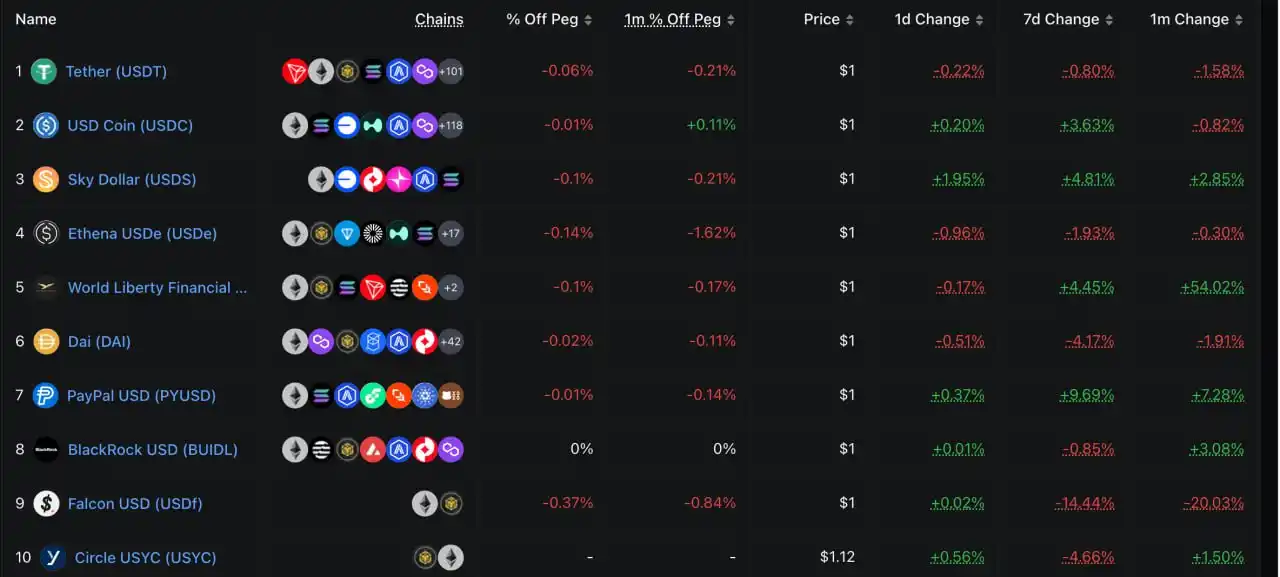
Meanwhile, from a compliance perspective, the issuer of USD1 has connections with certain departments of the US government, giving it a higher level of compliance trust than USDC. You can think of it as a more modern and policy-friendly stablecoin structure. According to the requirements of the GENIUS Act, compliant stablecoins are not allowed to directly generate interest, meaning their value is more reflected in the settlement and circulation layers than in the yield layer. Therefore, USD1 naturally needs to collaborate with on-chain yield platforms, using independent yield products to complete its asset allocation and capital efficiency ecosystem.
Therefore, I believe that USD1 is the first stablecoin to simultaneously possess both "market potential for large-scale expansion" and "policy and regulatory compatibility." This is its greatest value.
BlockBeats: From your perspective, what is the most pressing bottleneck for USD1 to truly become a mainstream on-chain yield asset?
Matt: The first issue remains the expansion of adoption. This includes support from more DeFi protocols and CeFi platforms, as well as access to more funding sources. In other words, there needs to be a wider range of fundraising sources upstream, and more application scenarios such as trading, wealth management, and lending downstream to support it. This isn't really a "bottleneck," but rather a process that requires time to refine and build, a path that any new asset must go through.
The second challenge is more fundamental: it relates to the asset management capabilities behind stablecoins. The essence of stablecoin investment is the reallocation of funds and the distribution of returns. The problem is that no alpha can be scaled up indefinitely. Every strategy has a capacity limit; as the amount of capital increases, the rate of return will inevitably decrease.
In our past experience running quantitative strategies, we have clearly felt that when the amount of capital increases from a few million to hundreds of millions or billions, the difficulty of executing the strategy increases dramatically, and the rate of return will also decline significantly.
Therefore, when USD1's capital reaches tens or even hundreds of billions of dollars, finding a matching, efficient, and scalable strategy combination will become the most important management challenge.
This places high demands on the team. On the one hand, they need to continuously iterate on the fund allocation and strategy engine; on the other hand, they need to improve their Alpha discovery capabilities, continuously expand new markets and new opportunity pools, and at the same time, they need to achieve a dynamic balance between liquidity and risk control.
If we look at Ethena, which is currently performing well in the market, we can see similar issues. Its recent annualized return has fluctuated between 2% and 5%, far below its earlier levels.
This illustrates a point: if you don't continuously iterate and upgrade your underlying strategies, even star products will see their returns decline rapidly. Therefore, this is actually the biggest challenge posed to the long-term sustainability of USD1.
The ability to maintain flexible strategy deployment and a high-quality return portfolio while the amount of funds grows is a problem that any product that wants to become the "standard for stablecoin investment" must solve.
For all projects related to DeFi or financial management, one core question always holds true: Can you continuously attract and retain funds on your platform?
If we can't achieve this, everything else becomes secondary. It is based on this premise that we chose USD1 as our entry point, aiming to draw more attention and funds to the Lorenzo platform through this asset, providing users with a reliable starting point for wealth management.
This is our first step: pooling funds and focusing user attention.
Having laid this foundation, our second step is to make Lorenzo a more equitable and open asset issuance platform. This means that we will not only offer our own proprietary strategies, but also proactively collaborate with competitive external beneficiaries, including quantitative trading firms, strategy teams, and high-performing fund managers.
We will tokenize these trustworthy products and strategies and complete fundraising, issuance, and circulation through our platform. This will not only help asset providers expand their funding sources but also provide users with more diverse investment options.
Therefore, the logic of the entire system is mutually beneficial: we have users, liquidity, and platform attention, which can empower our partners; and the steady returns brought by these high-quality strategies can in turn benefit platform users, creating a virtuous cycle.
Our goal is not a closed-loop operation, but rather to build a sustainable and collaborative on-chain wealth management ecosystem through Lorenzo. This is not just a growth logic at the platform level, but also our vision for the future of on-chain asset management.
BlockBeats: So why did you choose USD1?
Matt: As we mentioned before, one of the things we're working on is connecting the funding side and the wealth management product side. In my view, funding is like blood, the entire platform is like a grapevine, and all the exchanges and income-generating wealth management products are the fruits growing on that vine.
Without that vine, without the blood supply, the fruit cannot ripen. What Lorenzo wants to do is become that vine that connects everything, using USD1 as the main trunk to channel funds into various financial products within the ecosystem, supporting the entire on-chain yield network.
Therefore, we have set a very clear goal: to make USD1 the core and most universally used stablecoin for settlement on our platform. Whether it's subscribing to wealth management products, redeeming, distributing returns, or using it for collateralized lending and reinvestment, we aim to use USD1 for all stablecoin settlements within our wealth management ecosystem.
Essentially, this is about building a stablecoin-driven asset settlement system, which is also a key path for us to increase the adoption of USD1 in the on-chain wealth management field.
Ultimately, the importance of an asset depends on its widespread use and whether it becomes the "settlement benchmark" within the system. We want USD1 to become an indispensable part of this system.
BlockBeats: Let's go back to the sUSD1+ product itself. It's one of the core products in your entire revenue system. I noticed that you chose a "non-inflating net asset value growth" design, instead of the more common interest return model. Could you explain the difference between these two? Why did you choose this model?
Matt: When designing the sUSD1+ product, we did indeed prioritize a non-inflating net asset value growth model, rather than using a rebasing approach like some stablecoins.
First, let me explain what reward bearing means: the face value of an asset remains unchanged, but its net value increases with returns. You don't receive additional coins; instead, the value of each unit of the tokens you hold continuously grows. In contrast, the rebasing model reflects returns by periodically "issuing" more tokens.
Our decision to prioritize the reward bearing model is based on two main considerations:
First, there is compatibility with DeFi.
Currently, most DeFi protocols, especially exchanges and lending platforms, do not support rebasing assets well. For example, when a token continues to "expand" in a pool, the on-chain accounting logic becomes complex and even chaotic. Most centralized exchanges (CEXs) and decentralized exchanges (DEXs) do not support dynamically changing token quantities, nor are they sophisticated enough to automatically handle the accounting of "dividend-paying assets."
The same issue arises in lending protocols—if you put an asset with an ever-increasing balance into a lending pool, calculations for liquidation, valuation, and interest rates will face challenges. To avoid these problems, we believe that reward bearing is currently a more scalable and easily integrated technological approach.
Second, operational efficiency and product launch speed.
For example, Lido's stETH initially adopted a rebasing model before launching WstETH to adapt to DeFi. Ethena also underwent a transformation from USDe to sUSDe, transitioning from a rebasing model to a non-inflated structure design. We believe that at this stage, reward bearing is more suitable as a market launch model, with lower barriers to entry and better compatibility.
Of course, we will also consider launching a rebasing model in the future. Especially when facing more complex financial structures, such as scenarios requiring the separation of interest and principal, or periodic dividends, rebasing or its derivatives would be more suitable. However, in the early stages, prioritizing optimal composability and integration costs will allow for faster entry into mainstream scenarios such as lending, AMM, and mortgages. In short, the rebasing model will be the next stage product after our strategy system is more complete and our application scenarios are more diverse.
The macro vision and path evolution of "on-chain investment banking"
BlockBeats: Lorenzo launched stBTC and enzoBTC and related products during the BTCFi phase and integrated with 30+ DeFi protocols, making it a leading project in the BTC LST track at the time. What underlying foundations did these early explorations lay for OTF? And what prompted the subsequent strategic upgrades?
Matt: I think this can be discussed from two perspectives. First, it's about the evolution from single financial products to diversified financial products. During the BTCFi phase, we accumulated a lot of experience, both successes and lessons learned. For example, we learned a great deal about building on-chain liquid assets, how to distribute dividends and interest on these assets, how to integrate with DeFi protocols, and how to manage tail assets. This experience has greatly helped our subsequent product design and platform operation.
From a broader perspective, for a platform to continuously attract funding, it must possess the ability to constantly evolve. How to adapt to market changes and maintain its vitality is a question I've been constantly pondering. Especially in financial products, whether it's CeFi, DeFi, or more traditional financial logic, if your goal is to continuously attract funding, then you must have the ability to constantly launch new products and match market trends.
Therefore, regardless of the type of product you're developing, it all boils down to the core issue of "funding." A platform's long-term viability depends on its sufficient liquidity and ability to continuously attract funds. This is why we've expanded from our initial focus on BTCFi to more asset classes.
On the one hand, we hope to further expand the scale of funds to accommodate more diversified user preferences and financial goals; on the other hand, we also see greater potential for stablecoins to reach users. Although BTC is a very popular asset, ordinary users don't actually hold a large amount of BTC. In contrast, stablecoins have a wider frequency of use and reach a broader population in daily life. For example, we know that many users in China who are engaged in foreign trade or small commodity businesses, such as those in markets like Yiwu, actually hold a considerable amount of USDT. These are new users who are closer to daily life and have more practical use cases.
Our next goal is to reach the next phase of users and funding sources, and naturally, we hope to serve these new users, especially the new generation of Web3 users, with higher quality and more mature products. Therefore, in terms of platform selection, we have decided to continue focusing on stablecoins. Whether it's staking, quantitative strategies, more traditional compliant funds, or even new subscription-based products like RWA, stablecoins are the asset class with the widest coverage and the greatest operational flexibility.
From product richness to underlying adaptability, stablecoins are undoubtedly one of our most imaginative directions. Therefore, when we decided to develop new asset classes, stablecoins were the natural first choice. They can not only support larger volumes of funds but also reach a wider user base, providing us with more room for innovation and combination. Thus, stablecoins are an ideal entry point when we launch the second phase of our platform.
BlockBeats: So why did you choose BNB Chain as your first choice?
Matt: There are actually two reasons. The first is on an emotional and trust level. Our earliest supporters were BNB Chain. As an MVP program participant, we received investment and recognition from Binance Labs. This support was crucial for us—you could say that without BNB Chain's investment and endorsement, the project might still exist, but it wouldn't have developed as smoothly. Out of gratitude, we prioritize launching many of our new products on BNB Chain, rather than other chains.
The second reason is that BNB Chain has indeed been evolving rapidly over the past two years, with many significant actions and remarkable results. For example, the launch of Alpha directly drove a significant increase in users and liquidity on the BNB chain, and the activity of e-commerce transactions also increased exponentially. Now, in terms of overall liquidity, BNB Chain is one of the strongest public chains in the industry.
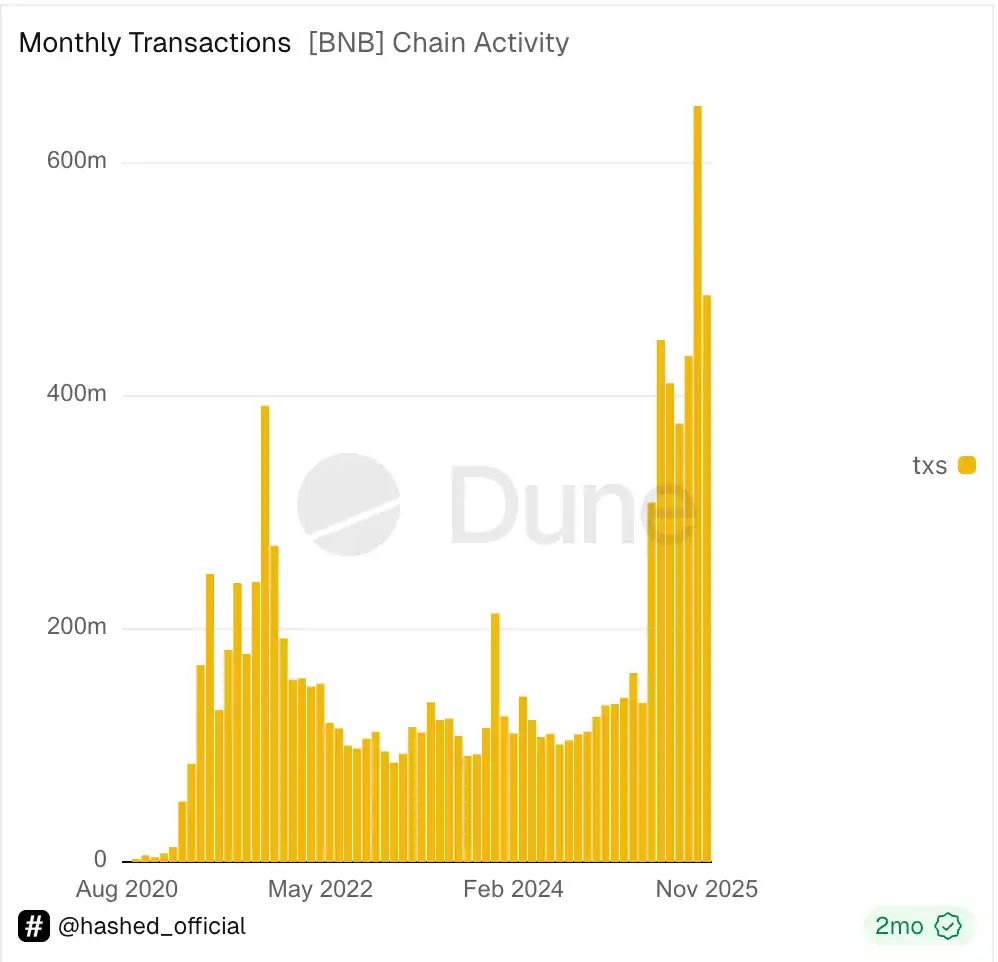
In addition, it is very active in promoting new asset classes - whether it is RWA or large stablecoin projects targeting institutions like USD1, they can all find application scenarios on BNB Chain.
Another noteworthy point is its significant support for AI-related projects. This comprehensive support, encompassing technology, funding, assets, and infrastructure, allows for greater flexibility in integrating new technologies and asset models when designing products. For our project team, BNB Chain's actions have created substantial room for product innovation, making it a truly suitable platform choice.
BlockBeats: Lorenzo's vision of "on-chain investment banking" is a very bold idea. How would you define this concept? How does it differ from the role of "investment banks" in traditional finance?
Matt: I think the relationship between traditional investment banks and "on-chain investment banks" in Web3 is more likely to be complementary or mutually beneficial.
Traditional investment banks certainly have their mature aspects. For example, they are more systematic and standardized in terms of the transparency of their pricing processes. Processes like IPOs or bond issuances, including prospectuses, roadshows, and information disclosure mechanisms, all have a relatively open and transparent framework. These are precisely what many Web3 projects currently lack. In the Web3 field, many projects remain largely "black boxes," with unclear information disclosure and a lack of regulation, making it difficult for users to truly understand what they are investing in and how it operates.
However, Web3 also has advantages that traditional finance cannot match. For example, the entry threshold for funds is lower, there are no complicated investor qualification screenings, and you are not required to be a qualified investor to participate. You do not need to meet many requirements regarding identity and asset background, especially for some lightweight products, the entry threshold is more friendly. The recent trend of putting US stocks on the blockchain is a direct example. You do not need to open a US stock account or buy in lots, which lowers the entry threshold.
Furthermore, Web3's financial infrastructure operates 24/7, and the DeFi ecosystem has no operating hours restrictions, allowing global users to access it, resulting in significantly higher "accessibility" and "autonomy" in finance. This is also one of the reasons for putting US stocks on-chain; some US stock contracts can be traded 24 hours a day, while on-chain US stock spot trading can enter DeFi.
Therefore, what we are considering is how to combine the professionalism of traditional finance with the openness of Web3. Since we are a Web3-based project, we have already enjoyed many of the inherent advantages of Web3 at the mechanism level. Our next effort is to address the shortcomings in "transparency".
For example, we place particular emphasis on the transparency of underlying assets, especially those involving quantitative strategies. At the same time, if we list third-party products on our platform, we will rigorously review their qualifications and require them to provide detailed disclosures, such as fund flows, product descriptions, net asset value changes, portfolio structure, and historical performance. Our goal is to ensure that users can clearly see: what type of assets they are investing in, how those assets are managed, their current operational status, and the potential returns or risks.
This disclosure mechanism reflects respect for users and is the bottom line we, as an "on-chain investment bank," strive to establish. We aim to create a platform that users can confidently access, retaining the efficiency and openness of Web3 while maintaining the clear, professional, and transparent operational standards of traditional finance.
In many cases, the reason users are willing to trade on platforms like Binance and OKX is essentially because they trust the brand. They believe the platform will be responsible for the products it issues and that their funds are safe on the platform.
Therefore, I believe that a "brand" is something any organization should cherish. The same applies to us; we have a rigorous screening and vetting process for choosing which products to launch. We are responsible for the safety of user funds. It is precisely under this premise that the platform can continuously attract more users and funds to participate in the various products we issue. This truly creates a virtuous cycle—on the one hand, more and more users and funds join, and on the other hand, we can select higher-quality, more competitive products to raise funds on the platform, further enhancing its attractiveness and reputation.
The second point concerns the relationship between cryptocurrencies and traditional finance. Many people ask where the barriers between these two lie. My view is that these two worlds are rapidly merging, and stablecoins are the most important bridge in this process.
Recently, I've been discussing with some friends where the new funding for Web3 will actually come from. One viewpoint is that traditional markets, such as the cryptocurrency and stock markets, want to "drain" liquidity from the crypto market; while the crypto market hopes to "drain" liquidity from traditional finance through US stock listings. However, this one-way extraction path rarely achieves the expected growth.
In contrast, I believe a healthier and more sustainable approach is to bring in more incremental funds through genuine integration.
How exactly should we do this? I think we can design and operate some excellent Crypto financial products in a more standardized and compliant manner, making their performance and management more professional. Then, we can assetize and tokenize these assets, and promote them to more traditional fiat currency users, and even users in the traditional content ecosystem, by connecting with traditional private and public offering channels.
This will not only broaden the product distribution channels but also truly realize the incremental capital flow from traditional finance to the Crypto world. In this sense, we do have an opportunity to promote a deeper integration between these two worlds.
BlockBeats: sUSD1+ OTF is Lorenzo's first stablecoin yield product. What are your thoughts on the future of the stablecoin wealth management market? Besides stablecoins, we've noticed that Lorenzo recently launched BNB+ OTF and the Lorenzo Earn product line. What other assets or product types do you see as having the potential for scalable growth? How will Lorenzo continue to iterate on its product offerings and user experience?
Matt: I think we will more clearly strengthen our role as an "asset issuance platform" in the future. Currently, many users may still have a somewhat vague understanding of us, thinking that we are just constantly launching our own products, such as BTCFi, stablecoin-related wealth management, and so on. But going forward, we will make it clearer to everyone that we are actually more like a launchpad for yield-generating assets—not just operating our own products, but a platform that provides issuance channels for more high-quality projects.
For example, our recently launched BNB+ OTF is essentially an extension of this logic. It tokenizes institutional-grade BNB enhancement strategies (such as Hash Global's BNBA fund), allowing ordinary users to access yield paths that were previously only accessible to institutions with a single click. This proves that, in addition to stablecoins, "yield-enhancing certificates" for mainstream public blockchain assets are also a product form with significant scalability potential.
We are indeed advancing a series of collaborative projects, with many pipelines and partner products currently in the pipeline. In the future, you will see more and more third-party products launched through our platform, and we will act as a "screener" and "guide," pushing high-quality assets to users.
Beyond the asset issuance itself, we are also considering building a more comprehensive suite of financial services around these assets. This isn't to say that traditional lending and trading platforms are bad, but rather that we want to address many functional details from a perspective closer to the product itself.
For example, for our own products, we may consider introducing a more sophisticated interest rate trading mechanism in the future, or developing corresponding collateralized lending functions. Simply put, we hope to build a more comprehensive and complete financial ecosystem around the assets we issue, connecting the entire process from "purchasing the product" to "asset operation" for users. This will create a more closed-loop and professional user experience.
In the future, we will provide users with a more complete one-stop asset management solution. Specifically, we will continue to introduce new income-generating assets regularly through the platform's Launchpad mechanism to enrich the product pool available to users. Building on this, we also plan to provide users with services similar to investment advice or investment advisory services to help them find more suitable assets or asset portfolios based on their own risk appetite and return goals.
This is the first layer. After users complete their investments, we will support them in further managing these assets, such as trading, collateralized lending, and participating in combinations of various yield strategies—all of which can be done in one stop within the platform. What we hope to build is not just a "product pool," but a complete asset operation universe, allowing users to experience the entire process from investment selection to fund management on a single platform. Recently, we also launched Lorenzo Earn. The first Earn product launched is an LP Vault based on PancakeSwap V3, used to deploy assets such as sUSD1+ and USD1 to automated market making and liquidity strategies on the BNB Chain, serving as a yield enhancement path outside of sUSD1+ OTF.
BlockBeats: Could you share more about Lorenzo's future expansion plans? For example, besides BNB Chain or the Asian market, what are your medium- to long-term plans in other areas?
Matt: We actually have good relationships with many public chains, whether they are currently popular new chains or mature public chains that have accumulated experience over the past few cycles. We have close cooperation and communication with them. Going forward, we will focus on our positioning as an "institutional-grade wealth management infrastructure" and implement and promote our product logic and service system in more public chain ecosystems.
Specifically, the assets we launch in the future will not be limited to a single chain, but will deploy corresponding liquidity on multiple chains, opening up staking and application scenarios, and assisting each chain in establishing a suitable financial product framework. We hope to replicate the combination of "high-quality asset issuance + supporting financial services" built by Lorenzo in various ecosystems.
I believe this is actually building a new type of public blockchain infrastructure. In the past, people understood the "three-piece set" of a public blockchain as trading, exchanging, lending, plus stablecoins, but I think "financial management" is also an indispensable underlying infrastructure for a public blockchain.
Many people may not yet realize the importance of financial products to the on-chain ecosystem, but as the market matures, users are increasingly focused on long-term returns and asset preservation. Methods relying on PVP, high leverage, and short-term speculation are unsustainable in the long run. This isn't to say that speculation has no value; indeed, many people can make money through high-frequency trading or short-term strategies. However, for most ordinary users, speculation is neither the healthiest nor the most sustainable way to manage assets.
Therefore, our direction is to build long-term, profitable financial infrastructure on every promising blockchain, providing users with more stable asset allocation channels and injecting new growth momentum into the public blockchain ecosystem.
From a healthier and more sustainable perspective, an ideal model would be for users to always maintain a certain allocation on the platform for passive, relatively conservative wealth management. This is a more long-term and rational approach for most users who are asset allocation conscious.
However, to achieve this goal, you need a truly complete and professional asset management platform to support such operations. This platform infrastructure is especially crucial when we hope to attract more incremental funds from traditional financial markets, or even institutional funds, to Web3.
Instead of users investing haphazardly across different platforms, a unified platform would be far more effective, allowing them to systematically allocate their funds. This platform would encompass products with varying risk levels and return profiles, as well as related financial services like trading and lending—all within a single platform. This clean, streamlined, one-stop solution would undoubtedly appeal to users genuinely committed to long-term investment strategies.
For many public blockchains, this kind of infrastructure is a much-needed but still missing piece of the puzzle. We are very grateful for the strong support and resources we have received from the ecosystem partners in our progress on BNB Chain. But from another perspective, what we are doing is also valuable to BNB Chain itself, filling the gap in its "on-chain asset management" capabilities.
For other public blockchains, this value may be even more significant. In particular, those public blockchains that have not yet established a complete infrastructure for asset management need us to provide such a standardized and replicable asset issuance and wealth management system.
Therefore, we hope that in the future, we can encourage more people—whether they are public chain teams or users—to gradually realize that wealth management is also an indispensable piece of infrastructure for public chains. We will continue to invest in this area and delve deeper into it, not only in terms of product development but also in terms of conceptual impact, truly bringing this long-term asset management mindset to more chains and ecosystems.
To better support this long-term architecture, we recently launched a Proof of Commitment (PoC) incentive system. Through PoC, we will provide rewards and incentives to early Lorenzo supporters based on users' depth of engagement in the Lorenzo product, asset holding duration, and contributions to the ecosystem. This ensures that those who truly stand with the protocol in the long term can enjoy the benefits of ecosystem growth first, and also lays the foundation for future governance rights allocation.
BlockBeats: What are your views on the most important structural opportunities in the DeFi space over the next three years? Especially in the area of yield-generating products, what other breakthroughs are worth paying attention to?
Matt: I think that from a broader perspective, the next stage of DeFi is actually undergoing a process of "value reconstruction." In the past few years, there was a kind of "moral fastidious" belief in decentralization in the industry, emphasizing that everything should be extremely decentralized. While this idea itself is not wrong, I believe that in practical implementation, pursuing 100% decentralization can actually become a hindrance to efficiency, governance, and even innovation. Many designs are ultimately a trade-off.
Look at some of the better-performing projects in this cycle, such as Hyperliquid. Essentially, it's a semi-decentralized platform. Its account management and fundraising conform to the Web3 paradigm, but its operations are actually very centralized. Similarly, the entire RWA (Real-Time Exploration & Control) sector, including stablecoins, is also largely centralized. The key to their success isn't absolute decentralization, but rather whether they truly solve problems and provide the value and experience users need.
Therefore, to some extent, the greatest value of on-chain settlement and open ledgers lies in providing these products with a financial operating system capable of accommodating large-scale funds. It eliminates many human-made obstacles in the traditional financial system, such as lengthy approvals, taxes, and institutional barriers. Its significance lies not in "whether it is on-chain" or not, but in "whether it creates greater efficiency for business operations."
Returning to the product itself, if it truly has value, offers a good user experience, and has sufficient liquidity, then regardless of whether it is "perfectly decentralized," it can attract enough users and funds. Platforms like Hyperliquid, some structured asset platforms, or high-quality stablecoin projects have thrived not because of their form, but because of their inherent value.
I believe one of the biggest opportunities in the next phase lies in the DeFi market refocusing on fundamental product-market fit (PMF) and real profitability, "after stablecoins." In other words, we'll see investors become more cautious and rational in judging whether a project can solve real problems and generate sustainable returns. Products with genuine value, a user base, and a viable profit model will attract more investment; conversely, projects that are merely speculative or driven solely by incentives will be gradually eliminated.
I have always emphasized that the structural opportunities in DeFi will come from first principles: Does your product solve a clear and real user pain point? Are you providing a service that a certain group of people actually need? Is the service you provide an indispensable link in the user's path to their goal? These are the fundamental criteria for judging whether a project has long-term value.
Therefore, for all projects, whether new or old, we must now seriously consider two questions: First, am I solving a real problem? Second, is my product the optimal solution for this current problem?
I believe the next three years will be a period of "survival of the fittest." A number of new products that can truly create value will emerge, while a number of old projects that cannot keep up with the pace and lack users will be gradually eliminated.
Click to learn about BlockBeats' job openings.
Welcome to the official BlockBeats community:
Telegram subscription group: https://t.me/theblockbeats
Telegram group: https://t.me/BlockBeats_App
Official Twitter account: https://twitter.com/BlockBeatsAsia