Table of Contents
ToggleAccording to the Economic Times, PayPal has not engaged in any sale or acquisition negotiations with Stripe, despite recent market rumors. This statement temporarily puts an end to the extensive merger and acquisition speculation, prompting investors to reassess the future direction of these two payment giants.
Previously, foreign media reported that Stripe was evaluating whether to acquire all or part of PayPal's business, but the discussions were still in the early stages and no concrete agreement had been reached. Now, reports indicate that the two sides have not entered into substantive negotiations, meaning the likelihood of a large-scale merger in the near future has significantly decreased.
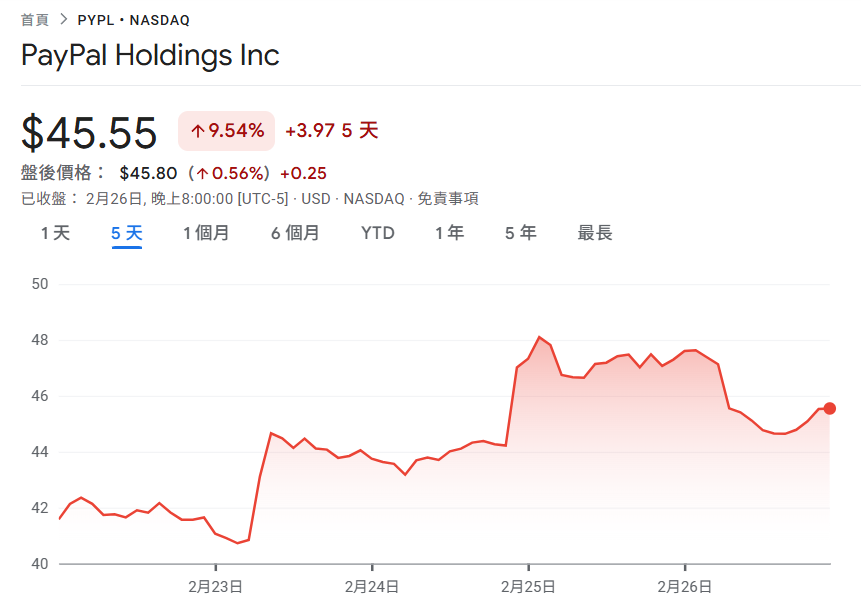
The stock price rose first and then fell, indicating significant fluctuations in market sentiment.
PayPal's stock price surged this week, fueled by merger and acquisition speculation, as investors increased their bets on potential premiums from a potential deal. However, the stock price subsequently fell back after the company denied talks of a sale, demonstrating that market sentiment is highly susceptible to news-driven fluctuations.
Analysts point out that mergers and acquisitions can often boost stock prices in the short term, but without substantial progress, the upward trend is usually difficult to sustain. For PayPal, whose fundamentals remain under pressure, stock price fluctuations reflect market expectations rather than a fundamental improvement in its operating conditions.
Fundamental pressures remain unresolved, and competition in the digital payment sector intensifies.
Founded in the late 1990s, PayPal was an early leader in the digital payments field. However, with the rapid rise of mobile payments, the company faced increasingly fierce competition.
Competitors include Apple Inc. (Apple Pay) and Alphabet Inc. (Google Pay), both of which have rapidly gained market share by leveraging their vast ecosystems and device advantages. In contrast, PayPal's pace in technology upgrades and product integration is considered by some market analysts to be less proactive.
Furthermore, the company's recent financial report also shows that revenue and profit performance fell short of market expectations, and the slowdown in payment transaction volume growth became a significant factor suppressing the stock price. These structural challenges will not disappear simply because the merger and acquisition rumors have subsided.
Behind the merger and acquisition rumors lies a strong sense of corporate defensiveness.
The Economic Times also pointed out that PayPal's senior management has been working closely with investment banks in recent months, not primarily to push for a sale, but to prepare for potential activist shareholder actions or hostile takeovers.
When a company's stock price is depressed for an extended period, it is indeed more likely to become a target for market speculation. Planning capital and governance strategies in advance is a common risk management practice for large listed companies. This also suggests that PayPal's move to strengthen its defenses is less about actively seeking a sale and more about proactively acquiring a controlling shareholder.
Short-term speculative themes fade away; long-term focus remains on the effectiveness of transformation.
Overall, the news that "PayPal has not entered into acquisition talks with Stripe" has cooled down the market's overblown merger and acquisition speculation. Short-term stock price fluctuations may be inevitable, but what truly determines a company's value is its ability to successfully transform itself in the highly competitive digital payments market.
For investors, rather than focusing on merger and acquisition rumors, it's more important to observe how the company improves its technological capabilities, enhances operational efficiency, and rebuilds market confidence. These key factors may be the core variables determining PayPal's future trajectory.