Editor's Note: From the Gulf War to the global war on terror, and then to the "troop surge" in Afghanistan, the United States' military operations in the Middle East have spanned almost the entire international political cycle of the past few decades. Accompanying these wars are not only geopolitical conflicts and huge financial expenditures, but also an often overlooked variable: monetary policy.
This article reviews several key wars since 1990, outlining the subtle relationship between war, fiscal pressure, and Federal Reserve policy: following numerous Middle East conflicts, the Fed has often stabilized the economy and financial markets through interest rate cuts or easing policies. Based on this, Arthur Hayes (co-founder of BitMEX) offers a market-oriented observation: when geopolitical conflicts escalate and fiscal spending expands, a loose monetary environment often follows, which can significantly impact risk assets, including Bitcoin.
The following is the original text:
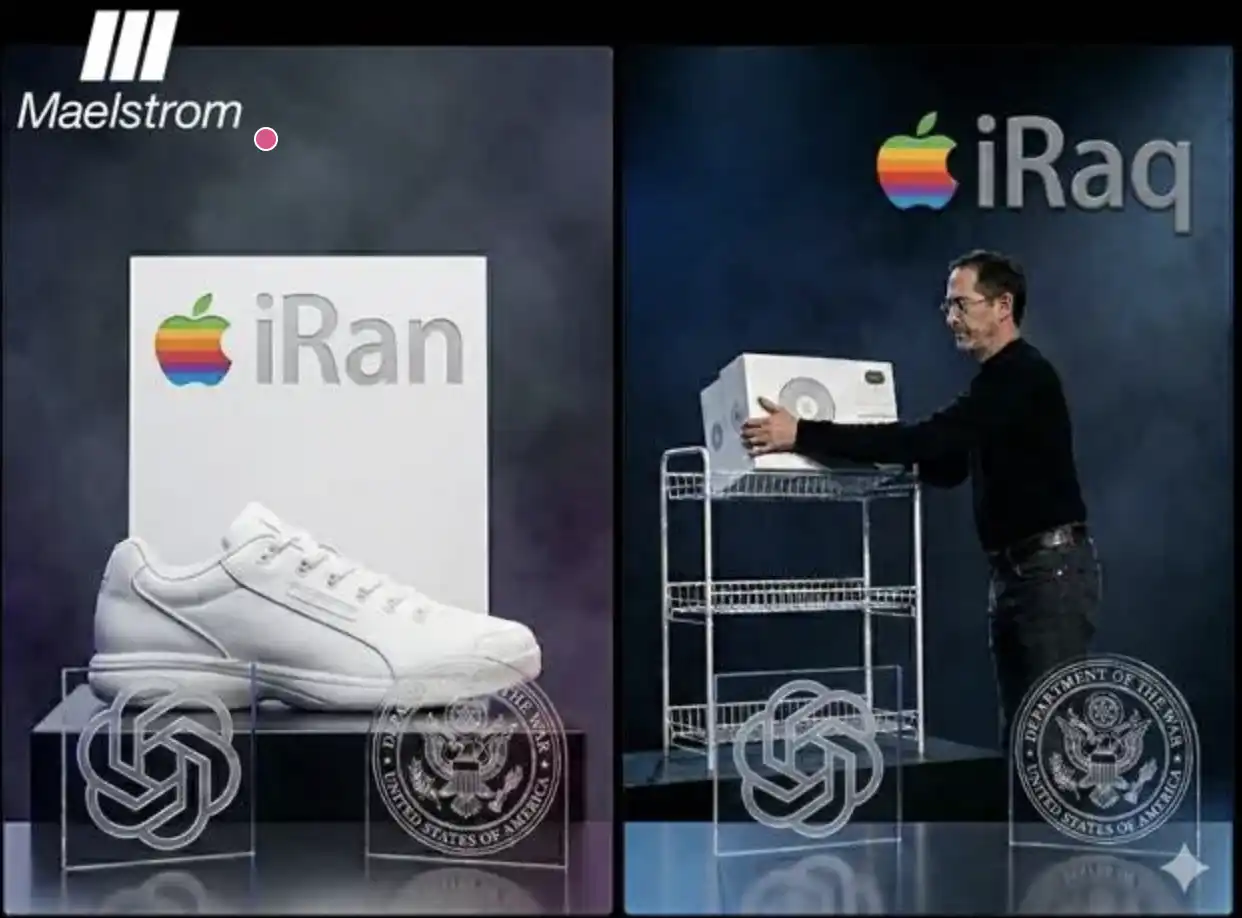
Under the direction of Donald J. Trump, hailed as the "most peace-loving president" in American history, the U.S. War Department partnered with OpenAI to develop an offensive proxy AI weapon: a potentially lethal new Apple iOS. Once implanted into a country's network infrastructure, this operating system would attempt to instigate a regime change. Such regime change is often accompanied by indiscriminate bombing of military and civilian infrastructure, causing massive casualties and costing hundreds of billions, or even trillions, of dollars.
After local political resistance was crushed, a new political elite, fostered by the United States, emerged. They drew funds from American taxpayers and extracted resources from local communities, depositing these funds into their own private wealth accounts at JPMorgan Chase. Over time, public discontent with this rule, reminiscent of the "Vichy-style regimes" fostered by the United States in the Middle East, gradually built up, often leading to their violent overthrow. In their place emerged a more localized, and often more reactionary, oppressive, and even bloodthirsty political structure.
This completes the entire "sales cycle," allowing OpenAI to launch its next-generation products. With OpenAI's IPO priced with an "unlimited future price-to-earnings ratio," are you already eagerly anticipating it?
Since 1985, the year my consciousness began recording human experience within this so-called "quantum continuum," Pax Americana, in the name of "justice," has launched a near-constant crusade against Middle Eastern oil-producing countries and key geostrategic nodes of oil and gas pipelines. Take a look at this chart generated by Perplexity's latest Computer model and get a sense of its "spectacular" scale.
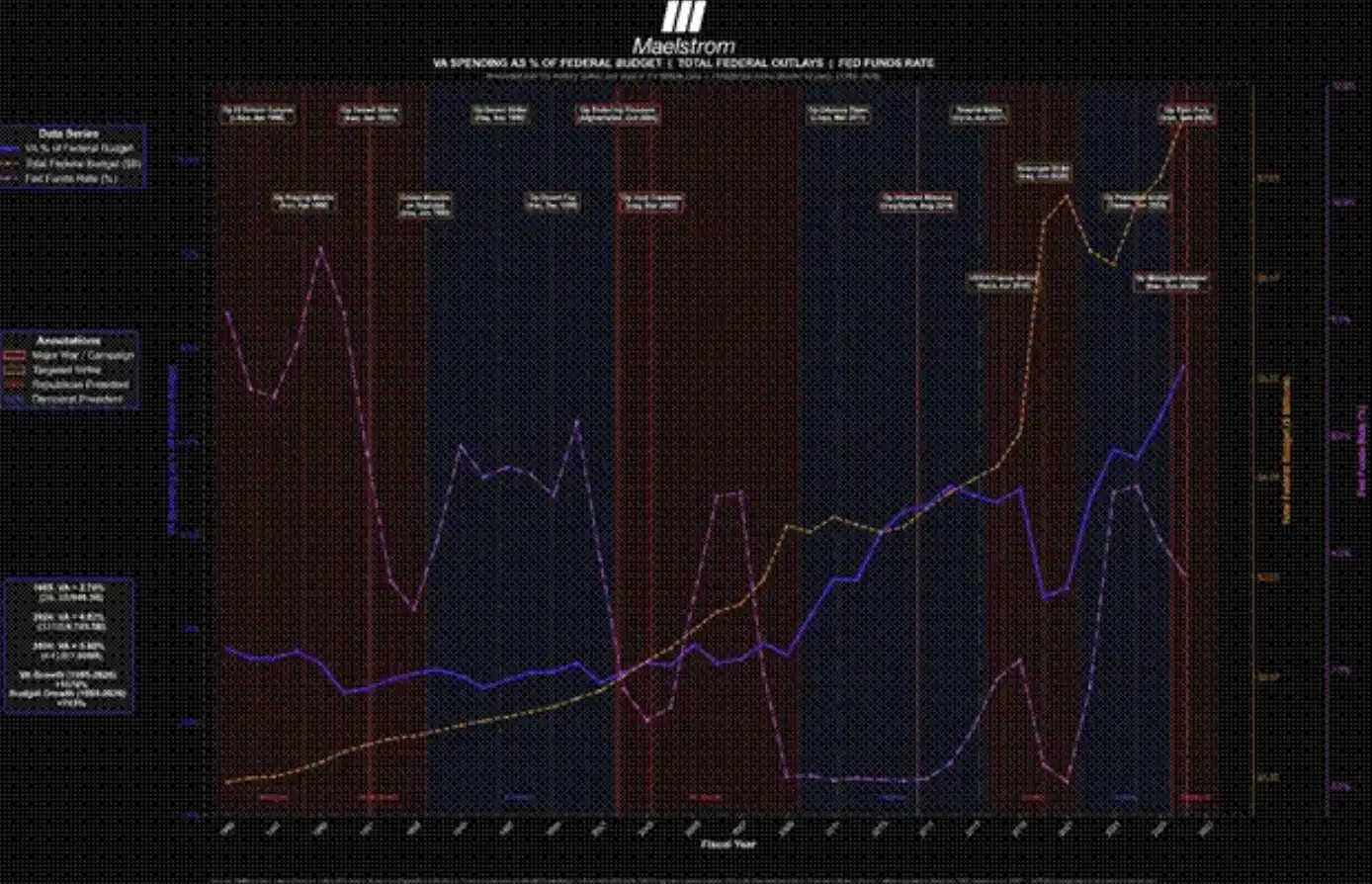
From a macro perspective, this chart attempts to illustrate the human costs of war. It centers on three key indicators: the percentage of the U.S. federal budget allocated to Veterans Affairs (VA), the total nominal federal government spending, and the effective federal funds rate. The chart also marks a series of representative (but not exhaustive) U.S. missile strikes or full-scale wars against Middle Eastern countries.
Data shows that spending on veterans' care is growing at almost twice the rate of the overall federal budget. More importantly, and this is the focus of this article, the Federal Reserve tends to quickly lower the cost of money almost every time Pax Americana launches a major "selective war" in the Middle East. Although every US president in my lifetime has tried to convince the public that those Middle Eastern wars, which appear like video games on the evening news, do not bring real suffering to the only "important humans" in the universe—American soldiers—the data clearly shows that America's obsession with military adventures in the Middle East is costly and consuming American lives.
The so-called "ovarian lottery" led to my birth on this continent, defined by humankind with crooked lines and called "America." In the past forty years of my life, both the Republican presidents ("red team") and the Democratic presidents ("blue team") have launched missiles against some Middle Eastern country that "deserves to be attacked," and even launched all-out wars. It's as if once elected president, high-ranking officials will take you into a top-secret room, clamp your testicles with pliers, and make you swear: during your term, you must at least make one Middle Eastern country feel the "burning heat of democracy," or else face the consequences.
Whether you believe in the various conspiracy theories currently circulating to explain why the US bombed a certain Middle Eastern country, this chart presents a remarkably clear fact in my lifetime: since 1985, every US president has engaged in military conflict with one or more Middle Eastern countries. Therefore, when President Trump now speaks of potentially assassinating Iran's Supreme Leader Khamenei and openly supports a "people's revolution" to overthrow Iran's theocratic regime, we investors are forced to consider: how will our investment portfolios be affected as Trump embarks on this "political rite of passage" that every US president has undergone?
Considering that I'm just a simple-minded guy in the crypto world with a bit of a "toxic masculinity," my logic for judging Bitcoin's rise and fall is actually very simple.
The longer Trump invests in the extremely costly undertaking of “nation-building” in Iran, the more likely the Federal Reserve is to fund a new round of “American peace” military adventures in the Middle East by lowering the cost of money and increasing the money supply.
To verify this hypothesis, let’s review the history of the Federal Reserve’s policy actions following each major military conflict in the Middle East since 1985.
The 1990 Gulf War: "Father" (President George H.W. Bush)
At its first policy meeting after the outbreak of war, the Federal Reserve chose to keep interest rates unchanged, but at the same time hinted that if the war lasted too long, it might be necessary to adopt monetary easing policies.
The following is a direct quote from the FOMC statement, which was retrieved and compiled for me by Perplexity.
August 21, 1990: "The increased uncertainty arising from events in the Middle East, and the potential for weaker-than-expected economic performance, has made the formulation of effective monetary policy extremely complex." "Several members believed that developments were likely to point in a certain direction—that is, at some point, policy easing would be necessary to offset the economic weakness that had already emerged before the rise in oil prices."
Subsequently, the Federal Reserve cut interest rates in succession at its November and December 1990 meetings, and described the war in a rather euphemistic way as a significant uncertainty affecting decision-making. The Gulf War finally ended in March 1991.
"The sharp decline in business and consumer confidence likely reflects not only developments in the Middle East itself, but also uncertainty about future changes in the region and their impact on oil prices."
In other words, the Federal Reserve chose to ease policy despite inflationary pressures triggered by soaring oil prices.
The 2001 Global War on Terror (GWOT): "Son" (President George W. Bush)
The "global war on terror" unfolded rapidly after the collapse of the Twin Towers of the World Trade Center in New York. Soon after, Iraq and Afghanistan became targets of cruise missile interrogation-style strikes. To stabilize economic confidence, the Federal Reserve almost immediately accelerated its pace of interest rate cuts.
At an emergency meeting following the attacks, then-Federal Reserve Chairman Alan Greenspan, known as the "conductor," stated: "Clearly, the events of last week have brought at least a higher level of fear and uncertainty, which has put significant downward pressure on asset prices and increased the probability of asset price deflation, the impact of which on the economy is evident. Therefore, I propose a 50-basis-point reduction in the target for the federal funds rate."
Essentially, if economic confidence under the "American Peace" system falters and asset prices fall, the Federal Reserve must act swiftly. And the "prescription," as always, is cheaper and more abundant currency.
Another statement from the Federal Reserve also revealed the fact that, when necessary, the Fed will fulfill its duty to assist the government in providing financing support for the war machine.
November 6, 2001: FOMC Statement
"While the reallocation of resources to enhance security may limit productivity gains for some time, the long-term outlook for productivity growth and the overall economy remains positive."
The 2009 "Surge": "The Holy Spirit" (President Barack Obama)
Ordinary people in Iraq, Syria, and Afghanistan may have thought that a Nobel Peace Prize-winning president wouldn't unleash hellfire on their countries. But as it turns out, such expectations were merely illusions, and false hopes are often the most destructive.
While Obama did not launch a new large-scale war in the Middle East, he did expand the troop presence in Afghanistan (the so-called "troop surge") because he viewed it as a "just war."
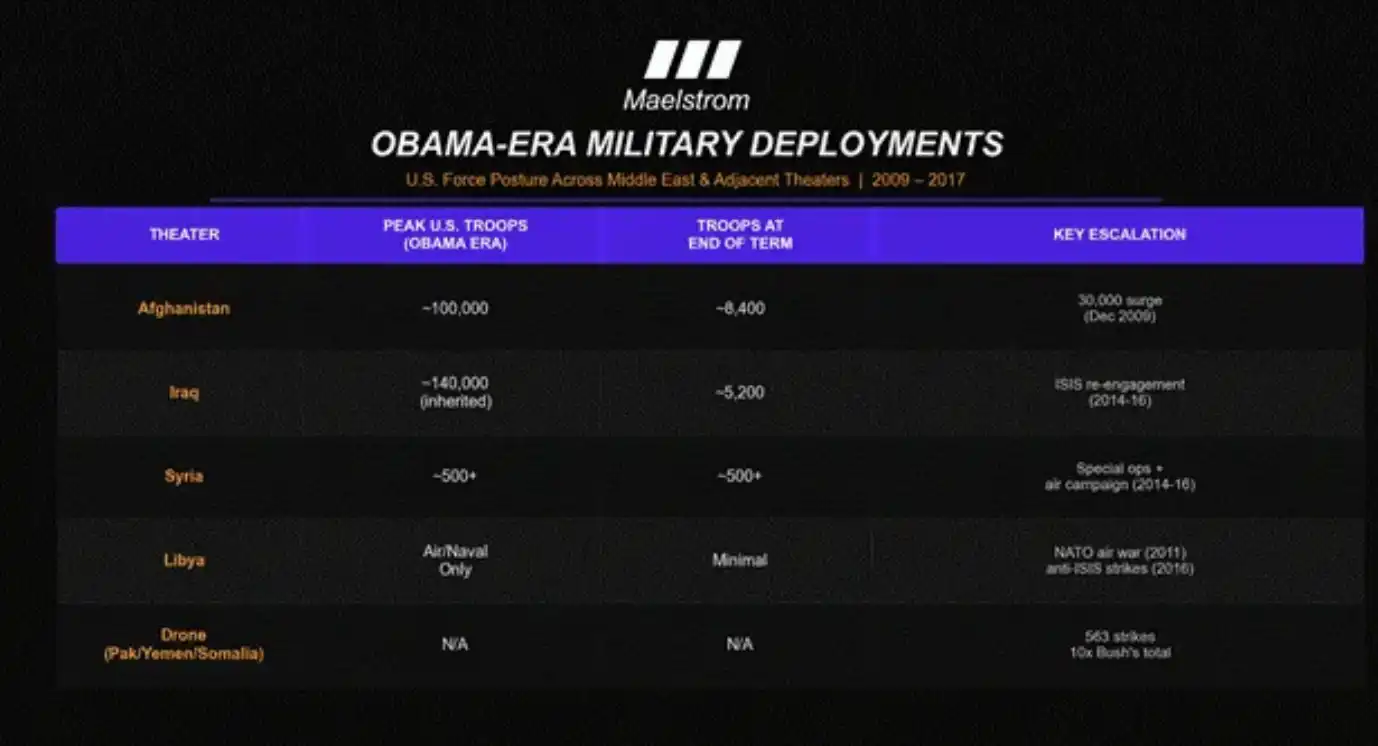
Given that the Federal Reserve had already lowered interest rates to zero by the end of 2008 and begun massive money printing through quantitative easing (QE), there was virtually no further action that could be taken on monetary policy when Obama expanded the deployment of troops to the Middle East. The cost of capital was close to zero, and liquidity was virtually unlimited. The US war machine and its contractors naturally profited immensely.
Iran in 2026: "Messiah" (President Donald Trump)
Fate seems to have played a rather ironic joke: after surviving an assassination attempt during the 2024 presidential campaign, Trump has almost "risen from the dead." As Kanye sang, "Jesus walks." Now I guess I can talk about Kanye—after all, he's "bowed down," right?
Trump's performance in office, and the re-election prospects of his "red team" Republican members, will largely depend on whether financial asset markets rise or fall, and whether oil prices decline or rise. Since the fall of the Shah of Iran, Pahlavi, in 1979, regime change in Iran has been a long-standing obsession of the American political elite. Against this backdrop, the Federal Reserve has every political "legitimacy" to significantly ease monetary policy. If the Fed fails to fulfill its duty and finances plans to "rebuild Iran into a US vassal state" with cheaper, more abundant currency, it would be seen as "unpatriotic."
Trading Strategies
At this moment, we don't know how long Trump will maintain his interest in reshaping Iran's political structure—a process that could cost hundreds of billions, or even trillions of dollars. We also don't know how much political pain he can endure before choosing to back down in the face of geopolitical and financial market pressures.
Therefore, a more cautious approach is to observe how the situation develops.
The real time to "enter the market in force" will be after the Federal Reserve cuts interest rates or resumes printing money to align with the government's policy objectives in Iran. At that time, it's time to buy large amounts of Bitcoin and high-quality Altcoin like $HYPE.
Take care, everyone, my friends.
[ Original Link ]
Click to learn about BlockBeats' job openings.
Welcome to the official BlockBeats community:
Telegram subscription group: https://t.me/theblockbeats
Telegram group: https://t.me/BlockBeats_App
Official Twitter account: https://twitter.com/BlockBeatsAsia