Wall Street experienced a volatile trading session on March 2nd as indices plummeted early due to Middle East tensions, but the decline narrowed significantly thanks to Dip hunting.
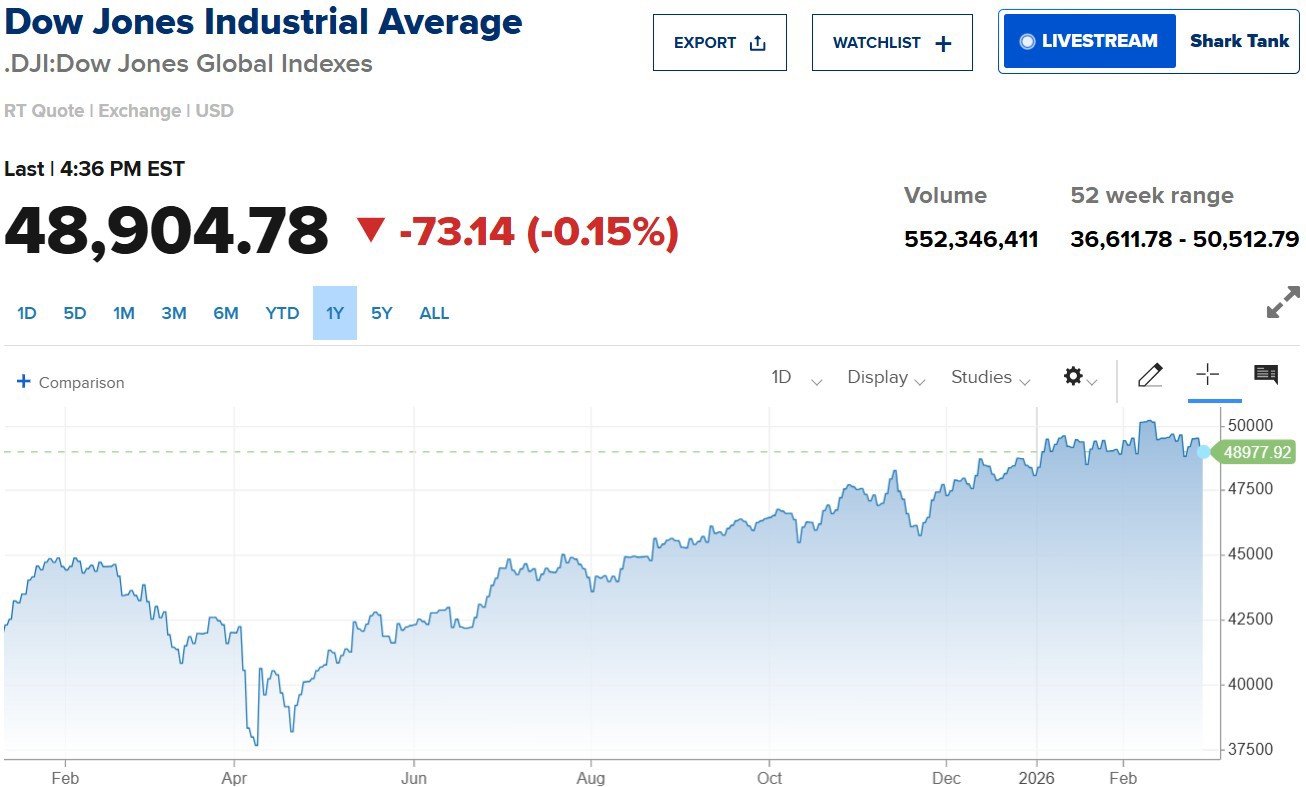
At the close, the S&P 500 edged up 0.04% to 6,881.62 points, despite having lost as much as 1.2% at one point. The Nasdaq Composite rose 0.36% to 22,748.86 points after having fallen 1.6%. Meanwhile, the Dow Jones fell 73.14 points (-0.15%) to 48,904.78 points, after having lost nearly 600 points at one point.
The recovery occurred as US crude oil prices moved away from their intraday highs, somewhat easing concerns about an energy shock to the US economy. At one point, oil surged as much as 12% in a single day, but then narrowed its gains.
At the same time, money flowed back into leading technology stocks. Nvidia rose nearly 3%, and Microsoft gained over 1% – stocks XEM as having strong balance sheets and good resilience in an uncertain environment.
Only 4 out of 11 sectors in the S&P 500 rose, including energy, industrials, technology, and real estate.
“The Futures Contract market has overreacted to the Iran conflict, creating buying opportunities as the S&P 500 approaches its 2026 Dip ,” said Jeff Kilburg, CEO of KKM Financial. He believes the long-term uptrend remains unbroken.
Conflict escalates, oil remains the key variable.
Tensions escalated following joint US-Israeli attacks that killed Iran's Supreme Leader Ayatollah Ali Khamenei – an event XEM as a major turning point in the Middle East.
President Donald Trump suggested that a military campaign against Iran could last 4-5 weeks. Meanwhile, Iran has vowed a strong response, raising concerns about a wider conflict in the region.
Brent crude oil prices rose nearly 8% following news that the Strait of Hormuz – the world's most important oil shipping route – was at risk of being closed. Iran is currently the fourth-largest oil producer in OPEC, making the market particularly sensitive.
According to Ross Mayfield, a strategist at Baird, if the shock lasts only about two weeks, the impact on American consumers and the Fed's interest rate policy may be limited. However, if oil prices Peg high for many months, the risk of inflation will return.
Defense stocks surged amid escalating military tensions. Northrop Grumman rose 6%, and Lockheed Martin gained more than 3%. Energy stocks such as Exxon Mobil and Chevron also saw significant gains.
Historical data from Wells Fargo shows that the S&P 500 typically experiences sharp initial declines following geopolitical shocks but tends to recover within two weeks and is up an Medium of 1% after three months.
News summary.