Introduction: Understanding the Present within the Context of History
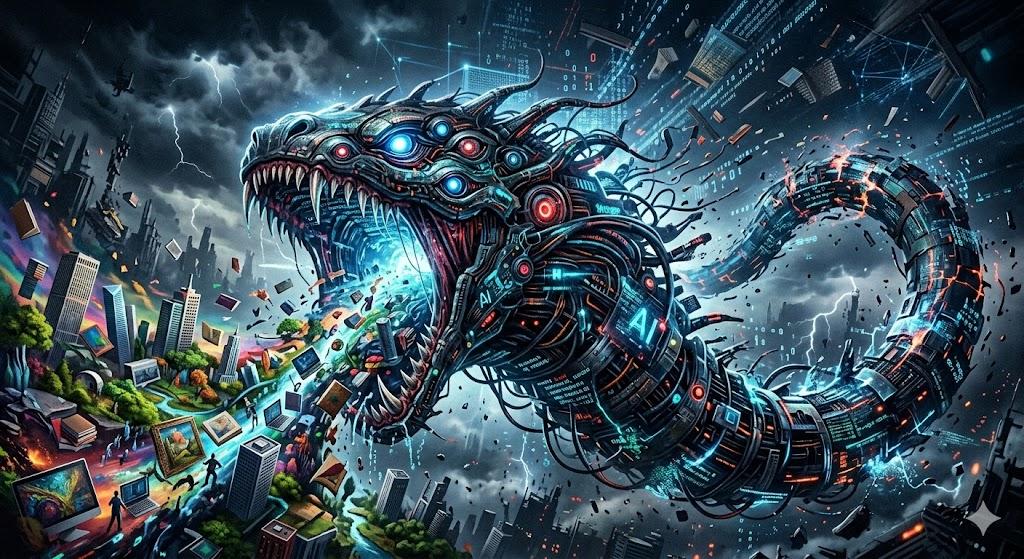
In today’s uncertain era, the global economic and political landscape is undergoing profound and complex changes. Ray Dalio, a famous investor and founder of Bridgewater Associates, delivered a speech entitled “AI Is Eating Everything — and It Might Eat Itself” [1]. This article aims to provide a comprehensive and in-depth summary and analysis of the content of this speech, and combined with Mr. Dalio’s consistent macroeconomic framework, to provide you with an in-depth analysis report.
Dalio's core argument is that we are at a historic turning point, and understanding the current situation requires a grand historical perspective. He doesn't simply address the issues at hand, but examines current events—whether it's the US debt crisis, the explosive growth of AI technology, or the escalating internal and external conflicts—within a 500-year historical cycle. He repeatedly emphasizes that many of the "unprecedented" events we are experiencing today have actually been repeated in different forms throughout history. Therefore, understanding these cyclical patterns is key to addressing future challenges.
This article will follow Dalio's line of reasoning, starting with his "Five Forces" framework for analyzing the world, and systematically deconstructing the debt and currency predicament facing the United States, the imbalance of its internal order, the evolution of great power conflicts, the challenges of the natural environment, and the disruptive technological revolution. We will elaborate on each core issue, cite his key arguments, and expand our analysis with relevant background information, striving to present you with a complete, comprehensive, and insightful knowledge system.
“I have studied these major cycles of the past 500 years, and five forces have intertwined to determine the answers to the problems we face today.” — Ray Dalio [2]
We hope to not only help you understand Dalio's diagnosis of the current world situation, but also inspire you to use periodic and systematic thinking to observe and think about the complex world we live in, so as to make more informed decisions.
Chapter 1: Understanding the Macro Framework of the World — The Five Forces Model
To understand Dalio's interpretation of the complex phenomena of the current world, one must first master his core analytical tool—the "Five Big Forces" model. This model, proposed by Dalio in his book *Principles: The Changing World Order*, posits that history is not a simple accumulation of random events, but rather an evolutionary process driven by a few key forces, exhibiting clear cyclical patterns. These five forces are intertwined, mutually causal, and collectively shape the rise and fall of nations and the global order.
1.1 The Debt and Money Cycle
This is the core driving force among the five forces. Dalio believes that the expansion and contraction of credit is the lifeblood of economic activity. In a long debt cycle, society tends to continuously increase debt because borrowing can stimulate consumption and investment, bringing short-term prosperity. However, when the rate of debt growth exceeds the rate of growth in debt repayment income, the system becomes unsustainable.
• Early stage of the cycle : Healthy credit growth promotes productivity and economic prosperity.
• Mid-cycle : Debt growth begins to outpace productivity growth, asset prices are driven up, and a bubble forms.
• Late stage of the cycle : Debt burdens become extremely heavy, forcing central banks to cut interest rates to alleviate pressure. When interest rates fall to near zero, traditional monetary policy becomes ineffective.
• Late stage of the cycle : In order to deal with the crisis, central banks have to resort to "printing money" (i.e., quantitative easing), purchasing government bonds and other financial assets to inject a large amount of liquidity into the market. This will lead to currency devaluation and may ultimately trigger a reshaping of the monetary system.
Dalio explicitly points out that the United States is currently in the late stages of a long-term debt cycle. Government spending far exceeds revenue, leading to a massive fiscal deficit that can only be covered by issuing more Treasury bonds. However, demand from buyers of this debt (including domestic investors and foreign central banks) is weakening, forcing the Federal Reserve to potentially expand its balance sheet again—essentially printing money—thereby diluting the value of the dollar. This is the fundamental reason why he repeatedly emphasizes the importance of hard assets such as gold.
1.2 The Internal Order and Disorder Cycle
This force primarily focuses on the social and political stability within a country. Its core driving factors are the widening gap in wealth, values, and politics . When the gap between the rich and poor in society is enormous, and the value conflicts between different groups are severe, populism rises, and political compromise becomes extremely difficult.
“When people pursue something more important than the system itself, the system is in danger. Our system is in danger because people will no longer accept the system or its alternatives, so they will fight against it.” — Ray Dalio [2]
Dalio argues that American society is in the "Fifth Stage" of this cycle, characterized by escalating internal conflict, approaching or already existing in some form of "civil war." He observes that both the left and right wings exhibit "irreconcilable differences," willing to undermine the existing system for their respective beliefs. This internal division and chaos prevents the government from implementing necessary, but potentially painful, reforms (such as spending cuts or tax increases) to address the debt problem, thus exacerbating the crisis of the First Force.
1.3 The External Order and Disorder Cycle
This refers to changes in the international power structure, particularly the competition between established and rising powers . Historically, when the comprehensive national strength of an emerging power (such as China today) approaches or even challenges the existing dominant power (such as the United States today), friction and conflict between the two countries in the economic, technological, geopolitical, and even military fields will increase significantly.
Dalio describes the current world order as a shift from a unipolar or multilateral cooperative world order to a power-based, confrontational one. In this environment, trust between nations declines, supply chains are "weaponized," and trade and capital flows are severely disrupted by geopolitics. For example, US tariffs on Chinese goods and export controls on key technologies (such as semiconductors) are concrete manifestations of this force. This external conflict, in turn, affects domestic economies (e.g., driving up inflation and disrupting production) and threatens the global debt and monetary system (e.g., foreign investors reducing their holdings of US Treasury bonds).
1.4 Acts of Nature
Dalio reminds us that we cannot ignore natural forces beyond direct human control, such as droughts, floods, and plagues . He points out that historically, the death toll and disruption of social order caused by these natural disasters have often exceeded those caused by wars. In contemporary times, climate change is the most prominent manifestation of this force.
Climate change not only directly causes economic losses (such as extreme weather destroying infrastructure and agriculture), but also requires massive investments in energy transition and adaptive infrastructure. Dalio estimates that addressing climate change could cost approximately $1 trillion annually. This enormous expenditure is undoubtedly a further blow to already heavily indebted governments, exacerbating the pressure of their debt cycles.
1.5 The Power of Technology
Technology is the most fundamental driving force for the progress of human society and the development of productivity, but it is also a double-edged sword. Throughout history, every major technological revolution (such as printing, the steam engine, and the internet) has greatly changed economic structures, social forms, and methods of warfare.
In the current context, artificial intelligence (AI) is undoubtedly the most disruptive technological force. Dalio, in his video title, points out that "AI is eating everything." On the one hand, AI is improving productivity in unprecedented ways and creating new industries; on the other hand, it may also exacerbate wealth inequality (between those who master AI technology and those who are replaced), change employment structures, and trigger new competition in the military field. Dalio specifically warns that the AI industry itself may be a bubble, that is, "eating itself." Huge investments may not translate into corresponding profits, especially with competition from open-source and free models, which could trigger a crisis similar to the bursting of the dot-com bubble in 2000.
Summary Table of the Relationship between the Five Major Forces
Power Name
Core driving factors
Current performance
Interaction with other forces
Debt and Money
Excessive expansion and unsustainability of credit
The US's massive national debt, fiscal deficit, and pressure on the central bank to print money.
Internal conflicts make reform difficult; external conflicts affect demand for government bonds; technology bubbles require credit support.
Internal order and conflict
Widening gap in wealth, values, and politics
Left-right divide, populism, and political gridlock in the United States
It hinders the resolution of debt problems; provides opportunities for external forces to interfere; and affects the collective ability to respond to natural disasters.
External Order and Conflict
Rising Power Challenges Established Power
Comprehensive competition between China and the United States in trade, technology, and geopolitics
Exacerbating the financing risks of debtor countries; diverting domestic conflicts; stimulating the development of military technology.
The power of nature
Climate change, epidemics, etc.
Frequent extreme weather events and high costs of energy transition
This could increase the government's financial burden and exacerbate debt problems; it could also intensify internal and external conflicts due to resource constraints.
The power of technology
Disruptive innovation represented by AI
Productivity revolution, reshaping of employment structure, and the risk of an AI bubble.
It is both a new engine for economic growth and a potential source of wealth inequality; it is also a core area of competition between nations.
In summary, Dalio's Five Forces model provides a systematic perspective, helping us see the deep connections behind seemingly isolated events. He argues that these five forces are currently undergoing dramatic cyclical changes, forming a historical "synergy" that places us in an exceptionally turbulent and risky period. Understanding this macro framework is fundamental to a deeper understanding of the subsequent content in this video.
Chapter Two: The "Black Hole" of Debt and the "Prisoner's Dilemma" of Reform
Within the framework of the Five Forces framework, Dalio devotes the most attention to analyzing the most pressing crisis facing the United States today—the debt and currency issues, and the accompanying internal conflicts. He argues that the US is mired in a "black hole" of massive debt, and the political "prisoner's dilemma" makes any effective reform extremely difficult. This chapter will delve into these two intertwined dilemmas.
2.1 US Treasury Bonds: A Ponzi Scheme That Is Running Out of Control
Dalio used a very vivid analogy to describe the financial situation of the U.S. government: it is like a company that spends $7 trillion a year but only has $5 trillion in revenue, and continues to generate a huge loss of $2 trillion [2]. This loss, namely the fiscal deficit, continues to accumulate on the national debt that has reached $38.8 trillion (as of the beginning of 2026)[3].
He further analyzed the operating mechanism and dangers of this debt "black hole":
1. Self-replication of debt: Currently, the United States needs to pay more than $1 trillion in interest on its national debt every year, accounting for about half of the fiscal deficit[2]. This means that the debt itself is generating more debt. According to the Congressional Budget Office (CBO) forecast, by 2036, annual interest payments will soar to $2.144 trillion, surpassing Medicare to become the second largest government spending item after Social Security[4]. This is a typical Ponzi scheme: new funds need to be constantly borrowed to repay old debts and interest.
2. Imbalance in Supply and Demand: The key to maintaining this cycle lies in having enough buyers to purchase newly issued U.S. government bonds. However, the demand side is flashing red. Dalio points out that both of the traditional major buyers—domestic investors and foreign central banks—are experiencing problems.
Foreign buyers are backing down : Foreign entities holding large amounts of U.S. Treasury bonds, such as China, Japan and European countries, are becoming increasingly cautious due to escalating geopolitical risks (the third force). They are concerned that these dollar assets could be frozen or sanctioned in the event of a conflict with the United States, a real threat that has become a reality since the Russia-Ukraine conflict. As a result, we are seeing central banks around the world gradually reducing their holdings of U.S. Treasury bonds and increasing their holdings of hard assets such as gold[5].
* Domestic buyer saturation : Dollar-denominated debt assets already account for a high proportion of domestic investors' portfolios, and their ability and willingness to absorb further massive amounts of government bonds are declining.
3. The Central Bank's Last Resort: Printing Money : When there aren't enough buyers in the market to absorb government-issued debt, the Federal Reserve faces immense pressure to intervene directly by purchasing Treasury bonds to prevent interest rates from soaring and government default. This action is essentially "printing money," creating currency out of thin air without a corresponding increase in economic output. Dalio emphasizes that this is the common fate of all fiat currency systems at the end of a debt cycle. Its direct consequences are significant currency devaluation and the dilution of wealth for investors holding cash and bonds.
“Historically, all currencies have either been ‘hard currencies’ (pegged to assets such as gold) or fiat currencies. And all fiat currencies have ultimately depreciated through printing money.” — Ray Dalio [5]
Key data table on the US debt situation
index
Data (as of early 2026 or projected)
source
significance
Total national debt
Approximately 38.8 trillion US dollars
Fortune [3]
The company faces a huge existing debt burden and high interest expenses.
Annual fiscal deficit
Approximately 2 trillion US dollars
All-In Podcast [2]
Debt is still growing rapidly.
deficit as a percentage of GDP
Approximately 6%
All-In Podcast [2]
This is well above the 3% sustainability level.
Annual interest expense
More than $1 trillion
Fortune [4]
Debt has entered a self-replicating phase.
Foreign holdings of US Treasury bonds
Approximately 1/3
All-In Podcast [2]
Weakened external demand poses a significant risk.
2.2 The "Blockchain Trilemma" of Government Reform
Faced with such a severe debt situation, the rational solution seems obvious: cut government spending and increase taxes. However, Dalio is pessimistic, believing that the United States is caught in a reform "prisoner's dilemma" caused by internal conflict (the second force), which can even be called the "Blockchain Trilemma": efficiency, fairness, and political feasibility .
1. Lessons from the failure of DOGE: An interesting example was mentioned in the interview — DOGE (Department of Government Efficiency). This was an ambitious plan advocated by Elon Musk and others, which aimed to reduce government waste and fraud and improve administrative efficiency through sweeping reforms [2]. However, the plan ultimately failed. Dalio analyzed that the root cause of its failure was the inertia of the system itself . The government system is too large and complex, and countless individuals and businesses rely on existing fiscal expenditures. Any attempt to cut welfare (such as the school lunch program) or change the existing interest structure will immediately trigger a huge political backlash. In a polarized society, radical reforms by either side will be seen as an attack by the other side, thus leading to political failure.
2. The Inherent Dilemma of Democracy: Dalio raises a pointed question: Can current democratic systems still elect a leader who can both effectively implement reforms and be accepted by the majority? In a social atmosphere where "everything you do will be criticized and attacked," leaders, in order to retain votes, often tend to choose short-term policies that appease voters (such as handing out money or cutting taxes) rather than undertaking necessary but painful structural reforms in the long run. This is like the "marshmallow experiment" in psychology, where politicians sacrifice the future "two marshmallows" (long-term national stability) for the sake of the immediate "one marshmallow" (votes).
3. Deep-rooted structural problems: government inefficiency and corruption, in Dalio’s view, are typical symptoms of the end of the debt cycle. The Minnesota daycare fraud case mentioned above, in which billions of dollars of public funds flowed into non-existent institutions, is a microcosm of this systemic failure[2]. When the entire system becomes so bloated and complex that even basic regulation cannot be effectively implemented, it is nothing short of a pipe dream to expect it to undergo a self-revolution.
"Structurally, the reforms are a bit difficult at this stage. That's a really downplaying statement." — Ray Dalio [2]
Therefore, Dalio concludes that the United States cannot resolve its debt problem through traditional political means. Deep internal divisions prevent any single party from gaining sufficient authority to implement robust reforms. This political paralysis allows the debt "black hole" to continue to deepen until it is eventually forced out by market forces (such as hyperinflation or a debt crisis). This foreshadows a turbulent and painful adjustment process, a script that has repeatedly played out throughout history.
Chapter 3: The Ultimate Choice Between Gold, Bitcoin, and Safe-Haven Assets
At the end of a debt cycle, when the credibility of fiat currencies is eroded, a core question emerges: What is a true "safe-haven currency"? Dalio has spent considerable time articulating his views on gold and Bitcoin, clearly expressing his preference for gold as the ultimate safe-haven asset. This chapter will delve into the logic behind his choice and his profound skepticism about modern digital assets.
3.1 Gold: The Timeless "Second Largest Reserve Currency"
Dalio’s advocacy for gold is not based on speculation, but on his profound historical insights. He emphasizes that gold is not an ordinary “precious metal”, but a most basic “money” that has stood the test of time for thousands of years. Since 2025, the price of gold has soared from about $2,900/ounce to $5,200/ounce, an increase of nearly 80% [2]. Dalio believes that this is not a market bubble, but a rational response of global capital to the current stage of the cycle.
He attributed the value of gold to the following core attributes:
1. Non-debt asset: This is the most fundamental difference between gold and fiat currency. When you hold US dollars, euros, or any other country's currency, you are actually holding a "debt instrument" of that country's government, the value of which depends on the government's credit and debt repayment ability. Gold, on the other hand, does not depend on anyone's promise; it is a physical asset and there is no risk of default.
2. Limited Supply: Central banks can print unlimited amounts of money, but the mining and supply of gold are extremely limited. This scarcity ensures that its value is not easily diluted like fiat currency. This is why gold serves as a reliable store of value during periods of inflation or currency devaluation.
3. Globally recognized value and transferability: Gold is the only non-sovereign store of value that is universally accepted by all countries and cultures around the world. When a country needs to pay another country, gold can be used as the final means of settlement, while fixed assets such as real estate cannot achieve this cross-border transfer. This "hard currency" attribute makes it the most important reserve asset for central banks in various countries besides the US dollar and the euro. Dalio has clearly pointed out that gold is now the "second largest reserve currency" held by central banks around the world [5].
4. Safe-haven property: History has repeatedly shown that when the shit hits the fan, that is, when there is war, hyperinflation, debt crisis or major political turmoil, gold often outperforms traditional financial assets such as stocks and bonds. This is because it has a lower risk of being confiscated and does not depend on any financial intermediaries. Dalio suggests that even if there is no particular view on gold, a rational investor should allocate 5% to 15% of his assets to gold as a "ballast" and "insurance" for his portfolio. [5]
3.2 Bitcoin: A “Small Market” Full of Structural Flaws
In stark contrast to his fervent admiration for gold, Dalio is skeptical of Bitcoin's potential as a safe-haven asset. While many cryptocurrency enthusiasts haile Bitcoin as "digital gold," Dalio points out several fatal structural flaws:
1. Lack of privacy: All Bitcoin transactions are recorded on a public blockchain, which means they can be tracked and monitored. Dalio argues that this transparency makes Bitcoin unattractive to institutional investors seeking asset privacy, especially central banks of sovereign nations. “Central banks won’t want to buy Bitcoin,” he asserts.[2]
2. Vulnerability to Control and Attack: As a purely digital asset, Bitcoin faces dual risks from government regulation and technological attacks. Governments can easily control the circulation of Bitcoin by regulating exchanges, imposing taxes, or even directly banning transactions. Furthermore, while blockchain technology is currently relatively secure, Dalio mentioned concerns that future technologies (such as quantum computing) could potentially break its encryption algorithms.
3. Small market size and high correlation: Compared with the market size of gold, which is worth trillions of dollars, the market of Bitcoin is still relatively small, making it more susceptible to price manipulation by a few "whale" holders. More importantly, Dalio observed that the price movement of Bitcoin is highly positively correlated with technology stocks (especially the Nasdaq index). This means that when the technology stock bubble bursts and the market experiences a liquidity crisis, Bitcoin will not only fail to provide a safe haven, but will also fall along with it, failing to play a role in diversifying risk. The performance of gold rising by 80% and Bitcoin falling by 25% in the past year is strong evidence of this [2].
4. Lack of intrinsic value and historical validation: Gold has served as currency for thousands of years, and its function as a store of value has been repeatedly verified. Bitcoin, on the other hand, has only existed for a little over a decade and has not yet undergone the test of a complete and severe macroeconomic cycle. It is more often seen as a high-risk, technologically speculative asset than a reliable store of wealth.
Comparison of core attributes of gold and Bitcoin
property
Gold
Bitcoin
Asset nature
Physical, non-debt hard assets
Digital, cryptographically based debt instruments (relying on network consensus)
Historical test
Over thousands of years, it has experienced numerous crises.
More than ten years, without experiencing a complete major cycle.
Privacy
Physical possession offers a high degree of privacy.
Transactions are publicly traceable, but privacy is poor.
Regulatory risks
Low (physical holdings are difficult to fully control)
Extremely high (vulnerable to government regulations and bans in various countries)
Market size
Huge (over $15 trillion)
Relatively small (approximately $1-2 trillion)
Institutional acceptance
Core reserve assets of global central banks
Rarely held by official institutions as reserve assets
Correlation with risky assets
Low or negative correlation indicates a safe-haven attribute
Highly positively correlated with technology stocks, exhibiting strong pro-cyclical characteristics.
3.3 The Conversion of Wealth and Currency: The Ultimate Stress Test
Dalio further offers a profound point: the distinction between "wealth" and "money ." Wealth resides in assets such as stocks, real estate, and companies, but you cannot directly use them for consumption. When you need to spend money, you must convert wealth into currency. And at the end of a debt cycle, this conversion process itself is fraught with risk.
“We have too much wealth relative to money right now. The question is, what is that money? When you convert wealth into money, the risk is that they will print money, as they have been doing ever since we had fiat currency.” — Ray Dalio [2]
He warned that when market panic sets in and everyone tries to sell their "wealth" (such as stocks) for "currency" (cash), the only option for central banks to prevent the financial system from collapsing is to print massive amounts of money to meet this liquidity demand. This will lead to a sharp devaluation of the currency, and ultimately, those holding large amounts of cash will find that the purchasing power of their "safe" currency is rapidly disappearing.
In this ultimate stress test, only hard assets like gold can truly weather cycles and preserve wealth. This is precisely the warning that Dalio is repeatedly sounding to investors at this historical juncture.
Chapter Four: The AI Revolution and the Bubble — "It's devouring everything, and it might devour itself."
After exploring the severe challenges of macroeconomics and politics, Dalio turns his attention to the most revolutionary force of our time—artificial intelligence (AI). He summarizes its impact with a powerfully impactful title: "AI is eating everything—and it may eat itself." This chapter will delve into Dalio's dual perspective on AI: on the one hand, he acknowledges AI as an unprecedented productivity revolution; on the other hand, he offers profound warnings about the enormous bubbles and systemic risks it may trigger.
4.1 AI as the ultimate productivity tool
Dalio views AI as the concentrated manifestation of technological power (the fifth force) in the modern era, its influence permeating all aspects of the economy and society. He believes that AI's revolutionary nature lies in:
• Exponential increase in efficiency : AI can automate a large number of repetitive and analytical tasks, greatly improving productivity, which in theory could create huge economic growth potential.
• Popularization of knowledge : Dalio himself is even trying to create a “digital version of himself” by inputting his life’s principles and experiences into AI so that he can have high-quality conversations with more people[6]. This suggests that AI has the potential to break down knowledge barriers and make top-notch expertise and services readily available.
• A complete reshaping of industries : From finance and healthcare to education and manufacturing, almost no sector is immune to the impact of AI. It is reshaping business models, job markets, and the competitive landscape between nations.
4.2 Warnings from the AI Bubble: Company ≠ Technology
Despite his optimism about AI technology itself, Dalio is deeply uneasy about the current capital market's fervent pursuit of AI. He raises a crucial distinction: investing in AI companies is not the same as investing in AI technology itself .
“During the bubble, many people didn’t realize that buying shares in these companies was betting on technology. That’s not true. There’s a huge difference between how companies behave and how technology behaves.” — Ray Dalio [2]
He drew lessons from numerous technological revolutions throughout history, particularly the dot-com bubble of 2000, to illustrate the risks of an AI bubble:
1. High attrition rate: In the early stages of any technological revolution, thousands of startups emerge, but only a tiny fraction survive and become profitable. The vast majority fail in the fierce competition, and investors lose everything. The same is true in today's AI field; despite its promising future, not all companies will emerge as winners.
2. The Challenge of Profit Realization: Currently, massive amounts of capital are flowing into the AI field, particularly in infrastructure (such as chip manufacturing and data center construction), with investments reaching trillions of dollars. However, whether these huge investments can be converted into sustainable profits remains a significant unknown. If AI applications fail to generate sufficient willingness to pay, or if intense competition leads to price wars, these upfront investments may not be recouped, creating a massive asset bubble. Dalio describes this as "AI potentially eating itself"—that is, excessive competition and capital consumption within the industry can prevent the entire ecosystem from becoming profitable.
3. Wealth Effect and Systemic Risk: The AI hype has driven up the stock prices of related companies, creating enormous paper wealth. However, this wealth is fragile. Once market sentiment reverses, or company financial reports fail to support their high valuations, it could trigger a massive sell-off. Even more dangerous is the possibility that if investors borrowed money to buy these stocks, or if the government begins levying a "wealth tax," they will be forced to sell assets to obtain cash, potentially bursting the bubble and triggering a chain reaction that could shock the entire financial system.
4.3 The US-China AI Race: Profit Model vs. Popularization Model
Dalio further places the discussion of AI within the grand context of the US-China competition (the third force), revealing two distinct development philosophies and the potential conflicts they may bring.
• The US “Profit Model” : In the United States, the development of AI is primarily driven by private enterprises, with the fundamental goal of achieving commercial profit. Companies invest heavily in R&D and then recoup costs and generate profits by selling products and services or collecting licensing fees. This is a typical capitalist, market-driven model.
• China's "Popularization Model" : Dalio speculates that China may adopt a different strategy. The government might view AI as a national infrastructure similar to electricity, with its primary goal not being to profit from a few companies, but to enable the entire society to use AI to the maximum extent and at the lowest cost, thereby comprehensively improving national productivity. Under this model, the government might vigorously promote open-source technologies and even provide free AI services to the entire population.
The clash between these two models will present serious challenges. Dalio envisions a scenario: if China's AI technology is comparable to that of the United States, but is free and open-source, how will American AI companies compete? In a global market, high-priced, closed business models will find it difficult to compete with free, open models. This is not only a competition of business models, but also a competition of national development philosophies, the outcome of which will profoundly affect the global AI industry landscape and profit distribution.
The dual risks of AI development
Risk type
Specific manifestations
Possible consequences
Internal bubble risk
Overinvestment in capital has led to valuations far exceeding fundamentals; high attrition rates; and difficulty in realizing profits.
Similar to the bursting of the dot-com bubble in 2000, a large amount of investment vanished, triggering financial turmoil.
External competition risk
The US and China adopt different AI development philosophies (profit vs. widespread adoption); the impact of open-source models on business models.
American AI companies are facing fierce price competition in the global market, which is damaging their profitability and weakening their long-term competitiveness.
In conclusion, Dalio's view on AI is dialectical and prudent. He recognizes its enormous potential as a historic opportunity while clearly pointing out the significant risks it carries in capital markets and geopolitics. He reminds investors and policymakers that they must separate technological development from business realities and national strategies, calmly assessing both opportunities and challenges to avoid losing their way in the wave of hype.
Chapter 5: Tariffs, Trade, and the Debate on America's Reindustrialization
One seemingly specific yet crucial issue is tariffs. Dalio's views on tariffs transcend the simplistic binary opposition of "free trade" and "protectionism" found in traditional economics textbooks. He examines the tariff issue within the broader context of imbalances in the US domestic economy and international geopolitical competition, offering a series of thought-provoking perspectives. This chapter will delve into how Dalio deconstructs the complex role of tariffs and how they are closely linked to the US trade deficit, deindustrialization, and national security.
5.1 Redefining Tariffs: Not Just Trade Barriers, But Also Fiscal Tools
Traditional economics often views tariffs as an inefficient policy tool that distorts market prices, harms consumers, and may provoke retaliation from trading partners. However, Dalio first challenges this narrow view, reminding us of a crucial historical role of tariffs: a major source of government revenue .
"In most of history and in most countries, tariffs have been the largest source of government revenue. Therefore, it is a perfectly effective way to raise funds and should be taken into consideration." — Ray Dalio [2]
He went on to put forward a radical view: economists have wrongly ignored taxes when calculating inflation . In his view, any government action that increases the cost of living for people, whether it is income tax, consumption tax or tariffs, should be considered part of inflation. “Why shouldn’t your tax burden increase be counted as inflation like your housing cost increase?” he asked rhetorically.[2]
From this perspective, tariffs merely change the form of "inflation." It may manifest as an increase in the price of imported goods, but it also provides revenue for the government, which can theoretically be used to reduce the burden of other taxes, such as income tax. The interview mentioned President Trump's idea of completely replacing income tax with tariffs. While Dalio believes this is not feasible on a large scale, he affirmed the idea of re-evaluating tariffs as an effective fiscal tool.
5.2 The unsustainability of trade deficits and national security risks
Dalio's deeper reason for supporting a reconsideration of tariff policy lies in his concern about the United States' long-standing and massive trade deficit. He points out that the other side of a trade deficit is inevitably a capital account surplus, meaning that the United States is heavily reliant on a continuous inflow of foreign capital to finance its consumption and investment . This dependence may be sustainable in an era of peace and globalization, but it becomes extremely dangerous in a world full of conflict and confrontation.
1. Industrial hollowing out and the decline of the middle class: Globalization over the past few decades has led the United States to transfer a large amount of manufacturing to low-cost countries, resulting in the "hollowing out" of domestic industries and the shrinking of the traditional blue-collar middle class. This is not only an economic problem, but also a profound social problem, directly exacerbating internal wealth inequality and political antagonism (the second force).
2. Supply Chain Vulnerability: Reliance on imports of critical products (such as pharmaceuticals, electronic components, and rare earth elements) makes U.S. national security exceptionally vulnerable in the face of geopolitical conflicts (third forces). Dalio emphasizes that in a world where "capital wars" and "commodity wars" could erupt at any time, every country must strive to build its own independent production capacity and reduce its dependence on potential adversaries.
“We are entering a world of increasing conflict… In this environment, you have to build independence. Therefore, (tariffs) are part of a plan to try to build that independence.” — Ray Dalio [2]
Therefore, in Dalio's view, tariffs are not merely about protecting outdated industries, but rather part of a national strategy aimed at guiding capital back to the home, rebuilding domestic supply chains, and achieving self-sufficiency in key sectors . This represents a strategic shift from "efficiency first" to "security first." While this may lead to price increases and efficiency losses in the short term, it may be a necessary price to pay for the long-term survival and development of the nation.
5.3 The “3% Solution” and the Glimmer of Bipartisan Consensus
While tariffs can be used as a tool, Dalio is keenly aware that they cannot solve America's deep-seated structural problems on their own. What he truly hopes for is a more comprehensive reform plan known as the "3% solution."
The core idea of this plan is to reduce the US fiscal deficit as a percentage of GDP to a sustainable level of 3% through a multi-pronged approach. It requires a comprehensive policy package, including:
• Cut some government spending
• Moderately increase taxes (possibly including tariffs)
• Maintain a relatively low but not overly stimulating interest rate environment
Somewhat reassuringly, Dalio mentioned that there seems to be a faint consensus forming at both ends of the American political spectrum regarding this "3% solution." Some insightful individuals from both the Democratic and Republican parties have recognized the seriousness of the problem and have begun to explore this bipartisan solution.[2]
However, whether this glimmer of light can penetrate the current thick political fog remains a huge unknown. As analyzed in Chapter Two, with the belief that "the system is more important than the cause" collapsing, any rational solution requiring mutual sacrifice and compromise is likely to be crushed in the meat grinder of partisan struggle. The tariff debate is ultimately just a microcosm of this larger predicament. Whether the United States can achieve reindustrialization and break free from its dependence on the outside world ultimately depends not on tariffs themselves, but on whether it can first resolve its internal divisions and dysfunctions.
Chapter Six: On the Road to Decline? America's Position in Historical Cycles
Finally, Dalio brings all the threads together to a fundamental and unsettling question: Is the United States heading towards decline? He doesn't offer a simple "yes" or "no," but rather, through his consistent historical cyclical perspective, positions the US at a critical and perilous stage. This chapter will explore Dalio's diagnosis of America's historical position and his profound anxieties about the risks of a "civil war" and institutional failures.
6.1 “The Fifth Stage”: When Internal Struggle Overwhelms Everything
In his historical cycle model, Dalio divides the rise and fall of an empire into six stages. He explicitly states that the United States is currently in "Stage Five." The core characteristic of this stage is the intensification of internal conflicts to the point that people's loyalty to the "cause" they support exceeds their loyalty to the national "system."
“When people pursue something more important than the system itself, the system is in danger. Our system is in danger because people will no longer accept the system or its alternatives, so they will fight against it.” — Ray Dalio [2]
This is a fatal shift. When political opponents are no longer seen as compatriots to be cooperated with, but as enemies to be defeated; when election results are no longer universally accepted, but as conspiracies to be overthrown; when laws and institutions are no longer seen as impartial arbiters, but as tools for partisan struggles—the very foundations of the nation begin to crumble.
The phenomena observed by Dalio include:
• Irreconcilable differences : The left and right wings are fundamentally opposed on wealth distribution, values, and social issues, with almost no room for compromise.
• Political paralysis : The two parties' mutual rejection prevents the government from implementing any meaningful long-term reforms, forcing it to focus on short-term, expedient policies, which in turn exacerbates core issues such as debt.
• Collapse of trust : Public trust in core institutions such as the government, media, and judicial system has plummeted to historic lows. Society has been torn apart into information cocoons, with people only believing information that aligns with their own stance, exacerbating division and misunderstanding.
He even compared the current situation to the late Roman Republic, citing Caesar's assassination in the Senate as an extreme example of internal political struggles reaching a life-or-death level. This internal attrition and conflict rendered the state unable to effectively respond to external challenges and internal crises.
6.2 Three Elements of Success and America's "Weak Points"
Dalio proposed three fundamental elements for a nation's long-term success and used them as a benchmark to measure the current state of the United States. These three elements are simple yet profound:
1. Educate your children well : not only should they acquire production skills, but they should also cultivate their civic virtues and manners, enabling them to get along with others rationally and peacefully.
2. Create an orderly and civilized environment : allow people to compete and cooperate under fair rules, thereby maximizing productivity.
3. Avoid war : Avoid both devastating civil wars and costly international wars.
“If you do these three things well, you will have a successful country. This has been the case throughout history. Well, we are now having problems with all of these areas.” — Ray Dalio [2]
Based on these three criteria, Dalio offers a worrying diagnosis of the current state of affairs in the United States:
• Education : The U.S. public education system faces enormous challenges. Students’ basic literacy skills are worrying, while education on values and history has become a battleground for culture warfare, exacerbating social divisions rather than fostering consensus.
• Internal environment : As mentioned earlier, American society is becoming increasingly disorderly and uncivilized, with political polarization and a growing tendency toward “mob politics” becoming more and more apparent.
• Risk of war : The United States is not only deeply mired in the internal conflict of the "fifth stage" and faces the risk of "civil war", but is also engaged in full-scale external competition with a rising power (China), and the risk of international war is also rising.
6.3 The allure of strongman politics and the "marshmallow test" of the constitution
Faced with this systemic failure, a natural question arises: Does the United States need a "strongman" leader to break the deadlock and forcefully implement reforms? Dalio acknowledges that in order to restore order to the country and get people to stop fighting and focus on production, a "strong leader" is indeed needed.
However, this in itself constitutes a huge paradox. In a country that values democracy, freedom, and the separation of powers, the emergence of a "strongman" can itself mean the subversion of the existing system. This leaves the United States hovering between the specter of "socialism" and "fascism"—the former attempting to enforce fairness through state power, and the latter attempting to forcibly establish order through authoritarian means; both are departures from the traditional liberal democratic system of the United States.
At the end of the interview, when asked what changes he would make to avoid today's predicament if he could rewrite the constitution, Dalio did not offer specific suggestions for amendments. Instead, he cited the famous "marshmallow test" as a metaphor.
The core of this test lies in the ability to delay gratification —that is, to resist the impulse to seek short-term, smaller gains in order to achieve a greater long-term reward. Dalio believes that this is precisely the fundamental problem of the American political system and even of human society as a whole. The election cycle of democratic systems naturally leads politicians to choose those "one marshmallow" that can immediately bring votes (such as tax cuts or welfare benefits) rather than those "two marshmallows" that require long-term commitment and may even bring short-term pain, but ultimately make the country healthier (such as fiscal austerity or structural reforms).
He believes that any attempt to enforce "prudence" and "foresight" through legal provisions risks stifling innovation and dynamism due to their rigidity. Therefore, his final answer is not institutional design, but a cultural and cognitive appeal: "Read history."
Only by understanding historical cycles and recognizing the long-term costs of short-term temptations can a country and society find the delicate balance between "financial prudence" and "innovative vitality." However, in an increasingly short-sighted and fragmented information age, this collective rationality based on historical wisdom seems to be more scarce than ever before.
Conclusion: Finding the Path to the Future in the Echoes of History
Ray Dalio's interview is less an economic prediction and more a diagnosis of civilization based on a grand historical perspective. Like a seasoned physician, he uses a CT scan of the "Five Forces" to reveal the deep-seated ailments within the American and global order. His core message is cautionary, even pessimistic, but he is not a fatalist. His repeated emphasis on historical cycles is not intended to spread despair, but to help us understand our place in the world and make wiser decisions.
In summary, Dalio's core points are:
1. We are at a historic turning point , where the three major forces of debt cycle, internal conflict cycle and external conflict cycle have all reached critical points, and their combined force is reshaping the world order.
2. The most severe challenges facing the United States are its own debt crisis and political division. The massive debt is multiplying, while the internal "quasi-civil war" makes any effective reforms impossible, creating a vicious cycle.
3. In the long-term trend of currency devaluation, gold is a more reliable ultimate safe-haven asset than Bitcoin. Gold has withstood the test of thousands of years of history and is a non-sovereign hard currency recognized by central banks worldwide, while Bitcoin has structural flaws and is highly correlated with risky assets.
4. AI represents a profound productivity revolution, but it also comes with huge market bubbles and geopolitical risks. Investors must be wary that investing in AI companies is not the same as investing in AI technology. The difficulty in realizing profits and the different development models between China and the United States both constitute systemic risks.
5. The United States is currently in the "fifth stage" of the imperial rise and fall cycle, where centrifugal forces outweigh centripetal forces, and the system itself faces the danger of being overthrown. Reversing this trend requires rebuilding social consensus and political trust, but this is extremely difficult in the current environment.
Dalio ultimately didn't offer a simple "prescription." What he offered was a way of thinking—a wisdom that requires us to step outside the noise of daily news, take a long-term view, read history, understand cycles, and seek balance . He reminded us that, whether in personal investing or national governance, the key to success lies in making those difficult choices that allow for "delayed gratification."
In this era of uncertainty, Dalio's profound insights offer us a valuable map. While it cannot tell us how to take every step forward, it clearly marks our current position, the precipice ahead, and the possible paths. Ultimately, the road ahead requires us to bravely and prudently explore and create it ourselves, drawing upon the echoes of history.
References
[1] All-In Podcast. (2026, March 3). Ray Dalio: “AI Is Eating Everything — and It Might Eat Itself” [Video]. YouTube. https://www.youtube.com/watch?v=u-vMNzHgSHI
[2] The Singju Post. (2026, March 4). Ray Dalio: AI Is Eating Everything — and It Might Eat Itself (Transcript) . https://singjupost.com/ray-dalio-ai-is-eating-everything-and-it-might-eat-itself-transcript/
[3] Fortune. (2026, March 2). Interest on the $38.8 trillion national debt has tripled since 2020… https://fortune.com/2026/03/02/how-much-interest-on-national-debt-do-taxpayers-pay/
[4] Fortune. (2026, March 1). Why Ray Dalio, Scott Bessent and others are rallying around a '3% solution' to the national debt . https://fortune.com/2026/03/01/ray-dalio-scott-bessent-national-debt-3-percent-gdp-solution/
[5] Kitco News. (2026, January 27). 'Gold is now the second-largest currency' — Ray Dalio on how 'capital wars' drive buyers into bullion . https://www.kitco.com/news/article/2026-01-27/gold-now-second-largest-currency-ray-dalio-how-capital-wars-drive-buyers
[6] World Economic Forum. (2024, August 30). Ray Dalio on the 5 trends shaping the global economy . https://www.weforum.org/stories/2024/08/ray-dalio-global-economic-trends/