 The lawsuit seeks damages for Coinbase, corporate governance reforms, and the return of compensation and profits allegedly earned by internal executives while the company's compliance failures continued.
A Coinbase shareholder has filed a Derivative lawsuit against several senior executives and board members of the cryptocurrency exchange, alleging they failed to adequately fulfill their compliance and disclosure oversight responsibilities, leaving the company facing legal and regulatory consequences.
The lawsuit was filed Tuesday in the U.S. District Court for the District of New Jersey and initiated by shareholder Kevin Meehan on behalf of Coinbase Global. The lawsuit names CEO Brian Armstrong, co-founder Fred Ehrsam, and several current and former executives and senior leaders, including Chief Legal Officer Paul Grewal and Chief Financial Officer Alesia Haas.
According to the filing, the defendants are alleged to have made false or misleading statements between April 2021 — when Coinbase went public through a direct listing — and June 2023. The plaintiffs allege that these oversight failures ultimately led Coinbase to face enforcement action from regulators.
In early 2023, Coinbase reached a $100 million settlement with the New York State Department of Financial Services (DFS) regarding deficiencies in its anti-money laundering (AML) compliance program. In another instance, the company was fined $5 million by the New Jersey Securities and Exchange Commission for listing unregistered securities.
The lawsuit filed by shareholders seeks compensation and recovery of insider profits.
The lawsuit seeks damages on behalf of Coinbase, along with corporate governance reforms and the recovery of compensation and profits allegedly earned by internal executives during the period when the company's compliance issues persisted.
Because the case is structured as a shareholder Derivative lawsuit, any financial compensation obtained will go to Coinbase rather than directly to the shareholders.
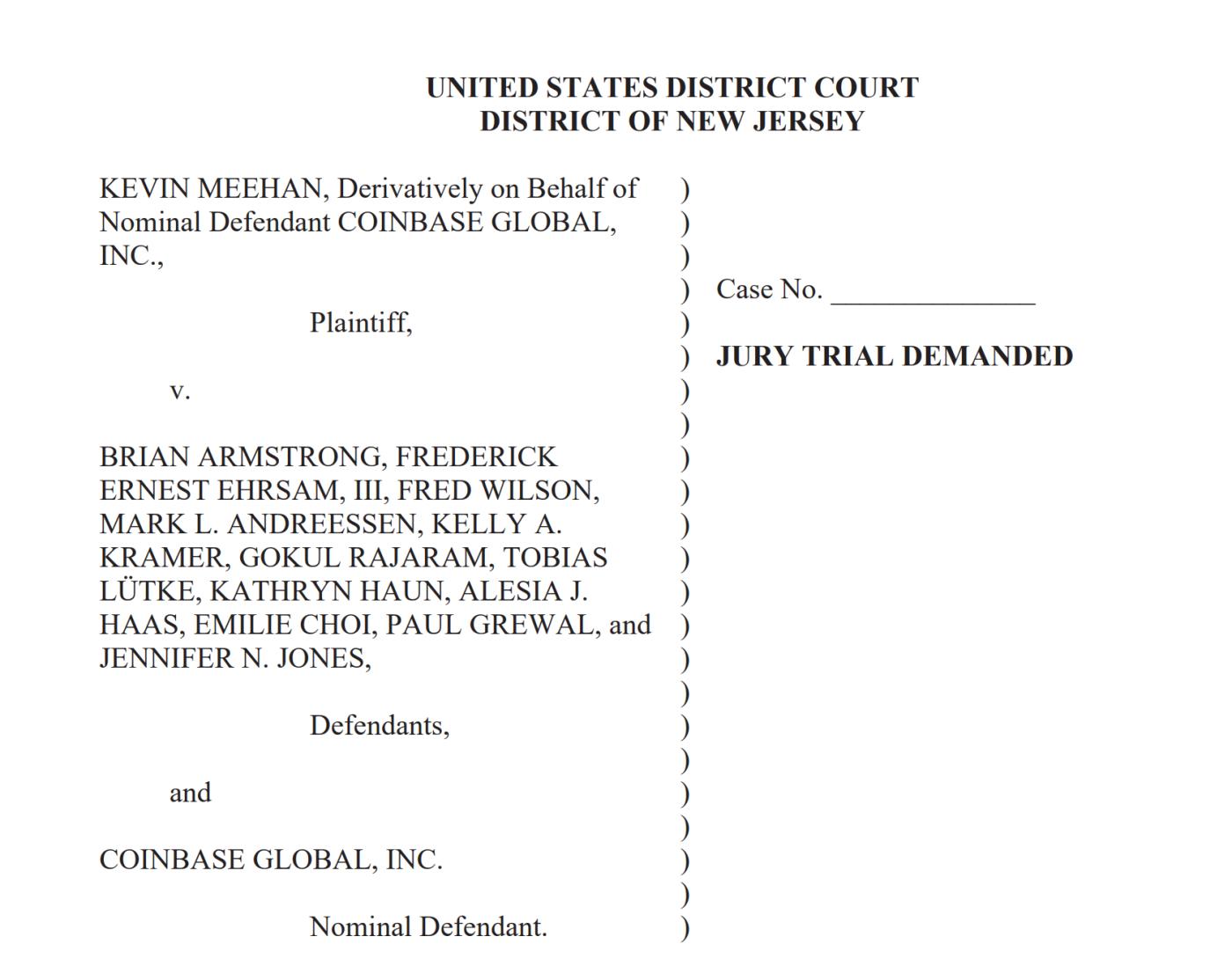
The lawsuit also seeks a jury trial and alleges the defendants illicit enrichment, abuse of control, and breach of fiduciary duty related to what is described as systemic compliance failures.
Cointelegraph contacted Coinbase for comment, but had not received a response at the time this article was published.
Coinbase faces more lawsuits.
In January, a Delaware judge allowed a shareholder lawsuit alleging insider trading by several Coinbase executives to proceed, despite an earlier internal investigation concluding the executives had not violated any rules. The lawsuit alleges that insiders, including Armstrong and board member Marc Andreessen, used undisclosed information to avoid losses of more than $1 billion by selling shares around the time Coinbase went public in 2021.
In May 2025, Coinbase and its two leaders also faced a class-action lawsuit initiated by an investor. This investor claimed that the company's stock price plummeted after Coinbase disclosed a user data leak and allegedly failed to disclose a breach of an agreement with the UK Financial Conduct Authority (FCA). The lawsuit alleged that these disclosures caused Coinbase's stock price to fall sharply, harming investors.