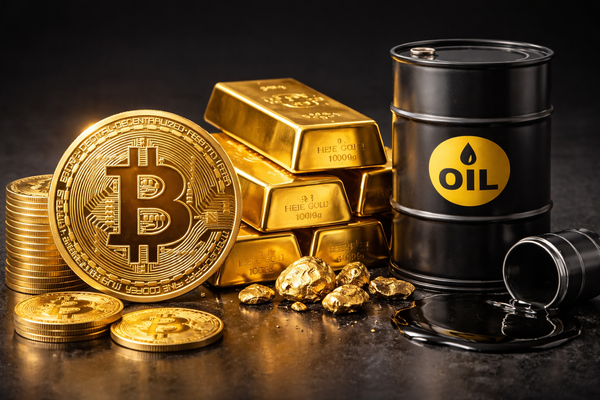
Amid ongoing military conflicts between the United States, Israel, and Iran, Bitcoin is gaining attention as a new "crisis alternative asset," outperforming traditional war-beneficiary assets like gold and crude oil.
According to global market data, Bitcoin rose by approximately 12.1% in the four days following the outbreak of war, outpacing both oil and gold. This rebound was faster than gold and oil, which have traditionally performed well during periods of war and geopolitical risk.
In particular, as the Strait of Hormuz, a key variable in this conflict, grows in risk, energy market volatility is increasing. However, some investors are also shifting funds into Bitcoin. The Strait of Hormuz is a strategic chokepoint through which approximately 20% of global maritime crude oil transport passes, and the mere possibility of its closure would have a significant impact on global energy markets.
Market analysts believe Bitcoin is establishing itself as a "digital alternative asset" distinct from traditional safe haven assets. Its ability to be transferred across borders and its lack of central authority control are believed to be stimulating investment demand during times of crisis.
Institutional investors' perspectives are also gradually changing. While gold was once considered a prime war-benefit asset, there's recently been a growing movement to classify Bitcoin as "digital gold" and utilize it as a portfolio hedge. Indeed, global asset management companies and hedge funds are expanding their strategies to incorporate Bitcoin as an alternative asset class, similar to gold.
However, Bitcoin's continued high volatility is a factor. If geopolitical tensions ease, some of the gains could be quickly reversed.
Nonetheless, some say that this Middle East conflict is serving as a test of whether Bitcoin can function as a "crisis hedge asset" rather than simply a risky asset.
In traditional financial markets, gold and crude oil have been the primary beneficiaries of war risk, but in the digital asset market, interest is growing over whether Bitcoin could partially replace that role.