By Mahe, Foresight News
Original title: President Trump , the "Yuan Shikai" of the crypto industry
On a winter night in 1915, beneath the red walls of Xinhua Gate in Beiping, China was engaged in a high-stakes gamble that would determine the fate of the nation.
Those elites who once championed republicanism, the tycoons fearing turmoil, and even the financial giants across the ocean all held their breath, watching the man sitting in the Zhongnanhai chair—Yuan Shikai. Four years earlier, the revolutionary army had overthrown the Qing Dynasty, but the foreign powers had chosen Yuan, not Sun Yat-sen, to lead the country.
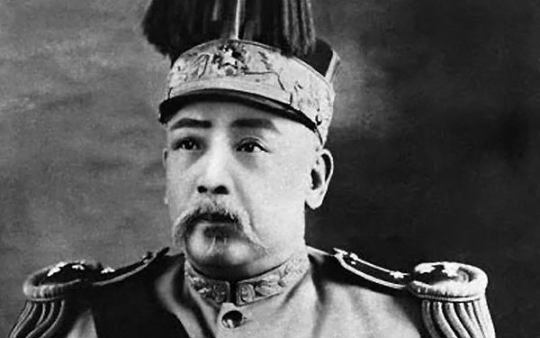
But Yuan Shikai was not the savior people had hoped for. With the support of his confidants, he changed the era name to "Hongxian," bringing China back to the imperial era. However, just 83 days later, his Chinese empire collapsed amidst widespread condemnation, and China subsequently entered decades of warlordism.
A century later, in the emerging financial realm of cryptocurrency, people are also searching for their own "strongman." In the 2024 US election, Trump is seen by the crypto industry as the savior who can break through regulatory constraints and lead the industry into the mainstream. From New York venture capitalists to Silicon Valley crypto upstarts, from traditional Wall Street financial institutions to retail investors in Southeast Asia, everyone is betting on this "crypto president."
However, just a year later, when the tariffs he wielded became the trigger for the crash on October 11, 2025, panic swept through the entire crypto market. When countless leveraged long positions were ruthlessly liquidated, people suddenly realized that Trump, who had once been so highly regarded, might be the culprit behind this Crypto Winter.
The relationship between Trump and the crypto industry can be best described as "what brought him success also brought him failure."
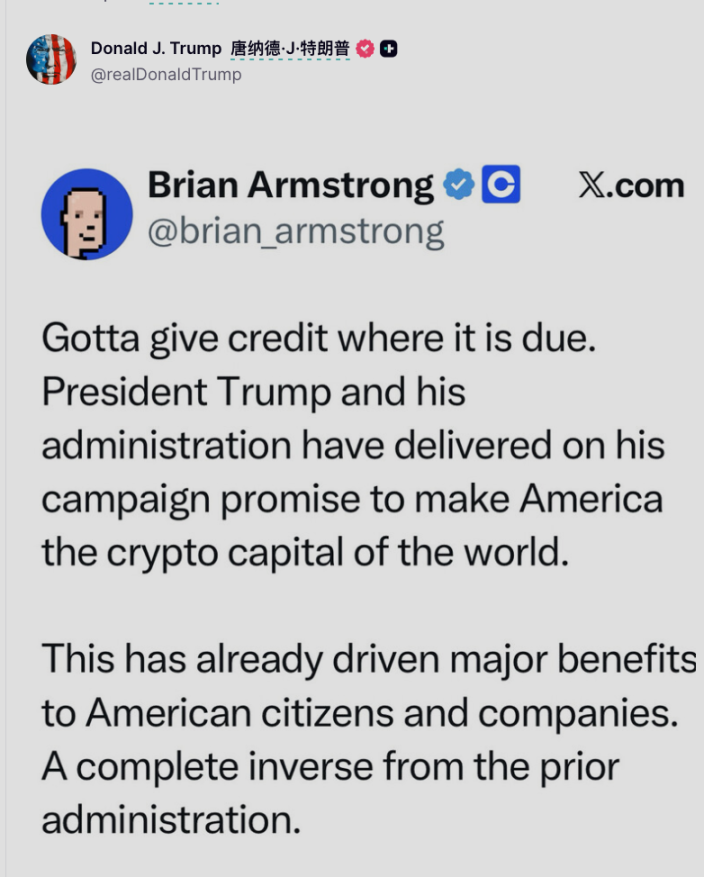
On March 4, Trump retweeted a post from the Coinbase CEO, reiterating his commitment to making the US the global cryptocurrency capital. His slogan sounds impressive and catchy, but will reality live up to his claims?
The last person favored by Trump gave a contrasting answer: when Musk's sweet collaboration with Trump in the White House lasted only a few months before ending in a falling out, you could understand that Trump's vision of the future of cryptocurrency was also a pipe dream.
After taking office, Trump did indeed take action. The infamous SEC Chairman Gensler resigned in early 2025, and was replaced by Paul Atkins, who had a more favorable stance towards the crypto industry. Several SEC lawsuits against crypto companies were shelved or dropped, bringing relief to exchanges such as Coinbase and Kraken . Trump also signed an executive order requiring the establishment of a dedicated task force to study how to integrate cryptocurrencies into the US financial regulatory framework.
These measures did indeed boost the market in the short term. Bitcoin's price rose steadily from $52,000 in September 2024, and in early October 2025, BTC briefly surpassed $126,000, setting a new all-time high. People began talking about an "institutional bull market" and an " ETF bull market," as if a new golden age was dawning. Ethereum, while performing less strongly, still rose for several months after a significant correction, reaching a new all-time high.
As of March 3, 2026, the cumulative net inflow of US Bitcoin spot ETFs was $55 billion, and the cumulative net inflow of Ethereum spot ETFs was $11.62 billion.
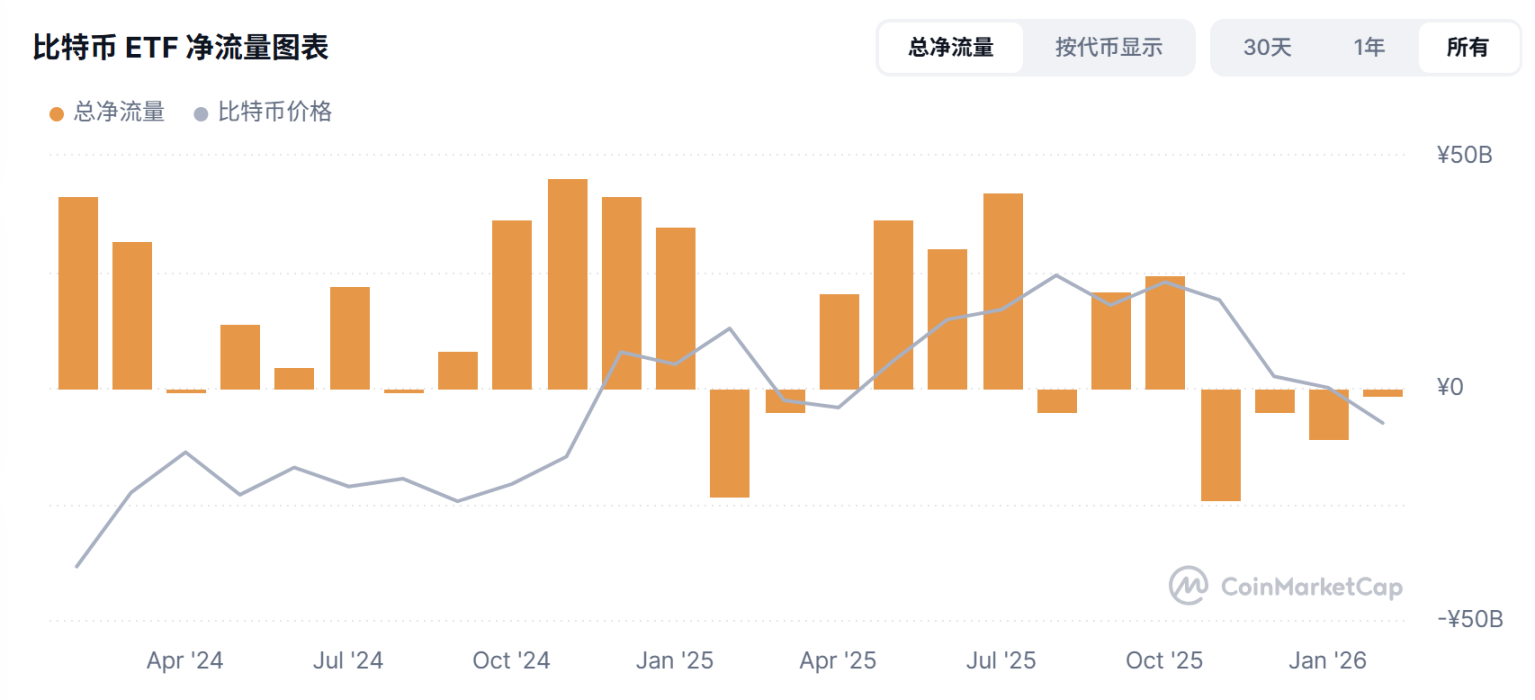
However, this optimism was short-lived. Just as Yuan Shikai's early republican experiment ultimately led to the restoration of the monarchy, Trump's "friendly" attitude towards the crypto industry has gradually revealed its true colors.
A family's extravagant wealth-accumulation
In January 2025, just before Trump's inauguration, a meme token called "TRUMP" was quietly launched. This token, named after the president himself, saw its price soar to $77 within just a few days of its launch, with its market value reaching tens of billions of dollars, creating an extremely exaggerated wealth effect. Some players in the Chinese community earned millions or even tens of millions of dollars in profits from this meme token in a short period of time.
From a token economics perspective, the Trump family holds a very high percentage of both tokens. On-chain data analysis shows that Trump himself and his affiliated entities hold a significant portion of the total supply of Trump tokens.
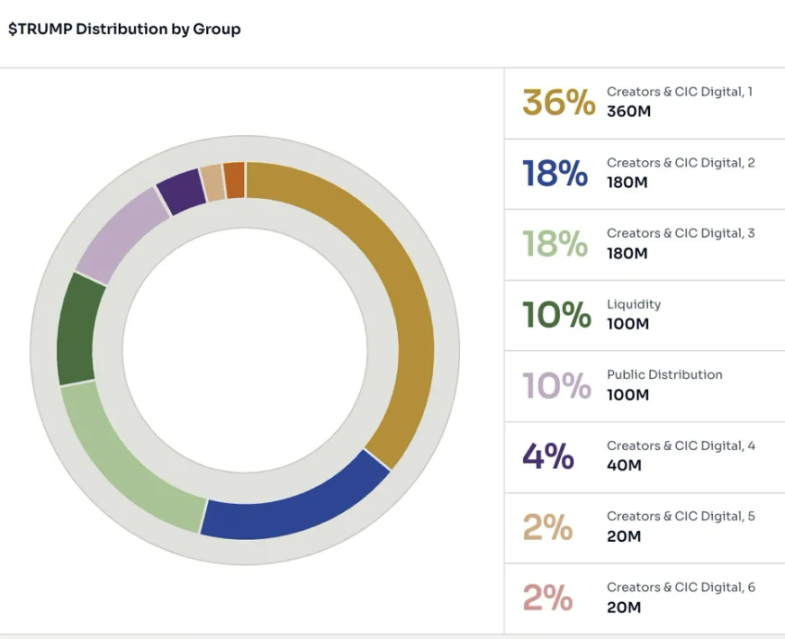
These "Creators & CIC Digital" groups collectively hold 80% (800 million tokens), constituting the majority of the token holdings. According to official and reliable sources, this portion is controlled by two entities linked to the Trump family:
CIC Digital LLC: This is an affiliate of The Trump Organization, directly linked to the Trump family.
Fight Fight Fight LLC: Owned by Celebration Cards LLC, this entity is also linked to Trump-related projects.
These entities collectively hold the remaining 80% of the tokens.
Its price has now fallen to around $3.5, a drop of about 20 times.
Following suit, First Lady Melania Trump also launched her own token, "MELANIA." The token's market capitalization exceeded $10 billion on its first day of listing, but subsequently collapsed rapidly due to insider selling, shrinking its market value to less than $2 billion. In June 2025, according to Lookonchain monitoring, the official MELANIA team had sold a total of 821,800 MELANIA tokens (representing 8.22% of the total supply) through 44 wallets over the past four months, cashing out a total of 244,934 SOL tokens (approximately $35.76 million).

The person who took over the deal became a sucker.
For a time, the Trump family seemed to have become the "cryptocurrency-issuing family" of the crypto world.
According to an investigation published by the Financial Times in October 2025, the Trump family earned more than $1 billion in pre-tax profits in the past 12 months through various cryptocurrency-related products and companies.
Such behavior of using political influence to amass personal wealth is extremely rare in American history.
President Ulysses S. Grant of the 19th century and Trump share a common trait: both entered politics as "outsiders" or "saviors." Grant, a Civil War hero, was held in high regard by the people; Trump, a business tycoon, promised to "make America great again."
However, the Grant administration became one of the most corrupt in American history. While Grant himself may not have been intentionally greedy, he was extremely protective of his family and subordinates, allowing them to amass wealth on a massive scale. The most infamous example was the "gold manipulation case" of 1869—Grant's cronies attempted to manipulate gold prices, nearly causing the collapse of the American financial market.
Trump's Memecoin operation bears a striking resemblance to the scandals of the Grant era. While there is currently no evidence that Trump directly manipulated the market, using his presidential position to endorse his family's token is essentially a monetization of power. Worse still, this behavior sets a dangerous precedent for the entire industry.
Following the Trumps' launch of their own cryptocurrency, imitators emerged one after another. Argentine President Javier Milley, a self-proclaimed "anarcho-capitalist," also launched his own Meme coin in 2025. However, this cryptocurrency fiasco ultimately ended in scandal—numerous insider trading was exposed, early investors (including Milley's relatives and friends) sold at the peak of the token price, and ordinary retail investors lost everything.
Memecoin, a cryptocurrency originally associated with humor and community culture, has gradually become a "cash machine" under the influence of Trump's example.
More and more politicians, internet celebrities, and public figures are issuing their own tokens, turning the trust of their fans into personal wealth. This rapidly expanding bubble is not only weakening the credibility of the crypto industry, but also making the term "cryptocurrency" increasingly associated with "scam" and "speculation" in mainstream discourse.
It was from that time onward that the 70 billion FDV became an insurmountable obstacle for meme coins, and many meme coins began to decline.
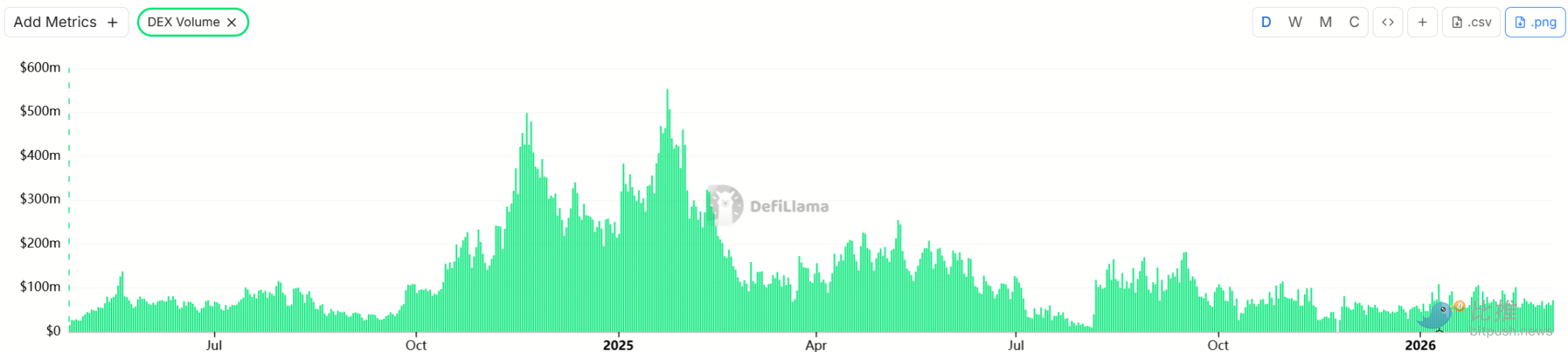
Data from DefiLlama shows that January 2025 was the peak of Pump.fun's trading volume, after which it began to decline sharply, with activity dropping abruptly. In January 2025, the highest single-day trading volume reached $550 million, but now it hovers around $60 million per day.
Even though BNB Chain later saw the emergence of so-called "Binance Life" and other once-hyped meme coins, its FDV failed to break through 1 billion.
After October 11, as the crypto market turned bearish, Meme coin's performance also plummeted.
Market liquidity is being divided up by token issuers and savvy traders.
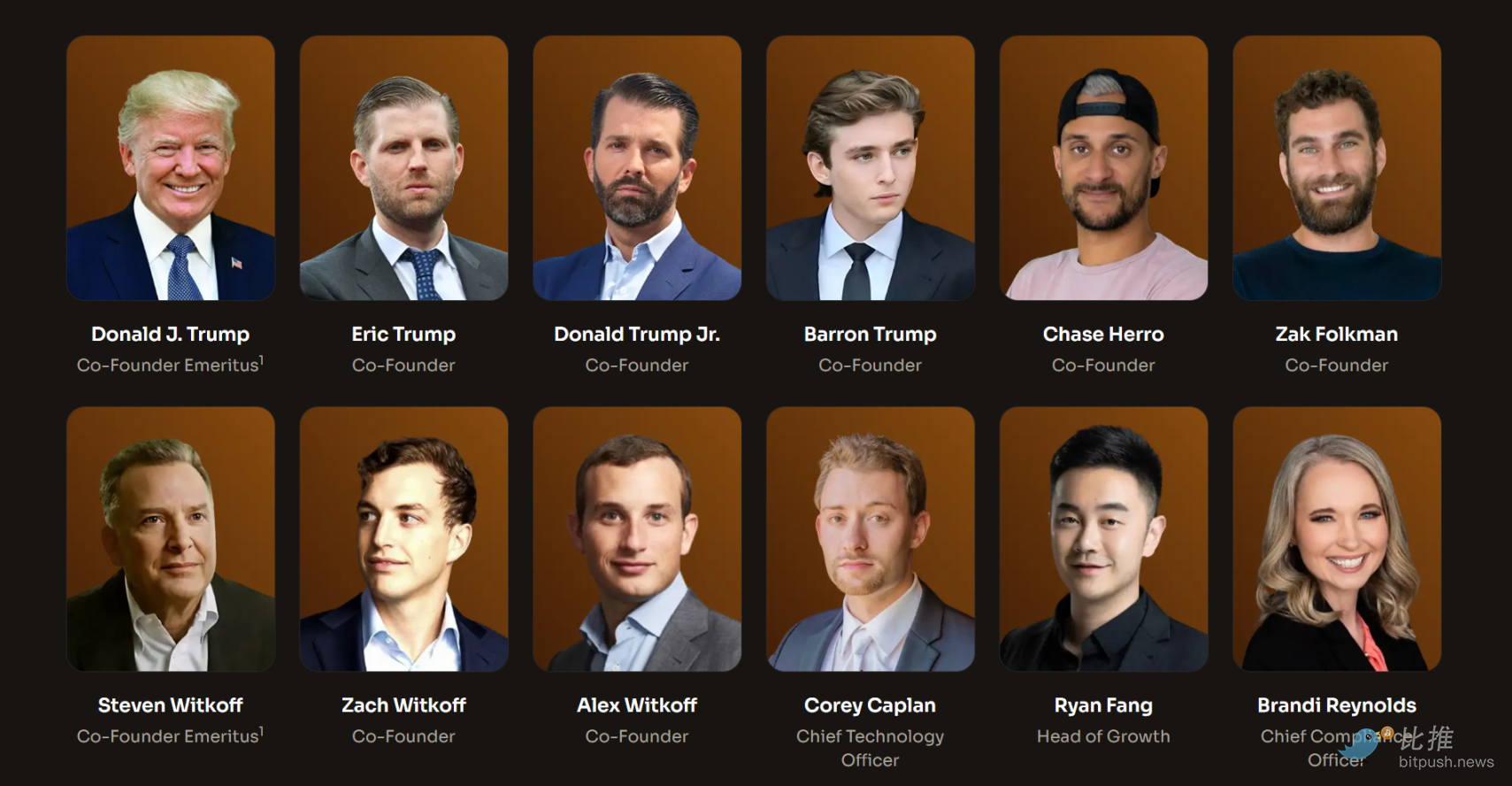
Another crypto project, WLFI, has a team of executives comprised of members from the Trump and Witkoff families. The Trump family members include Donald Trump Jr., Eric Trump, and Barron, who is nominally Trump's youngest son.
Currently, driven by a series of incentive programs, the market capitalization of the stablecoin USD1 has surged to $4.6 billion. The Trump family, through the entity DT Marks DEFI LLC, holds approximately 38% of the equity in WLF Holdco LLC, which is the sole member of World Liberty Financial, Inc. (the company responsible for developing the WLF protocol and operating its governance platform). DT Marks DEFI LLC is held by entities affiliated with the Trump family, with Trump himself holding approximately 70% of the equity in this entity.
After June 2025, its shareholding further decreased to about 40%, and recently stabilized at about 38% (according to the latest official statement, it is related to the acquisition of a 49% stake by investors associated with Sheikh Tahnoon bin Zayed Al Nahyan of the UAE. This transaction was completed in early 2026, bringing in $500 million, of which the Trump family entity received $187 million).
In addition, the Trump family and its affiliates hold 22.5 billion WLFI tokens (out of a total supply of 100 billion, representing 22.5%), worth $2.25 billion at the current price of $0.10. Furthermore, the family is entitled to 75% of the net proceeds from any WLFI token sale (after deducting reserves, fees, etc.) under the service agreement.
Cryptocurrency is a tool, not an end in itself.
If Memecoin became the Trump family's ATM, then the subsequent series of tariff wars exposed Trump's true attitude towards cryptocurrencies: in his eyes, crypto is perhaps just a tool, rather than a major innovation worthy of attention.
While the Trump administration was indeed more lenient in its regulations than its predecessors, this leniency was selective and utilitarian. For areas that could directly benefit the Trump family (such as Memecoin), regulation was virtually nonexistent, leading to numerous irregularities.
This "selective friendliness" is essentially about winning votes and rewarding voters, rather than genuinely promoting the healthy development of the crypto industry. Trump needs the support of crypto voters, hence the various promises he made during his campaign; however, he doesn't truly understand or care about the long-term value of this technology. Once the interests of the crypto industry conflict with Trump's political agenda, the former is often sacrificed.
Cryptocurrencies are relatively new, and due to their dual financial and technological attributes, their holders are predominantly young people, many of whom are tech elites. Before the election, the voices and opinions of young people are crucial for votes, and Trump didn't miss this opportunity. He gained favor with industry voters through promises and attendance at crypto summits. By loudly promising in his campaign speeches to "end the crackdown on the crypto industry," he successfully portrayed himself as a guardian of technological innovation.
On the other hand, Trump has always been viewed unfavorably on Wall Street. From multiple bankruptcies to legal disputes, traditional banking institutions have never ceased their wariness of him. Even after taking office, some of Wall Street's top capital firms, as supporters of the Democratic Party, naturally did not want to become his financial alchemists. In this context, cryptocurrency, for him, is not only a "financial backdoor" to circumvent traditional regulations and bypass bank scrutiny, but also a handy weapon to build his family's economic empire. By pushing his family businesses into the crypto industry, he is attempting to create a "Trump financial empire" independent of the existing financial order.
This shows that Trump doesn't favor cryptocurrencies, but rather new weapons that allow him to bypass regulations and expand his voter base. Whether this weapon is cryptocurrency or AI is irrelevant to him. But looking at the crypto industry, as an emerging sector, does it most need President Trump's sugar-coated bullets? A most pressing issue has been overlooked in this superficial victory—the current innovation stagnation facing cryptocurrencies.
Looking back at the development of the crypto industry, each bull market has been accompanied by significant technological innovations. The 2013 bull market stemmed from Bitcoin's first exposure to mainstream society; the 2017 bull market saw Ethereum smart contracts ignite the ICO frenzy; and the 2021 bull market witnessed DeFi (decentralized finance) and NFTs (non-fungible tokens) bringing entirely new application scenarios.
However, by 2025, the crypto industry had hit a bottleneck in innovation. DeFi's gameplay had been overused, yields were getting lower and lower, while risks were getting higher and higher; the NFT market, after experiencing a bubble burst, has yet to find real value support; many sectors have been proven false one after another, and the listing of tokens has become the starting point for the death of projects.
In contrast, innovation in the field of AI is booming. Companies like OpenAI, Google, and Anthropic are constantly releasing amazing new models, and AI applications are permeating all walks of life. From content creation to code generation, from medical diagnosis to financial analysis, AI has demonstrated its enormous potential to change the world.
This contrast is stark. In the battle for capital and talent, AI is completely dominating the crypto industry. In 2025, global venture capital investment in AI reached a record high, while funds flowing into the crypto sector continued to shrink. More and more developers are shifting from Web3 to AI, and more and more investors are turning their funds away from cryptocurrencies to AI stocks.
The Trump administration remained unmoved. While Trump campaigned on a promise to make the U.S. a "crypto capital," his administration failed to implement any substantial policies to foster the crypto industry. There were no tax breaks, no R&D subsidies, and no talent development programs. In contrast, Trump announced that Japan's SoftBank Group, the Open AI Research Center, and Oracle would invest $500 billion to build infrastructure in the U.S. to support artificial intelligence (AI) development.
The crypto industry's lack of innovation, coupled with the siphon effect of AI, has plunged the entire sector into an unprecedented predicament by 2025. Trump's tariff war, then, has further exacerbated this fragile situation.
The tariff war dealt a "fatal blow," causing a market crash and collapse.
If the Meme coin controversy is a slow poison, then Trump's tariff war is a heavy blow to the crypto market.
Trump launched the trade war under the pretext of "protecting American manufacturing" and "reducing the trade deficit," goals that have nothing to do with the crypto industry. However, the financial turmoil triggered by the trade war has severely impacted the crypto market. Trump seems unconcerned—the interests of the crypto industry are clearly secondary to trade policy in his priorities.
On February 1, 2025, Trump signed an executive order imposing an additional 10% tariff on all Chinese imports, citing the need to combat the influx of fentanyl. After negotiations failed to reach their expected targets, Trump launched a comprehensive tariff escalation in early April, dubbed "Liberation Day."
On April 2, Trump announced a 34% tariff on Chinese goods. Within days, the total tariffs surged to 100% or even higher in some sectors. China subsequently announced retaliatory tariffs of equal proportion (34% and subsequent) on US goods.
BTC also plummeted from $88,000 to $74,500, hitting its lowest point in the first half of 2025.
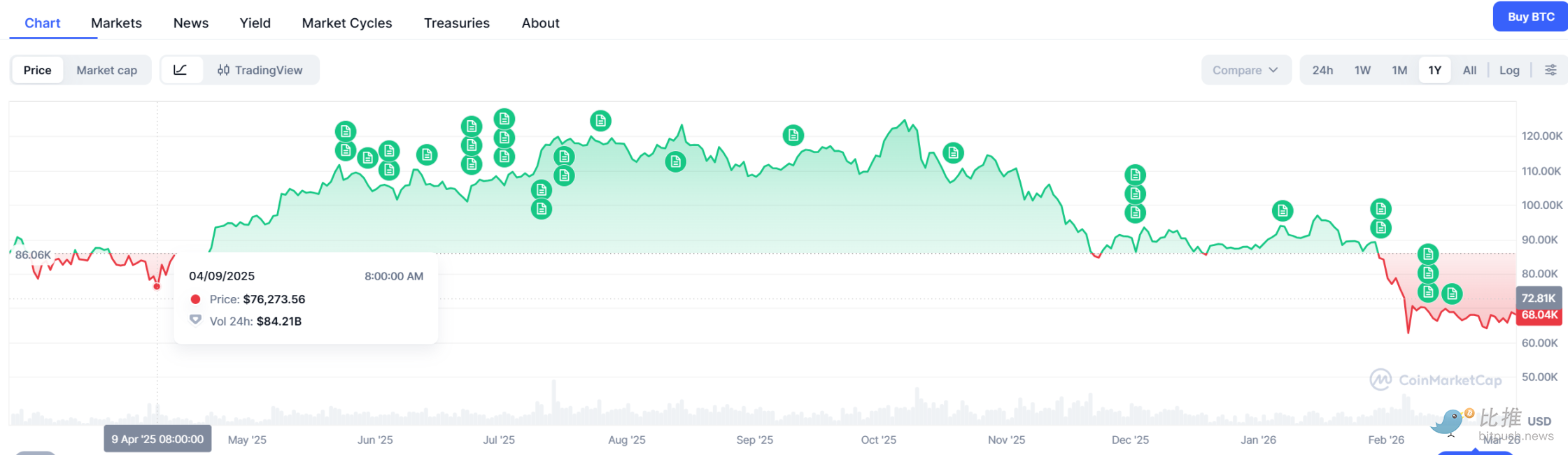
The crypto industry's sensitivity stems from the fact that when the macroeconomic environment deteriorates and risky assets are sold off, the crypto market is often among the first to be affected. Trump's tariff policies have created precisely such a hostile macroeconomic environment.
However, this tariff war was just the prelude. Who could have imagined that on October 10, Trump would suddenly announce on social media that the United States would impose punitive tariffs of 100% to 130% on all Chinese imports due to China's export restrictions on key minerals (rare earth).
The news triggered violent fluctuations in global financial markets. The Dow Jones Industrial Average fell by more than 1,000 points at the open, while the Nasdaq Composite Index fell even more sharply. In the cryptocurrency market, panic was amplified to an extreme degree.
On the evening of October 10th, BTC continued its downward trend, declining from $120,000. Around 4 AM on October 11th, the market situation changed dramatically, with BTC suddenly dropping to $113,000, and shortly after, it dipped to $102,000. Influenced by BTC, ETH also fell to $3,435, SOL to $168.79, and SUI even briefly dipped to $0.5597. ATOM on Binance even fell to $0.001. On-chain gas consumption also surged to 450 Gwei. Backpack experienced a malfunction due to the market volatility, and the exchange Kraken was temporarily inaccessible.
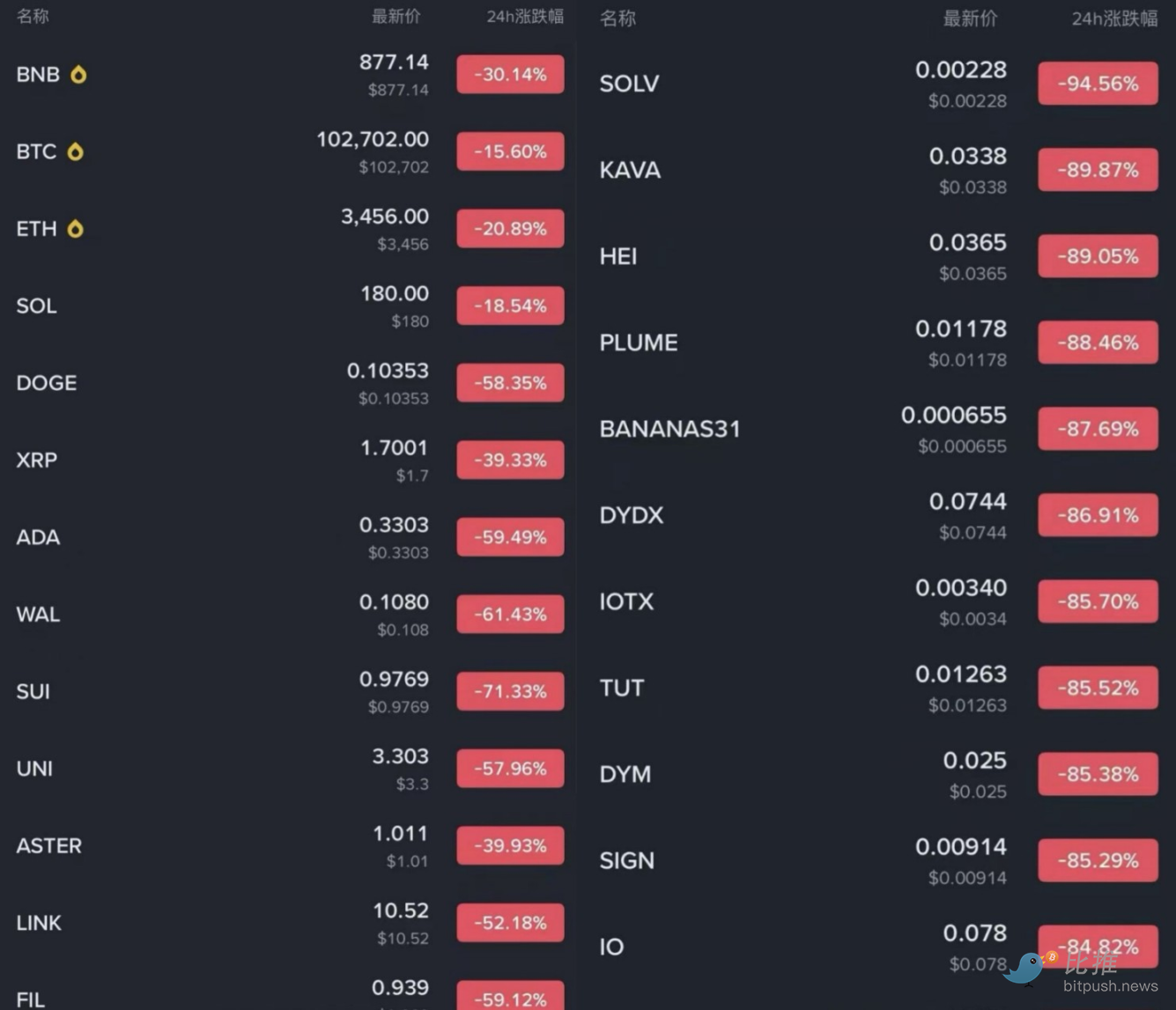
Even more devastating was the high-leverage derivatives market – according to Coinglass data, in terms of open interest, a record $19.179 billion was liquidated across the network in the past 24 hours. Of this, $16.715 billion was long positions liquidated, affecting 1,633,245 people globally. The largest single liquidation occurred on Hyperliquid – ETH-USDT, valued at $203 million. By platform, Hyperliquid saw over $10.2 billion in liquidations, Bybit over $4.6 billion, and Binance over $2.3 billion.
The exchange's servers frequently crashed due to the massive traffic, preventing many investors from closing their positions in time, leaving them helpless as their holdings were forcibly liquidated. Social media was filled with voices of despair: some lost their down payments on homes, some lost all their children's tuition fees, and some even contemplated suicide.
The ripple effects of this crash are far-reaching. Many crypto projects were forced to shut down due to broken funding chains, exchanges laid off staff across the industry, and regulators began to re-examine their lenient policies toward the crypto sector. Once bustling crypto summits became deserted, and some once-proud crypto KOLs fell silent, while others left the scene altogether.
From that moment on, the market officially entered a bear market.
And Trump? He didn't say a word about the dire state of the crypto market.
At this moment, the crypto industry finally realized reality: the "crypto president" on whom they had placed so much hope was never their friend. Trump used the crypto industry to gain political capital and used Memecoin to amass wealth for his family—nothing more.
Over a century ago, Yuan Shikai went from being the "savior of the republic" to a "usurper of the nation," dealing a heavy blow to China's modernization process. Today, with Trump's term still ongoing, no one knows whether he is a "crypto president" or an "industry mastermind."
However, true technological innovation does not perish because of the betrayal of a political figure. Crypto practitioners who have experienced all of this understand that only technological progress and value creation are the true moats of an industry.
Twitter: https://twitter.com/BitpushNewsCN
BitPush Telegram Community Group: https://t.me/BitPushCommunity
Subscribe to Bitpush Telegram: https://t.me/bitpush