
Everyone is counting Iran’s missiles. They are counting the wrong thing. The number that determines the outcome of this war is not 2,000 or 2,500 or 3,000. Those are pre-war missile inventory estimates and they are now largely irrelevant. The number that determines the outcome is the one that moved from 504 to 29 in five days. On Day 1 of Operation Epic Fury, Iran fired 504 ballistic missiles and drones across the Gulf theater. On Day 5, the number was 29. That is a 94 percent collapse in daily launch volume in less than a week. Not because Iran ran out of missiles. Because Iran ran out of the thing that launches them. Launchers. The ballistic missile is a precision munition that requires a precision launch platform. Iran entered this war with approximately 200 operational launchers, rebuilt from the roughly 100 serviceable platforms that survived the June 2025 Israel-Iran war. JINSA assessed that 75 percent of those launchers have been destroyed through March 5. The B-2 strike on the underground Damavand missile base east of Tehran, which CENTCOM confirmed today, targets the category of facility designed to protect launchers from exactly this kind of attrition. Damavand is not a missile warehouse. It is a launch infrastructure complex, the place where the hardware that puts missiles in the air is hardened and sheltered below ground. The GBU-57 Massive Ordnance Penetrator does not care about the rock above Damavand. That is what it was designed to not care about. Iran’s missile doctrine was built on volume and simultaneity. The mass salvo, hundreds of missiles launched in coordinated waves from dispersed platforms designed to overwhelm Iron Dome and US Patriot batteries by saturating their intercept capacity, is the only mechanism by which Iran’s missile force constitutes a genuine strategic threat to Israel. A degraded launcher pool that can produce 29 fires per day is not a mass salvo capability. It is a harassment capability. The two are not the same threat in any meaningful military sense. The Damavand strike is not simply another underground complex attacked. It is the US targeting the reconstitution node, the facility where surviving or replacement launchers would be sheltered, maintained, and redeployed. Destroying Damavand does not just eliminate what is there. It eliminates the survivability architecture that would allow the launcher fleet to recover. Day 1: 504 fires. Day 5: 29 fires. The trajectory of that number is what the B-2 was sent to Damavand to continue. Every penetrator bomb that goes into that mountain is not destroying a missile. It is foreclosing the operational recovery that would allow the 29 to become 504 again. The missiles still exist in tunnels and caches across Iran. They are increasingly becoming missiles with nowhere to go. open.substack.com/pub/shanakaa...…

Shanaka Anslem Perera
@shanaka86
03-06
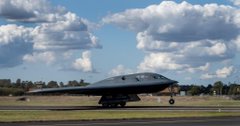
The B-2 is not a bomber. It is a key. And there is only one thing on earth it was built to unlock.
The GBU-57 Massive Ordnance Penetrator. Thirty thousand pounds. The largest non-nuclear bomb in the American arsenal, developed at a cost of $330 million over a decade of
Sector:

From Twitter
Disclaimer: The content above is only the author's opinion which does not represent any position of Followin, and is not intended as, and shall not be understood or construed as, investment advice from Followin.
Like
Add to Favorites
Comments
Share
Relevant content