This article is from Vanity Fair.
Compiled by Odaily Odaily( @OdailyChina ); Translated by Moni
"I really can't take it anymore."
In early February, the Signal inbox of a major crypto market maker was flooded with dozens of messages like this: The crypto market had plummeted another 15%—wiping out $400 billion in market capitalization in just a few days. In the previous four months, dragged down by Bitcoin, the total market capitalization of cryptocurrencies had plummeted by nearly 50%, with Ethereum and Solana both approaching 60%. This crash wiped out approximately $2 trillion in value, plunging the industry into a bear market, which the crypto community called "Winter"—a slightly nerdy metaphor paying homage to the unsettling line from *Game of Thrones*: "Winter is coming."
Project founders were in a panic: some hastily attempted privatization, some hastily launched emergency equity financing, and others simply abandoned ship altogether. Frankly speaking, veterans of the crypto industry have experienced far more severe crashes—the market has plummeted by 80% or even 90%—but this time, the chill is exceptionally different.
While battling regulators in Washington, Coinbase CEO Brian Armstrong watched his personal net worth evaporate by approximately $10 billion. Internal conflicts simmered within Ethereum, with co-founder Vitalik Buterin posting a series of tweets expressing concerns about the platform's scaling methods; as an early supporter of Polymarket, he expressed his aversion to the increasingly addictive nature of blockchain prediction markets. Ordinary traders were dismissed as "tourists" by industry veterans , either panic selling or turning to more fashionable trends like artificial intelligence and prediction markets.
Technology without faith and spiritual sustenance is nothing; what we have built is a religious movement.
"They are all cowards."
Meltem Demirors, an early crypto investor and current founder of Crucible Capital, offered this assessment of her peers who panicked and fled. She was adorned with stacked diamond crosses, a black tracksuit, and the company slogan, "Hold on to your beliefs," emblazoned on her hip.
In this Crypto Winter, she began buying Bitcoin again.
One afternoon in February, as the market continued to decline, a small group of true believers gathered in a Buzzard landmark in Manhattan's Lower East Side—a building once known as a "capitalist temple" of banks, now transformed into the Nine Orchard Hotel at a cost of $300 million, with Galaxy Digital CEO Michael Novogratz becoming its new co-owner.
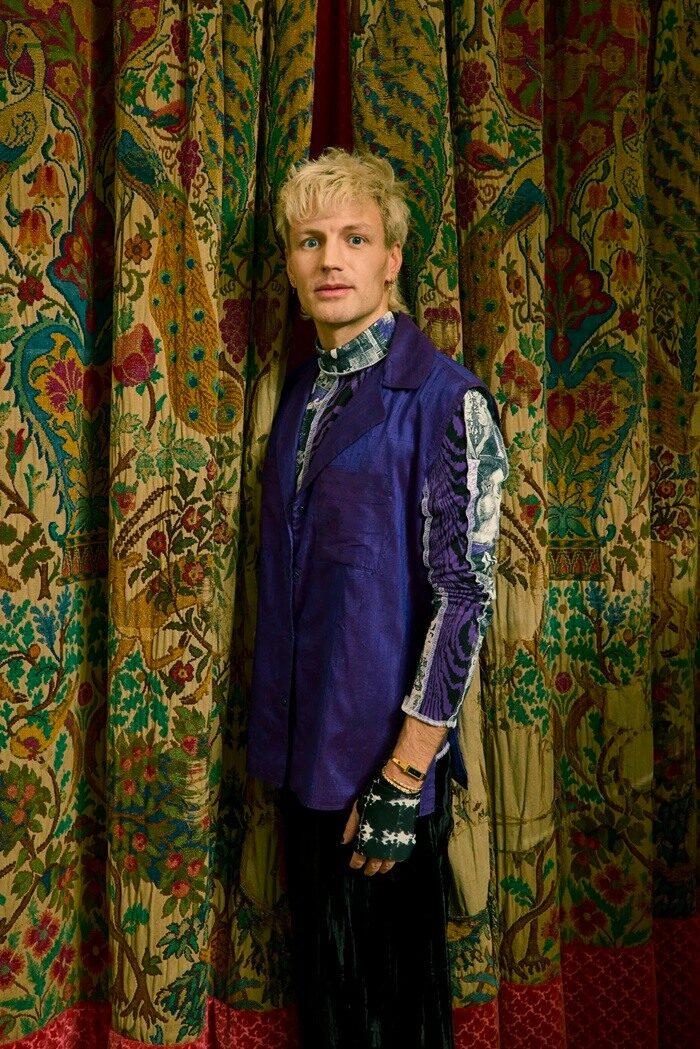
After their paper wealth shrank by billions , key figures in the crypto world, including Michael Novogratz, Meltem Demirors, Olaf Carlson- Cathie Wood, Cathie Wood, and Danny Ryan, gathered to exchange their experiences—not about what they sold, but about what they were buying.
Cathie Wood possesses a wealth of exclusive research data, while Olaf Carlson-Wee insists he never follows the news; both are continuously increasing their Bitcoin holdings. Danny Ryan, on the other hand, is unconcerned about daily fluctuations: "I'm a Luddite," he declares, "If I need to know something, someone will tell me."
“Technology without faith,” Meltem Demirors reiterated, “technology without a spiritual core is worthless.” Unlike the disciples who doubted the resurrection of Jesus, the faithful believers in cryptography have never wavered. “Honestly, what we’ve built is a religious movement.”
Gold, commodities, real estate, bonds, stocks—all asset classes are answering the same question: Where does value come from? In fact, they are products of social consensus, and they only have meaning because of collective recognition.
Gold: value stems from nature and scarcity; Bonds: value stems from institutional trust; Real estate: value stems from land and permanence; Commodities: value stems from the material itself; Stocks: value stems from human creativity.
Every asset needs a creation myth, from scarcity to capitalism itself. But for those who firmly believe cryptocurrency is the "sixth asset class," its value extends far beyond the financial realm. "I've been waiting for this day since the dollar was decoupled from gold in 1971," Cathie Wood recalls, recalling Arthur Laffer, a Reagan-era economic authority and the originator of the Laffer Curve, telling her this. Cathie Wood's actively managed ETFs heavily invest in disruptive technologies, and she asked Arthur Laffer, "Just how big can this vision be?" His answer revealed the ultimate fantasy of early crypto believers: "Tell me, how big is the US monetary base?"
On Halloween 2008, six weeks after the collapse of Lehman Brothers—the fourth-largest investment bank in the United States—the myth of institutional security completely crumbled. A mysterious figure using the pseudonym Satoshi Nakamoto quietly sent a 9-page PDF document to a small group of cryptographers, titled "Bitcoin: A Peer-to-Peer Electronic Cash System." This "white paper" outlined a completely new financial system that bypassed central institutions such as banks, governments, and the Federal Reserve, protecting ordinary people from the effects of inflation, asset freezes, and arbitrary manipulation of monetary policy. Bitcoin achieves self-security through "mining"—a competition among dedicated computers to crack cryptographic puzzles. Asset access relies on a unique seed phrase: losing the seed phrase means permanent loss of funds; remembering it allows for permission-free retrieval of wealth from anywhere in the world.
In 2009, Satoshi Nakamoto brought Bitcoin from theory to reality by mining the Genesis Block. Once the rules were established, anti-counterfeiting mechanisms were implemented, and Bitcoin began circulating (though it was still worthless at the time), he disappeared completely. This retreat not only deepened Bitcoin's mythical aura but also endowed it with true decentralization: there is no longer an omnipotent controller; this experiment belongs to everyone, yet also to no one.
“I fell in love with Bitcoin at first sight,” said Erik Voorhees, founder of ShapeShift exchange and Venice AI. He discovered Bitcoin in 2011 while working on the Libertarian Free State project in New Hampshire. “I felt that Bitcoin could conquer the world; it cannot be devalued, no individual or institution can manipulate it, and no one can stop it.”
This movement took root on the margins of society, and its followers were a group of rebels in the post-financial crisis era: disillusioned with reality and yearning for social and political change. Early believers were mostly young, male, and deeply addicted to the internet; they were cypherpunks on forums, building their own information cocoons and firmly believing that cryptography could achieve what regulators had never been able to: redistribute power—Michael Novogratz, dressed in a new Valentino red suit, described it as: "Bitcoin is like the Rebels in Star Wars."
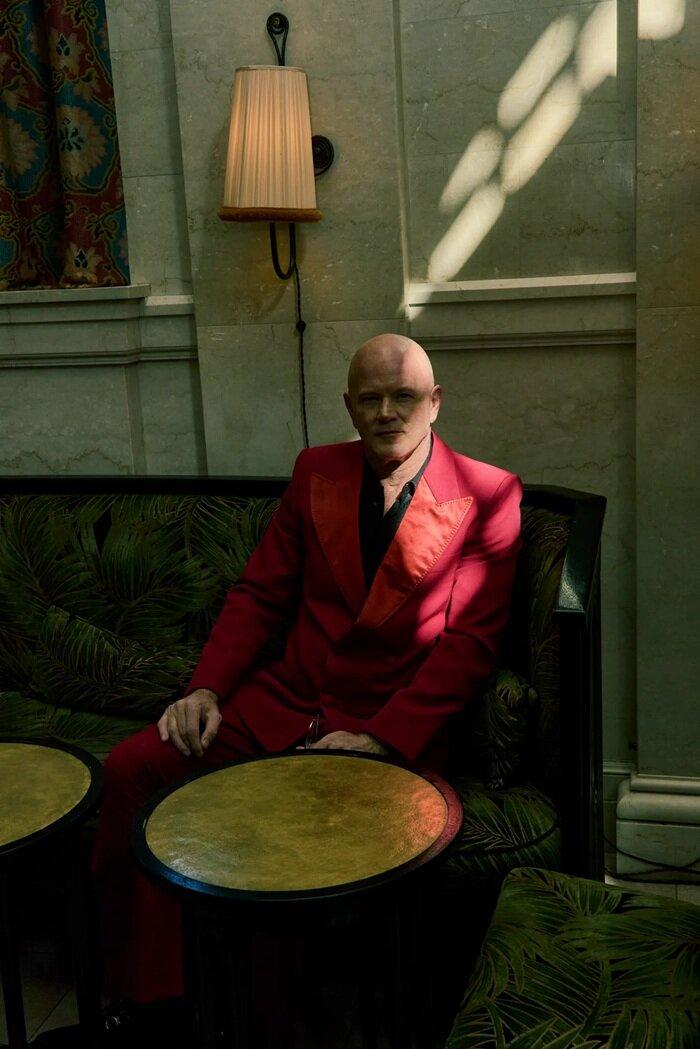
From "marginal rebels" to mainstream forces
“Once you truly understand Bitcoin,” says Carlson-Wee, founder of crypto hedge fund Polychain Capital. “You can never ignore it again.” In 2011, as a senior at Vassar College, he first encountered Bitcoin on an online forum and quickly became convinced that cryptocurrency was the future of global finance, even persuading his thesis advisor to allow him to write his graduation thesis on it. After graduation, Carlson-Wee worked as a lumberjack in Washington state, sending his resume and thesis to Coinbase, a startup then operating from his San Francisco apartment. Within days, he was hired as the company's first employee. “In those early days, it felt like everyone was guarding a secret that the whole world didn't yet know.”
As the "Occupy Wall Street" movement sounded the alarm about widening wealth inequality in the United States, the financial autonomy and global financial inclusion advocated by cryptocurrencies resonated with a generation—who witnessed trillions of dollars of household wealth evaporate while governments intervened to bail out banks. "My first day on the trading floor was the day after Lehman Brothers collapsed," said Arthur Hayes . He was stranded on a remote Japanese island, snowbound, unshaven, and wearing a red thermal T-shirt. "It was a very special way to start my financial career."
Arthur Hayes had a strong foundation in traditional finance: Wharton Business School, Deutsche Bank, and Citigroup. But witnessing colleagues being laid off during the market crash led him to turn to assets he could control—first gold, and then Bitcoin in 2013. In 2014, unemployed, he lived on a friend's couch.
28-year-old Arthur Hayes co-founded BitMEX, introducing Wall Street-level leverage and derivatives to crypto trading, ultimately creating "perpetual contracts." Traders don't need to hold Bitcoin; they can simply bet on its price fluctuations with leverage of 5x, 50x, or even 100x. "Some people went bankrupt, while others became rich overnight," Arthur Hayes said calmly, noting that the fate of early believers often hung in the balance within minutes.
The product "perpetual contracts" ignited the market, creating a multi-trillion dollar market and giving rise to a new generation of "crypto gamblers"—willing to take huge risks for the occasional windfall of millions of dollars.
Cryptocurrency has thus become a casino.
Without control, who decides the future? This is the core of cryptocurrencies, and also their fatal flaw. Disagreements abound, from ethical applications to whether the Bitcoin ecosystem should expand with new tokens. Yet it is this diverse alliance—liberals, venture capitalists, builders, traders, and scammers—that ultimately propelled cryptocurrencies into the mainstream.
In the same year that Arthur Hayes made Bitcoin more like gambling than gold, 20-year-old Vitalik Buterin—a slender Thiel Scholar who looked like he should have walked the Balenciaga runway during the Demba era—completely revolutionized the industry.

One day in 2014, Joseph Lubin took Michael Novogratz to Brooklyn to meet with members of the Ethereum Foundation—the following year, the Ethereum platform officially launched. Through "smart contracts"—automatically executed code running on the blockchain—Ethereum allows developers to build a complete financial system: lending platforms, digital art marketplaces, and autonomous organizations. No banks, no corporate giants, only code.
“Joseph Lubin almost went through a religious conversion,” Michael Novogratz said. “Ethereum will change the world, save the world.” The entire economic system is migrating to the blockchain, stablecoins are supporting fragile third-world currencies, and open-source finance is replacing the opacity of traditional banks. “I’m already rich and don’t need the world to be saved, but I think Ethereum is interesting.”
“I didn’t have an epiphany about Bitcoin,” said Danny Ryan, co-founder and president of Ethereumize. In sub-zero New York weather, he wore a thin black T-shirt and denim jacket, his long hair braided, and a yellow plastic nose ring that he claimed helped him breathe. Ryan’s moment of enlightenment came in 2016 when he discovered Ethereum. In January 2017, he fully committed himself to Vitalik Buterin’s foundation and was quickly hired—just as cryptocurrencies were explosively entering the mainstream.
“ That was a crazy golden age, ” Meltem Demirors recalled.
At a meeting in November 2017, she watched Ethereum “geeks” dressed in unicorn T-shirts and Hawaiian shirts help Goldman Sachs and a16z investors set up MetaMask wallets and participate in initial coin offerings .
Subsequently, Bitcoin broke through $10,000, and the total market capitalization of cryptocurrencies soared from $16 billion to a peak of $535 billion, with an annual growth rate of over 3200%.
The emergence of Ethereum meant that the crypto world was no longer limited to a single token, a single creation myth, or a single ideology. Anyone could build anything, breaking down monolithicity and tearing apart cohesion. The US government has consistently been powerless to control this industry, which was originally intended to circumvent centralization. In the eyes of regulators, cryptocurrency is simply an impenetrable online scam.
Over the next decade, the market oscillated between frenzy and collapse, wiping out the life savings of countless people while creating generations of wealth for a select few who accurately timed the market. Within the crypto ecosystem, however, massive divisions existed: veterans vs. tourists, idealists vs. scammers, builders vs. traders.
There are two types of people in the crypto community: believers and scammers.
There are two types of people in the crypto community—
The first type is the believer: those who philosophically agree with Bitcoin's original principles and value decentralization, privacy, and individual sovereignty. They are vilified simply because their principles contradict those of many modern institutions (especially governments and their allies, fiat banks).
The second type is the scammer: driving a Lamborghini and peddling meme coins, completely unscrupulous, mostly entering the market after 2017. They go from outright scammers to those with a slight speculative mindset, and finally to ignorant fools.
A crypto holder using the pseudonym "Moose" pulled out a Palauan ID card— a document from the Pacific island nation of Micronesia, which he had purchased online for $200 . This card served as his access to an offshore derivatives platform inaccessible to US users. "Everyone does it," he said. The 27-year-old, like many men his age, first encountered cryptocurrency in the mid-2010s when purchasing drugs and fake IDs on the Silk Road website. His idols weren't athletes or movie stars, but anonymous Twitter accounts—anime avatars, obscure bios, and devoted followers who faithfully tracked their transactions.
Jordan Fish, operating in a different tier within the same circle, goes by the online name "Cobie" and has a Telegram profile picture of a jumping white dog. He profited early on with the Ethereum staking protocol Lido and later founded the membership-based crypto investment platform Echo, valued at over $300 million. " In 2019, being a cryptobro was pretty cool, but now, it's not cool at all. "
As encryption moves from the fringes to the mainstream, and then becomes a cultural laughingstock, its promise of disruptive innovation gradually fades. Those who once considered themselves rebellious are increasingly resembling other heavily addicted internet youths: playing games, using memes, and trading—making their already tarnished image even worse.
In 2023, Arthur Hayes's wild party at the TOKEN2049 conference in Singapore attracted thousands of people. The drinks ran out within an hour, and security had to fend off intoxicated people who nearly had to scale the walls to get in. Two years later, at the same conference in Dubai, Carlson-Wee traveled between California and the UAE (reportedly working on a project with the local government), partying on a Lotus superyacht. Accompanying him was DogeOS CEO Jordan Jefferson, who wore what he called a "Habibi Doge" T-shirt—a Shiba Inu wearing a traditional UAE turban. (A UAE-affiliated company had previously invested $500 million in Trump's family's crypto project before his inauguration.)
“Everyone thinks that making money in crypto means you're on a yacht in Miami, surrounded by a hundred prostitutes. During the Ethereum conference in Cannes, I spent three days straight at the Lagerlit restaurant,” Meltem Demirors said. “I was completely drunk, crawling around on the table. Ethereum believers hate nice things, hate pleasure; they just want you to be groped, wear organic cotton, and torture yourself. ”
There's another type of creature in the crypto world: the "whale."
Whale are the behemoths of the Bitcoin world.
In crypto slang, a whale refers to someone who holds more than 1,000 bitcoins. They often possess digital assets worth over $10 billion, and a single transaction can shake the market. These whale are completely anonymous, never attend meetings, host parties, or post controversial tweets: the noisiest voices in the crypto world are never the richest .
Anonymity, once an ideological resistance against centralization, has now become a necessity for survival. Showing one's face in the crypto world is tantamount to courting trouble. The industry experiences dozens of violent incidents every year: kidnappings, home invasions, and armed robberies. Large-scale data breaches expose asset holdings, turning digital wealth into real-world targets. Last year, a Norita crypto holder claimed to have been kidnapped, tortured for two weeks to extract passwords, and only managed to escape.
“I’m no longer a public figure,” Fish said , because “it could very well be dangerous.” OpenSea co-founder Devin Finzer and his wife, Yu-Chi Lyra Kuo, are often seen traveling with a burly bodyguard who looks more like a Viking than a Secret Service agent. “That’s our bodyguard.”
There's a rule for long-term survival in the crypto world: never be the protagonist. I'm a supporting character; everyone knows me, but nobody truly knows why I exist.
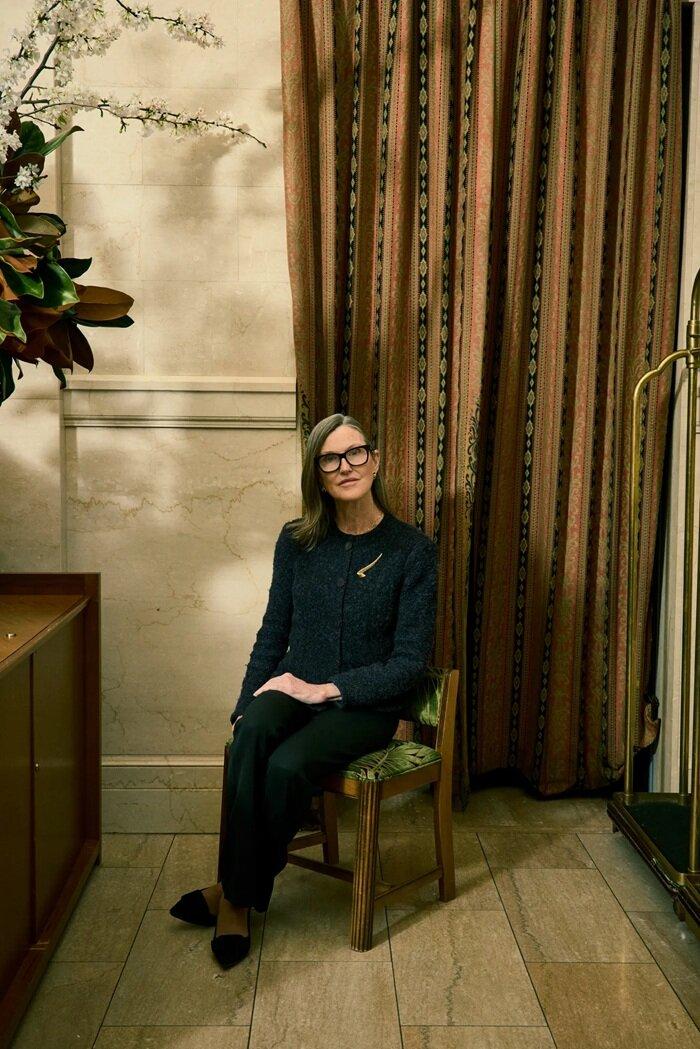
On the morning of the Vanity Fair photoshoot party, Cathie Wood didn't recognize Meltem Demirors, whom she hadn't seen in ten years. "You've actually gotten younger," Cathie Wood said, embracing her. "Because I'm rich now," Meltem Demirors replied with a mischievous grin. Carlson-Wee, like a little boy meeting his idol, meekly introduced himself to Cathie Wood, and the two immediately reminisced about their days when everyone considered them crazy, reaffirming their shared belief in " buying on dips "—cleverly avoiding the reality of cryptocurrencies plummeting nearly 50% in three months.
Michael Novogratz strode in wearing a long silver down jacket, greeted everyone warmly, and then complained that he was in the second day of a severe hangover—he described the revelry on Saturday night, the climax of which was going to the Burning Man-inspired New York nightclub Gospël at 4 a.m., and he prayed that his 30-year-old daughter and newlywed husband who lived nearby did not see it.
Ryan watched from the corner of the room with a mixture of amusement and apprehension. Meltem Demirors and his assistant rummaged through the clothes they had brought. Michael Novogratz was torn between a diamond-studded black suit and Valentino, while Ryan had only brought two pairs of trousers, his favorite of which had a hole in the crotch, but he wore it anyway. “It’s too hot,” he complained barefoot as the hairdresser dried his thick, shoulder-length hair.
“Where is Devin Finzer?” Meltem Demirors asked.
Devin Finzer and his wife Yu-Chi Lyra Kuo own a private suite on the fourth floor, complete with personal assistants, security, celebrity makeup artists, and surrounded by haute couture clothing.
Ultimately, after considering millions of dollars worth of haute couture clothing, Yu-Chi Lyra Kuo chose a non-haute couture Armani dress and did not wear JAR jewelry.
In 2017, Devin Finzer founded the NFT marketplace OpenSea —a move that, in the eyes of crypto veterans and even his wife, meant he missed the crucial threshold to becoming an OG (Original Genius). His background is the dream of many Silicon Valley mothers: he grew up in the suburbs of San Francisco, graduated from Brown University with a degree in computer science and mathematics, and previously worked as a software engineer at Pinterest.
When the crypto market exploded, Devin Finzer and his friend Alex Atallah decided to create a digital asset version of eBay. Inspired by Ethereum tokenization, and especially the CryptoKitties craze, OpenSea was born.
Shortly after, the COVID-19 pandemic broke out. Bored young people flocked to the crypto universe, and NFTs skyrocketed.
In 2021, Beeple's NFT artwork sold for $69 million at Christie's. Heads such as Bored Ape Yacht Club and CryptoPunks became status symbols comparable to Rolex and Porsche. Some people even spent more than $1 million to buy a stone clipart.
In January 2022, OpenSea's valuation soared to $13 billion. That same year, the young Devin Finzer, exhausted from working at the rapidly expanding company, suddenly found himself in Silicon Valley's top social circles, where he met Yu-Chi Lyra Kuo.
“Yu-Chi Lyra Kuo is like a hot girl with a Ferrari engine inside her body,” Devin Finzer said.
Yu-Chi Lyra Kuo said that she had expressed her concerns about OpenSea to Devin Finzer before the crypto crash and NFT bubble burst in 2022, but no one listened. She believes that OpenSea was too much of a bandwagoner, and that Devin Finzer was immature, short-sighted, and failed to shift towards a more sustainable direction in time.
“Everyone’s raving about Devin Finzer. He’s on the cover of Forbes, 29, handsome, and everyone wants to charter a plane to take him to the Super Bowl and every dinner party.” Yu-Chi Lyra Kuo paused, “I’m not interested in any of that.”
“It’s a humble journey,” Devin Finzer added softly. “Even when everyone is praising you to the skies, you still have so much to learn.”
The market collapse had been brewing for months—
In 2021, Bitcoin plummeted from a peak of $69,000 to $16,000, ushering in the industry's worst winter. OpenSea's valuation crashed by approximately 90%.
In May 2022, Terra/Luna crashed, wiping out over $40 billion in ecosystem value within 72 hours, leaving retail investors worldwide with nothing. Three Arrows Capital, one of the largest crypto hedge funds, subsequently collapsed.
In November 2022, FTX, the exchange of industry darling SBF, collapsed and was destroyed within a week. He was eventually arrested and convicted on seven counts of fraud and conspiracy, stealing up to $10 billion in customer funds.
“Devin Finzer isn’t the first prodigy I’ve mentored,” Yu-Chi Lyra Kuo said without elaborating. As the company collapsed and the NFT bubble burst, Yu-Chi Lyra Kuo became Devin Finzer’s “product mother,” treating him like a “custom-made teddy bear.” Now, they claim to be relaunching OpenSea with a grander vision.
However, not everyone shares the same conviction as Devin Finzer and Yu-Chi Lyra Kuo.

The more mature the blockchain infrastructure becomes, the harder it is to explain why OpenSea offers features not available on exchanges like Coinbase and Gemini. Successful projects have raised the bar—for example, Hyperliquid and Uniswap now share rewards with token holders. Most tokens cannot compete with this, as their issuance is primarily for governance, and holders only have the ability to vote on protocol decisions without direct economic benefits.
The collapse of FTX not only plunged the entire industry into crisis but also triggered what's known as a "witch hunt" in the crypto world : a coordinated effort by regulatory agencies to stifle a technology they neither understand nor can control. Regulators, on the other hand, argue that the crypto world is the Wild West, and that protecting American investors, even with imperfect rules, is a good start.
Biden appointed Gary Gensler to head the U.S. Securities and Exchange Commission (SEC)—the former Goldman Sachs partner and MIT blockchain professor who understands cryptocurrencies better than any other regulator. Gensler's goal is to tame the industry, focusing on the core question: Is cryptocurrency a security or a commodity? The answer will be crucial: securities fall under SEC regulation, and exchanges and token issuers must register, disclose, and comply with investor protection rules designed for stocks—rules tailored for centralized institutions, not for assets that can circulate globally without banks, brokers, or national borders.
Applying traditional financial regulatory models to technologies centered on autonomy, privacy, anonymity, and breaking global boundaries is doomed to failure. The crypto community calls this "enforcement-style regulation": Gary Gensler accused multiple companies of violating securities laws, forcefully pushing crypto-friendly banks out of the system.
“The SEC wanted to eradicate crypto through litigation,” Ryan said. He recalled receiving the subpoena on Easter Sunday in 2024 while setting the dinner table. “I was the highest-ranking person in the Ethereum Foundation in the United States.”
Arthur Hayes was sentenced to six months of house arrest in May 2022 after admitting to intentionally failing to implement anti-money laundering controls at BitMEX. Specifically, BitMEX allowed US customers to access the platform via VPN, and he boasted at a meeting that bribing Seychelles officials was cheaper than complying with US regulations. Binance CEO CZ fared even worse, receiving a four-month federal sentence in April 2024 for aiding and abetting money laundering, and Binance paying a $4.3 billion fine, one of the largest corporate fines in US history.
Then, Trump made a second appearance. In 2021, he called Bitcoin a scam, but just three years later, he delivered a keynote speech at a Bitcoin conference, promising to make the United States the "crypto capital of the world." Although Trump's values run counter to the global utopian vision of crypto believers, his support for the industry was enough to win him votes.
“No political party in the United States is inherently pro- or anti-crypto,” said Arthur Hayes. If crypto investors become voters focused solely on this issue, politicians will only face one question: “Should we win them over?”
“ I’m probably the only person in the crypto world who didn’t vote for Trump, ” said Michael Novogratz. A major progressive donor, he has tried for years to persuade Elizabeth Warren to meet with him about industry matters, but to no avail. “This industry is still politically contentious, it shouldn’t be, it should be bipartisan. We need rules, and the lack of innovation is because there are no rules.”
In the final months before Trump's re-election, Ryan received a letter: the case was dropped. Ryan's lawyer said he had never seen the SEC act this way. "The best outcome is that they stop contacting you." This time, the securities fraud charges simply vanished.
According to Ryan, the Biden administration realized its slim chances in the US presidential election and could no longer afford to alienate the entire tech industry. The crypto industry ultimately poured $135 million into the 2024 election, reportedly mostly going to Republican candidates, who have a more than 90% chance of winning those districts.
In 2025, Trump launched his own Meme cryptocurrency, Trump, which briefly reached a market capitalization of $10 billion, but subsequently plummeted by 80%. After taking office, he pardoned Arthur Hayes and CZ (SBF is still in prison).
Conclusion
To different people, the infiltration of cryptocurrency into the mainstream system is either a complete betrayal of its original purpose or proof of a successful experiment. Some of the most steadfast believers in decentralization are now appearing in closed-door meetings at the White House. Cryptocurrency holders are not only ordinary people, but also sovereign wealth funds, family offices, and companies with private wealth managers. This movement, born to disable Wall Street, has now become its most powerful lobbying force and its most reliable clients.
“We won,” Moose said. “But after winning, does that mean cryptocurrency becomes just another ordinary asset class?”
Has the crypto industry become what it once hated? Or is it changing the world from within?
In the depths of winter, the answer still drifts in the wind, and the believers remain steadfast in their faith.