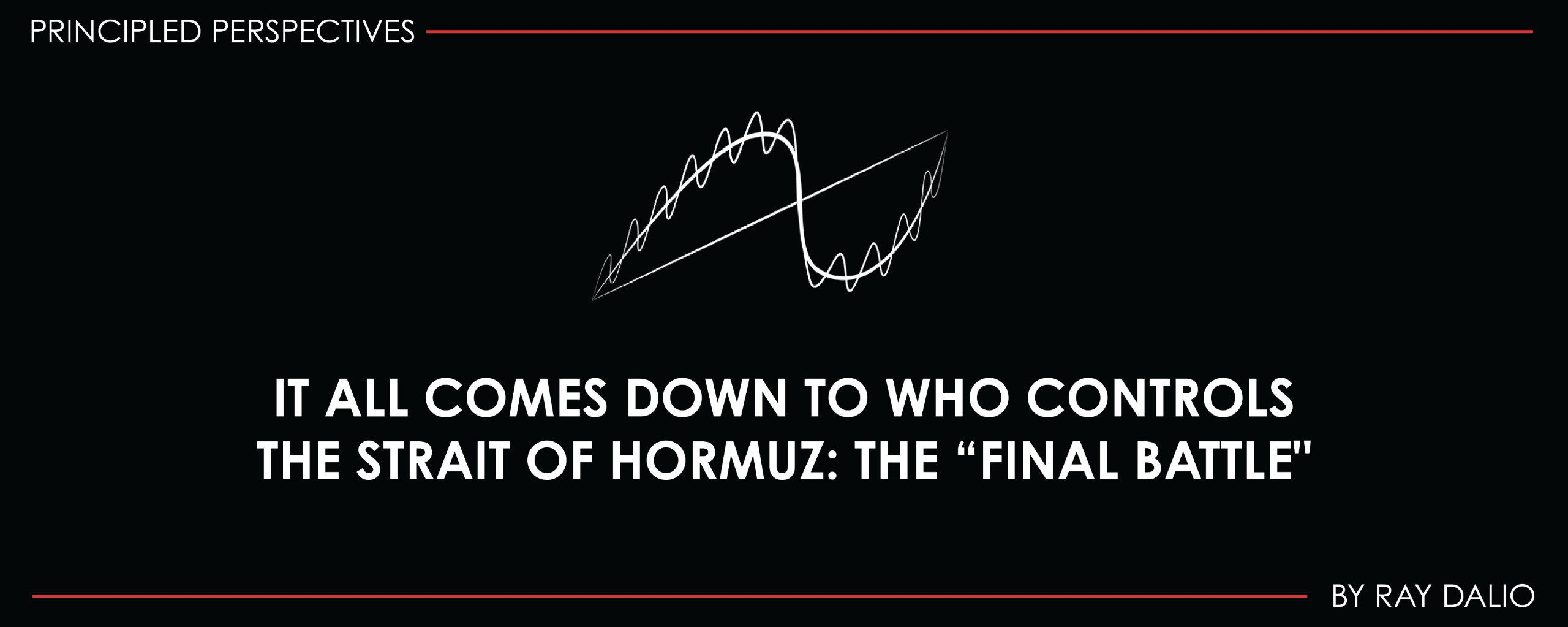
📌 Everything Depends on Securing Dominance over the Strait of Hormuz: The Final Battle by Ray Dalio 1. Why the Strait of Hormuz Is Important Because the Strait of Hormuz is a key passage for global energy transport, who controls it is not merely a military issue but is directly linked to the global economy. If Iran continues to threaten this strait or holds it as a bargaining chip, the United States could be judged to have lost the war. 2. What Does It Mean If the U.S. Loses? If the United States fails to control Hormuz, it would not be merely a tactical failure but a signal of the weakening of U.S. hegemony. Allies would begin to doubt the U.S.’s ability to guarantee security, and the market could also re-evaluate the power and credibility of the United States. 3. Conversely, If the U.S. Wins Conversely, if the United States succeeds in ensuring safe navigation in the Strait of Hormuz and controlling Iranian threats, its military power and leadership could be strongly reaffirmed. This could lead to a result that instills confidence in U.S. allies and markets. 4. It is highly unlikely to be resolved through negotiation I believe it is difficult for this war to end with simple negotiations or agreements. Ultimately, it is highly probable that a major clash will erupt over who actually controls the strait, and that will be the moment that determines the true victory or defeat. 5. U.S. Weakness The United States is not superior solely by military power; what matters more is its ability to withstand the pain of a prolonged war. Iran is highly likely to endure a long-term conflict and sacrifices, while the U.S. is more sensitive to rising oil prices, worsening public opinion, and election pressures; therefore, the longer the conflict drags on, the more disadvantageous it may become. 6. The Aftermath of this Conflict The Hormuz issue is not merely a matter for the Middle East; it is connected to various geopolitical issues involving trade flows, capital flows, energy prices, confidence in the dollar, and China, Russia, North Korea, Europe, Japan, and India. In other words, this war is part of a larger shift in the global order. Source
This article is machine translated
Show original

Telegram
Disclaimer: The content above is only the author's opinion which does not represent any position of Followin, and is not intended as, and shall not be understood or construed as, investment advice from Followin.
Like
Add to Favorites
Comments
Share
Relevant content