Table of Contents
ToggleThe countdown to SpaceX 's IPO was overshadowed by a securities disclosure dispute from three years ago—but that shadow seems to be fading. According to Axios, citing SEC court documents, Musk is in settlement negotiations with the Securities and Exchange Commission (SEC) regarding the delayed disclosure of his Twitter holdings between March and April 2022. The core motivation is straightforward: SpaceX's bankers want to completely resolve this outstanding legal dispute before launching the IPO.
How the SEC filed the lawsuit: 21 days, $500 million, and a mistake in the form.
In January 2025, the SEC formally sued Musk, accusing him of delaying the disclosure to the market for 21 days after acquiring a stake of more than 5% in Twitter in 2022, more than double the statutory 10-day deadline.
This 11-day time difference did not come without a cost—the SEC alleges that Musk used this period to continue buying at "artificially low prices," saving him an estimated $500 million in procurement costs. The SEC is asking the court to impose a civil penalty and require Musk to return the allegedly "saved" $150 million.
Complicating matters further, Musk filed a "13G" form—a format designed for passive investors, intended to convey the message, "I'm just a minority shareholder and don't intend to interfere in the company's operations." However, everything that followed—including aggressive stock purchases, acquisitions, and the dismissal of management—was the work of an active investor, and should have been reported on a "13D" form. Musk's side insists the delay was "unintentional" and counters that the SEC investigation violated his freedom of speech.
It is worth noting that Musk's lawyers told the court this month that the current settlement negotiations are being conducted without the involvement of SEC enforcement lawyers, indicating that the communication channels between the two parties are quite unusual.
X paid the fine in Europe but still retains the right to appeal.
Meanwhile, X's compliance pressure in Europe has seen new developments. A spokesperson for the European Commission officially confirmed that X has paid a €120 million fine before the deadline and submitted a rectification plan regarding the operation of the Blue Check certification function.
The fine stemmed from an investigation under the EU's Digital Services Act (DSA), which determined that X's paid authentication mechanism misled users. Paying the fine does not equate to admitting guilt—X also announced that it is still appealing the ruling, meaning this compliance tug-of-war is far from over.
Nvidia: The chip supplier for Musk's empire
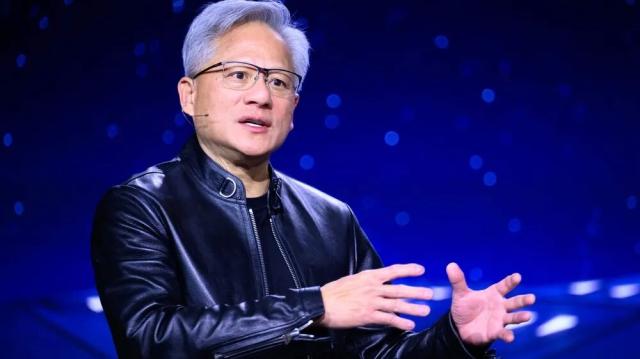
Despite the heavy pressure from laws and regulations, Musk recently made a rare statement on social media praising NVIDIA, saying he is a "super fan" of NVIDIA and its CEO Jensen Huang, and declaring that SpaceX's AI division and Tesla will continue to purchase NVIDIA chips on a large scale in the future.
This statement is quite intriguing. Previously, both Musk's xAI and Tesla publicly emphasized developing their own AI chips, aiming to reduce reliance on external suppliers. Now, their praise of Nvidia and confirmation of continued procurement could indicate that the computing power gap for projects like Grok and FSD is difficult to fill domestically, or it could be a signal of "stable investment in AI infrastructure" ahead of SpaceX's IPO.
Is the IPO path clear? Lessons from the crypto market.
If SpaceX's valuation truly reaches $1.75 trillion, it will surpass Meta and Tesla to become the largest tech IPO in history. Once the SEC settlement is reached, legal uncertainty will be eliminated, and bankers could begin the roadshow process as early as June.
For the cryptocurrency market, this signal has several implications: First, if the scale of AI computing power procurement by Musk's various entities (xAI, Tesla, SpaceX) continues to expand, the recovery of risk appetite for technology stocks and computing power concepts will often drive overall market sentiment; Second, if SpaceX's IPO is successfully priced, it will once again verify the argument of "liquidity premium for ultra-large technology assets," which is beneficial to the position of large-cap cryptocurrency assets such as Bitcoin in institutional asset allocation.
If regulatory hurdles can be overcome one by one, Musk's tech empire is moving towards a new phase that is more transparent and market-oriented.