Author: 0x76
Although the concept of blockchain games was proposed very early, strictly speaking, until the start of the 20-year bull market, it was difficult for the entire encryption industry to pick out a representative blockchain game product.
The success of DeFi has inspired other on-chain application developers to a certain extent. Whether it is games or other social tracks, project teams have begun to learn from DeFi. And just as DeFi is composed of "De" which represents decentralization and "Fi" which represents finance, the reference to the successful experience of DeFi is actually divided into two completely different directions.
One of the ideas is to integrate the token incentives in DeFi to form GameFi, and the other idea is to learn from the characteristics of DeFi decentralization to build a decentralized on-chain game, that is, DeGame.
Obviously, in the past bull market, almost all chain game projects chose the first option, and subsequently derived other derivative concepts such as Play to Earn and even X to Earn. But everything remains the same. The underlying construction method of this type of project is based on a centralized game running on a traditional server, supplemented by a token economic system to motivate users.
As for DeGame products in another development direction, although there are very few players, there are also some influential and outstanding representatives. The most typical example is Dark Forest, which has been developing and experimenting with projects in an orderly manner since its establishment in the early 20s. However, since such projects generally do not issue tokens, there is naturally no room for hype in the bull market, resulting in a relative lack of attention in other mass markets.
So, which of the above two completely different development ideas is more likely to be the future of the blockchain game industry?
Before answering this question, it is necessary for us to revisit the successful experience of DeFi, which is currently used for reference by all application projects, and is currently almost the only successful application layer product.
The main experience of DeFi success
First of all, we need to redefine the scope of DeFi. In a broad sense, DeFi can include almost all financial products built on the blockchain, including algorithmic stablecoins, various Derivatives, and more. However, the reality is that there are basically only two types of DeFi products that really have intrinsic value and have withstood the long-term test of the market, transactions and loans represented by Uniswap and Compound. Therefore, in the following article, we directly use the narrow definition of DeFi, which only includes DEX and lending products using the AMM mechanism.
The main experience of the success of this type of DeFi project can actually be summarized in the following three points:
1. Due to its relatively decentralized characteristics, users avoid the risk of asset custody of the centralized platform, prevent the platform from misappropriating user funds and Rug Pull away with money, and also break the traditional platform’s right to approve currency listing, and then Created a freer open market;
2. The AMM algorithm and the fund pool model greatly reduce the calculation of building financial logic in Ethereum, that is, the gas cost, and improve efficiency;
3. A certain token incentive mechanism has accelerated the early popularization of the product;
Therefore, from the successful experience of DeFi above, we can conclude that limiting the power of central nodes to do evil in the past through decentralized technology is the intrinsic value basis for the long-term existence of Web3 applications. The token incentive is only a catalyst to help early projects achieve better popularization under the premise that the foundation has been realized.
Why is GameFi struggling to succeed?
If you agree with the above conclusions, then you will find that the current mainstream GameFi products basically have not made any "decentralization" efforts at the product level. In addition to tokens and NFT registration and distribution through the blockchain, GameFi’s core business logic is still completely constructed in a centralized manner, and the project party holds unrestricted power in the game.
Therefore, for a GameFi project to be successful, it often needs to break through two bottlenecks. One is that the project must be game-like. If it is difficult to achieve, then the project will not be able to generate intrinsic value and will eventually become an idle fund.
Another bottleneck is the team moral hazard that the project team must face when they have centralized power but lack a regulatory environment. Judging from the phenomena we have observed in the past two years, the occurrence probability of moral hazard has far exceeded the difficulty of realizing gameplay. This is also the fundamental reason why GameFi games are basically not fun: the team’s impulse to do evil can’t wait to develop Gameplay day.
It is precisely because of the above reasons that many GameFi projects that have emerged in the past two years have basically developed into intentional or unintentional funds.
In addition, in the relevant narratives surrounding GameFi, there is also a widespread lie, that is, the GameFi governance token or NFT held by users can enable users to take ownership of projects or game assets. As for why holding tokens cannot be simply equivalent to owning ownership, my previous article " Does ownership in the Web3 economy really exist?" " has already been discussed in detail, and will not be expanded here.
It is for the above reasons that the development direction of centralized games plus token incentives represented by GameFi is almost doomed to fail. In fact, this conclusion is in the previous article " Play to Earn or Play to Ponzi?" "Also discussed in more detail, interested readers can click on the link to review.
Now let’s go back to the topic of this article. Since the GameFi model often becomes a capital market, what are the unique characteristics of DeGame projects on another development path?
The main features of the full chain game
In fact, there have always been many different names in the market for chain game projects that are characterized by decentralization. In the above, we have been using DeGame for generalization, more for comparison with another development path, GameFi. But in fact, since these games often deploy their core game logic directly on the chain, the market is more accustomed to calling such projects "full-chain games" or "On-Chain Games". In the following, we will follow the customary name of the market and collectively refer to the projects on the DeGame track as "full-chain games".
Full-chain games generally have the following obvious characteristics.
openness
Similar to DeFi, which is also deployed on the whole chain, full-chain games are naturally more open, and the community can freely refer to other ready-made game components that have been on the chain, and even conduct further customized development on the basis of existing games.
We have observed this phenomenon in the community development activities of the famous full-chain game Dark Forest. Similarly, the full-chain game OPCraft, which was demonstrated at Devcon in Bogota not long ago, also realized the community's customized development of some functions or components of the game in just two weeks of demonstration time.
In future full-chain games, plug-ins or codes contributed by players or the community may become an increasingly important part of these games, and their importance may even surpass that of the official team.
Composability
Also benefiting from the openness, characters or props between different full-chain games can also be combined with each other like DeFi Lego. This feature is expected to achieve a real breakthrough in blockchain gameplay in the future, allowing users to use their own game characters and props across games to achieve a future scene similar to the movie "Ready Player One".
The most representative case of this concept at present may be the NFT project Loot whose price has basically returned to zero (below we just review the two schematic diagrams of the founder of Loot at that time, and its core essence is actually the composability we talked about) . But even so, Loot still inspired many latecomers conceptually. Including Rarity, which was dominated by AC and was also unfinished later (an analysis article was written at the time), as well as Loot Realms, which has been migrated to the StarkNet ecosystem and is still under development.
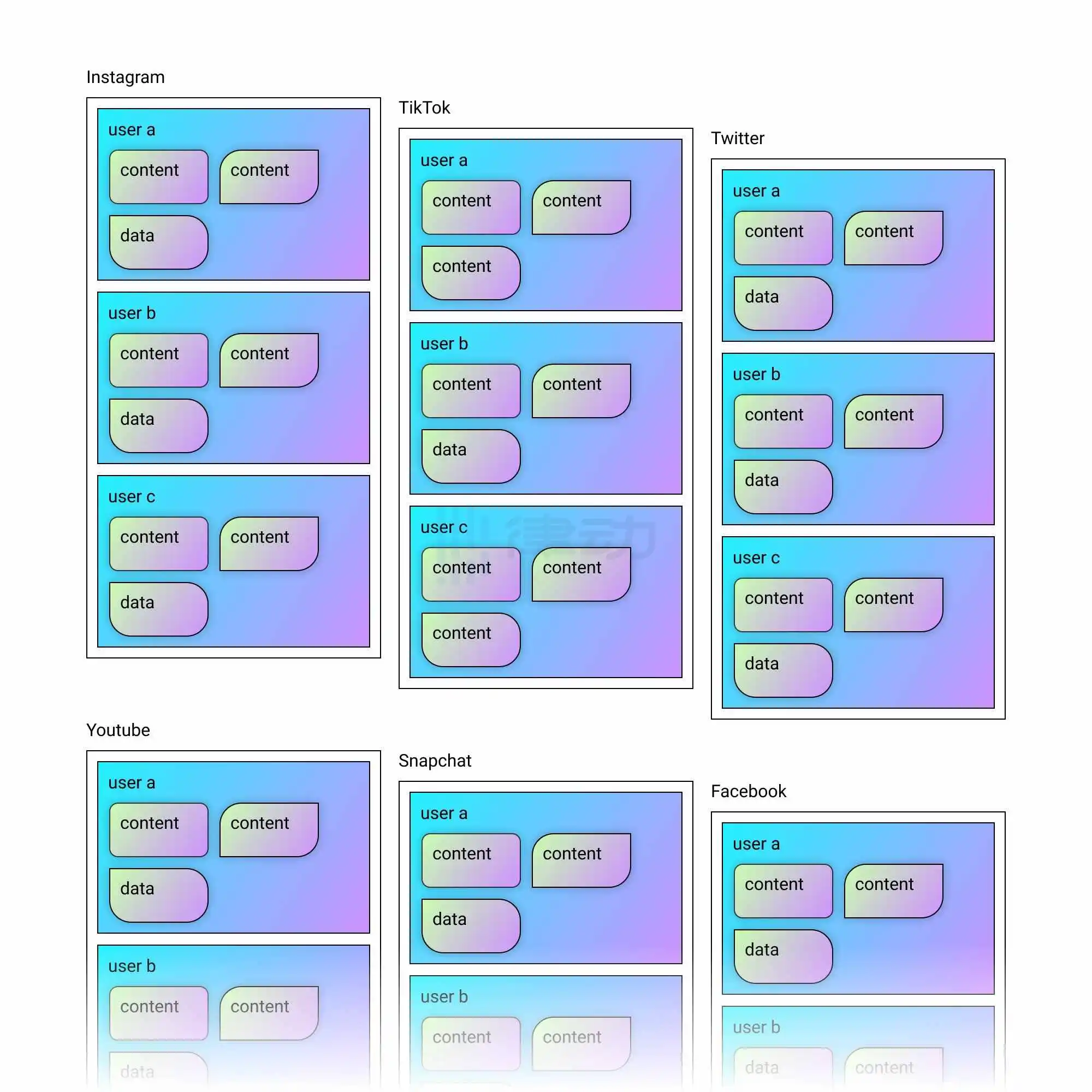
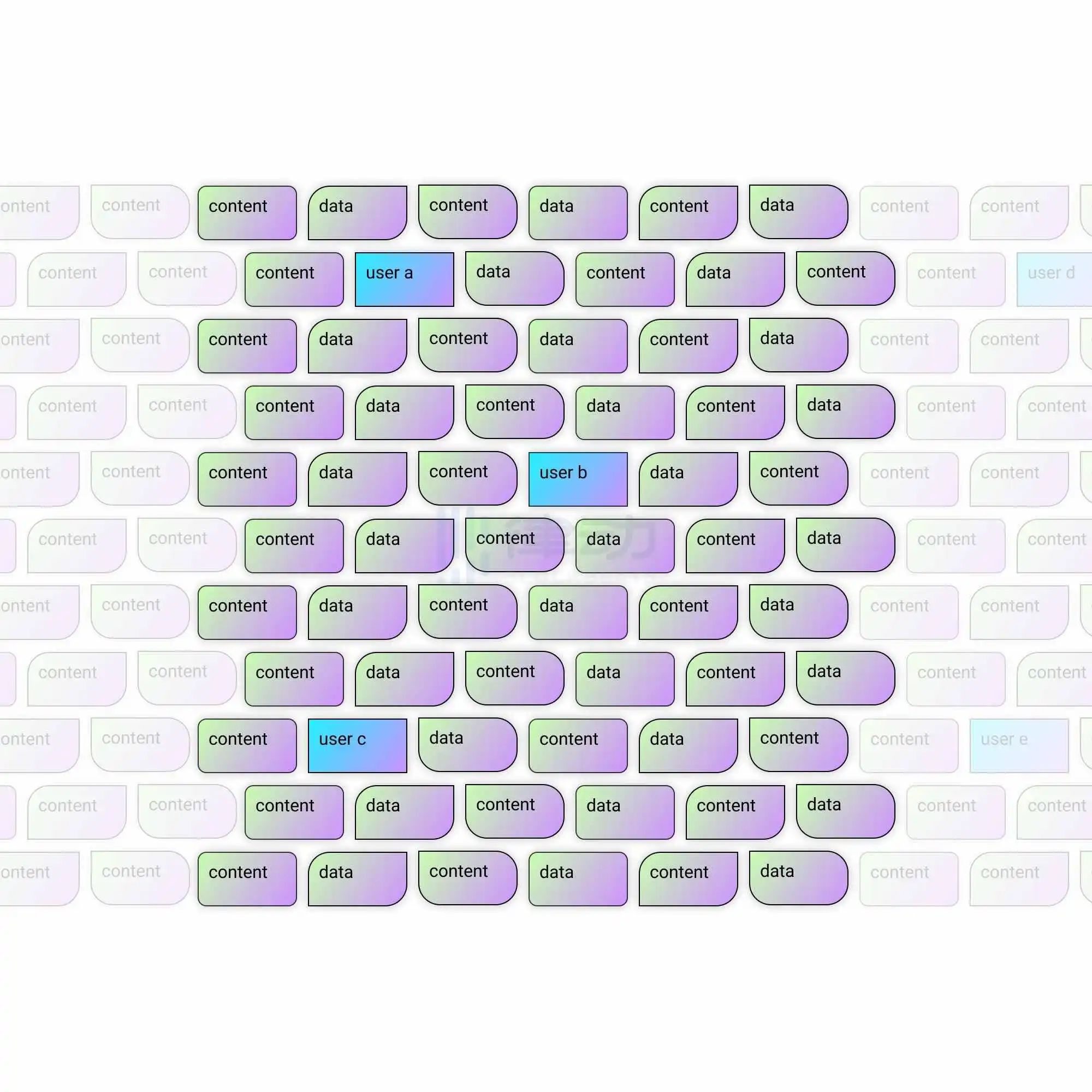
Although these early attempts are hardly successful, their development still allows us to see the potential of full-chain games to achieve some characteristics that traditional games cannot achieve.
more decentralized
The first thing to declare is that I don't think that applications built using decentralized platforms (including DeFi and full-chain games) must be decentralized. The degree of decentralization of an application does not entirely depend on the development platform it uses, but also depends on its specific business logic.
For example, some DeFi reserves super administrator privileges in smart contracts, and project parties can terminate or even modify deployed smart contracts at any time. Although these projects are fully deployed on the chain, their degree of decentralization will still be affected by their specific business logic.
But in general, since the business logic of the full-chain game deployed on the public chain is open and verifiable, it is more difficult for the project party to modify the game logic arbitrarily, which can prevent the tragedy of V God’s childhood from repeating to a certain extent. This is like media supervision, although it cannot prevent corruption in an absolute sense, it can still effectively reduce the probability of corruption.
At the same time, the full-chain game also solves the problem of game asset custody mentioned above (having currency does not mean having ownership). Since the use value of tokens in full-chain games is directly defined by smart contracts on the chain, the tokens or NFTs held by users can be truly equivalent to game equipment or item ownership.
The development bottleneck of the whole chain game
Of course, it is undeniable that, apart from the significant advantages mentioned above, the reason for the slow development of full-chain games is actually very obvious, that is, the calculation speed and cost of the existing public chain cannot meet even the calculation of a small casual game. volume demand. This obstacle also makes the early projects developed in this direction basically all end in failure.
However, with the development of the industry today, especially with the gradual maturity of various Rollup solutions and the gradual advancement of the Ethereum mainnet upgrade plan, this performance bottleneck that once blocked the development of the entire chain of games is gradually showing signs of being broken .
In addition, developers in this direction are also carrying out innovations similar to the AMM type in DeFi, that is, under the constraints of the performance bottleneck of the existing public chain, through mechanism or technological innovation to reduce the calculation consumption of unit operations, thereby greatly improving the performance of the product. operating efficiency. The MUD development framework we will mention later has the potential to comprehensively improve the operation or development efficiency of full-chain games in the future.
Ecosystems and teams worthy of attention
At present, in the development of the whole chain game, two relatively independent communities have been formed. One focuses on game development based on EVM-compatible OP- Rollup , and the other is built directly on the zk- Rollup project StarkNet, and uses the new Cairo language. Below, we briefly introduce the teams or communities in these two ecosystems.
StarkNet Ecology
StarkNet uses the unique Cairo language, so there may be some barriers to the introduction of early developers compared to EVM-compatible scaling solutions. However, with the gradual development and maturity of the underlying zk- Rollup technology, it is expected that StarkNet may enjoy the advantages of faster transaction speed and lower computing cost in the long run.
At present, many full-chain game projects have gathered in the StarkNet ecosystem. Although most of them are still in their early stages, their follow-up development deserves continuous attention.
(1) MatchboxDAO (Twitter: @matchbox_dao)
MatchboxDAO is more like a professional community focusing on full-chain games in the StarkNet ecosystem. In addition to sharing relevant information, it will also hold some hackathons from time to time.
Personally, I think the more valuable ones are the articles written or reproduced by him on the development theory and cutting-edge practice of full-chain games. Readers who are interested in this direction can further read its Mirror document , from which you can also find some cutting-edge experimental projects.
(2) Topology
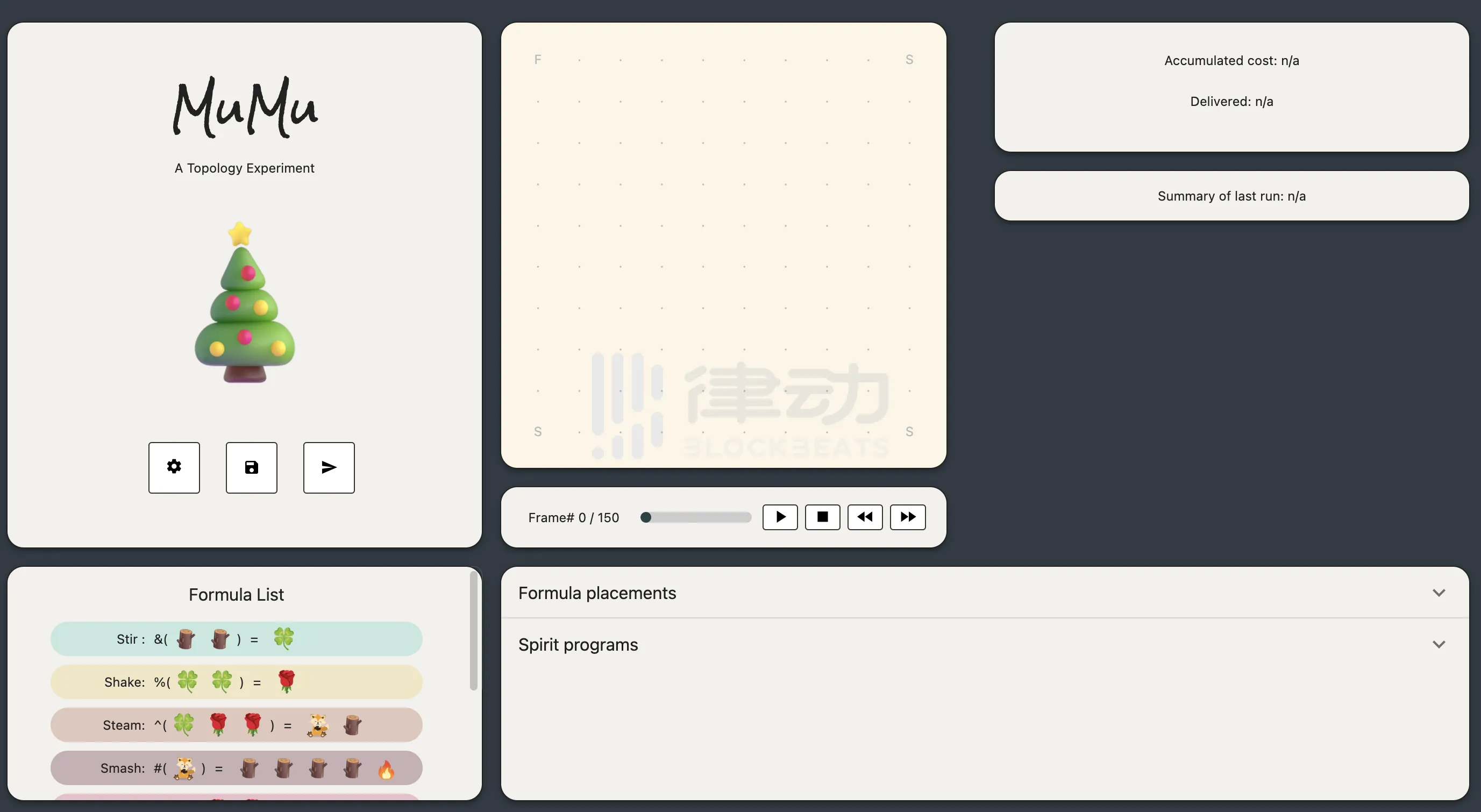
Topology was originally a game based on the story of the Three-Body Problem, but since it is still in the early testing stage, the future development direction is still very variable, so I will not introduce too much about the game.
Personally, I think the project deserves more attention from the Chinese developer @guiltygyoza behind it. From his personal blog, we can clearly understand his overall thinking on the whole chain of games. The team is currently focusing on developing some experimental mini-games in order to obtain market feedback and iterate faster.
According to the methodology that investing in projects is investing in people, Topology may produce some iconic innovations in the future.
Recently they launched an experimental mini-game MuMu (Chinese name Nuo Nuo), interested readers can click on the link to experience it.
(3) Briq
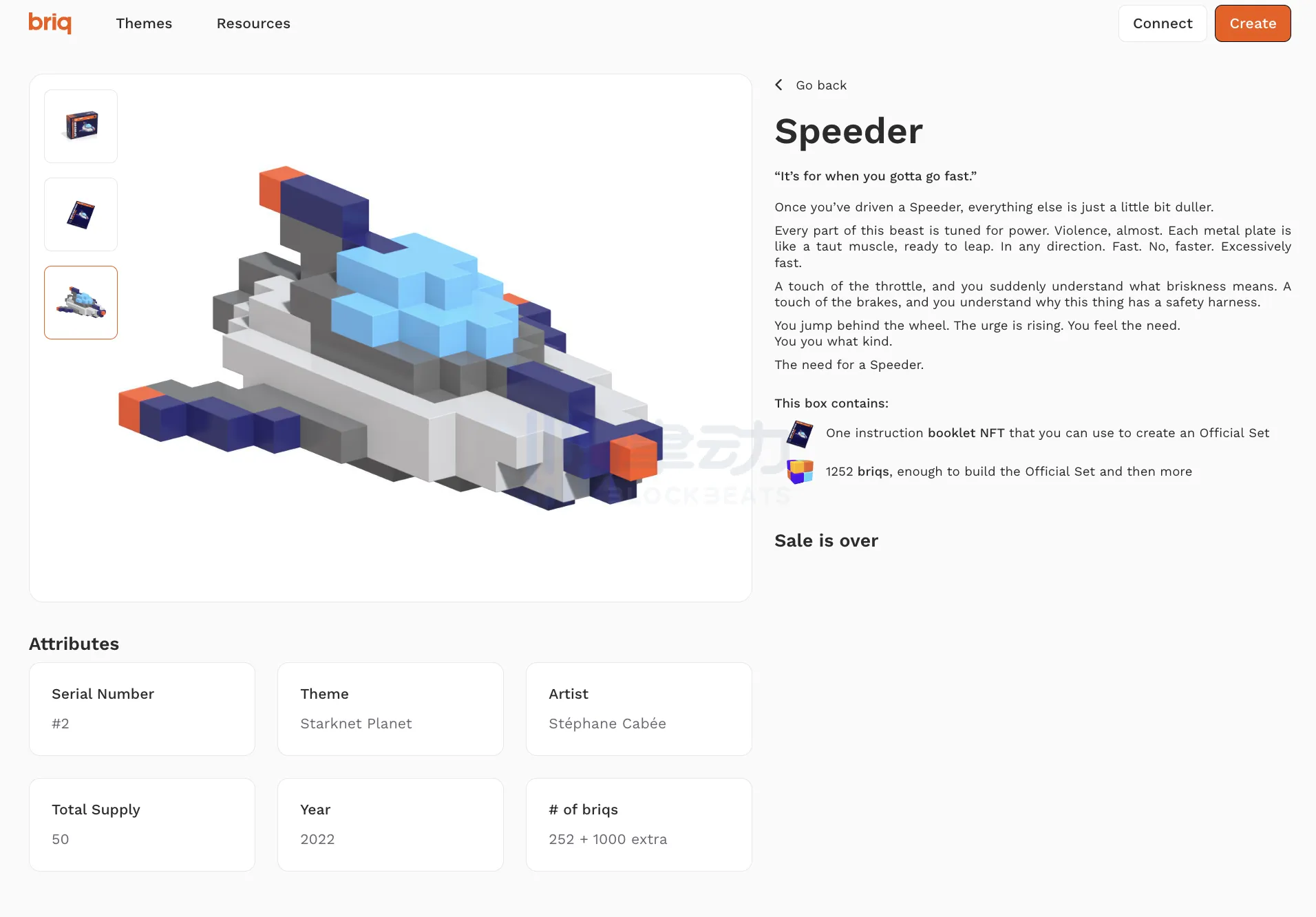
Briq is an on-chain Lego built on StarkNet. Its advantage is that basically all information is stored on the chain. Therefore, it is expected that in the future, some different usage scenarios can be built by relying on the openness of the full-chain game.
But the problem is also obvious, that is, such a component-level product will inevitably require other game communities to develop various specific usage solutions for it, which is still difficult to achieve in the early StarkNet ecosystem. Therefore, its current business model is still relying on the expected sales of NFT products in the future. The follow-up development of this project is worthy of attention, but it is still too early to produce actual value.
EVM ecology
Compared with the StarkNet ecosystem, the current full-chain game ecosystem mainly based on Optimism or other EVM-compatible architectures is more mature. In particular, the public demonstration of the Lattice team at Devcon in Bogota some time ago also won a lot of attention for related projects.
(1) Lattice
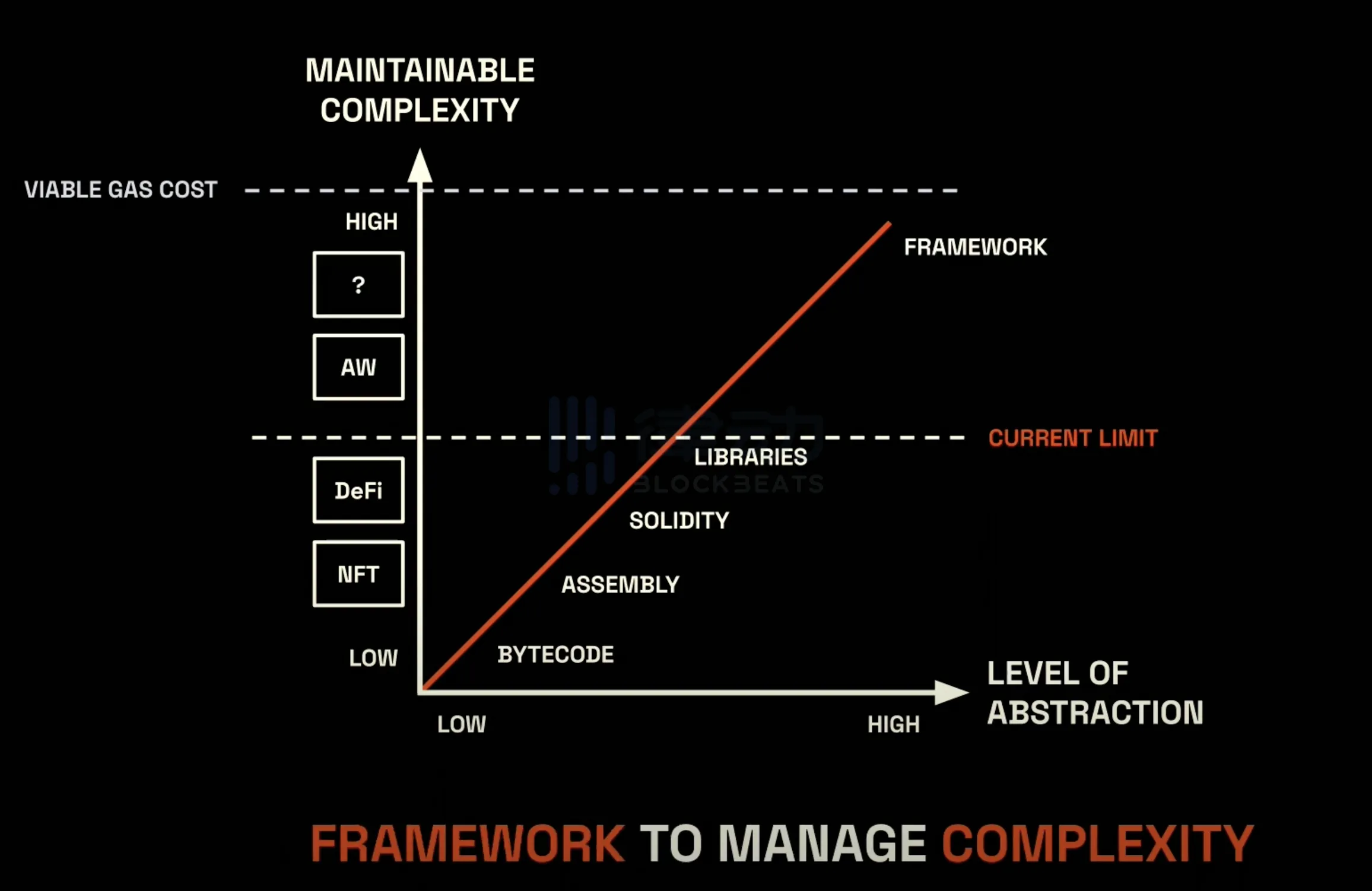
Lattice is a full-chain game development team, but unlike many other game developers, the Lattice team first developed a full-chain game development framework MUD (the future usage scenarios of this framework may not be limited to full-chain games).
In simple terms, MUD can be understood as a developer framework (Framework). As shown in the figure below, more abstract underlying development tools will likely support more complex on-chain applications. Among them, AW (Autonomous World) in the vertical axis represents the autonomous world, which is a concept used to refer to the whole chain game. Interested readers can refer to this demo video for a more detailed explanation of the MUD framework.
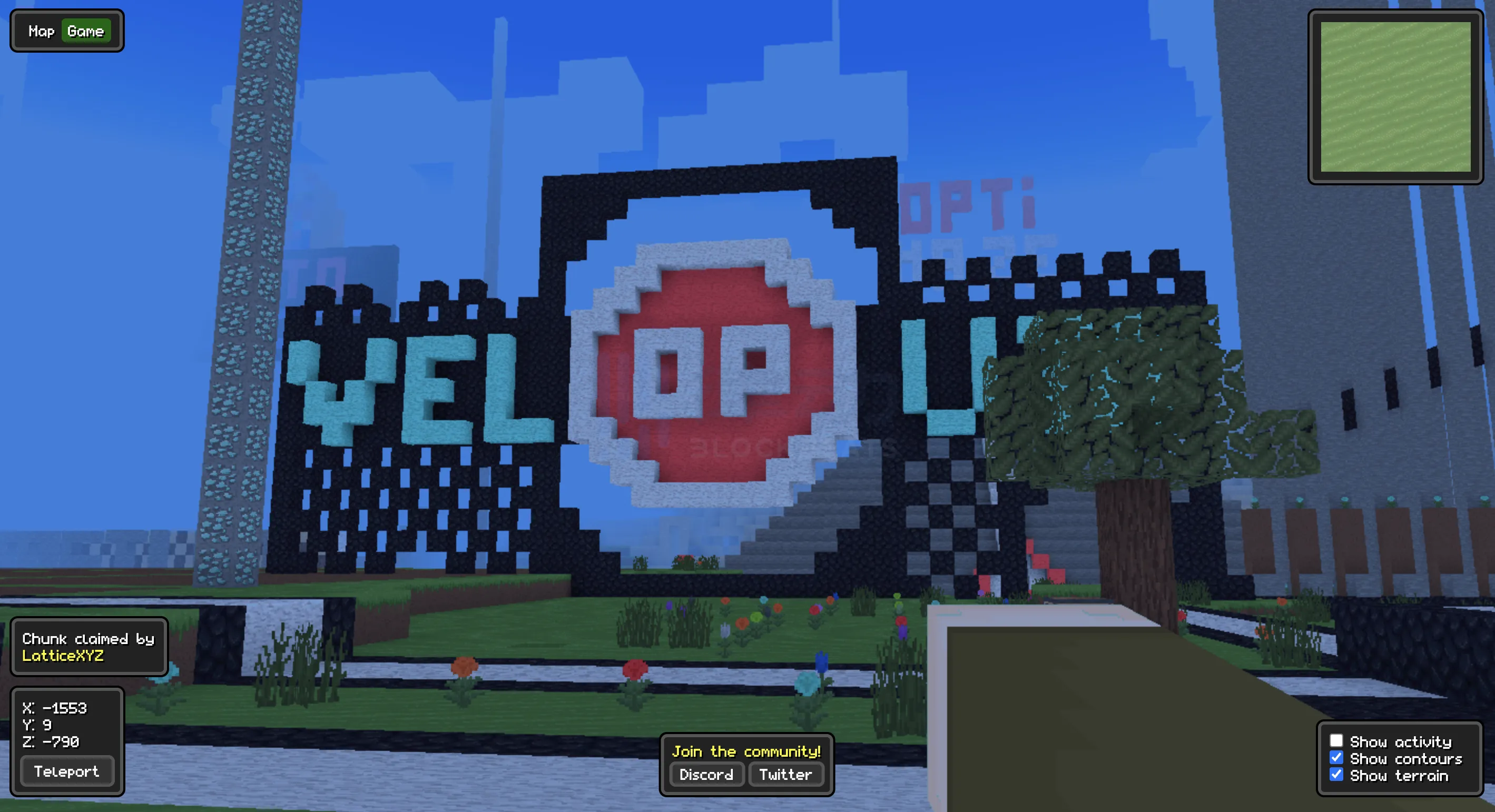
Of course, readers with a non-technical background can understand its significance more intuitively by experiencing the game products developed by relying on MUD. These include the on-chain version of the "Minecraft" game: OPCraft, which was previously demonstrated live at Devcon in Bogota and aroused great repercussions.
The game format of OPCraft basically copies the game format of the famous Minecraft (MineCraft), so it doesn't need much introduction. More importantly, the player's modification or construction information of the virtual world is stored on the chain. We can still use this link to learn about the items or images created by the players who participated in the experience in Bogotá at that time. The future potential of the MUD game engine and full-chain games can be seen.
(2) 0xPARC
0xPARC is a research organization established by Gubsheep, the initiator of the famous full-chain game project Dark Forest (you can read this article ( Chinese translation ) for the background of Gubsheep), and it is currently focusing on the cutting-edge progress of full-chain games. Funder of the mentioned Lattice project.
Of course, strictly speaking, 0xPARC is not a pure game development team, and its research and funding directions are not limited to the game field. But currently 0xPARC supports many cutting-edge exploratory full-chain game projects, including the Autonomous Worlds Residency: Demo Day event (mainly full-chain game-related projects) that was publicly demonstrated not long ago.
Therefore, the activities or blogs held by 0xPARC can be used as a window to understand the most cutting-edge progress of the whole chain of games.
It can be seen that the projects or organizations mentioned above are basically in the early stages of theoretical construction or the development of underlying technologies. The full-chain game products launched at this stage are often only in the nature of testing, and the products are still very immature. But if you carefully understand the vision or values of the teams behind these projects, you can find that they tend to be more long-termist, and they don’t lack in-depth thinking about the direction they are engaged in (specifically, they write more articles than they can play games LoL) .
Whether the future full-chain game may become DeFi in the next round of bull market, and whether it will finally usher in its own "AMM moment" is still difficult to answer. But if you want to look for an application layer subdivision track that may produce breakthroughs in the next cycle in the bear market, then the current full-chain game may be an area worth paying attention to.
Rhythm BlockBeats reminds that according to the document "Reminder on Preventing Illegal Fundraising in the Name of "Virtual Currency" and "Blockchain" issued by five departments including the China Banking and Insurance Regulatory Commission in August 2018, the general public is requested to treat the blockchain rationally, and do not Blindly believe in hype promises, establish correct currency concepts and investment concepts, and effectively improve risk awareness; actively report and report to relevant departments for clues of violations and crimes discovered.