Table of Contents
ToggleThe US regulatory framework for cryptocurrencies has once again triggered significant market volatility. The release of the latest version of the Clarity Act, a draft bill for stablecoin legislation, has sparked concerns about limitations on stablecoin yield models. Shares of USDC issuer Circle (ticker symbol: CRCL) plummeted by as much as 20% in early trading on Tuesday, abruptly halting its impressive gains of over 100% accumulated in the past few weeks.
Meanwhile, Coinbase (COIN), a cryptocurrency exchange whose revenue is highly tied to stablecoin interest rates, was also affected, with its stock price falling by about 8%.
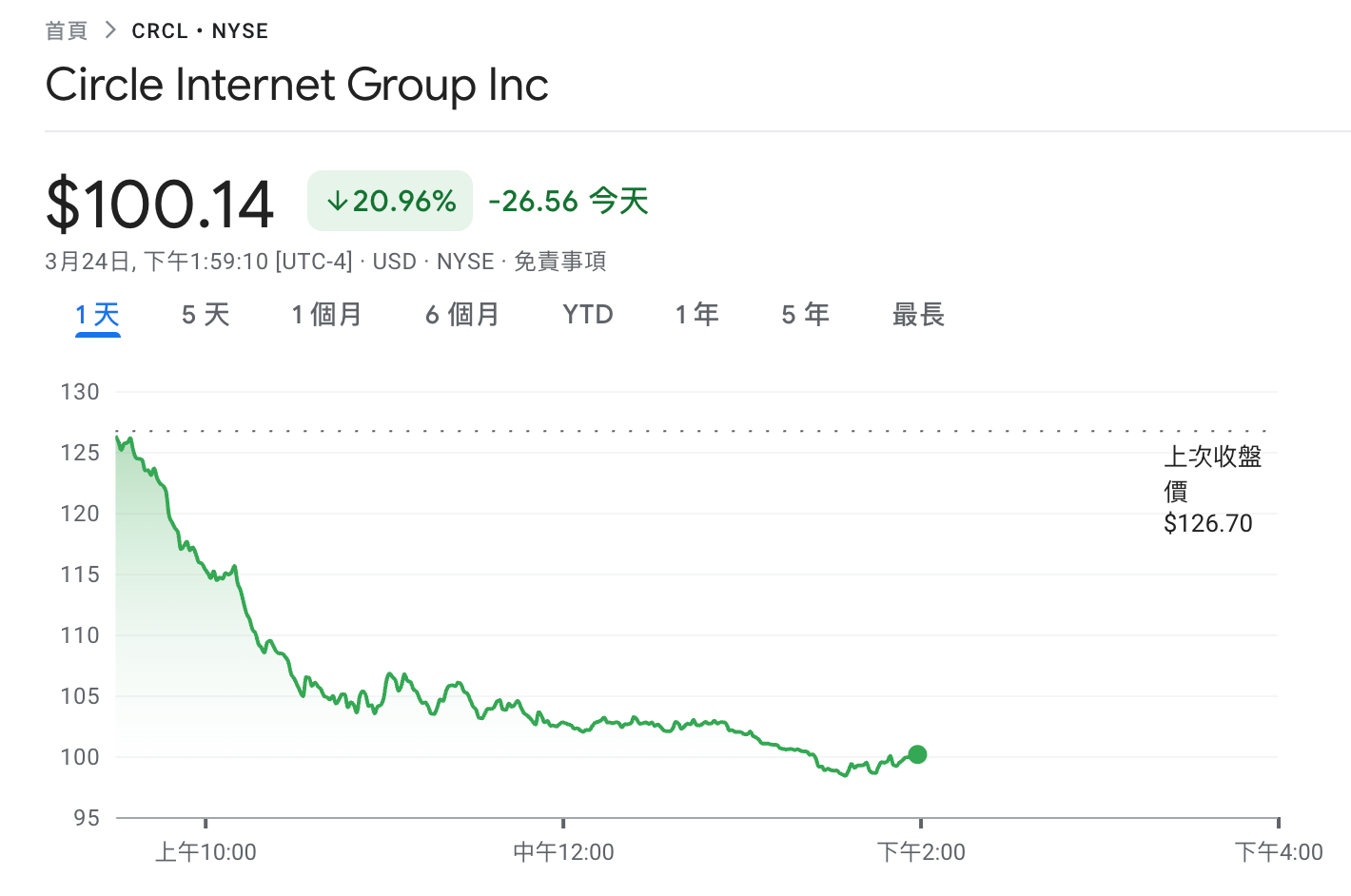
Key Impact: The Clarity Act proposes to block "passive interest generation."
According to CoinDesk, the key factor triggering this wave of selling on Wall Street is the potential disruption of the current stablecoin business model by the Clarity Act.
In the past, the GENIUS Act, which focuses on stablecoins, prohibited issuers from directly paying returns to users. However, industry players developed a "pass-through model" to address this: Circle earns interest from USDC's reserve assets (such as US Treasury bonds), shares a portion of the profits with Coinbase, and Coinbase then uses these funds as rewards for USDC holders. This interest-earning mechanism has always been a core incentive for investors to hold stablecoins.
However, according to analysis by Keyrock digital asset researcher Amir Hajian, the latest version of the Clarity Act directly targets this loophole, explicitly prohibiting any form of reward that is "economically equivalent to interest." This effectively drains a key driver of stablecoin adoption.
Shay Boloor, chief market strategist at Futurum Equities, also warned that if USDC cannot provide returns, it will be difficult to move beyond being a "simple payment instrument," which significantly weakens the bullish logic for USDC to become a true store of value.
Increased Competition: The Big Four Auditors Advance Tether
In addition to regulatory concerns, Circle also faces immense pressure from its main competitor, Tether (the issuer of USDT).
Tether has announced that it has hired one of the "Big Four" accounting firms to conduct a full audit of its reserves. Market analysts believe that if the audit is successful, it will significantly improve USDT's risk management image in the eyes of institutional investors, which could potentially further erode USDC's market share in terms of compliance and transparency.
Wall Street View: Market Overreacts, Long-Term Outlook Remains Positive
Despite a barrage of negative news, most Wall Street analysts do not view this as a "survival crisis" for Circle. Analysts believe the plunge is largely due to Circle's stock price having surged 170% since early February, making its extremely high valuation exceptionally vulnerable to any negative headlines.
Regarding the market outlook, institutions still point out three main supporting reasons:
Coinbase's short-term profits may actually increase: Mizuho Securities analyst Dan Dolev points out that USDC currently accounts for about 20% of Coinbase's revenue, a large portion of which is used for user rewards. If the new legislation prohibits rewards, Coinbase may actually save on this huge expense in the short term, thereby boosting its book profits.
The market's "shoot first, ask questions later" overreaction: Clear Street analyst Owen Lau believes that the actual situation is not as bad as the news headlines make it out to be, and the market sell-off is clearly driven by emotional panic.
Compliance alternatives will emerge: Ryan Rasmussen, head of research at digital asset management firm Bitwise, emphasizes that even facing short-term headwinds, Circle's stock price has still risen by more than 30% this year. He anticipates that the industry will develop alternatives such as loyalty programs to circumvent the interest-bearing ban. He adds, "Circle's long-term prospects have never been brighter; they firmly hold a 30% market share in a market projected to grow tenfold over the next four years."

 Related reports