Here's a little-known fact: when the market is consolidating and choosing a direction: if ETH outperforms BTC, it usually indicates an impending price surge. If ETH underperforms BTC, it usually indicates an impending price drop.
I've said this before. You can review the price action of BTC during its sideways movement this year; the accuracy rate is 100%.
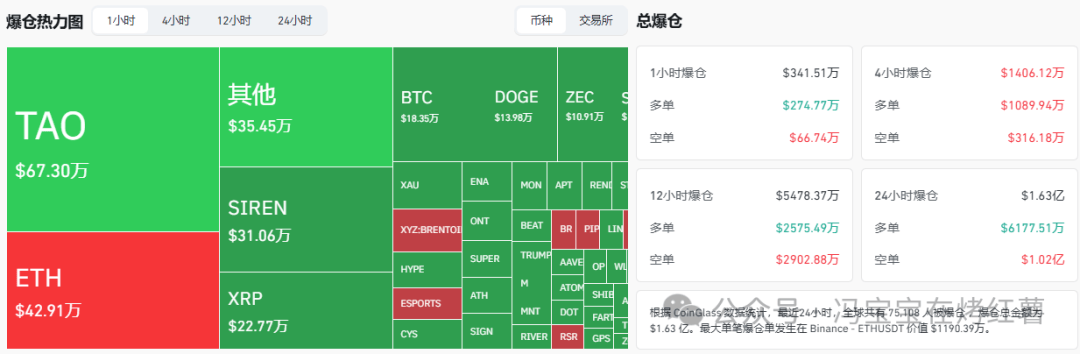
In the past 24 hours, a total of 78,180 people across the internet have had their positions liquidated, with a total liquidation amount of $163 million. Long positions were liquidated for $61.7751 million, and short positions were liquidated for $102 million.
BTC
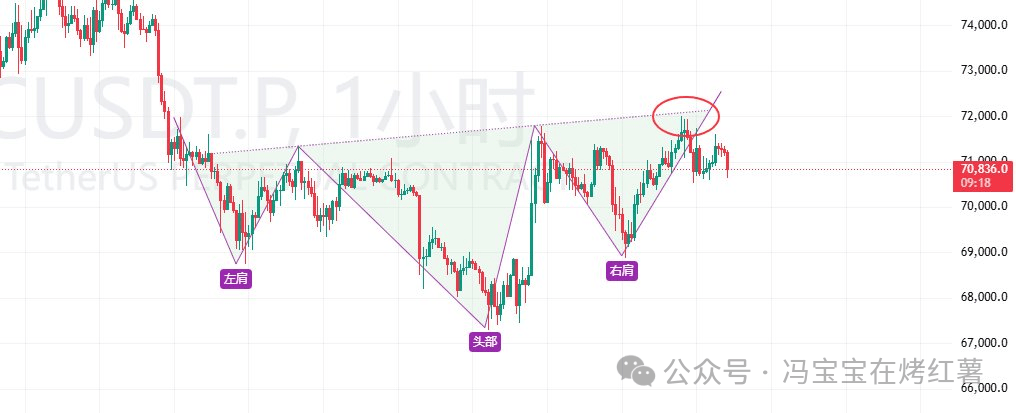
Bitcoin briefly surged to the neckline of a head and shoulders bottom pattern before being pushed back down, indicating significant selling pressure. However, as long as it doesn't break below the low of the right shoulder, there's still a chance for it to move higher.
Therefore, we should wait for it to pull back before considering entering a long position, expecting to buy around $70,000 to $69,500.
ETH
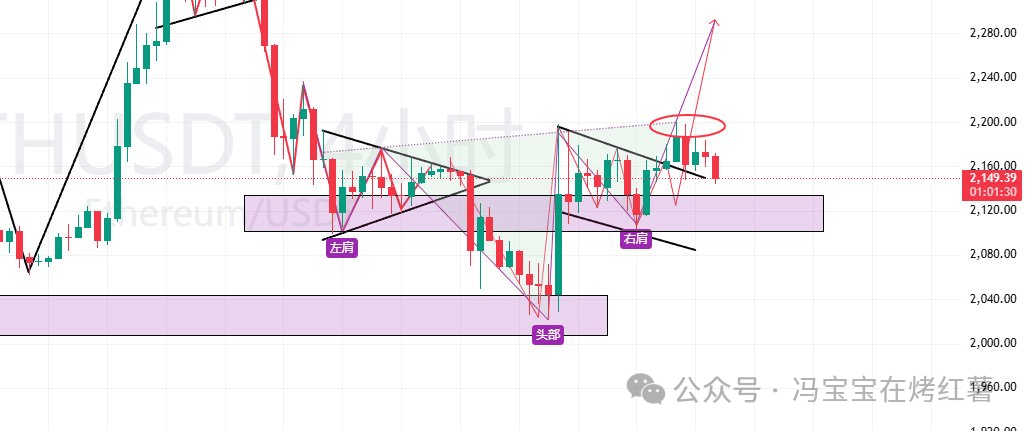
Ethereum briefly surged to the neckline, but was immediately pushed down, indicating heavy selling pressure. It will likely need to retrace to digest the pressure.
Next, we'll see if the low point of the right shoulder below can hold. As long as it doesn't break down, there's still a chance for a rebound. Therefore, we plan to wait for a pullback to around 2130-2100 before entering a long position.
The next bull market will still be dominated by structurally driven altcoin-driven market.
The coins that have managed to break out of their own price ranges in the past few months are mostly those with institutional narratives, like $TAO, $ZRO, and $MORPHO. Frankly, this rally isn't driven by retail investors; they haven't even entered the market yet. The main buyers right now are actually institutional funds.
Therefore, this also determines that the next bull market will not be a broad-based rally, but rather a structural one.
The logic for selecting coins is also very simple:
Either the market capitalization is large enough with good liquidity, allowing large funds to enter and exit freely; or it can be linked to traditional finance. If it doesn't meet either of these conditions, it's difficult to attract sustained investment.
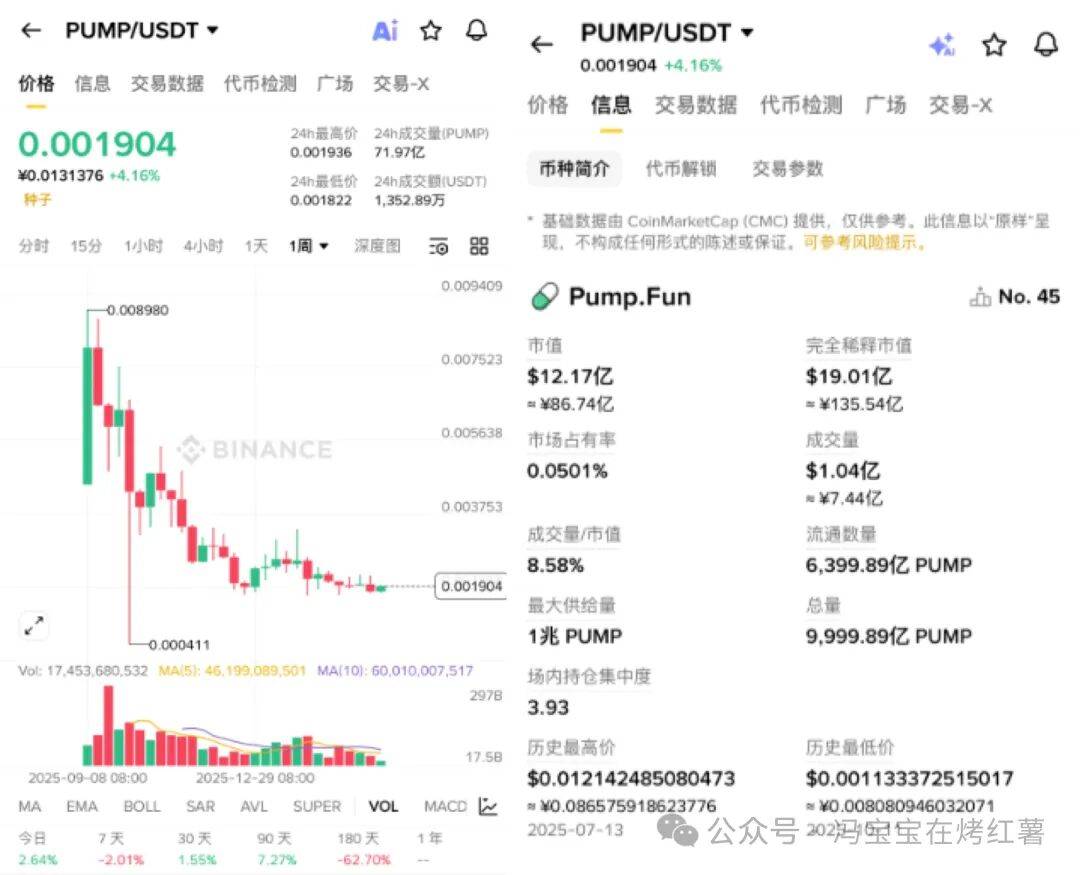
Following this line of thinking, I've started dollar-cost averaging into PUMP, mainly because of the logic of mean reversion.
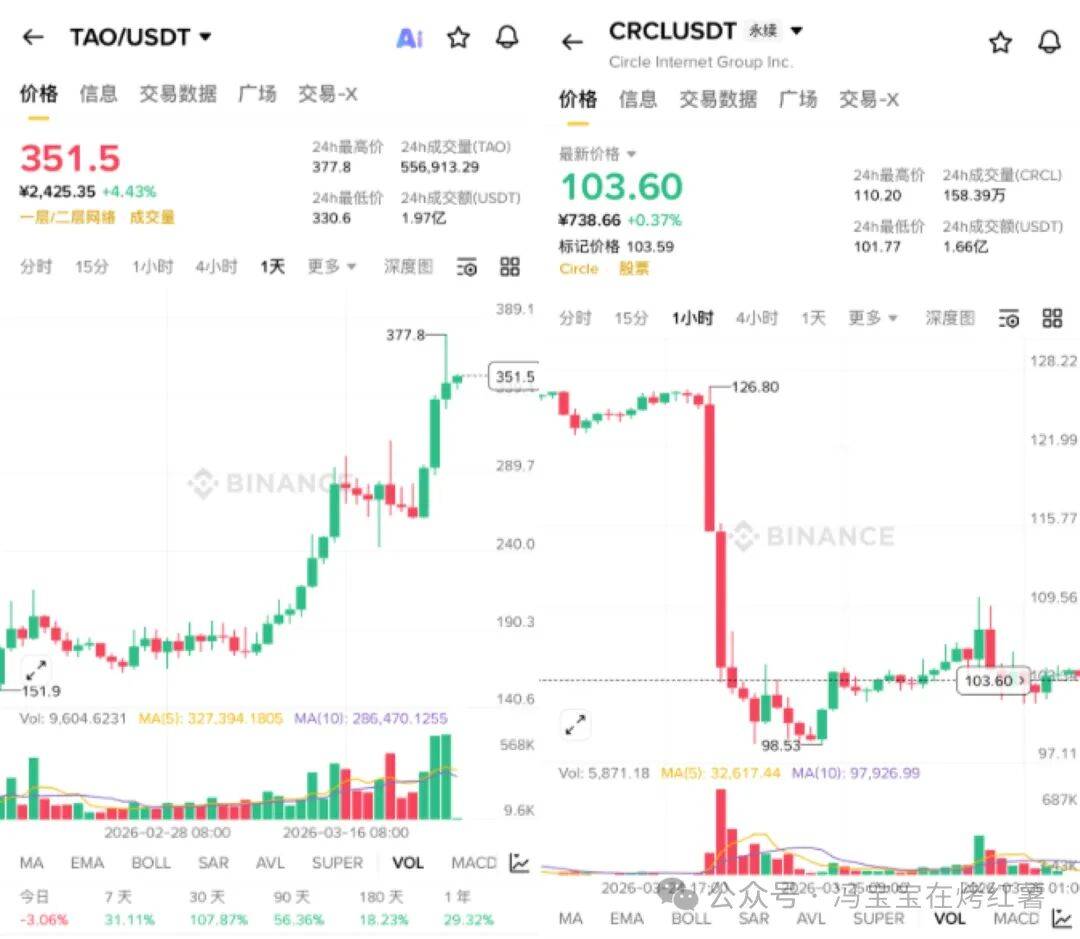
TAO
Many people are now experiencing FOMO (Fear of Missing Out) due to the soaring TAO (Taiwanese Oxygen Demand) prices, fearing that the upward trend will continue without any turning back and they will never have another chance to get on board.
Two weeks ago, when everyone missed out on CRCL, they thought the same thing. Now that CRCL has fallen, nobody dares to buy the dips. There will definitely be a buy the dips opportunity in TAO later; it'll just depend on whether you can seize it then.
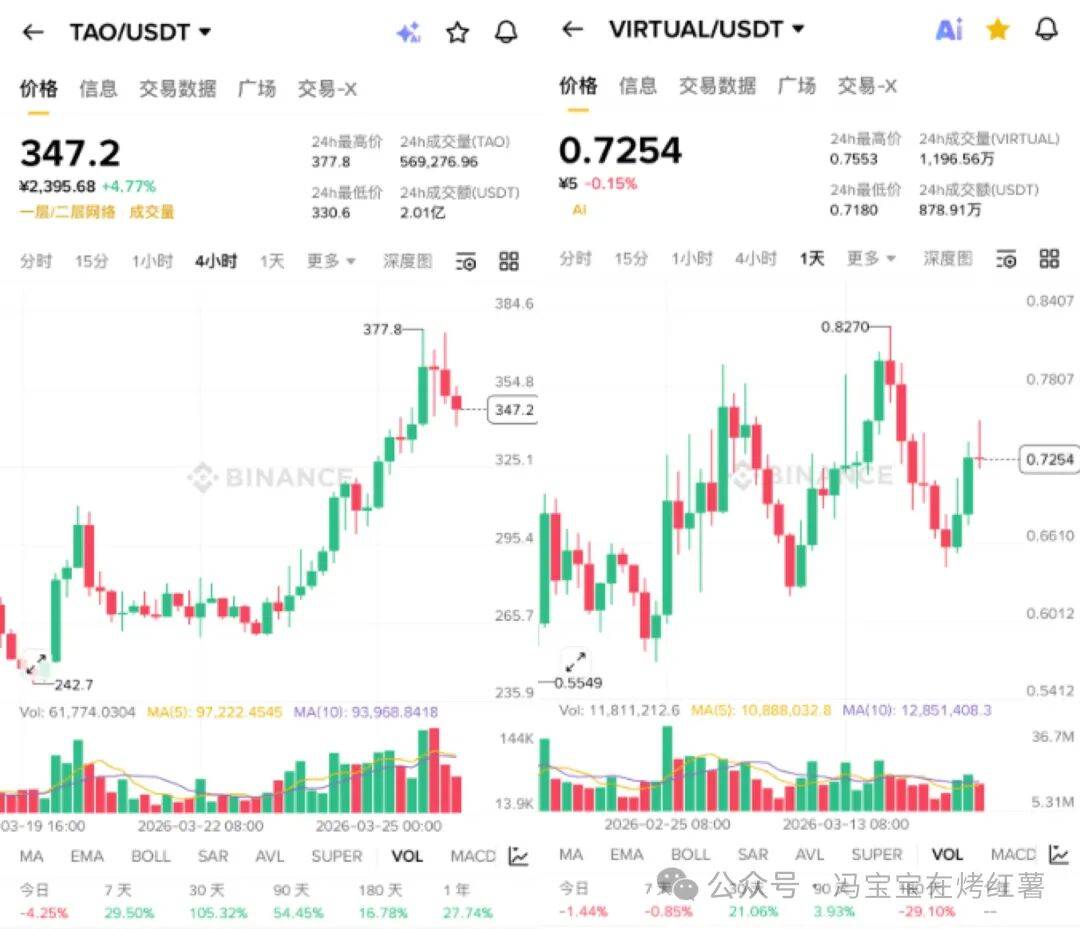
VIRTUAL
Those who have been following this for a while know that the AI sector has been a key focus that I have been emphasizing repeatedly this year. TAO and VIRTUAL are the two AI encryption projects that I am most optimistic about. I highlighted TAO before it took off, and now it has gained popularity.
VIRTUAL's core strength lies not in its launch platform, but in the ACP protocol and AI economy—high barriers to entry and immense potential. The project's fundamentals and token model are healthy, so a short-term lack of price increase is normal, similar to TAO's initial performance. Hold on patiently; an upward trend is only a matter of time.
Finally, let me briefly state one point: facts have once again proven this point.
Projects that can generate returns are generally good projects, indicating concentrated investment. Investing in traffic, hiring KOLs, and airdrops all incur costs, and project teams definitely need to find ways to recoup them.
Therefore, most project developers will try to push prices up to secure contracts. Only a very few will directly dump prices and refuse to budge.
My recent experience playing Alpha projects has taught me this: If there are market makers (MMs) and clear price support, go all in on a 80M market cap; 100M is also acceptable. If the trend looks wrong, get out. Once you start trading contracts, 200M is basically the short-term top.