Emphasized the necessity of applying RWA and AML at the hearing
);)
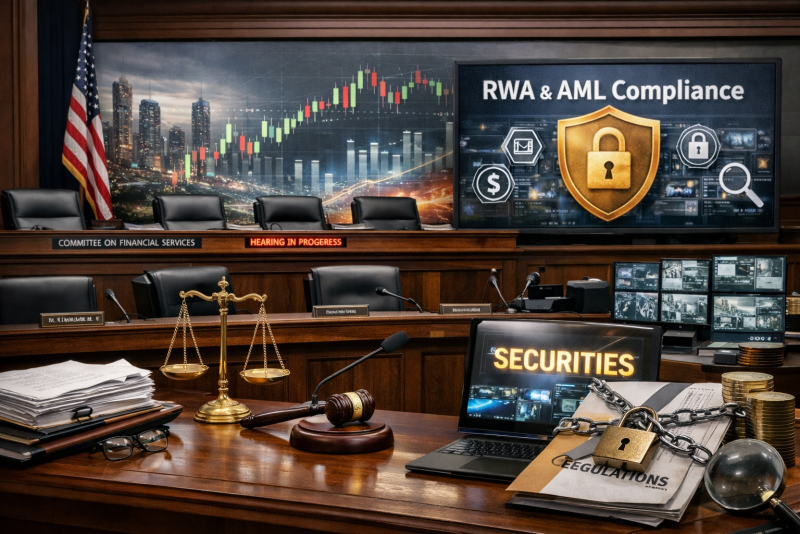
This hearing was held during the review of the Capital Markets Technology Modernization Act. French Hill, Chair of the U.S. House Financial Services Committee, emphasized the need to strike a balance between innovation, investor protection, and market integrity amidst the spread of asset tokenization.
Summer Mersinger, CEO of the Blockchain Association, stated that blockchain-based tokenization reduces transaction costs and settlement times. "By replacing existing manual record-keeping systems with transparent timestamp records, we lower costs and reshape financial markets," said CEO Mersinger.
The witnesses unanimously stated that existing securities laws apply to tokenized securities as they are. Their position is that investor protection and the supervisory framework remain unchanged even if the method of recording transactions shifts to blockchain.
Legislators focused on the applicability of Anti-Money Laundering (AML) and Know Your Customer (KYC). Illinois Representative Bill Foster pointed out the possibility of anonymous transactions in public blockchain and self-custodial wallet environments.
John Zecca, Vice President at Nasdaq, explained that in permissioned blockchains, KYC information can be collected at the protocol level. Christian Sabella, Deputy Chief Legal Officer at DTCC, stated that it is also possible to embed identification information into the token itself.
Salman Banaei, Chief Legal Officer at Ploom Network, explained that asset freezing is possible by embedding regulatory compliance features at the token level. However, Banaei added that complete technology for identifying illegal transactions has not yet been secured.
Reporter Jeong Ha-yeon yomwork8824@blockstreet.co.kr