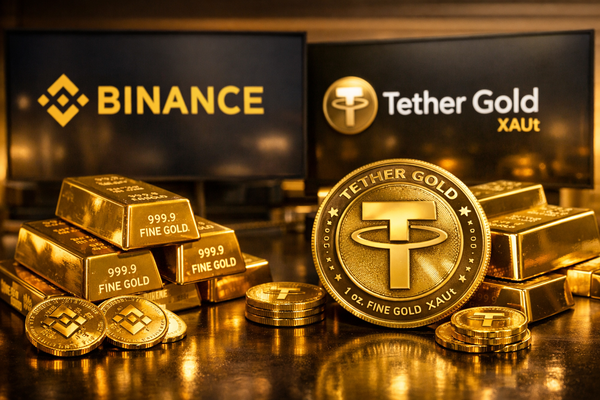
Tether Gold (XAUt), a gold-pegged stablecoin issued by Tether, has been listed on Binance, the world's largest cryptocurrency exchange. As this representative commodity-backed token pegged to the price of physical gold enters the world's largest liquidity market, expectations for the expansion of the digital safe haven asset market are growing.
According to CoinDesk and others on the 26th (local time), Binance officially listed Tether Gold and began supporting spot trading. Trading commenced at 2:00 PM UTC.
Unlike existing stablecoins pegged to fiat currency, Tether Gold is a commodity token that maintains its value based on the price of gold. Investors can enjoy effects similar to holding gold on the blockchain, and it serves to bridge the physical gold market with the cryptocurrency market.
This listing holds significance beyond the mere addition of a new asset. While the stablecoin market has been dominated by dollar-based tokens, the diversification of asset classes is gaining momentum as tokens backed by real-world assets, such as gold, are being incorporated into major exchanges.
It is also noteworthy that demand for gold is resurfacing as volatility and geopolitical risks have recently intensified in global financial markets. Amidst this trend, Tether Gold, which has moved gold to the blockchain, is strengthening its new positioning as a 'digital safe haven asset.'
The market anticipates that the liquidity and accessibility of gold-backed tokens will significantly improve following this Binance listing. This is because, while gold investment was previously conducted through physical storage or ETFs, it is now expanding into a form where 24-hour trading is possible through cryptocurrency exchanges.
Ultimately, Tether Gold's listing on Binance demonstrates a trend in which Real-Range Assets (RWA), including commodities, are being fully incorporated as a core pillar of the cryptocurrency market. While dollar-tokenized stablecoins established the infrastructure for digital payments, gold-backed tokens are expanding the market structure to the next level by adding the role of a "store of value" on top of it.