The Nasdaq fell into a technical correction, and BTC fell below $69,000 again, with the lower boundary of the trading range, which hadn't been broken for four weeks, now being closely watched for the first time.
Written by: ChandlerZ, Foresight News
On March 26, US stocks experienced their most severe single-day sell-off since the outbreak of the Iran-Iraq War. The S&P 500 closed down 1.74% at 6477 points, its biggest drop since January 20, and down about 6% from its pre-war high; the Nasdaq fell 2.38%, having fallen more than 10% from its October high, officially entering a technical correction phase; the VIX closed up 8.17% at 27.40. WTI crude oil closed up 4.60% at $94.48, having touched above $95 during the day, while Brent crude closed at $108.01, both new highs since the Iran-Iraq War.
Bitcoin fell over 4% that day, breaking below $69,000, while Ethereum fell nearly 6%. Eleven minutes after the close, Trump announced a 10-day extension of the sanctions, causing S&P futures to surge briefly before giving back all their gains. BTC and ETH saw almost no rebound. This is the first time recently that the crypto market has not followed the TACO announcement with a price increase.
Regarding contract liquidation data, according to Coinglass, a total of $329 million was liquidated across the network in the past 24 hours, with approximately $287 million in long positions liquidated. Ethereum liquidations amounted to approximately $111 million, and Bitcoin liquidations amounted to approximately $100 million.
According to Coinglass data, the cryptocurrency fear and greed index rose to 14 today, indicating that the market is in a state of "extreme fear".
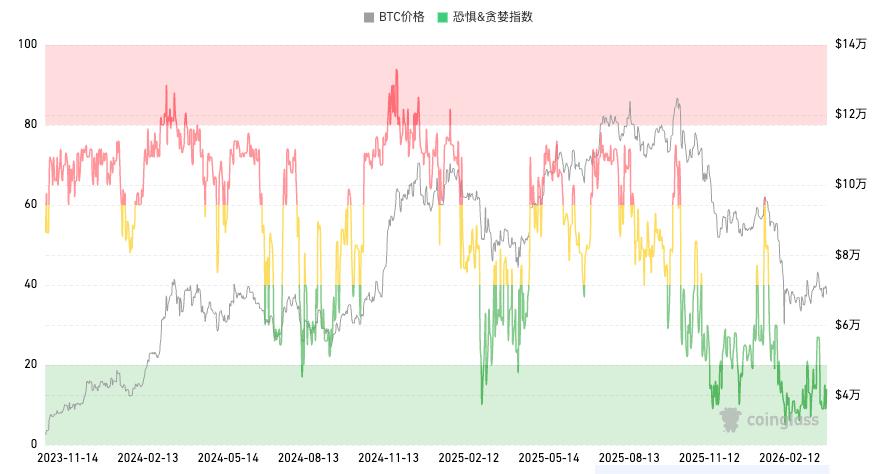
The Nasdaq's technical pullback and the simultaneous decline in both stocks and bonds have put pressure on the cryptocurrency market.
Thursday's stock market crash stemmed from a dual rupture in confidence caused by inflation. On a macro level, oil prices were the key trigger. WTI crude oil touched $95 intraday, turning inflation fears from "expectations" into "numbers." The market is no longer pricing in interest rate cuts; some contracts are even beginning to factor in the probability of rate hikes. The OECD warned that the Middle East crisis will push US inflation to 4.2% this year, the highest among the G7.
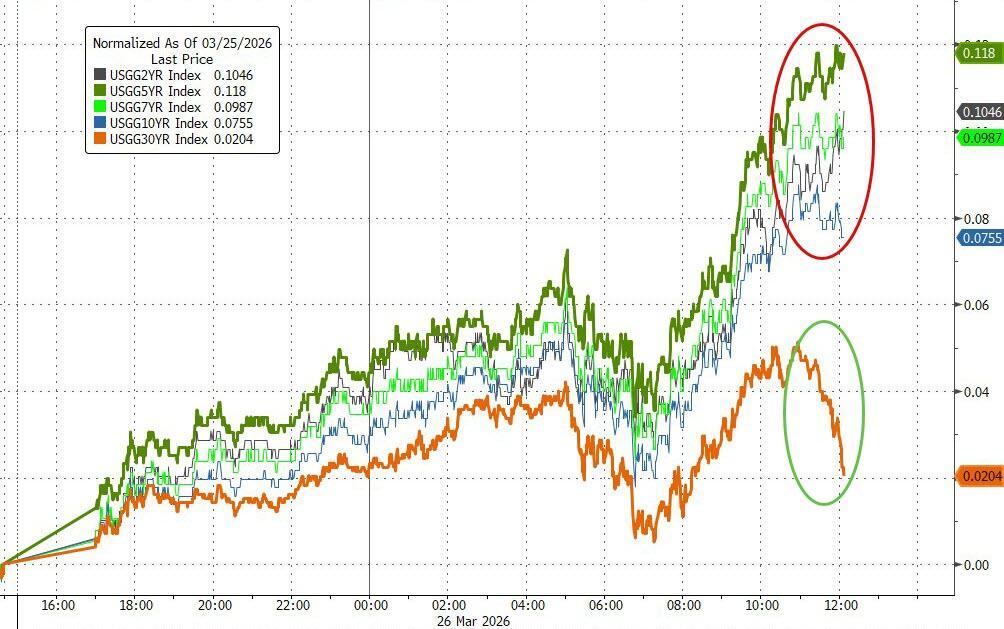
The bond market collapsed in unison, with the 10-year Treasury yield rising 8 basis points to 4.41% and the 2-year yield rising 10 basis points to 3.99%, a cumulative increase of more than 0.6 percentage points this month, marking the worst monthly performance since September 2022; all three Treasury auctions this week, totaling $183 billion, saw weak demand and winning yields higher than market expectations.
Furthermore, Trump's second TACO was completely ignored by the market, seemingly indicating that the arbitrage potential of this strategy had been fully exhausted. Just 11 minutes after the market closed, Trump announced a 10-day extension to the deadline for striking Iranian energy facilities, to 8 PM on April 6th. S&P futures surged instantly, while WTI crude oil briefly plunged. Both prices then returned to their original levels shortly afterward.
This is the second extension since Trump first threatened to do so on March 21. Trump had earlier claimed that Iran had "sent ten oil tankers through the Strait of Hormuz" as a "gift" to the United States. However, according to CNBC, the actual situation was that Iranian Foreign Minister Araqchi announced the passage of vessels from China, Russia, India, Iraq, and Pakistan, and it had nothing to do with a "gift to the United States." In the past 24 hours, including vessels suspected of paying for passage, far fewer than ten ships actually passed through the strait.
When the delay was first announced, BTC rose by 5%; this time, BTC fell by 4%, and S&P futures rebounded in after-hours trading but then gave back all of that, failing to hold for even half an hour.
Bloomberg strategist Michael Ball believes that "as long as crude oil remains above $100, the market will continue to be highly volatile. Stocks need oil prices to fall, which depends on a real de-escalation of geopolitical tensions; verbal reassurances are not enough."
The pressure on tech stocks is also mounting, with Meta plunging 7.92%, the Philadelphia Semiconductor Index falling 4.79%, TSMC ADR dropping 6.2%, and AMD declining 7.49%. This round of decline has already spread from the macro level to individual stocks, with the Nasdaq, which is heavily concentrated in tech stocks, being the first to break down.
Bitcoin holds at $63,000, the floor of the war premium.
Since the US and Israel launched Operation Epic Fury on February 28, Bitcoin has been trading between $68,000 and $76,000. This range has never been effectively broken, with $68,000 serving as support for more than four weeks since the start of the conflict.
From the beginning of February to now, the entire large fluctuation range of BTC has covered the period from the low before the war to the high since the war. The bottom around $63,000 actually represents the boundary of "war premium to zero". Once it falls below this level, it means that all the positive pricing of Bitcoin by the war and the bottom rebound have been completely digested.
According to Glassnode statistics, long-term holders who have held their positions for more than 155 days have accumulated approximately 85,000 BTC since the low point on March 10th, continuing to accumulate without reducing their holdings. Currently, the STH/LTH supply ratio is 16.7%, indicating that long-term holders dominate the market structure, while Hot Capital Share is only 21.9%, showing low participation from new funds. This round of decline stems from a contraction in demand, and existing capital has not fled on a large scale.
What will the market do next?
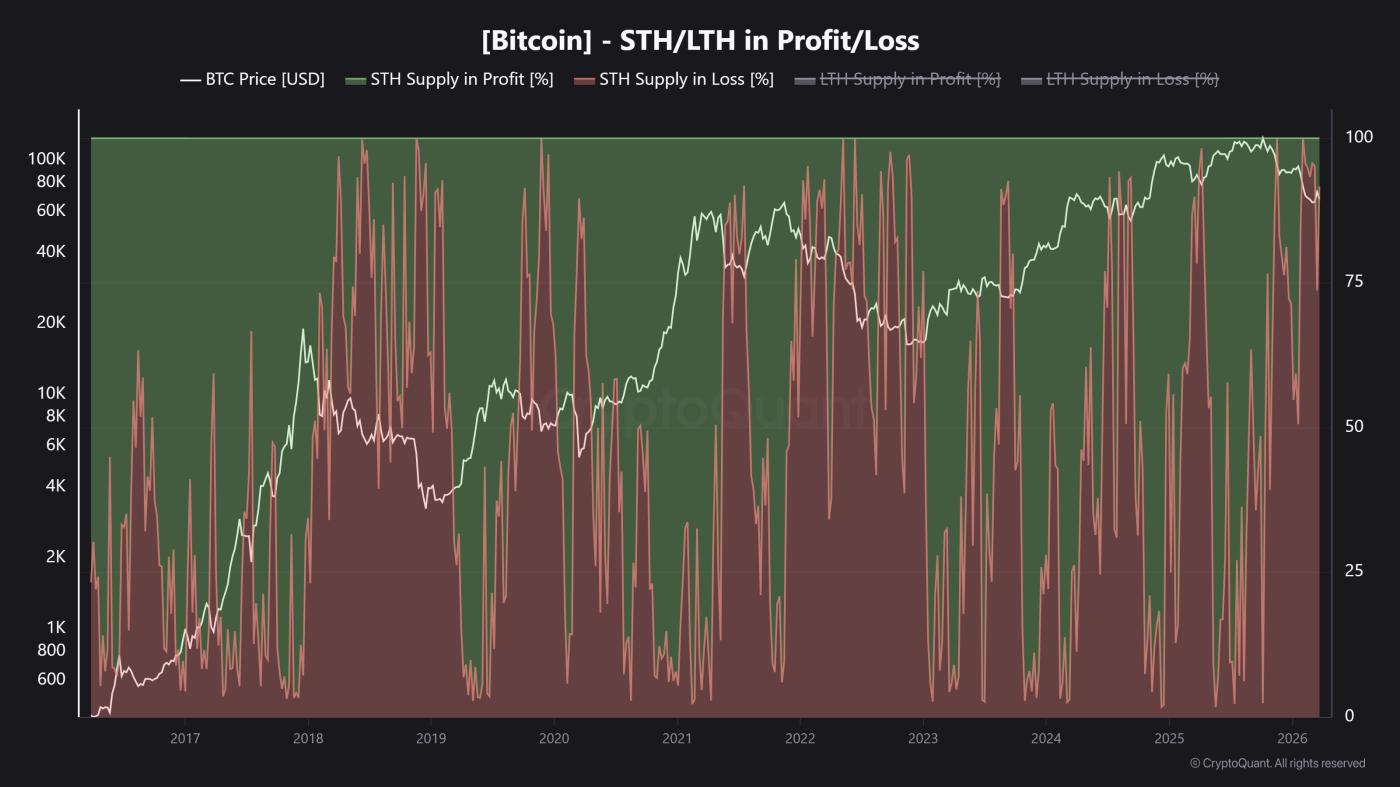
CryptoQuant analysis suggests that the realized price for short-term holders (STH) is currently higher than the current price. Of this group holding approximately 5.7 million BTC, only about 8% are currently profitable, while the remaining 92% are experiencing unrealized losses. The realized price being higher than the current price implies that these holders' average purchase cost is above $70,000. Every price rebound triggers their loss-reduction selling, explaining why every BTC rally this month has encountered supply pressure, making sustained upward momentum difficult.
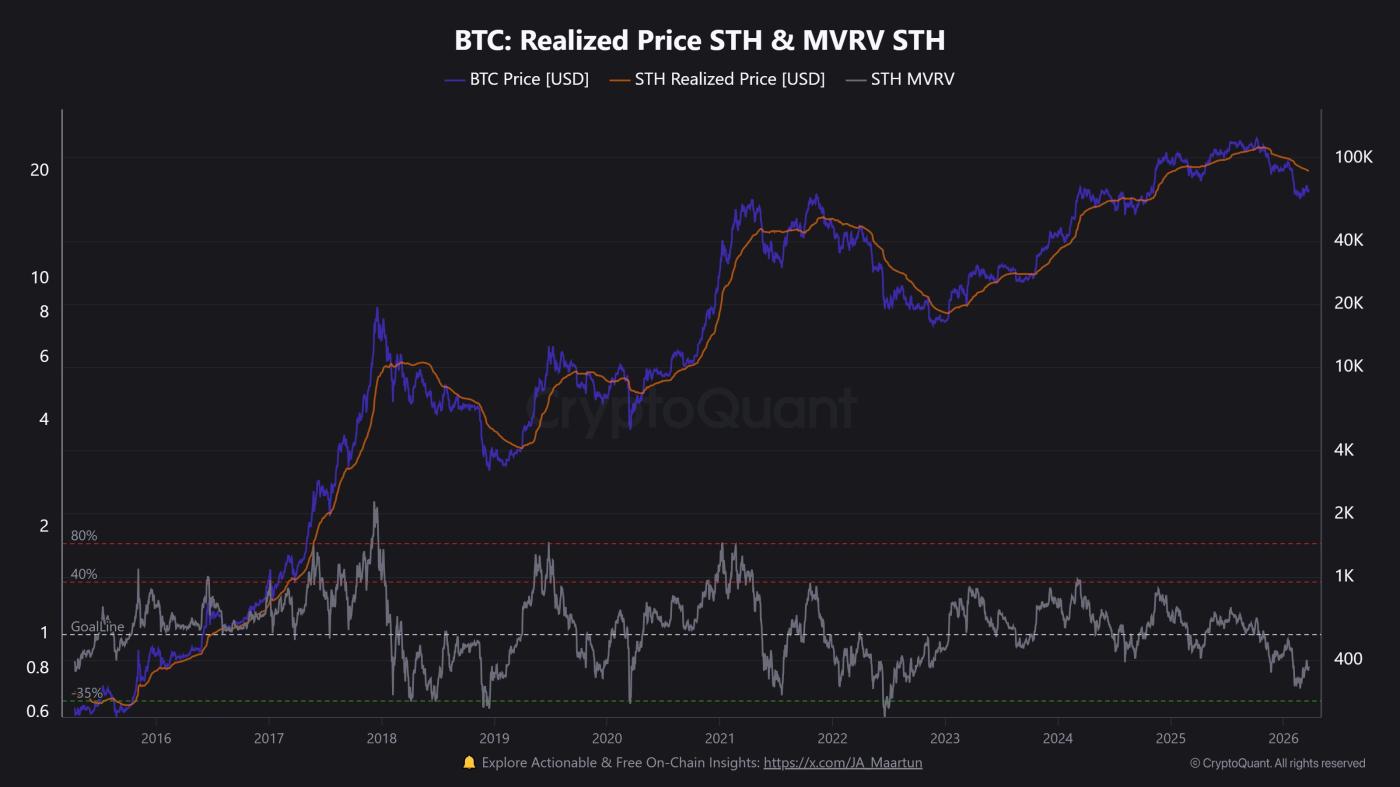
Furthermore, Strategy holds approximately 762,000 BTC, with an average holding cost of around $75,600. CryptoQuant points out that the recent rally was precisely suppressed near this price level, and the market is reacting to this cost line. Strategy's holding size means that this price level forms a real reference anchor on-chain, and $76,000 is also the all-time high for BTC since this round of trading began.
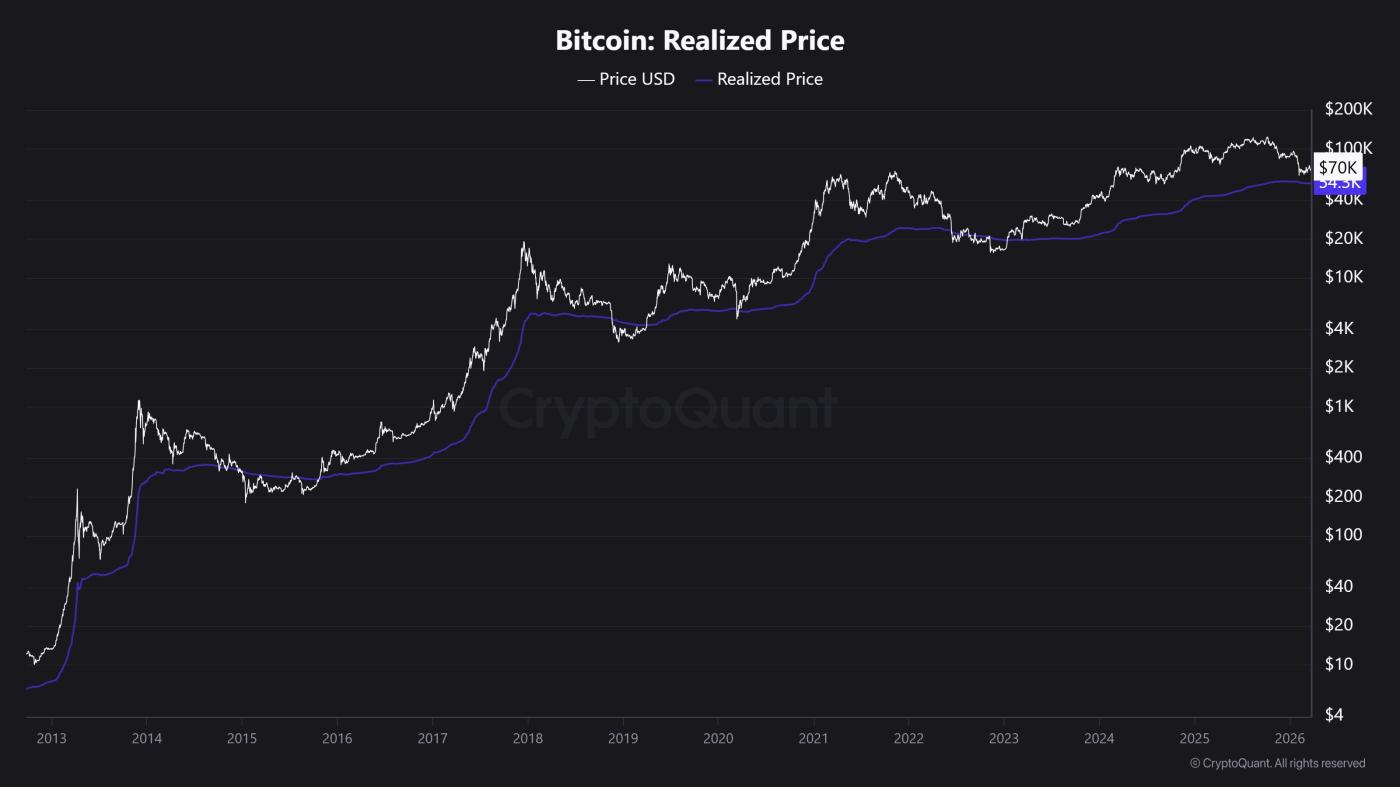
The current average realized price across the entire market is approximately $54,000. In past bear market cycles, spot prices have often retraced to or even lingered around this level for a period. $54,000 represents approximately a 23% downside from the current price, well below any support level discussed since the war.