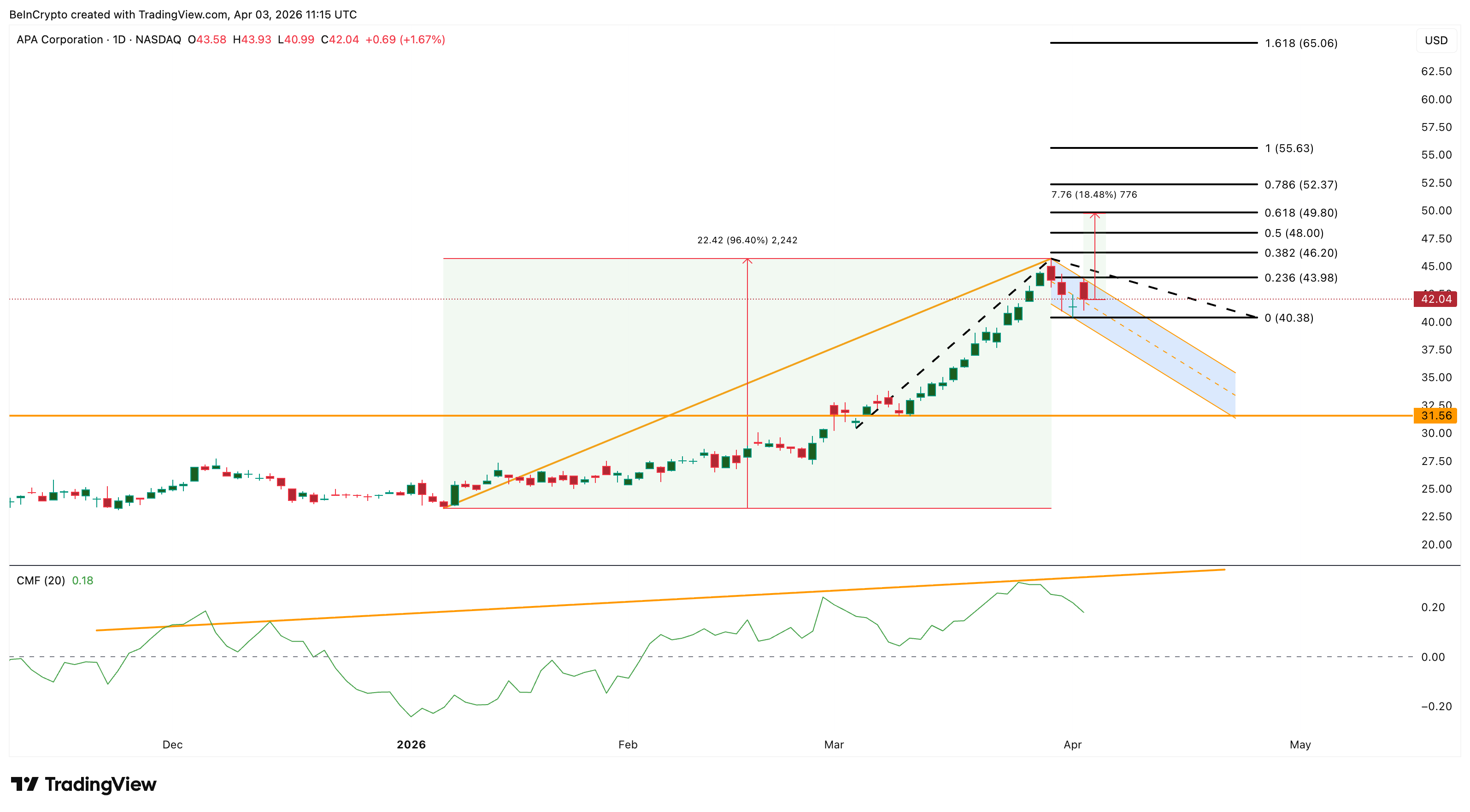
In the past 24 hours, a total of 91,960 people across the internet have had their positions liquidated, with a total liquidation amount of $295 million. Long positions were liquidated for $251 million, and short positions for $44.8506 million.
BTC
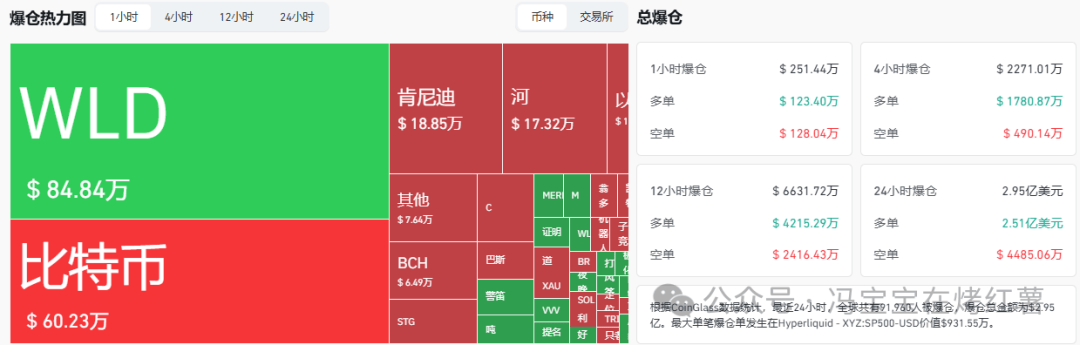
Bitcoin has temporarily stopped falling on a minor timeframe. Looking at the liquidation chart, most of the chips at the bottom have been cleared out, with only a small amount remaining around 68,000. Clearly, there are still quite a few chips at the top, and a bottoming signal has appeared on a minor timeframe.
The next move will either involve a pullback to 68,000 to clear out those shares before rebounding, or it will go straight up to clear out the shares above 70,000. The probability of a short-term rebound is quite high.
ETH
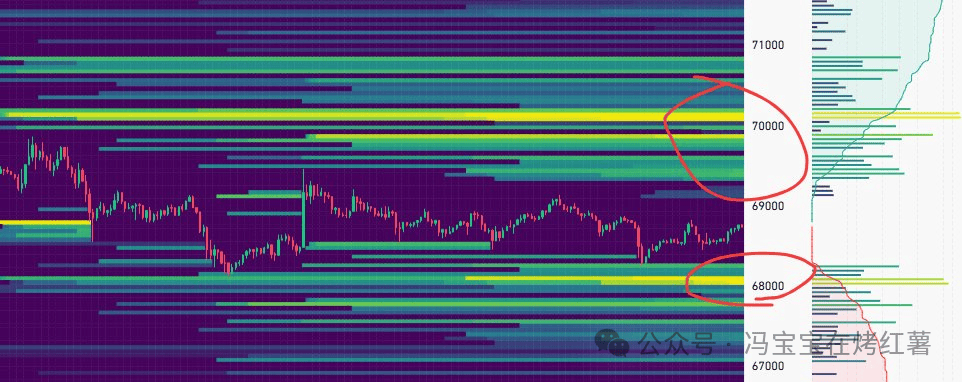
Looking at the Ethereum liquidation chart, the bottom has been largely liquidated, even the yellow line is gone, indicating that further declines are unlikely. The significant amount of tokens around 2100 is particularly noticeable, suggesting a high probability of liquidation at that level, and a short-term rebound is expected.
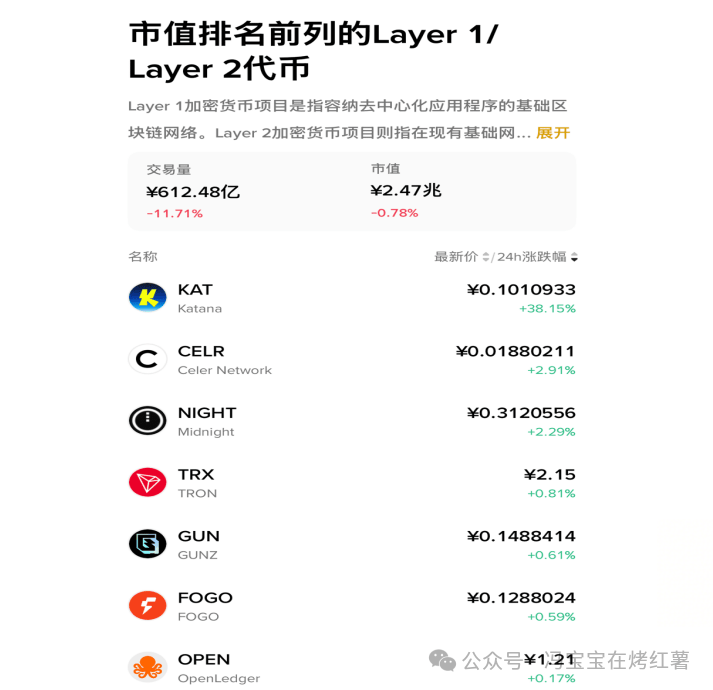
In the next bull market, I believe there are no more than three public blockchains that are truly worth investing in.
AI and open source have significantly lowered the barrier to entry for public blockchains. Investment banks or large companies that want to launch a blockchain can fork an EVM-compatible chain from existing code, modify the logic with AI, and it can be running in tens to hundreds of hours. With their own users and compliance resources, deployment can be achieved very quickly.
This has led to the "decentralized trust" that public blockchains previously emphasized being replaced by "centralized efficiency + auditable ledgers" in many scenarios. Consequently, the differentiation between public blockchains will become increasingly pronounced. Those that can truly stand the test of time will likely fall into three categories:
ETH: Primarily a settlement layer, a foundation for credit, and the most decentralized public blockchain;
TON: If Telegram can truly bring a large number of users onto the blockchain, the potential is enormous.
$SOL: A US public blockchain, the home of Meme coin. As long as Meme exists, it will exist.
As for AVAX, SUI, APT, and ADA, they will likely face long-term competition and market fragmentation. The market doesn't need that many public chains. The ones worth investing in for the next bull market are ETH, TON, and SOL.
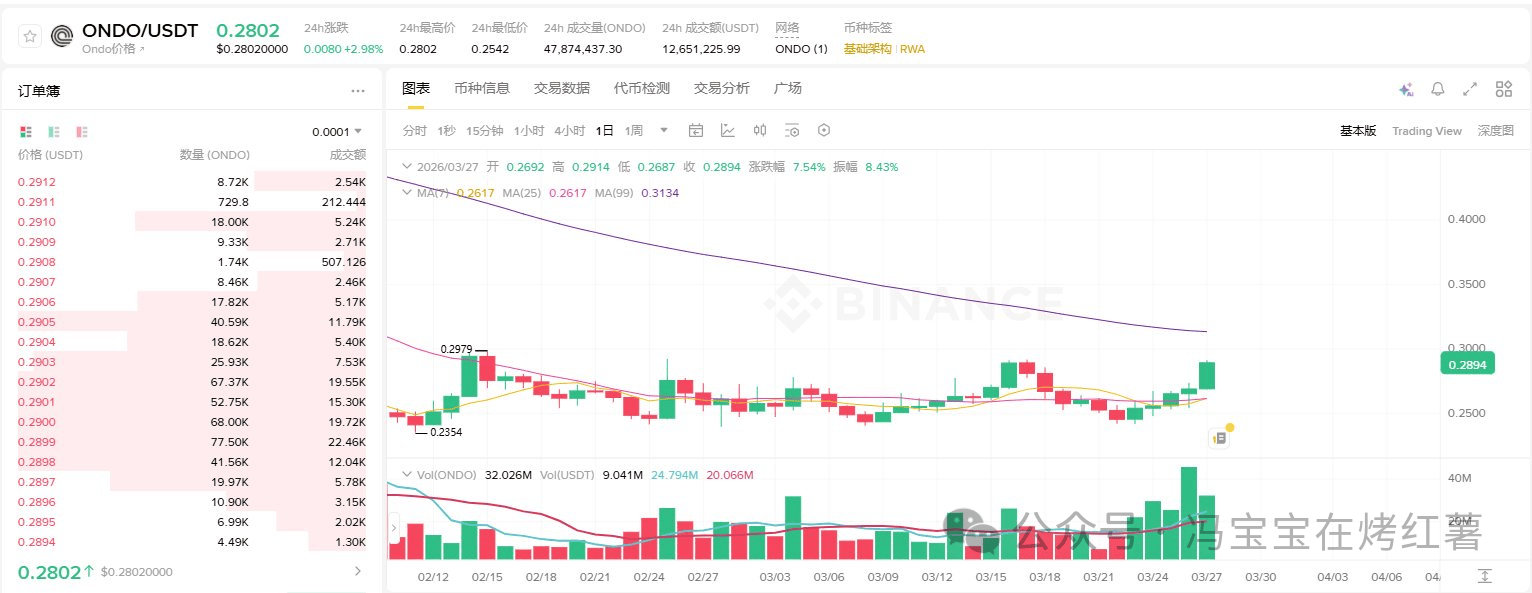
I've always felt that the RWA (Real Estate Investment and Development) sector isn't suitable for short-term speculation.
Its underlying logic is actually quite hardcore. Once real assets are truly put on the blockchain on a large scale, the entire funding structure of the crypto market will be restructured.
The market will shift from speculative hype and expectations to a rush to buy real assets and stable cash flow. Projects like ONDO, which sit at the intersection of traditional finance and on-chain markets, are particularly attractive to large amounts of external capital.
However, the RWA (Real Estate Investment and Development) sector moves slowly, and it's difficult to see results in the short term. When judging its potential, don't focus too much on whether it will experience a surge; the key is whether it can become a long-term investment theme. Once this path is established, the potential is far greater than most people imagine.
From a technical perspective, I've identified Altcoin currently trending upwards in the secondary market.
The standard is that the daily chart must be above the 30-day moving average (MA30), and the weekly chart must also be above the 60-week moving average (MA60). Only 12 charts meet this requirement.
Leaving aside PI and TRX, PI is the kind of Ponzi scheme coin played by older generations, while TRX is heavily controlled by Justin Sun. Of the remaining 10, 7 are in the AI sector:

RENDER, $NEAR, FET, GRASS, PHA, SAHARA.
It's fair to say that the AI sector is currently the only remaining hot area among Altcoin.