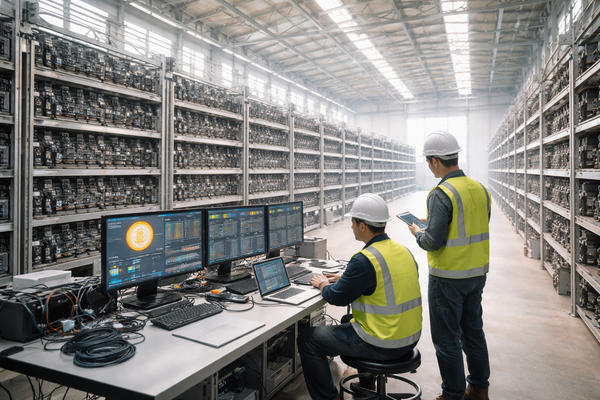
A trend is being observed where major mining companies, which have been steadily accumulating Bitcoin until recently, are changing their holding strategies and beginning to sell. This is interpreted as a structural change triggered by the deterioration of profitability across the entire mining industry, going beyond mere financial issues of individual firms.
Notably, MARA Holdings has moved away from its existing 'hold-centric' strategy by conducting a large-scale Bitcoin sale. Riot Platforms and CleanSpark also appear to be securing cash by continuously selling a portion of their production volume on the market. This trend stands in contrast to the past, when mining companies held Bitcoin for the long term to bet on price increases.
Behind these changes lies the slowdown in mining profitability. While Bitcoin price volatility has increased, the unit cost of mining has risen rapidly due to a combination of rising mining difficulty and the burden of electricity costs. Analysis suggests that some mining equipment has already fallen below the break-even point. Consequently, mining companies are shifting their strategies from hoarding Bitcoin to utilizing their assets to secure liquidity and improve their financial structures.
What stands out particularly is how the proceeds from the sale are being used. Rather than simply avoiding losses, debt reduction, capital investment, and expansion into new businesses such as AI and data centers are proceeding simultaneously. This is why it is interpreted that mining companies are shifting their nature from "Bitcoin hoarders" to "infrastructure companies."
However, it is premature to conclude that the current trend is simply "buying at the peak and cutting losses." Some of the sales are largely characterized by asset reallocation for financial strategic purposes, and buying and selling histories across different price ranges vary significantly among companies. Nevertheless, a significant change is clear: the likelihood has increased that mining companies, which were once the primary suppliers in the market, will now act as a constant source of selling pressure.
This could also affect the structure of the Bitcoin market. In the past, mining companies acted as a "pillar" by suppressing supply during price upturns, but the structure is now shifting to one where they continuously release a certain volume into the market to defend profitability. Analysts suggest that this could act as a factor limiting upward momentum in the medium term.
Ultimately, this change carries significance beyond a mere increase in selling. It is interpreted as a signal that the Bitcoin mining industry has entered a turning point, shifting from an "accumulation model betting on price increases" to a "cash flow-centric infrastructure business." If this trend continues, it is highly likely that the Bitcoin market will enter a new phase of equilibrium where institutional investors and ETF funds, rather than miners, support the price.