In the minds of most users, Bitcoin is Bitcoin: 1 BTC will always equal 1 BTC, the only difference being the price fluctuations, the amount held, and the time of purchase.
But as the market matures, a new question begins to emerge: Are all Bitcoins really exactly the same?
If viewed purely from the perspective of quantity, the answer might be "yes"; however, if considered from the perspective of its creation time, on-chain history, scarcity, market narrative, and cultural value , the answer is not necessarily so. It is against this backdrop that the concept of "antique Bitcoin" has begun to receive increasing attention.
What is "antique Bitcoin"?
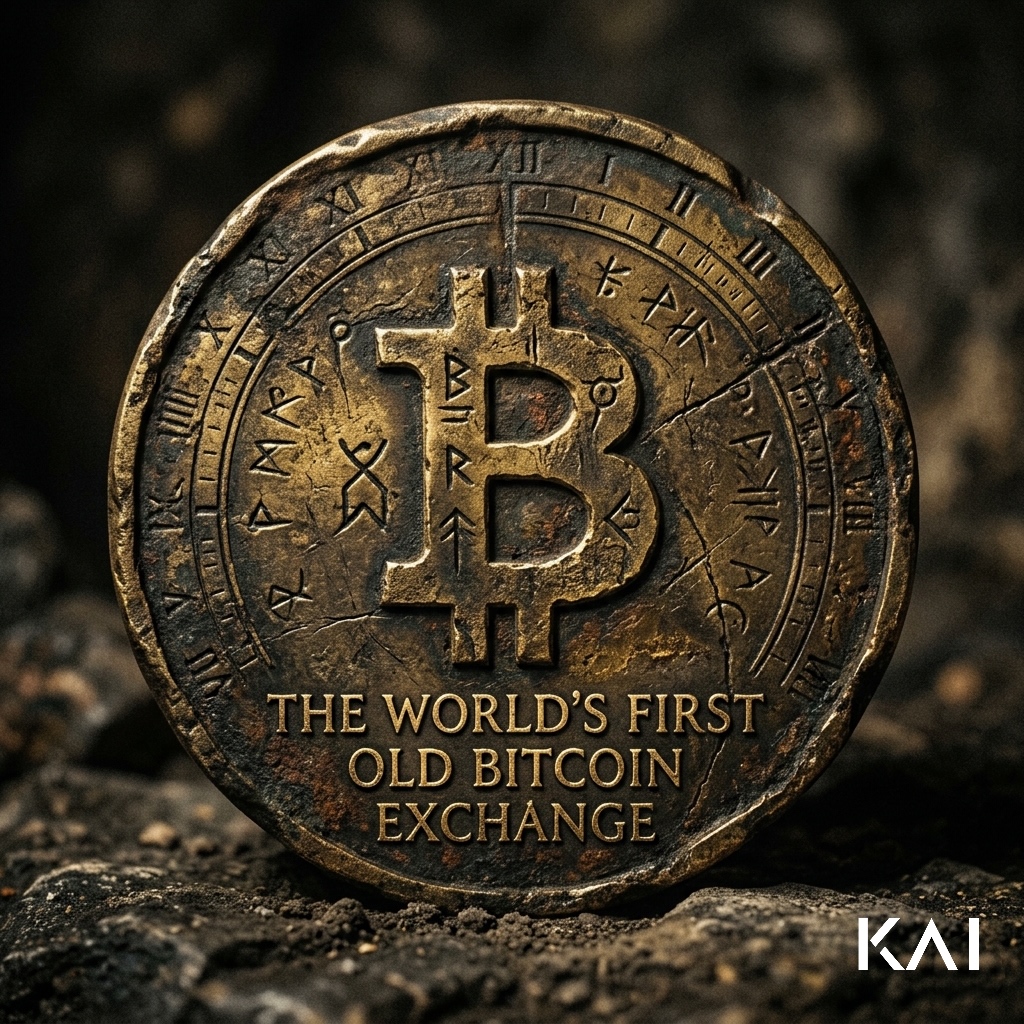
The so-called "antique Bitcoin" is not a new coin, nor is it an alternative asset outside of Bitcoin. Rather, it refers to BTC that was mined in the early days of the Bitcoin network and has clear on-chain age characteristics and historical attributes .
Simply put, although they share the same unit as the Bitcoin newly circulating in the market today, they are not the same in terms of "historical background".
Just like with the same bottle of wine, a freshly brewed bottle and one that has been aged for many years are often not considered completely the same type of product in the consumer market; similarly, in the art market, the same materials and craftsmanship, whether they come from a specific era or have a verifiable provenance, will directly affect their perceived value.
This difference also applies to Bitcoin.
Why might "time" become a new dimension of value for Bitcoin?
What initially made Bitcoin special was not only its limited supply, but also the fact that it embodied a very distinct spirit of the times: decentralization, censorship resistance, autonomous property, and peer-to-peer value transfer.
The earlier a Bitcoin was mined, the closer it is to the origin of this history.
What makes these BTCs special is not that they are "technically more advanced," but that they are closer to the original context of Bitcoin's early days—a time without large institutions, complex financial packaging, or excessive marketing. The participants back then were mostly geeks, cryptography enthusiasts, libertarians, and the earliest true believers in decentralization.
Therefore, the core value of antique Bitcoins is not just their "oldness," but rather what they represent:
- Earlier on-chain creation time
- Clearer historical stage labels
- Greater narrative scarcity
- Greater cultural recognition
- More flexible space for collection and pricing
This means that the future Bitcoin market may no longer only have "price" as a single dimension, but will gradually show a trend of " stratification by era, history and origin ".
Why is this concept worth users' attention?
Over the past few years, the crypto market has proven that the value of an asset comes not only from its functionality but also from consensus.
NFTs once allowed the market to understand for the first time on a large scale how "on-chain serial number, minting time, scarcity series, and community recognition" can affect pricing; while the continued development of the Bitcoin ecosystem has made more people realize that as the world's most consensus-based crypto asset, Bitcoin itself may also be further stratified and reinterpreted.
For ordinary users, this brings at least three new cognitive changes:
1. Bitcoin may no longer be limited to just "buying high or low".
If the market gradually accepts that "BTC from different eras has different narrative value," then the trading logic of Bitcoin will expand from simple price speculation to deeper asset identification and value discovery.
2. On-chain history will become a new identification capability.
In the future, users may not only focus on whether they have BTC in their wallets, but also on the time period from which the BTC originated, whether it has a clear historical label, and whether it possesses "early attributes" recognized by the market.
3. Bitcoin may be entering a phase of "collectibility" and "stratification".
As market competition deepens, assets with genuine cultural and historical value tend to attract more attention first. Antique Bitcoins, in essence, represent a significant signal of Bitcoin's shift from a "uniform commodity" to a "layered asset."
Is this just hype or a marketing ploy?
Whenever a new narrative emerges, the market always asks: Is this just a repackaged new story?
This is a reasonable question.
However, from another perspective, the financial market itself has always been engaged in "tiered pricing." Stocks are differentiated by growth potential and dividend capacity, bonds by rating and maturity, artworks by age and provenance, and gold by physical object, craftsmanship, and collectible attributes.
Therefore, antique Bitcoins do not create value out of thin air, but rather attempt to answer a question that has not been seriously discussed before:
Now that Bitcoin has become a global asset, will it, like other mature assets, gradually develop a more detailed classification, identification, and pricing system?
This is an issue that the industry should take seriously.
The significance of antique Bitcoins goes beyond just their price.
More importantly, antique Bitcoins offer the market a new educational perspective:
It reminds users that Bitcoin is not just a code symbol, nor is it just a price chart number. It has its own origins, its own early believers, and its own path of technological and cultural evolution.
In an increasingly financialized, platform-based, and institutionalized market, re-discussing "where Bitcoin came from" is actually helping users to re-understand "why it matters."
This is also where the greatest value of antique Bitcoin lies – it is not just a trading concept, but more likely a re-education on the original spirit, historical value, and future pricing power of Bitcoin.
Conclusion
It has taken Bitcoin more than a decade to rise from a fringe experiment to the center stage of the global asset market. In the next phase, the focus of market discussions may no longer be just "how much it is worth," but rather " which type of Bitcoin deserves to be re-examined ."
The emergence of antique Bitcoins marks the beginning of this change.
It may not become mainstream overnight, but it is opening a new door to understanding: Bitcoin has time, history, and identity in addition to price, quantity, and transactions.
And this is perhaps the story that most needs to be clearly told in the next round of market education.