[Hong Kong] When more than 100 mining machines lit up simultaneously at the convention center on the shore of Victoria Harbour, nearly 4,000 attendees witnessed a reality unfolding: the window of opportunity for a new generation of public blockchains has opened.
On March 29th, the first stop of the BOT Chain Global Consensus Conference was held in Hong Kong. This full-day conference attracted technology developers, ecosystem partners, representatives from investment institutions, and community builders from 45 countries and regions. Long queues formed outside the venue, and the hallway was packed, with people even standing in the aisles. This is a true testament to the fervor surrounding the public blockchain sector in the spring of 2026.
“This is more than just a press conference,” a participant who came all the way from Japan told our reporter. “It’s a gathering of consensus. People from different countries and speaking different languages are sitting together, and the light in their eyes is the same—some things are being witnessed.” 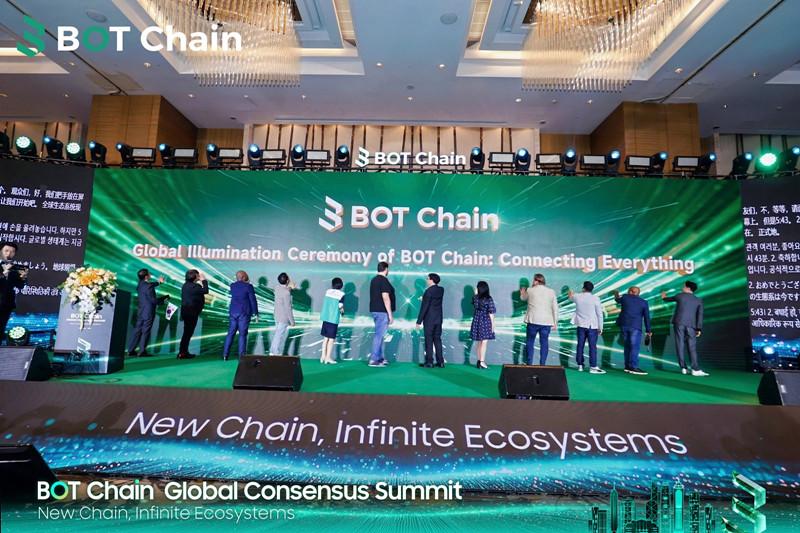
Recognition from mainstream society: Parliamentarians open the meeting, sending a positive signal
At the opening ceremony, Mr. Chan Chung-yee, a member of the 8th Legislative Council of the Hong Kong Special Administrative Region, and Mr. Lam Chun-ka, a member of the Sai Kung District Council, attended and delivered speeches.
In his speech, Legislator Chan Chung-yee stated that Hong Kong is accelerating its development into a global Web3 innovation hub and remains open to projects with core technological innovation capabilities. Legislator Lam Chun-ka, from a regional technology innovation perspective, pointed out that Sai Kung District is actively exploring pathways to integrate technology with community development. The technological concept of BOT Chain aligns perfectly with Hong Kong's strategic direction in promoting technological innovation.
The presence and speeches of the two legislators sent a clear signal: once the technological path is validated, market enthusiasm is confirmed, and application prospects are opened up, attention and support from mainstream society will follow. This is a positive response to the overall direction of Web3 innovation. 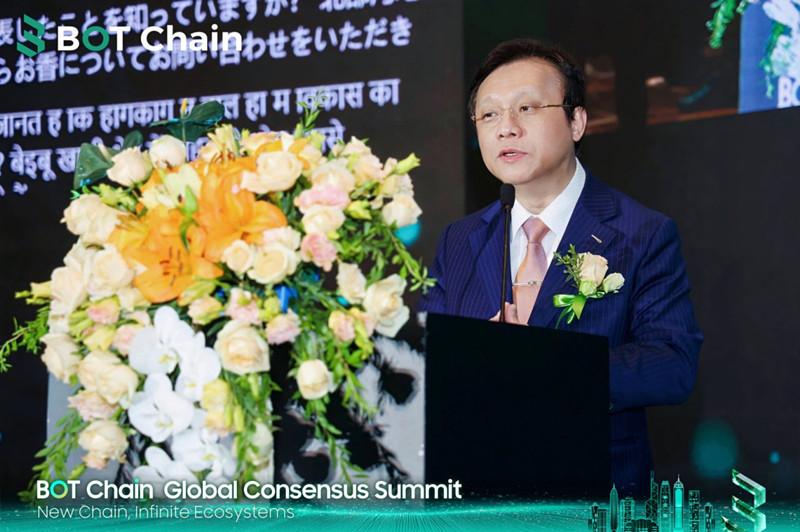
One of the certainties: the technical route has been successfully tested.
The public blockchain sector has evolved from a "performance race" to an "ecosystem competition" over the past few years, but very few projects have truly weathered the cycle. BOT Chain offered its own answer at this conference.
Alexander Ververis, Founding Architect and Chief Technology Officer of BOT Chain, officially released the project's globalization strategy roadmap. Key highlights include: continuous optimization of the hybrid consensus mechanism (Hybrid-PoW + DPoS), high throughput supported by the parallel execution engine, upgraded cross-chain interoperability, and a full-language SDK ecosystem toolchain for developers.
But the most eye-catching feature was the array of nearly a hundred mining machines on display. Ververis stated at the event, "We don't just do software; we do 'hardware and software integration.' Mining machines are the physical foundation of BOT Chain's decentralized consensus and our deepest moat."
One blockchain infrastructure investor present commented: "The moat of pure software public chains is getting shallower because code can be forked. But 'software-hardware integration' is different; it requires full-chain capabilities in chip design, supply chain management, and hardware deployment. This is not something that just any team can do." 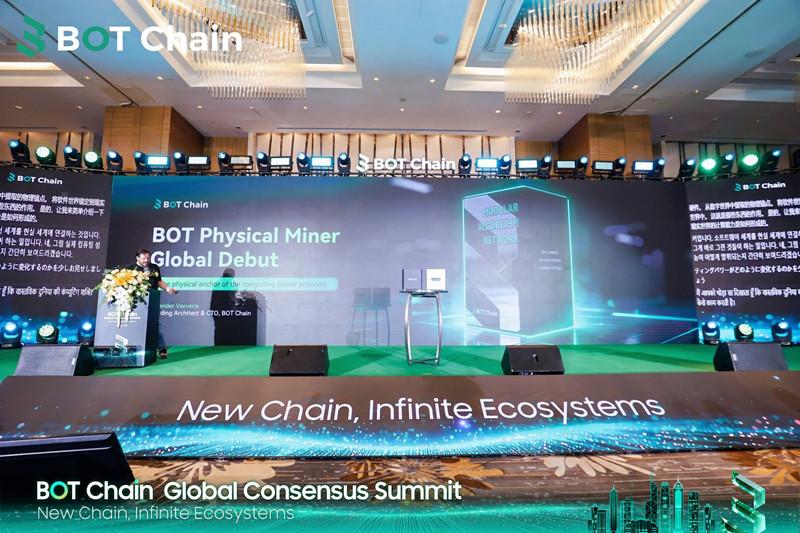
The second certainty: From traffic to user retention, the consensus has been established.
Data doesn't lie.
As of the day of the conference, BOT Chain has covered communities in 45 countries and regions worldwide, with the number of active addresses on the chain continuing to grow, and the development of the developer ecosystem and computing network progressing simultaneously. At the conference, several ecosystem cooperation projects reached preliminary cooperation intentions, covering multiple tracks including DeFi, GameFi, and RWA.
“We chose to develop on BOT Chain because its performance is sufficient to support our user base, and its community is very active,” a GameFi project founder from Europe told reporters.
In his keynote speech, Tony Tong, president of the Hong Kong Blockchain Association, pointed out that the public blockchain sector is shifting from a "performance race" to an "ecosystem implementation" phase, and projects with technological depth, access to capital, and compliance capabilities will become the core force in the next cycle.
This assessment aligns perfectly with BOT Chain's current strategy. The market response has been equally positive: during the conference, BOT Chain-related topics consistently trended on major social media platforms, with community discussions remaining highly active. 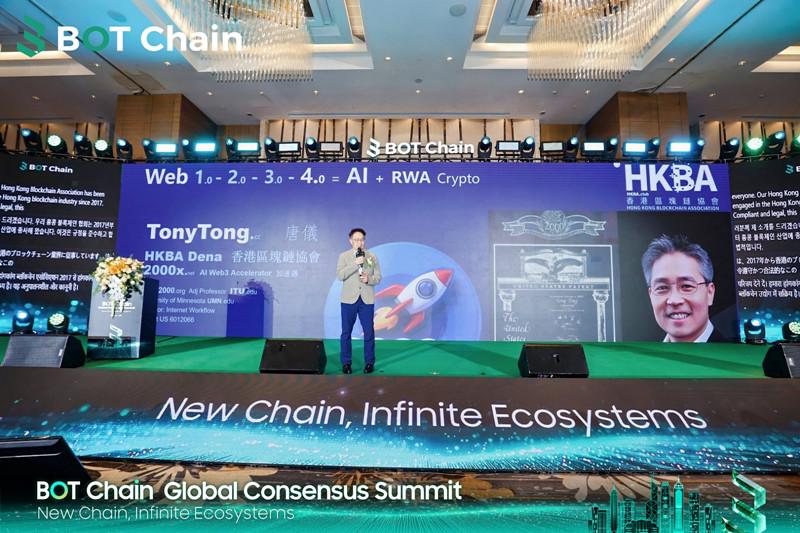
The third certainty: promising growth opportunities are emerging.
If technology and the market represent BOT Chain's "present," then its strategic layout in the industry is its "future."
In the RWA (Real-World Asset) field, BOT Chain's high-performance and privacy-preserving computing capabilities are naturally suited to the compliance requirements of asset tokenization; in the AI Agent field, its hardware computing network provides the physical foundation for on-chain AI applications; and in the GameFi field, its low fees and high throughput meet the technical threshold of a large number of users online simultaneously.
“We are not building a chain, but an ecosystem,” Ververis said in his speech. “In the future, any developer, whether doing DeFi, GameFi or AI Agent, can get customized technical support on BOT Chain.”
An analyst who has long followed the public blockchain sector told reporters, "BOT Chain's strategy is very clear—to deepen its technology, broaden its ecosystem, and secure capital. If all three lines can be implemented, it is highly likely that it will occupy a leading position in this cycle." 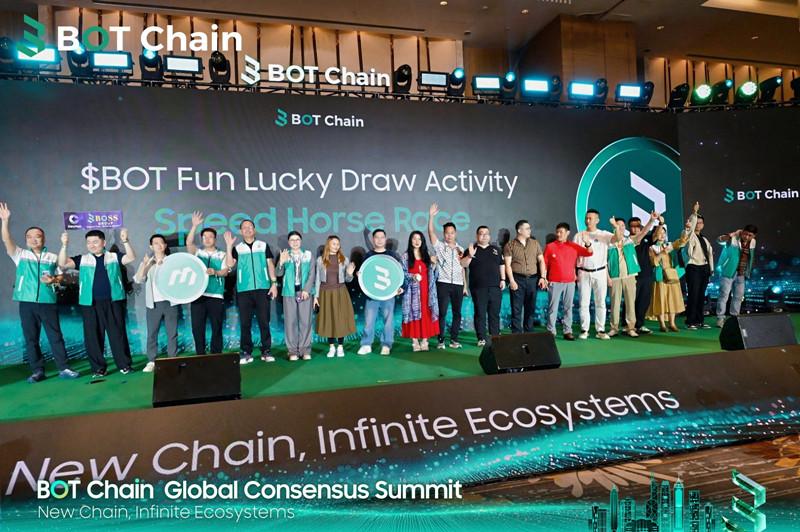
Certainty is building
The public blockchain sector is never short of stories, but very few projects can truly move from "possibility" to "certainty".
The message BOT Chain sent at this conference was clear: the technology has been tested and proven, the market is validating it, and the market is opening up. The gathering of communities from 45 countries, the participation of 4,000 people, and the activation of nearly 100 mining machines—these are not accidental.
“We’ve spent countless days and nights, starting from a single line of code, to today where nearly a hundred mining machines are lit up simultaneously,” Ververis said at the end of his speech. “BOT Chain is defining the future.”
Thunderous applause erupted from the audience. At this moment, Hong Kong witnessed a certainty unfolding before its eyes. 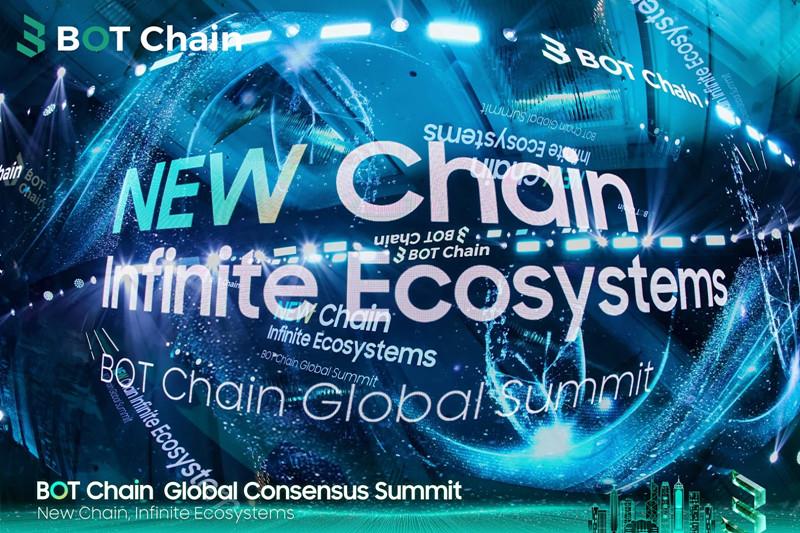
About BOT Chain
BOT Chain is a leading global modular algorithm network dedicated to providing a system-level foundation for AI Agent and DePIN collaboration. As a Layer 1 public chain built for large-scale Web3 applications, BOT Chain employs a hybrid consensus mechanism and parallel execution engine to construct a high-performance, highly secure, and highly scalable next-generation public chain infrastructure. Through its integrated hardware and software computing network and global ecosystem layout, BOT Chain is accelerating the realization of its grand vision of "thousands of ecosystems."
The BOT Chain Global Consensus Conference in Hong Kong has concluded, with three key certainties emerging: technology, market, and future prospects.
This article is machine translated
Show original

Source
Disclaimer: The content above is only the author's opinion which does not represent any position of Followin, and is not intended as, and shall not be understood or construed as, investment advice from Followin.
Like
Add to Favorites
Comments
Share
Relevant content