Foresight News gives you a quick overview of this week's hot topics and recommendations:
01 Encrypted Hotspot
Quick Look at the Details of the $285 Million Drift Theft: Hackers Steal Private Keys and Drain Liquidity in 10 Seconds
Calculate the private key in 9 minutes? The quantum threat is rapidly approaching Bitcoin.
Advances in quantum technology also present opportunities for the crypto industry.
Interactive Brokers' first major move of 2026: Entering the crypto market.
02 Interesting Facts about the Crypto
$20 for a face: The "underground" assembly line of KYC in the crypto world
The EdgeX Airdrop Fiasco: A Carefully Planned Scam?
"Coins are flowing to Strategy, which has no shortage of coins, while other treasury companies are struggling to stay afloat."
Prediction market giants clash: Kalshi and Polymarket's competition intensifies.
03 Industry Observation
A new battle has begun on Wall Street as giants collectively hunt for tokenization.
Crypto is undergoing a massive, quiet mutation.
America's most conservative money is eyeing cryptocurrency.
Is this new framework going to bring Ethereum back to life?
01 Encrypted Hotspot
This week, the Solana ecosystem's DeFi protocol, Drift Protocol, suffered a major hack. Attackers stole the administrator's private key, manipulated oracle and market parameters, and drained the protocol's treasury within seconds, resulting in a loss of approximately $285 million. This incident has become the biggest DeFi security incident of the year, exposing weaknesses in multi-signature governance and permission protection, and severely damaging market confidence. Recommended article:
Quick Look at the Details of the $285 Million Drift Theft: Hackers Steal Private Keys and Drain Liquidity in 10 Seconds
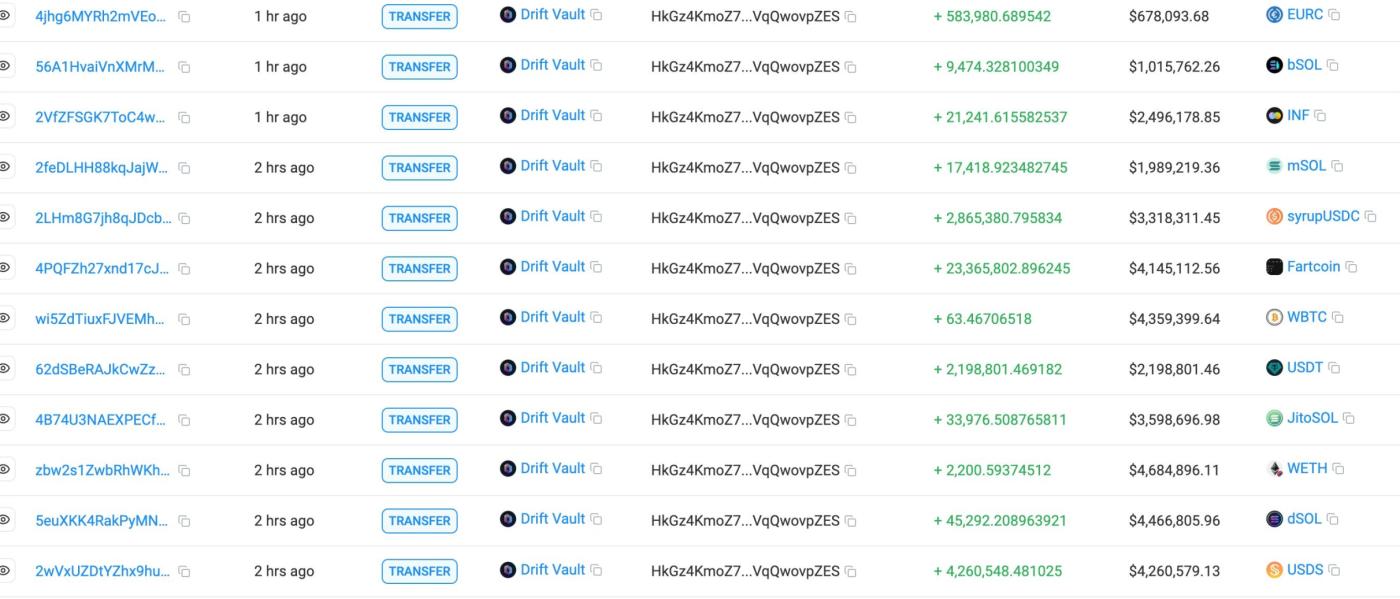
The attack began in the early hours of April 2nd. On-chain monitoring platform PeckShield issued an alert: the Drift main vault address began massive transfers to a newly created wallet, HkGz4K. The first transfers primarily consisted of JLP (Jito Liquidity Provider) tokens, worth approximately $155 million, followed by USDC, SOL, cbBTC, wBTC, WETH, and some meme coins.
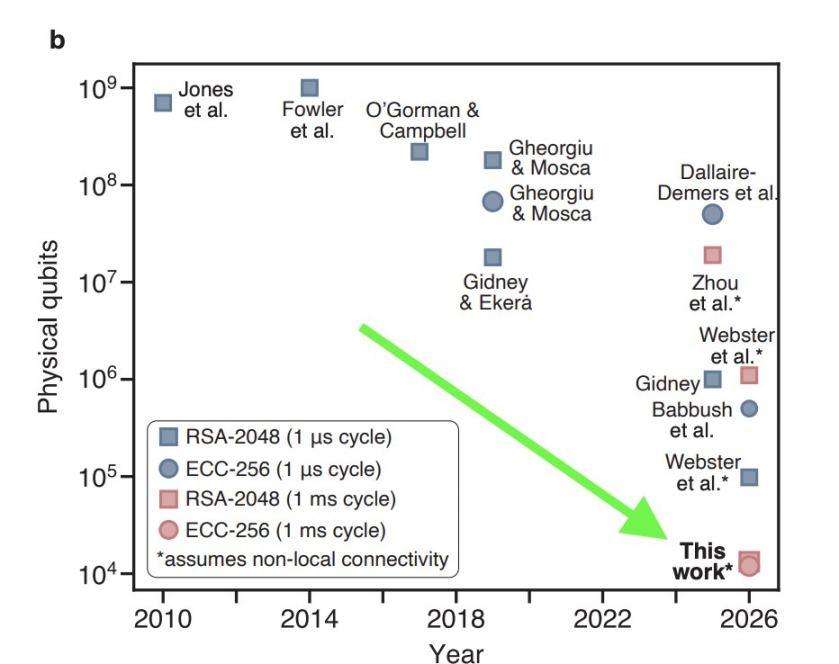
Breakthroughs in quantum computing technology are rapidly approaching, posing a serious challenge to the security foundation of Bitcoin. Google, in collaboration with academia, has confirmed that a quantum computer can crack an ECDSA private key in approximately 9 minutes, requiring significantly fewer physical bits than expected. Google has moved up its post-quantum cryptography migration to 2029, warning that blockchains must immediately initiate a comprehensive post-quantum upgrade, otherwise their underlying security and value consensus will face disruptive risks. Recommended Articles:
Calculate the private key in 9 minutes? The quantum threat is rapidly approaching Bitcoin .
This paper has three core conclusions:
- A highly efficient Shor algorithm for ECDSA has been implemented, requiring only about 1200–1400 logical qubits. ECDSA is the core cryptographic algorithm protecting Bitcoin, and the industry previously estimated that it would require about 10,000 logical qubits. This achievement represents a 10-fold improvement in efficiency.
A quantum circuit built by a Google team can reverse engineer a Bitcoin private key in about 9 minutes, requiring only 1,400 logical bits and 90 million operations. Previously, it was widely believed that a 10-minute quantum attack was at least 10 years away; now, a Bitcoin mempool attack may become a reality within the next decade.
Google did not publicly disclose the complete quantum circuit, but instead verified its feasibility using zero-knowledge proofs, emphasizing that this was a responsible disclosure. The paper explicitly states that the circuit is an attack vector against cryptography (especially blockchain). From a game theory perspective, quantum companies will become increasingly secretive about their technological advancements in the future, making it impossible for us to accurately assess how far away the quantum threat truly is.
The paper also provides an in-depth analysis of the threats faced by Bitcoin, Ethereum, and other blockchains, and concludes clearly that the time for blockchains to migrate to post-quantum cryptography is now.
Faced with the looming quantum security crisis, the crypto industry cannot simply passively endure the pressure. While the quantum threat has reshaped the industry's security baseline, it has also forced the blockchain ecosystem to accelerate technological iteration and system upgrades. From quantum-resistant encryption solutions to protocol architecture innovations, the market has already made preparations in advance. This technological revolution may become a crucial opportunity for the industry to move towards a more robust future. Recommended Article:
Advances in quantum technology also present opportunities for the crypto industry .
Despite increasingly urgent warnings, the overall conclusion of various studies and industry commentaries is clear: quantum computing will not disrupt blockchain, but it will force a restructuring of its security system. Recent analyses have identified multiple attack paths, ranging from rapid exploits targeting vulnerabilities at the transaction level to slower attacks on dormant wallets whose keys have been exposed.
Meanwhile, ongoing research in the post-quantum cryptography field indicates that feasible solutions already exist, but their adoption remains uneven.
Importantly, any observer, investor, or policy advocate can attest that blockchain systems are not static. Protocol upgrades, hard forks, and cryptographic algorithm migrations are already part of the ecosystem's operating mechanism. Compared to traditional financial infrastructure, this adaptability is itself a structural advantage.
Quantum computing does not present a fatal flaw, but rather a forced opportunity for advancement. The ultimate winners will not be those who try to avoid risks, but rather those who drive transformation and embed quantum resistance capabilities into governance, information disclosure, and technology design before the full threat becomes apparent.
In 2026, Interactive Brokers, a traditional brokerage giant, accelerated its expansion into the crypto market, bringing its low commission rates and professional execution advantages to the crypto space through initiatives such as 24/7 stablecoin deposits, direct crypto asset transfers, and compliant trading in Europe. This marks a significant step in the deep integration of TradeFi and Crypto, and signifies that crypto assets have officially become an important component of institutional asset allocation, reshaping the global multi-asset trading landscape. Recommended Article:
Interactive Brokers' first major move of 2026: Entering the crypto market .
Interactive Brokers' story is essentially a microcosm of how established Wall Street brokerages are repositioning themselves through technology and execution.
Since its founding in 1978 by Thomas Peterffy, Interactive Brokers has focused on developing automated trading systems. According to its latest publicly available Q4 2025 financial report, Interactive Brokers had 4.4 million client accounts, a 32% increase year-over-year. Net new client accounts exceeded 1 million in 2025, setting a new annual record. Full-year commission revenue was approximately $2.1 billion (+27%), and net revenue was approximately $6.205 billion (+20%), with strong average client returns (approximately 19.2% for individual clients and approximately 28.91% for hedge fund clients).
These impressive figures demonstrate the contribution of "low commissions + global access + one-stop platform" to long-term returns, and also enable Interactive Brokers to gain a foothold at the intersection of TradeFi and Crypto.
02 Interesting Facts about the Crypto
KYC (Know Your Customer) is supposed to be the core line of defense for compliance and risk control in the crypto industry, but its high cost and regional restrictions have spawned a gray market. A full verification process can be completed for as little as $20. AI face-swapping, video hijacking, and other technologies have drastically reduced the cost of fraud, allowing hundreds of thousands of practitioners to form a complete underground network. Compliance safeguards are rendered ineffective, and identity theft and financial risks continue to spread, reflecting a deep-seated dilemma in the industry's governance. Recommended Article:
$ 20 for a face: The "underground" assembly line of KYC in the crypto world
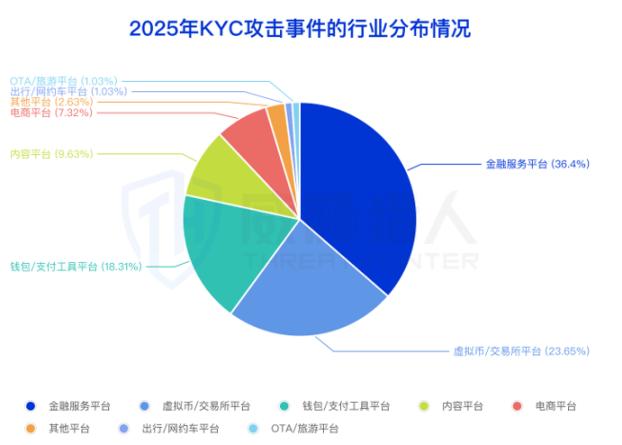
According to Threat Hunter's "2025 Global KYC Attack Risk Research Report," cryptocurrency exchanges and wallet payment platforms are the core targets of all KYC attacks, accounting for over 78% of all attacks. The most sold attack materials are "address proof" files, for a simple reason: they require frequent updates, while AI can generate them in batches.
These figures paint a clear picture: fraud, identity theft, and an organized criminal supply chain. Stack these numbers together: 500,000 participants, 1 million publicly traded sales posts, and accounts from leading compliant exchanges like Coinbase, Binance US, and Kraken. This isn't an isolated case on any one platform, but a systemic vulnerability faced by the entire crypto compliance system—as long as KYC exists, a market that bypasses it will exist, and on a considerable scale.
EdgeX, a perpetual contract DEX incubated by Amber Group and invested in by Circle Ventures, has seen its airdrop promises severely deviate from reality. Community share has been drastically reduced, with nearly 100 million yuan worth of tokens flowing to related parties. The opaque points redemption algorithm and concentrated withdrawals from linked accounts have raised questions. The project team's efforts to lock up and buy back tokens have failed to quell public anger. This controversy surrounding the distribution of tokens, seemingly backed by institutional backing, reflects a crisis of trust within the DeFi airdrop ecosystem. Recommended Article:
The EdgeX Airdrop Fiasco: A Carefully Planned Scam ?
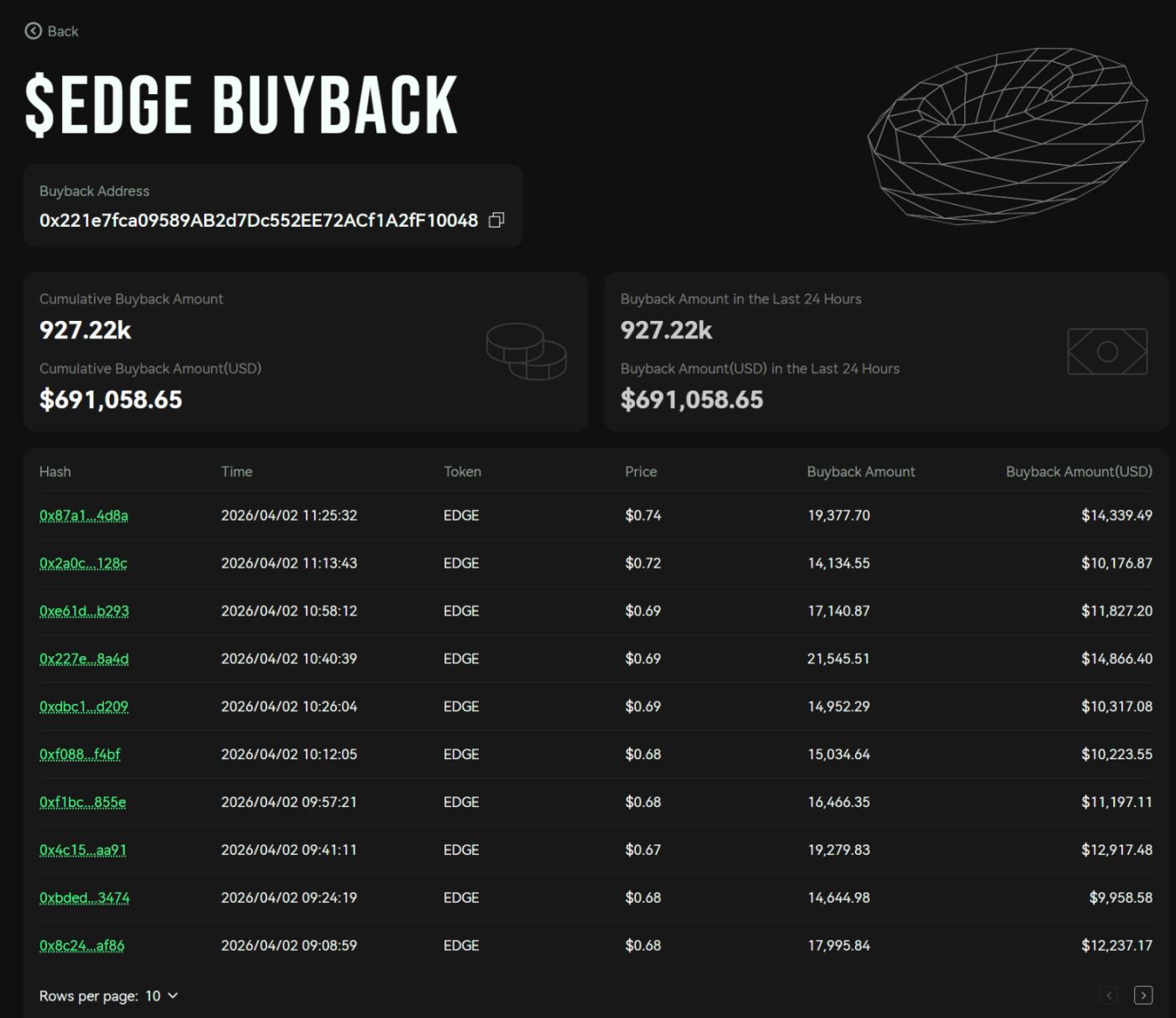
It's worth mentioning that on the afternoon of April 1st, edgeX announced that it had begun buying back tokens to calm market sentiment. To date, it has bought back a total of 927,000 tokens, worth approximately $690,000.
However, some users publicly questioned on EdgeX, arguing that if they were truly sincere, they should have transferred the repurchased tokens to a burn address on Ethereum. EdgeX has not responded to this.
Interestingly, at 4 PM on March 31, Polymarket had an 87% probability that edgeX's FDV would exceed $300 million the day after its launch, a 62% probability that it would exceed $400 million, a 48% probability that it would exceed $500 million, and a 26% probability that it would exceed $600 million. The market's predicted total trading volume was approximately $10 million.
However, just one day after the edgeX token was listed, its FDV exceeded everyone's expectations, eventually surpassing $600 million. Its predicted market capitalization reached $15.21 million.
The corporate Bitcoin treasury landscape underwent a dramatic shift in 2026: Strategy accounted for 94% of listed companies' Bitcoin purchases in March, while other treasury companies, mining enterprises, and even low-cost holders sold off their holdings to repay debts or transform their businesses. The once-hot flywheel of fundraising for Bitcoin purchases quickly reversed, market demand became highly concentrated, and the contradiction between the decentralized narrative and the control of a single giant became increasingly prominent. Recommended article:
Strategy's primary financing vehicle this year has shifted from convertible bonds to its variable-rate perpetual preferred stock, STRC, with a target price pegged to $100 par value and a current annualized dividend yield of approximately 11.5%. During the week of March 9-15, Strategy purchased $1.57 billion worth of Bitcoin, with 75% ($1.18 billion) coming directly from the net proceeds from STRC sales that week. Simply put, it's collecting monthly interest from traditional fixed-income investors and using that money to buy Bitcoin.
The brilliance of this mechanism lies in the fact that for every STRC issued, Strategy simultaneously issues new MSTR common stock. The two funds are combined to purchase tokens, locking the overall leverage ratio at approximately 33%. This allows it to maintain the stability of its financial structure while continuously expanding its balance sheet.
On March 23, Strategy launched three new ATM offerings, totaling up to $44.1 billion. The offerings include up to $21 billion in Class A common stock (ticker symbol: MSTR), up to $21 billion in variable-rate perpetual preferred stock (STRC), and up to $2.1 billion in 8% perpetual preferred stock (STRK). Simultaneously, the company increased its authorized STRC preferred stock from 70,435,353 shares to 282,556,565 shares and decreased its authorized STRK preferred stock from 269,800,000 shares to 40,270,744 shares. The previous STRK preferred stock offering was terminated on March 22.
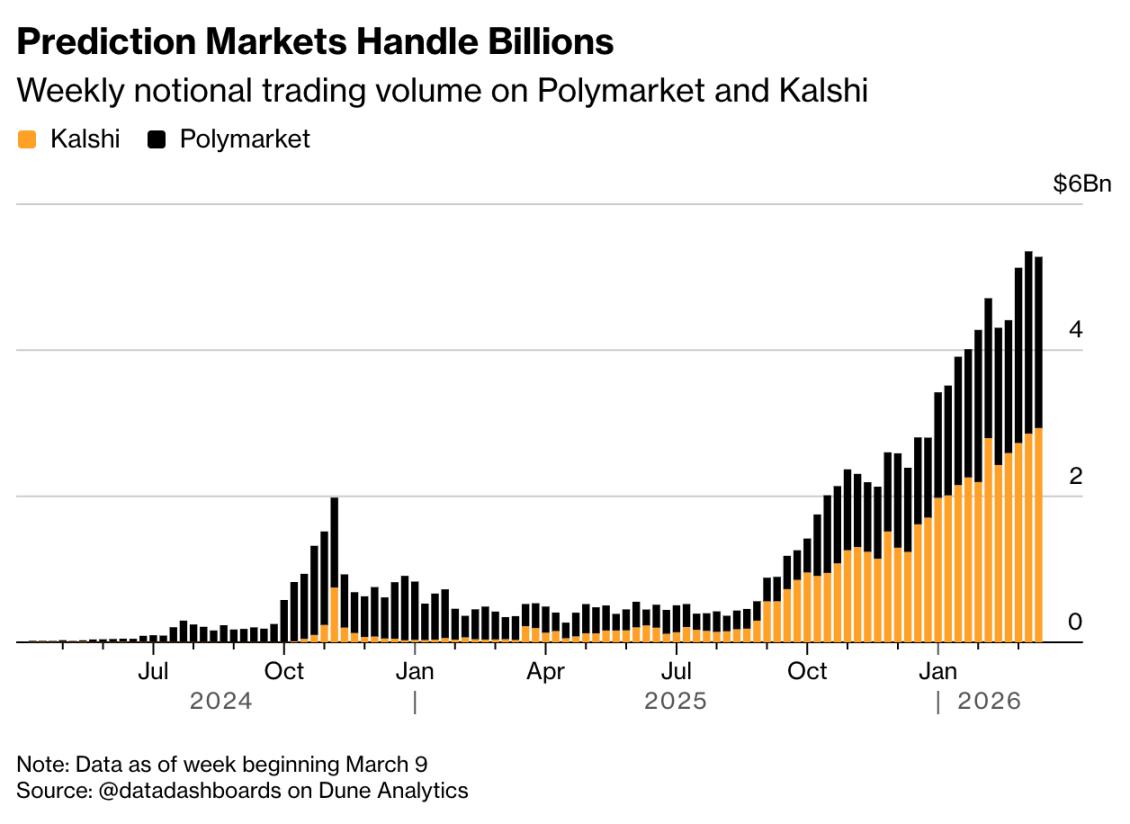
The prediction market sector is rapidly emerging, with Kalshi and Polymarket fiercely competing for dominance. One, with CFTC compliance, launches a public relations campaign advocating "rejecting dead markets"; the other leverages its overseas presence to expand into highly sensitive contracts. The two clash fiercely over compliance, insider trading, and ethical boundaries. With industry trading volume soaring to nearly $6 billion, and under increasingly stringent regulations, this competition is reshaping the rules and future of prediction markets. Recommended Article:
Prediction market giants clash: Kalshi and Polymarket's competition intensifies .
The core of the dispute lies in the fundamental differences in the establishment models and operating rules of the trading platforms. Kalshi is headquartered in the United States and regulated by the U.S. Commodity Futures Trading Commission (CFTC); while Polymarket's main trading platform is located overseas.
Polymarket, leveraging its overseas operations, launched contracts related to military conflicts, including those related to the Iran conflict. Kalshi pointed out that such products are neither ethical nor legal.
A Kalshi advertisement bluntly states: "We don't run a death market."
Starting earlier this week, Kalshi's marketing campaign, which takes the form of a "platform rule list," began appearing at bus and subway stations in Washington, D.C.
One of the rules states: "Rule 1: We strictly prohibit insider trading because Kalshi is a federally regulated U.S. exchange." To industry observers, the subtext of this statement is obvious: Polymarket's main platform is not subject to the jurisdiction of U.S. regulatory agencies.
03 Industry Observation
By 2026, asset tokenization will become a core battleground on Wall Street. BlackRock compares it to the internet boom of 1996. Kraken's integration into the Federal Reserve's payment system breaks the monopoly, and giants like Nasdaq, the NYSE, and CME are making intensive moves to restructure clearing and custody systems. This transformation is not merely a technological upgrade, but a reshaping of financial power and fee structures, defining the next generation of global financial infrastructure. Recommended Article:
A new battle has begun on Wall Street as giants collectively hunt for tokenization .
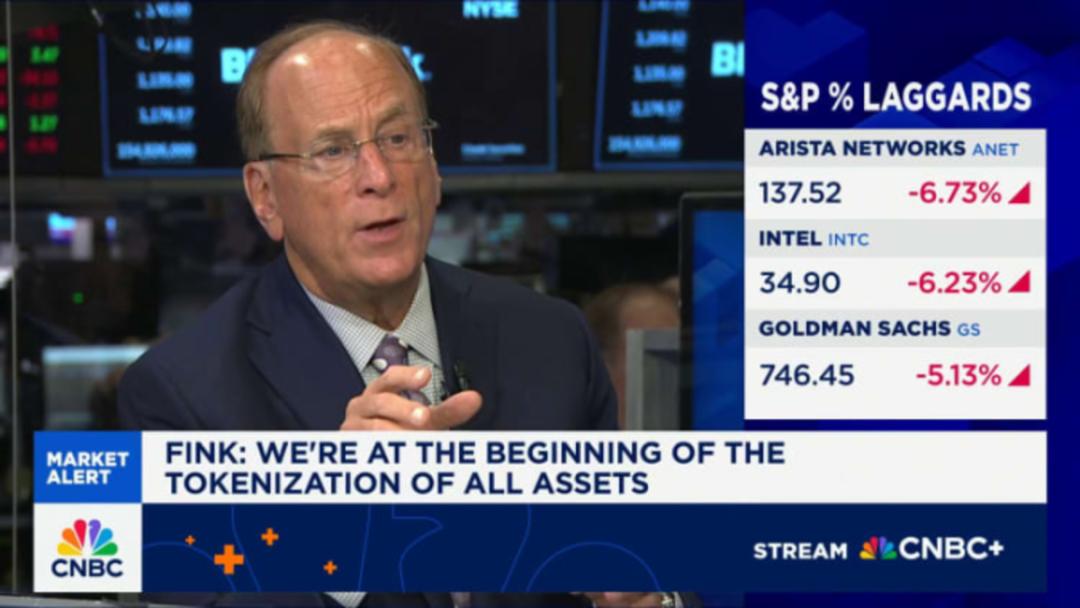
When BlackRock CEO Larry Fink wrote this assessment in his annual letter to investors in March 2026, he may have already seen the direction, but the speed at which this transformation actually unfolded was still faster than most Wall Street players anticipated.
Before the words had even finished, a war for control of the next generation of financial infrastructure had already begun on Wall Street. Throughout March, the battle raged almost daily.
Crypto is undergoing a fundamental paradigm shift, moving from a speculative market to a global settlement system covering traditional finance. Assets such as US stocks and gold are rapidly tokenizing, with institutions and exchanges fully entering the market, and regulations gradually loosening. It is no longer a token bubble circulating on the blockchain, but a new financial infrastructure operating 24/7, poised to reshape the global asset landscape. Recommended Articles:
Crypto : A Huge Mutation Is Quietly Occurring
What's even more interesting is that this cognitive shift isn't limited to the traditional financial sector. In fact, the management teams of leading exchanges, including Binance, Bybit, and Bitget, had already completed a similar cognitive shift internally by the end of 2025.
In June 2025, Bybit entered the "US stock tokenization" field through xStocks.
In September 2025, Bitget explicitly proposed the UEX vision and entered the operational phase, launching a series of tokenized products for US stocks, gold, crude oil, and other commodities.
In February 2026, Binance Alpha launched its first batch of tokenized US stocks and ETFs.
Meanwhile, decentralized derivatives platforms such as Hyperliquid and Aster have already launched related products and reaped the first wave of benefits.
On March 30, the U.S. Department of Labor released proposed rules to open an alternative asset channel for over $10 trillion in 401(k) retirement plans, officially including cryptocurrencies within the scope of compliant asset allocation. This shift from "extreme caution" in regulation in 2022 to establishing a safe harbor exemption framework allows long-term conservative funds to indirectly invest in digital assets through mechanisms such as target-date funds, marking a key turning point for mainstream institutional entry into the crypto market. Recommended Articles:
America 's most conservative money is eyeing cryptocurrency .
What deserves even more attention is the spillover effect of this policy shift.
At the federal level, restrictions are being eased, and states are following suit. On February 25, 2026, the Indiana legislature passed a bill requiring some state retirement plans to provide access to at least one self-brokered account for crypto investment options by July 1, 2027. Texas, Florida, Wyoming, and other states are also pushing for the integration of digital assets into their public retirement systems in their own ways.
From an industry perspective, the Department of Labor acknowledged that it currently lacks sufficient data to assess the number and scale of the three beneficiaries: private equity, hedge funds, and digital asset investment institutions. It has also opened a special commentary channel to collect industry information.
After Ethereum's scaling, the L2 ecosystem became fragmented, resulting in dispersed liquidity and a disjointed user experience. Gnosis and Zisk launched the EEZ framework, which uses synchronous composability to achieve atomic execution across rollups, breaking down these barriers, reconstructing a unified Ethereum ecosystem, and driving value back to the mainnet underlying layers. Recommended article:
Is this new framework going to bring Ethereum back to life ?
Technically, Zisk's real-time proof capabilities have not yet undergone large-scale independent verification. Ecosystem-wise, persuading leading L2 servers like Arbitrum or Base, which have established strong competitive advantages, to adopt a shared framework is tantamount to getting them to voluntarily relinquish some of their sovereignty—a coordination issue requiring extensive negotiation and alignment of interests. From technical feasibility to ecosystem feasibility, there is still an industry-wide consensus to bridge the gap.
However, the question raised by EEZ cannot be avoided: After Ethereum completes its "scaling," can it reconnect itself into a solid whole based on its fragmentation?