The glimmer of hope for peace in the Middle East lasted less than 24 hours before facing another crisis. US President Donald Trump had just announced a two-week conditional ceasefire agreement with Iran on the evening of April 7, buying time for the Islamabad peace talks on April 10; however, fierce fighting between Israel and the Lebanese front is pushing this fragile agreement to the brink of collapse.
Israel launches heavy bombardment of Lebanon, prompting Iran to threaten to withdraw from the ceasefire.
According to the Tasnim News Agency, which has close ties to Iran's Islamic Revolutionary Guard Corps, sources revealed that Iran views Israel's continued attacks on Lebanon on Wednesday (August 8) as a "blatant violation of the ceasefire agreement." Iranian officials have strongly warned that if Israel does not cease its actions, Iran will completely withdraw from the ceasefire agreement with the United States and respond strongly on "all fronts."
The core reason for the near collapse of the agreement lies in the serious disagreement between the two sides regarding the "scope of the ceasefire." Iran's 10-point peace proposal explicitly demands a cessation of all fronts, including Lebanon; however, the camp of Israeli Prime Minister Benjamin Netanyahu insists on a "separate front" strategy, stating that it only supports a suspension of strikes against Iranian territory and absolutely does not include Hezbollah in Lebanon.
Risk aversion intensifies, crypto market declines
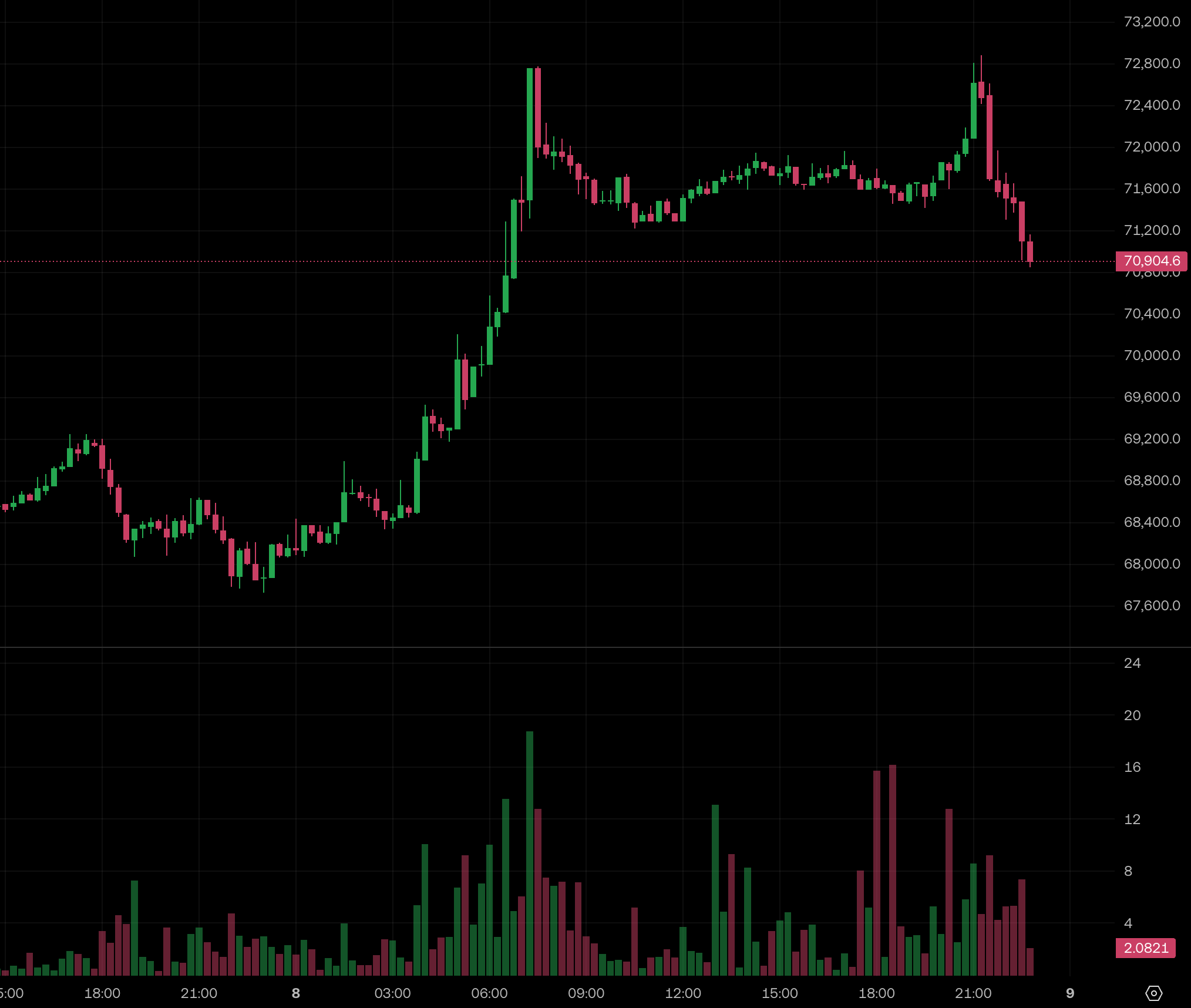
As the situation in the Middle East deteriorated rapidly within hours, panic quickly spread across global risk asset markets. The cryptocurrency market was hit hardest, with Bitcoin (BTC), which had initially benefited from the ceasefire agreement and reached $72,000, experiencing heavy selling pressure and a sharp drop below the $71,000 mark in a short period. Ethereum (ETH), the second-largest cryptocurrency, was also not spared, with its price falling all the way to around $2,200.

 Related reports