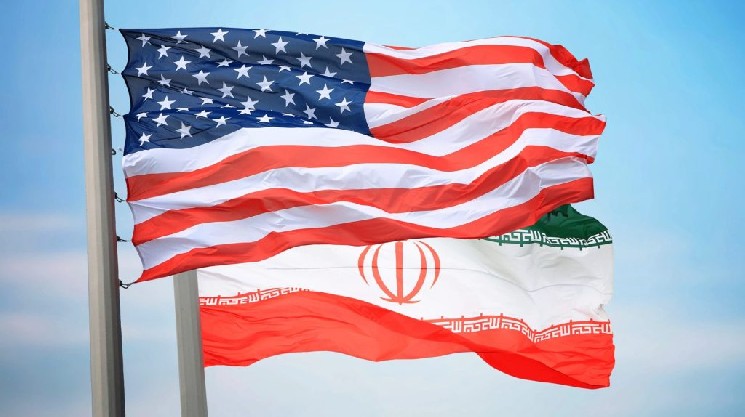
Speaking on April 12, President Donald Trump announced that the US Navy would begin blockading ships entering and leaving Iranian ports, immediately after negotiations stalled.
The U.S. Central Command (CENTCOM) announced that the operation would officially launch at 10:00 a.m. (U.S. time), applying to all vessels traveling to or from Iranian ports in the Persian Gulf and Gulf of Oman.
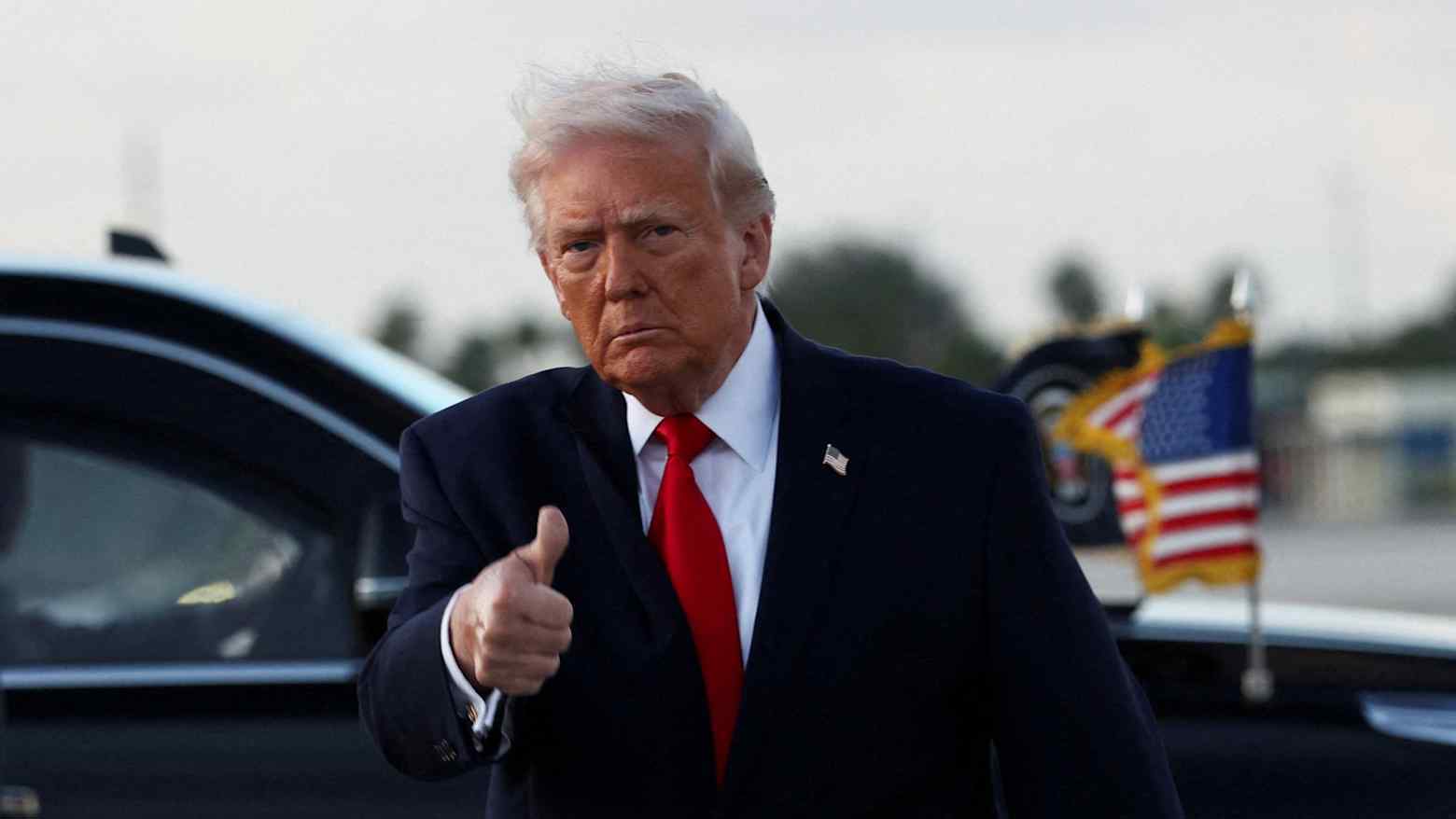
US President Donald Trump is pressuring Iran to end the war.
Notably, Washington asserted that enforcement would be "non-national," meaning any international vessel connected to Iran could be targeted for inspection. However, ships that only pass through Hormuz but do not dock in Iranian ports are guaranteed freedom of navigation.
Sanctions should also be imposed on ships that pay fees to Iran.
Not stopping at a blockade, Trump also issued a stern warning: any ship that has paid Iran to pass through the strait will be targeted by the US, even if operating in international waters.
This message directly targets Tehran's proposed toll collection scheme – a policy Capital controversial regarding its legality. At the same time, the US announced it would destroy the naval mines it accuses Iran of laying in the region.
Speaking on social media, Trump emphasized, "No one who pays illegal fees will be safe on the high seas," adding an extremely strong military warning against any act of aggression.
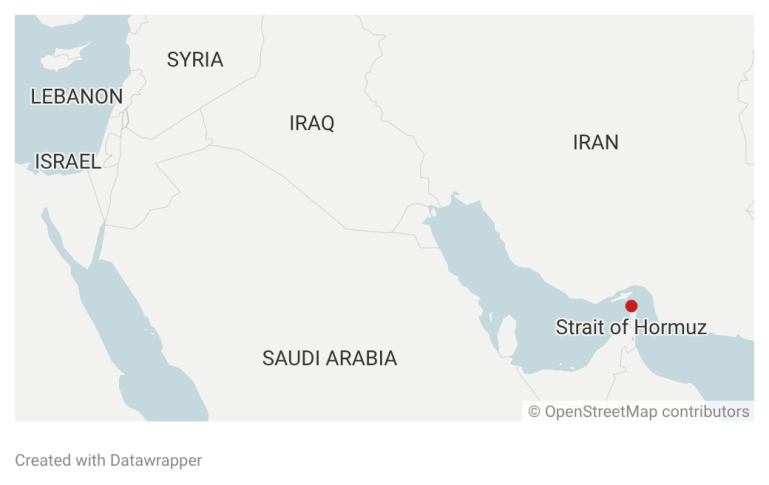
Location of the Strait of Hormuz
Iran retaliates.
In an almost immediate reaction, Iran's Islamic Revolutionary Guard Corps declared that any military vessels approaching the strait would be considered a violation of the ceasefire and would be met with a "strong, decisive" response.
Meanwhile, Iranian Parliament Speaker Mohammad Baqer Qalibaf asserted that new pressure from Washington would not cause Tehran to change its stance. The message was quite clear: Iran is ready to confront if forced, but remains open to negotiations if the conditions are "balanced and fair."
After six weeks of conflict that killed thousands and disrupted global energy supply chain , markets are reacting extremely sensitively to developments in Hormuz.
Trump himself acknowledged that oil and gasoline prices could remain high until the midterm elections in November – a rare sign that domestic political pressure is mounting.
Conversely, the US dollar surged against major currencies as investors sought safe-haven assets amid stalled negotiations that plunged the market into its seventh consecutive week of uncertainty.
A psychological tactic also emerged when Iran posted a map of gasoline prices in the Washington area, accompanied by a sarcastic message suggesting that Americans might "reminisce about the days when prices were $4-5 per gallon."
Negotiations are at a standstill.
The talks in Islamabad – the first face-to-face meeting between the US and Iran in more than a decade – failed to resolve core disagreements.
Washington demands that Iran completely cease uranium enrichment, dismantle key nuclear facilities, and stop supporting forces such as Hamas, Hezbollah, and the Houthi rebels. At the same time, the US also wants Tehran to fully open the Strait of Hormuz.
Conversely, Iran considers these demands "excessive," emphasizing that an agreement can only be reached if the US returns to the framework of international law.
Vice President JD Vance – who led the US delegation – acknowledged that the failure to reach an agreement was “bad news,” but stressed that the damage would be skewed more toward Iran.
Despite his tough rhetoric, Trump still believed Iran would eventually return to the negotiating table, describing the talks as “very friendly”—a typical contradiction between pressure tactics and diplomatic goals.
Notably, he also revealed that NATO allies – despite previous criticism – are considering joining the operation in Hormuz to support it.
Conversely, Tehran also sent soft signals. Iranian President Masoud Pezeshkian, in a phone call with Vladimir Putin, said that a “balanced and fair” agreement was still within reach if the US changed its approach.
Despite escalating tensions, shipping data offers a glimmer of hope: three mega-tankers left the Persian Gulf via the Strait of Hormuz on April 12th. These were the first shipments recorded since the ceasefire.
This signal indicates that the global energy flow has not been completely strangled – but given current developments, Hormuz remains a "time bomb" for the world economy, where a single military decision could shake trillions of dollars worth of markets.
Source: Nikkei Asia