The US stock market has once again demonstrated its strong resilience in the face of geopolitical shocks.
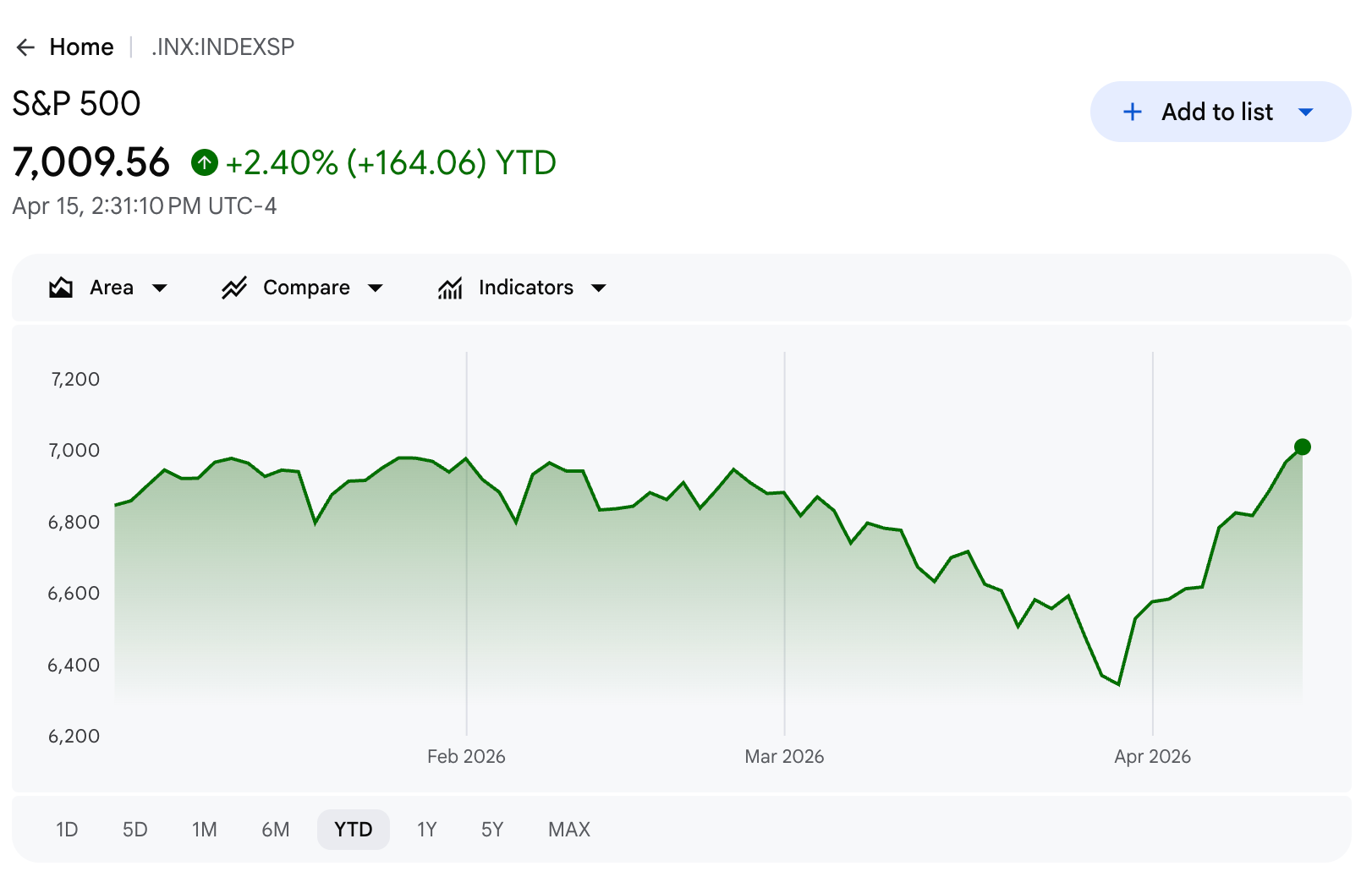
In the early hours of Thursday, April 16th (Taiwan time), the S&P 500 index rose steadily during trading, briefly breaking through the 7,000-point mark. This not only broke the record high since the end of January this year (around 6,978 points), but also indicates that the market has completely emerged from the shadow of the outbreak of the Iraq War on February 28th.
The Nasdaq erased a 10% wartime loss, writing a 10-day winning streak.
Looking back to the end of February this year, the S&P 500 experienced a sharp correction of about 10% due to the US and Israeli military action against Iran. However, with market expectations that the scale of the war would be controlled and the commencement of peace negotiations, the market quickly staged a V-shaped rebound. On Monday (14th), the S&P had basically recovered its losses, and today's gains further confirmed the return of the bulls.
It is worth noting that the Nasdaq index, which is heavily weighted towards technology stocks, has performed even more aggressively, achieving 10 consecutive trading days of gains, marking its longest winning streak since 2021, indicating that funds are pouring into the technology sector.
Four driving forces: peace, oil prices, AI, and financial reports.
Wall Street analysts believe that the market's recent rise despite geopolitical risks was driven primarily by the following four factors :
- Expectations for peace talks: Although the first round of US-Iran talks had some setbacks, the positive signals released by the Trump administration have led investors to believe that diplomatic means will eventually end the conflict.
- Oil prices have retreated from their peak: Oil prices, which surged at the beginning of the war, have fallen significantly as hopes for a ceasefire have grown, easing market concerns about double-dip inflation.
- Corporate earnings season gets off to a strong start: the banking sector's earnings reports, which started recently, have been solid, and the AI technology theme (such as NVIDIA) continues to provide strong support for the computing power narrative.
- Historical patterns are repeating themselves: Historical experience shows that sell-offs triggered by geopolitics are usually short-lived and sharp, while fundamental resilience often leads to a rebound after the panic subsides.
Despite the high market sentiment, analysts also cautioned investors that market volatility could return if subsequent US-Iran negotiations fail to make substantial progress.

 Related reports
Tom Lee warns: After the epic surge in US stocks, a devastating 20% crash is imminent.