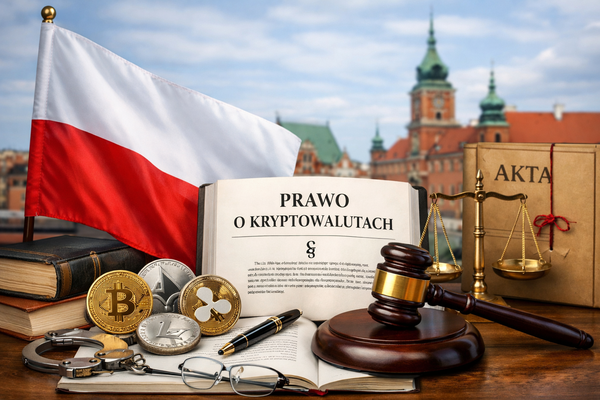
Poland's cryptocurrency regulation bill has once again failed to pass the parliament. The bill was thwarted once more following a failed attempt to override the president's veto, and the introduction of the European Union's Crypto Asset Markets Act (MiCA) framework is also facing delays. While common regulations are being implemented across Europe, market uncertainty appears to be escalating as Poland lags behind in establishing its own regulatory framework.
This vote is noteworthy not only as a simple legislative failure but also as an indication that political conflict is impacting financial regulation. The government led by Prime Minister Donald Tusk has maintained the position that the bill is necessary to protect investors and establish market order. Conversely, the President's side exercised its veto power, arguing that excessive regulation could hinder industrial growth. As a result, the conflict between the two sides has not been resolved, leading to a prolonged institutional vacuum.
The problem is that the MiCA is already being implemented at the European level. The EU has been fully applying regulations covering the issuance, trading, custody, and disclosure of crypto assets since the end of 2024. However, each country must separately establish domestic laws and supervisory frameworks to actually enforce them. Poland is stuck at this stage.
As a result, the market has been placed in a state of "incomplete regulation" rather than "no regulation." While existing businesses can continue operations under the existing legal framework for a certain period, new entrants face a situation where licensing standards and supervisory authorities are unclear. Investors also face uncertainty regarding under which system they can be protected in the event of disputes or accidents.
A bigger problem is competitiveness. The core of MiCA is a 'passporting' structure that allows businesses to expand into other countries once they obtain a license within the European Single Market. However, if the overhaul of domestic regulations is delayed, as in Poland, companies are likely to choose countries with clear regulations. This could result in capital and innovation shifting to other nations.
This case demonstrates how Europe's integrated regulatory model operates in reality. Even with the existence of common rules, market perception is bound to vary significantly depending on each country's political schedule and legislative speed. Particularly in rapidly changing industries like cryptocurrency, the clarity and timing of regulation enforcement are more critical than the mere presence of regulations.
Poland is currently stalled at the final stage. While the framework known as MiCA has already been established, there is a lack of mechanisms to operate it in the actual market. The longer this vacuum persists, the greater the uncertainty and concerns regarding the weakening competitiveness of the Polish cryptocurrency market are expected to become.