As far as Curry is concerned, this uncautious operation will also be destined to become an indelible stain on him, and he and his followers will be alerted at any time in the future: endorsements need to be cautious, and the market is risky.
Written by: Blue Sword Thirteen
Source: Houchang Village Sports Team
Stephen Curry may not have expected that a careless business cooperation would bring him such a big trouble.
In a recent class-action lawsuit against the virtual currency platform FTX, Curry was listed as a defendant along with Tom Brady, Naomi Osaka and many other well-known athletes, as well as FTX founder Sam Bankman Fried. In a complaint filed in federal court in South Florida, the plaintiff alleges that, having been influenced by the defendant's false advertising and other deceptive practices, he fell into FTX's Ponzi scheme and lost a substantial amount of his investment as a result, and he seeks payment from FTX and the celebrity endorsers. $11 billion in damages.

Remember this ape head in Curry? This was a representative event of cryptocurrency breaking the circle at that time. In August 2021, Curry spent 180,000 worth of virtual currency on the platform to buy this avatar, and then he announced his endorsement of FTX in September.

In February last year, FTX also used this as a promotional advertisement to dispel people's concerns about cryptocurrencies
Curry's cooperation with FTX began in September 2021. In FTX's promotional materials and advertisements, the NBA's greatest shooter is the company's global ambassador, and he also received some equity. In an interview, Curry said: "I am very happy to be able to cooperate with such a company that can lift the veil of cryptocurrency and eliminate the panic of new users."
In order to commemorate Curry breaking the previous NBA record of 2973 three-pointers held by Ray Allen, FTX created exclusive NFTs for him, a total of 2974 photos (only accessible through FTX), each priced at $499, All proceeds go to the Eat. Learn. Play Foundation, which the Currys founded in 2019.
In March last year, Curry and O'Neal filmed an advertisement for FTX together. Facing the camera, he said the following lines: "I am not an expert in cryptocurrency, and I don't need to be. Because of the existence of FTX, I have a safe purchase. , selling and trading cryptocurrencies.”

When questioned by the media later, O'Neal said that he was completely dragged into the water by Curry
Because of Curry's relationship, the Golden State Warriors also joined in. In December 2021, FTX officially became their official cryptocurrency platform. Some media said that this is the first cooperation between professional sports and cryptocurrency. Warriors President Brandon Schneider said: "After talking with FTX, we realized that both parties share a common vision to innovate around the integration and adoption of cryptocurrencies, including the important role that NFTs play among fans around the world."
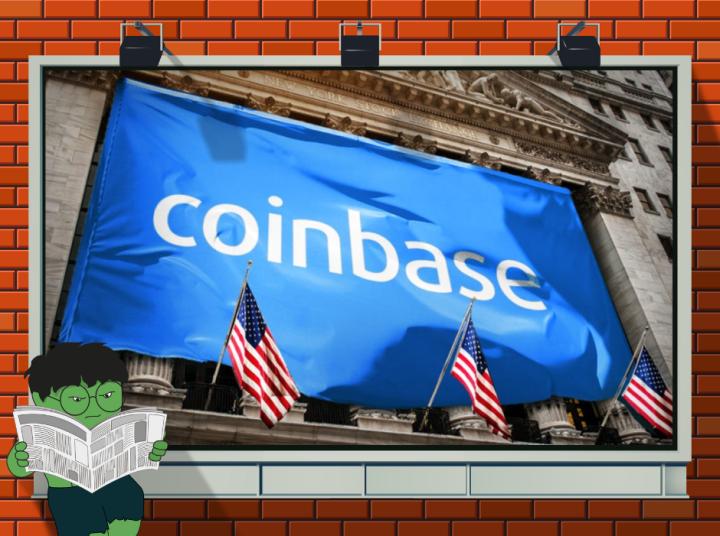
Curry and the Warriors are only part of the FTX sports marketing map. They have successively signed Tom Brady, O'Neal, Naomi Osaka, Shō Otani and other sports superstars. In addition, FTX printed its logo on MLB referee uniforms, sponsored the Mercedes team, and named the home of the Miami Heat for 10 years at a price of 135 million US dollars.

The Heat's home FTX arena (formerly the American Airlines Arena)
It is costly to establish a marketing relationship with sports superstars, teams, and leagues. However, FTX has enough confidence. After all, their valuation once reached 32 billion U.S. dollars. On the other hand, this kind of gameplay also reflects the logic of cryptocurrency companies-they seem to have reached a consensus, throwing money at the sports world, and using the popularity of sports and the influence of stars to endorse the platform.
A Bloomberg report last August showed that cryptocurrency platforms had spent $2.4 billion on sports marketing in the previous 18 months. Among them, Crypto.com is the most generous. In addition to naming the home of the Lakers, UFC and F1 are involved, and it is also a sponsor of the World Cup in Qatar.
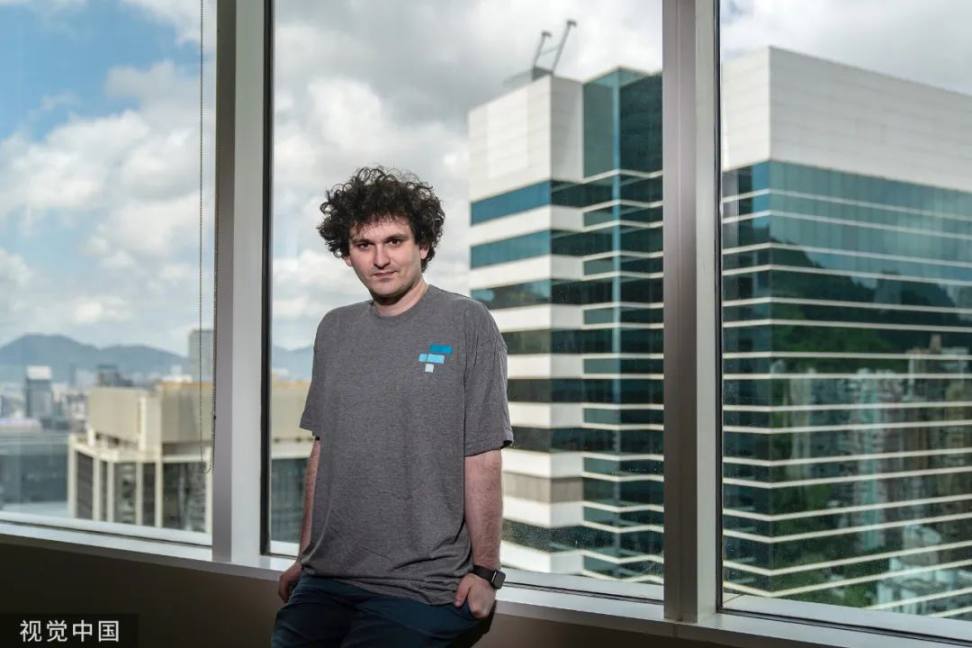
FTX founder Sam Bankman Fried, formerly known as the currency circle Musk
However, crazy sports marketing cannot stop the overall decline of the currency circle. Since May last year, the cryptocurrency has collapsed, and the market value of trillions of dollars has evaporated in just one month. Bitcoin reached a peak of $60,741 in November 2021, and has since fallen all the way to $22,294 in August last year, and this is just the beginning.
FTX was not spared from this wave of crashes, and the report released by the currency media Coindesk on November 2 finally became the last straw that crushed them. In the report, people familiar with the matter exposed the balance sheet of Alameda (a related transaction company of FTX). According to the data, Alameda’s total assets are US$14.6 billion, of which US$5.8 billion is held in FTT coins issued by FTX. If the debt of US$8 billion is included, Alameda’s net assets are as high as 88% in FTT coins ( Very illiquid, discounts available only for clients trading on FTX).
This means that Alameda is really just a shell.
On the surface, this report exposed Alameda, but it actually pointed the finger at FTX. After all, the two companies are closely related: the founder of FTX, Sam Bankman-Fried, started his first company Alami Although he later resigned as CEO to avoid suspicion, his successor, Caroline Ellison, had a relationship with Fried, and the executives of the two companies often work in the same penthouse in the Bahamas.

Fried and Ellison, their "sex video" was once leaked
On November 6th, FTX’s competitor Binance CEO Changpeng Zhao announced the sale of all FTT coins on the books. This operation dispelled the industry’s last doubts about that report. FTT coins began to dive all the way, and FTX was affected by it. Withdrawal, forming a run. In just 3 days, FTX encountered a wave of withdrawals of up to 6 billion US dollars.
On November 8, FTX could only suspend user withdrawals. Fried tried to make a final struggle and asked Binance for help, hoping that the other party would take over FTX. Binance initially agreed, and the two parties signed a non-binding letter of intent for the acquisition. However, only one day later, Binance changed its mind and gave up the acquisition. On November 11, Fried reluctantly announced that FTX was bankrupt, and he resigned as CEO.
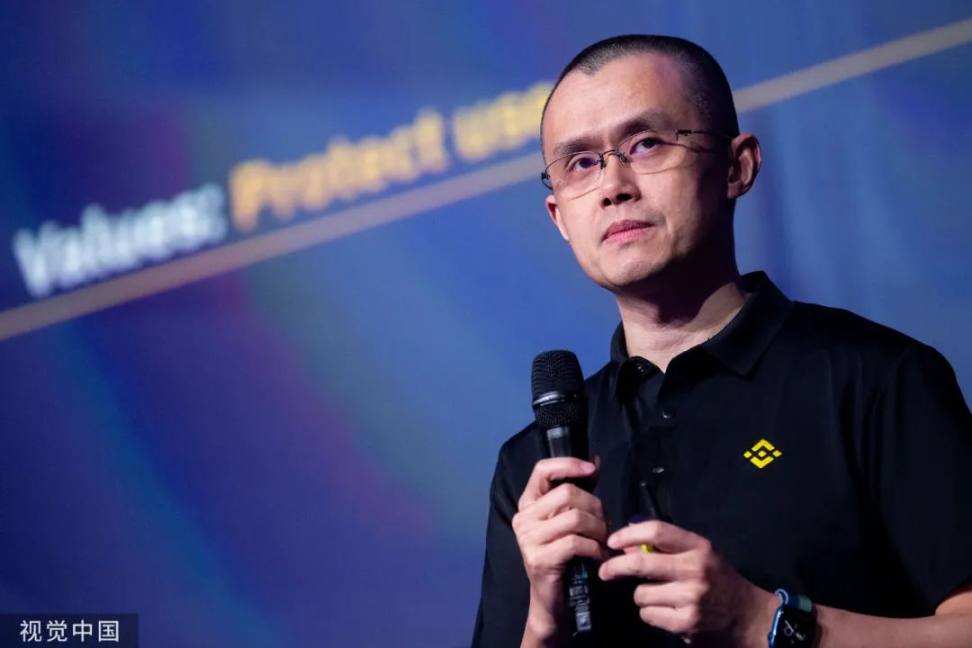
The founder and CEO of Binance, Changpeng Zhao, many people in the circle believe that, as the boss of the industry, he first smashed the market, then talked about the acquisition, and finally abandoned it, which completely killed FTX
Fried's current embarrassment is in stark contrast to his high spirits two years ago. When he was interviewed at the time, he was asked how the company, which had just been established for two years, had the long-term stability to fulfill the 20-year agreement. Respond like this: "Never get into the details, it's been a good year for us. Frankly, we didn't need an extra 18 years to get to this effect."
In a word, all the details of FTX under Fried's rule are rotten. John Wray, the new CEO and liquidator who succeeded Fried, had participated in the liquidation of Enron and had 40 years of legal and restructuring experience. Even so, he was still shocked by the chaos of FTX: "In my career, from I have never seen such a complete failure of a company, and the financial information is completely unreliable."
John Ray submitted a document to the U.S. Federal Bankruptcy Court, listing the various crimes of FTX. Simply put, there are no records: no bank accounts, cash accounts, no records of receipts and payments, and even no minutes of board meetings. De uses software that automatically deletes messages to communicate internally and announce major decisions. In such a chaotic enterprise, any financial report cannot be trusted.
As a customer of FTX, the biggest question is, where does the money go? John Ray said that as far as he knows, a lot of FTX funds are used to buy real estate and other personal items for employees and consultants.
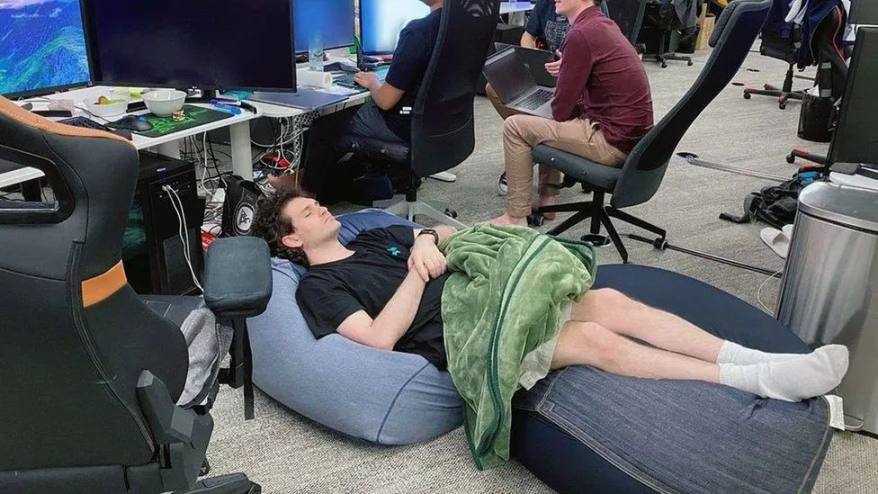
Subsequent revelations revealed that Fried’s private life was extremely chaotic. He not only spent money like water, but also opened a harem in the company, and everyone “knows their ranking.”
In the past two years, FTX has bought at least 19 properties in the Bahamas worth nearly $121 million for company executives and Fried's parents, most of them luxury beachfront homes, the most expensive, according to sources seen by Reuters. The most famous is a $30 million penthouse in Albany, where Tiger Woods hosts his annual golf tournament.
Reuters said it could not determine the source of funding for FTX's home purchase. A lawyer for FTX went even further, saying that a division of the company had spent $300 million to buy a house.
Beyond that, the most serious problem with FTX is the misuse of client funds. FTX has promised that it will never lend or otherwise spend the cryptocurrencies entrusted to the exchange by customers. But Reuters broke the news that FTX sent more than $10 billion to Alameda for transactions, loans and investment activities, and most of the transfer of funds occurred at the end of 2021. John Wray confirmed the existence of reports that there was a software backdoor between Alameda and FTX that would allow Fried to do whatever he wanted without raising the alarm.
As more shady stories were exposed, some media reviewed the tricks between FTX and Alameda: First, Alameda used internal information to buy FTT coins at a low price, then pushed the price up through hype, and then sold it at a high price. FTT is used as collateral to raise funds from FTX - through this trick, they turn the worthless FTT coins (in fact, many of them are rubbish coins merged by Fried) into real gold and silver (mainly from FTX) customers), and then use this real money to make high-risk investments to make profits.
Obviously, this whole set of tactics is actually a castle built with matches, and any problem in any link will lead to a tragic thunderstorm-in fact, it does burn very fast, Fried's 32 billion His worth was wiped out within a few days, and he himself was arrested.

avalanche
Unexpectedly, one day after bankruptcy, FTX fell into another huge vortex. The conservative website Gateway Pundit published a report on Nov. 12 alleging that Democrats diverted tens of billions of dollars to Ukraine, where they were then laundered through FTX's platform.
The Russian media went crazy and Fox News quickly followed suit. Commentator Jesse Waters told his 2.7 million viewers that Ukraine accepted US aid funds and invested in FTX. He speculated that this may be a money laundering scheme. part of the effort to benefit the Democrats.
Waters also attached a chart that tallies the flow of money for President Joe Biden. On the night of the show, former President Trump posted the same picture on social platforms.
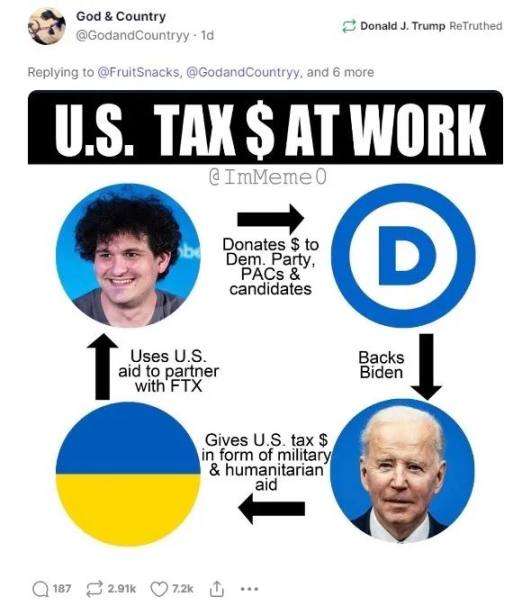
Conspiracy theories that FTX is involved in money laundering (so is it any wonder he can't figure out where a lot of the money went?) are popular on social media because Fried is the second-largest donor to the Democratic Party, and last year he donated money to Democratic candidates and PACs donated $40 million, and it’s worth mentioning that FTX’s assets include a $7.3 million bet that Trump loses the election.
Soon, Ukrainian officials came forward to refute the rumors. Deputy Minister of Digital Transformation Alex Boryakov wrote on Twitter: "In March, a cryptocurrency foundation raised funds to 'aid Ukraine', through FTX converts donations into Ukrainian fiat currency, and Ukraine has never invested in FTX.” Ukraine’s foreign ministry liked the tweet and explained the Ukrainian government’s relationship with FTX in an email to The Associated Press.
But for those users who invested real money, whether this is a rumor or not, the collapse of FTX is a foregone conclusion, and their money will never be returned. The celebrities who endorsed this cryptocurrency platform have obviously become accomplices— — Which naturally includes Curry and O'Neal and a lot of other sports stars who stand for FTX.

The plaintiffs in the Curry class action hired two attorneys, David Boyce and Adam Moskowitz, who represented Al Gore in the famous Bush v. Gore case. In a statement, Moskowitz wrote: "FTX is a PR and marketing genius who knows that a Ponzi scheme bigger than Madoff's can only be done in the world's most famous, respected, It is only possible with the help and push of the most popular and influential celebrities.”
Individuals and groups that were previously tightly bound to FTX are trying to draw a line with it. On the day Fried declared bankruptcy, the Heat cleared all signs related to FTX in the arena and began to look for a new title sponsor; the Warriors suspended their cooperation with FTX and removed all promotional advertisements in the arena; Des Racing announced that the FTX logo on the F1 car will be removed immediately.
Tom Brady can be said to have lost his wife and lost his army. According to media reports, he invested most of his family's wealth in FTX before, and chose to divorce Gisele Bundchen because of the heavy losses. After FTX went bankrupt, Brady deleted all tweets related to it, but he couldn't escape his responsibility.
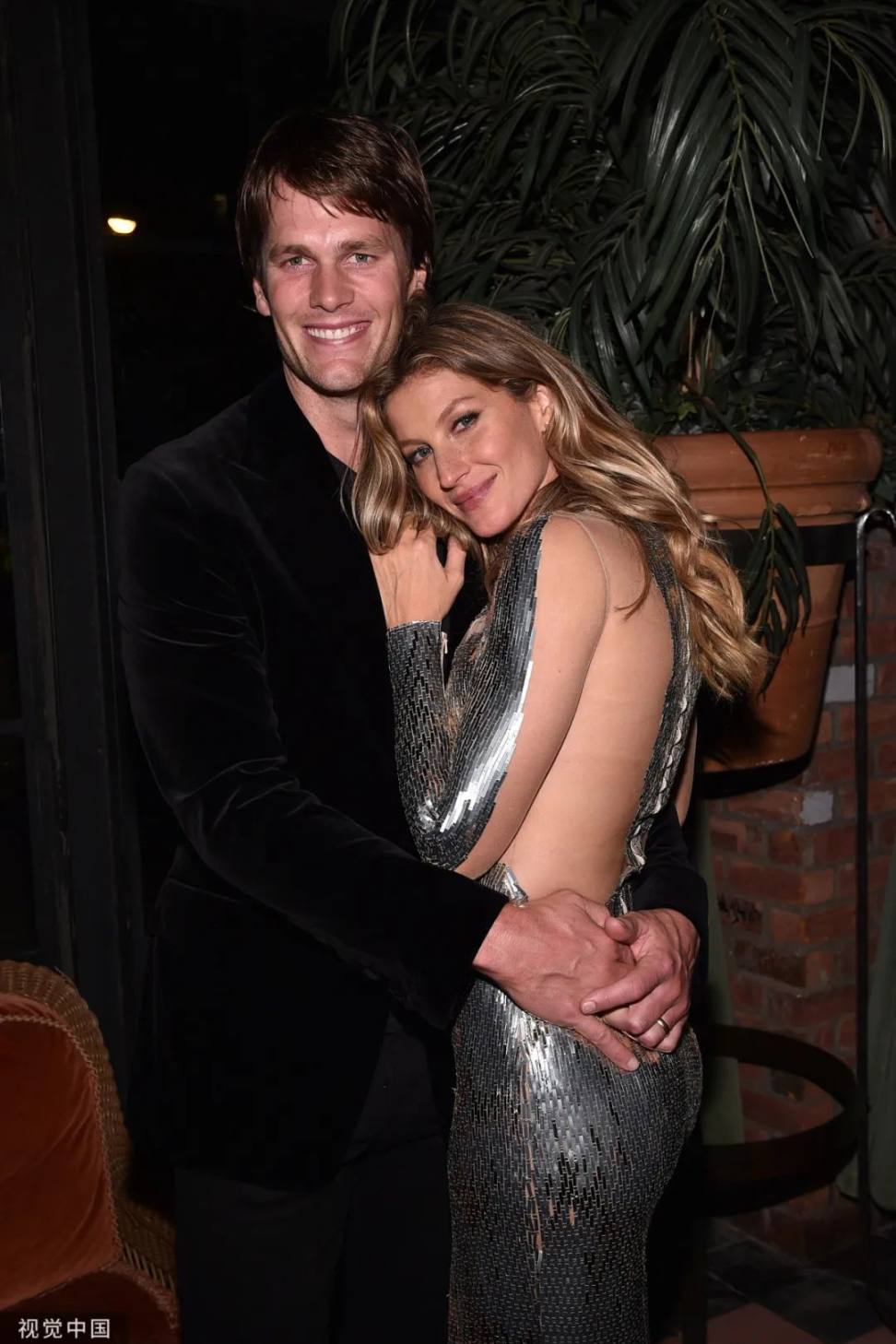
Bundchen and Brady
Texas regulators have launched an investigation into multiple FTX spokespeople to determine whether Brady, Curry and others violated securities laws in their promotion and marketing. Referring to previous cases where securities violations involving endorsers have mostly resulted in fines rather than jail time, boxing champion Mayweather and Kim Kardashian have both received hefty fines for promoting cryptocurrency violations.
As far as Curry is concerned, this uncautious operation will also be destined to become an indelible stain on him, and he and his followers will be alerted at any time in the future: endorsements need to be cautious, and the market is risky.