
Stablecoins are sending two conflicting signals to the crypto market.
On the one hand, stablecoins are an important on- chain payment layer and reflect the level of network usage. On the other hand, when stablecoin reserves on exchanges decrease, it can be a sign that cash flow is contracting and risk appetite is weakening.
- Stablecoin reserves reportedly decreased by $4 billion, while Bitcoin fluctuated near $80,000.
- In one week, stablecoin reserves decreased by 5.18% to approximately $66.37 billion.
- Chainalysis projects that the adjusted volume of stablecoins could reach $719 trillion by 2035.
Stablecoin reserves decrease, risk pressure increases.
A prominent crypto analyst noted that stablecoin reserves have decreased by $4 billion, while Bitcoin is fluctuating near the $80,000 mark. This development is generally interpreted as a liquidation on exchanges, as investors tend to hold digital cash rather than move into riskier assets.
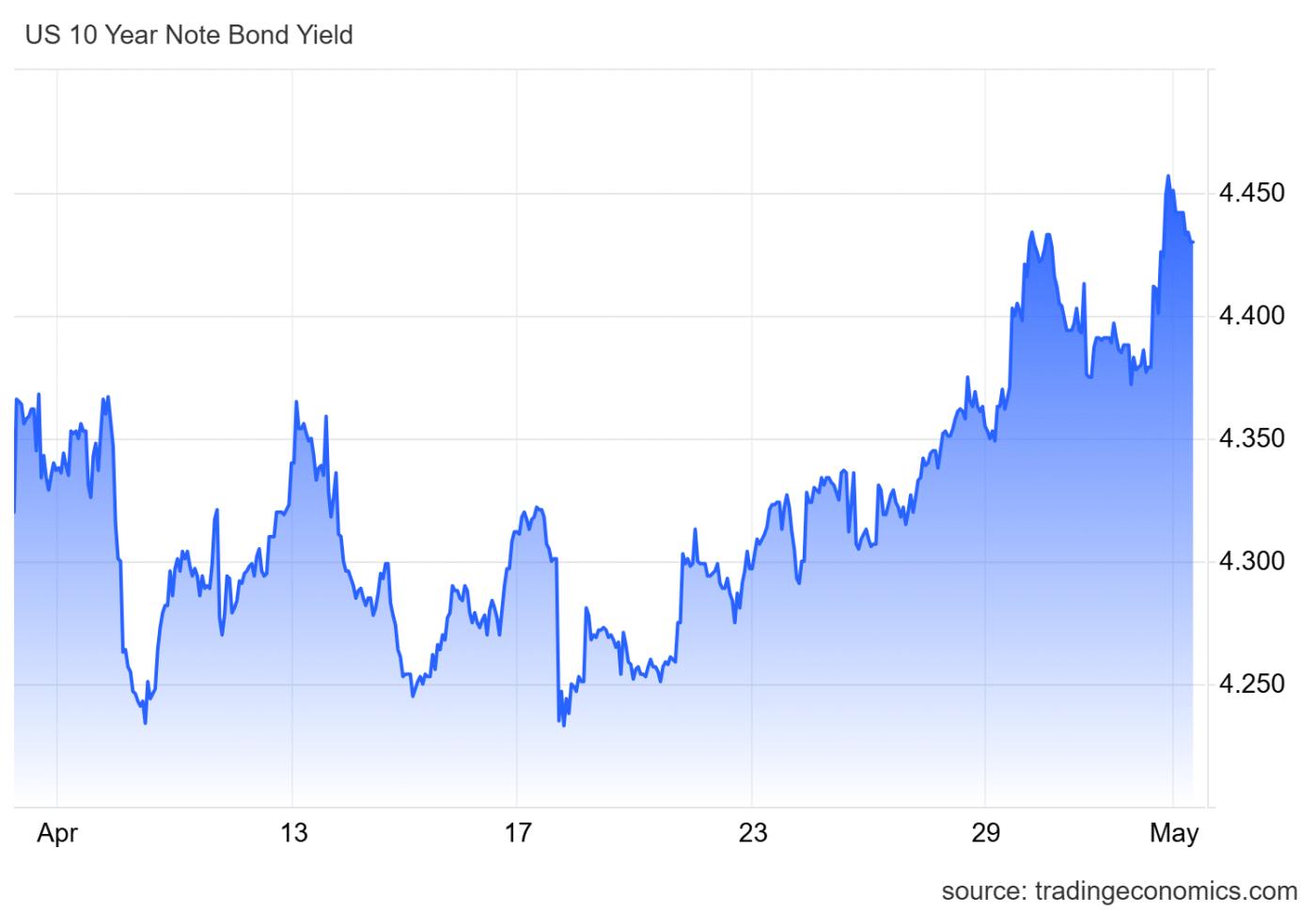
Macroeconomic factors are tightening liquidation .
This development is not isolated. The chart shows that global yields are rising, with 10-year US Treasury yields returning to near 4.5% and 30-year yields exceeding 5%. When safe-haven bond yields are higher, Capital tends to shift towards bonds rather than holding in highly volatile assets.
Oil prices also rebounded above $110 per barrel, increasing inflationary pressure and keeping yields high. In this context, the 5.18% drop in stablecoin reserves to approximately $66.37 billion last week may reflect a more cautious investor sentiment.
The available data is insufficient to conclude that this is a long-term trend. However, this decline suggests that the market's liquidation buffer is thinning, especially for risky assets like Bitcoin.
Stablecoins are viewed positively from the perspective of network usage.
Conversely, Chainalysis paints a more positive picture of stablecoin adoption. Stablecoins are not only value-holding tools but also payment layers for on- chain transactions, so increased usage is often accompanied by higher network activity.
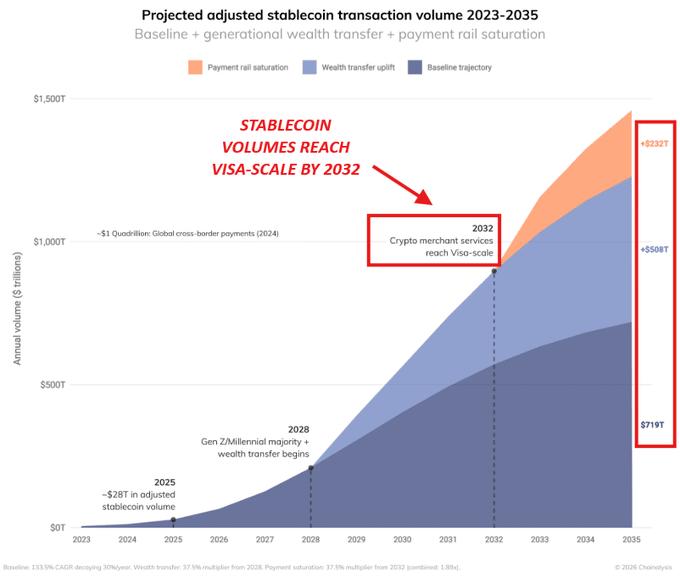
This report projects the adjusted volume of stablecoins could reach $719 trillion by 2035. Chainalysis also suggests that the volume of stablecoin payments could catch up with Visa and Mastercard between 2031 and 2039. In addition, Western Union, USDPT, Fidelity (FIDD), Meta, and several Fortune 500 companies are mentioned as preparing to launch plans related to stablecoin infrastructure.
The actual impact depends on where the money is located.
The key point is that the same stablecoin data can lead to two different interpretations. If stablecoin volume increases and is used as a payment layer, that's a positive signal for on-chain activity. But with risky assets like Bitcoin, the deciding factor is whether that liquidation actually enters the market or simply sits on the sidelines.
Therefore, the $719 trillion projection reflects the expected growth of the stablecoin ecosystem, but does not automatically translate into strong buying pressure on Bitcoin. In the short term, the $4 billion decrease in stablecoin reserves, down 5.18% this week, suggests the market is lacking further clear liquidation support.
Summary
Stablecoins are showing two sides of the same market. At the infrastructure level, they can scale aggressively and strengthen network operations. At the transaction level, the decline in stablecoin reserves while yields and oil prices rise leans toward a more defensive stance, making liquidation for risky assets thinner.